


More news on this day
Rail passengers trying to travel between London and Winchester have faced hours of disruption, with cancellations, diversions and limited replacement buses turning routine journeys into stressful ordeals across southern England.
Get the latest news straight to your inbox!
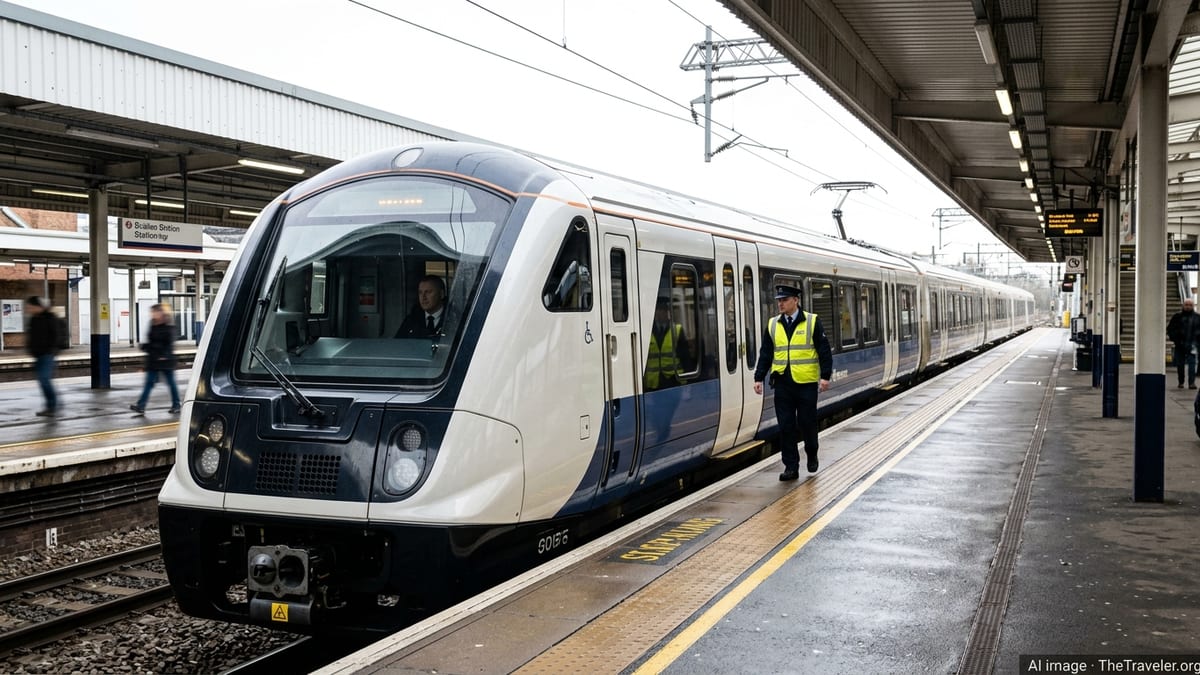
Major disruption on London to Winchester routes
Recent disruption on the London Waterloo to Winchester corridor has highlighted how quickly the rail network in southern England can grind to a halt when multiple incidents coincide. Publicly available information from National Rail Enquiries and South Western Railway has shown repeated days of cancellations and severe delays on services running through Woking, Basingstoke and Winchester, often triggered by infrastructure faults, overrunning engineering work or signal failures on key main line sections.
On affected days, journey planners have flagged “do not travel” advisories for parts of the South Western network, with trains between London Waterloo and key Hampshire destinations reduced, diverted via slower routes or cancelled outright. When this happens, passengers heading for Winchester can suddenly find that normally frequent fast trains are replaced by a patchwork of limited stopping services and overcrowded alternatives through Southampton or Salisbury.
Industry data indicates that even when the core line remains technically open, constraints such as speed restrictions and congestion around bottlenecks like Woking Junction and Basingstoke can force control teams to thin out the timetable in real time. That can leave some intermediate stations with far fewer departures than advertised, compounding the impact for travellers starting their journeys in London and attempting to reach Winchester for work, education or connecting travel.
Replacement buses, diversions and mounting delays
When lines are partially closed, published disruption summaries have pointed to rail replacement buses being deployed between key nodes such as Basingstoke, Winchester, Southampton Central and Eastleigh. While these services aim to maintain connectivity, they inevitably add significant time to journeys. Travel updates routinely warn that road traffic around the M3 corridor and local congestion near major stations can slow buses, making arrival times difficult to predict.
In practice, this means that a standard journey of around one hour between London Waterloo and Winchester can stretch well beyond ninety minutes or even two hours during major disruption. Some journey planners have shown itineraries requiring passengers to travel first to alternative hubs such as Reading or Salisbury, then double back towards Winchester on secondary lines, reflecting the limited capacity available on the main London to Southampton route when part of the infrastructure is out of use.
Reports from passengers and local media coverage describe queues for replacement buses forming outside stations when disruption has been at its worst, with some travellers turned away from full vehicles and instructed to wait for the next service. In these conditions, people with luggage, children or reduced mobility can find the experience particularly challenging, especially when information about expected waiting times changes rapidly as conditions on the road evolve.
Information gaps at London termini
For many travellers, the most frustrating aspect of recent disruption has been the difficulty of understanding in real time how to complete their journeys from London. At London Waterloo, live departure boards, concourse announcements and operator social media feeds have at times presented slightly different snapshots of the situation, reflecting how quickly controllers adjust train plans to recover from incidents on the line.
According to published accounts in UK rail industry coverage, short-notice platform alterations and train formations with fewer carriages than scheduled have added to the confusion. Passengers arriving to find their train cancelled or heavily delayed often discover that alternative departures are already heavily loaded, making it hard to judge whether to wait on the concourse, board a slower stopping train or attempt a different route altogether.
Although National Rail Enquiries and individual operators maintain disruption pages and journey planners, there can still be a gap between official advice and the lived reality on crowded platforms. Some passengers have reported only discovering the extent of the delays once they reached Waterloo or Clapham Junction, by which point options for rerouting via other lines are more limited and time-consuming.
Knock-on effects across southern England
The London to Winchester flow sits on a crucial section of the South Western Main Line that also serves long distance routes to Southampton, Bournemouth and Weymouth. When signalling or power issues occur on any part of this trunk corridor, the resulting timetable changes radiate far beyond a single city pair. Published disruption overviews have documented cases where trains to the south coast have been terminated short at Basingstoke or Winchester to keep some level of service running closer to London.
These operational decisions, while intended to stabilise the network, can leave passengers further along the line facing long waits and extra changes. For travellers in Winchester, onward connections to smaller Hampshire stations, local bus links and even cross country services can be missed, affecting evening commutes and weekend leisure trips. In some instances, public reports suggest that delays have spilled over into the following day as rolling stock and train crew end up out of position.
Local tourism bodies for Winchester and nearby heritage sites depend on reliable rail access from London, particularly during school holidays and major events. When severe disruption coincides with busy periods, visitors arriving late or abandoning their journeys altogether can have a visible impact on city footfall. Businesses near the station, including hotels and restaurants that cater to day-trippers and short-break visitors, are among those most exposed when trains fail to arrive as planned.
Advice and options for affected passengers
Travel information published by rail operators during recent episodes of disruption has highlighted several options for passengers trying to reach Winchester. On days of severe disruption, tickets have in some cases been accepted on alternative routes run by other train companies, allowing travellers to reach Hampshire via alternative main lines and then connect by local services, although this often involves longer journey times and at least one additional change.
Passengers are being encouraged through official channels to check journey planners on the day of travel, paying particular attention to service-specific notes about reduced carriage numbers, on the day cancellations and any “do not board” advice for especially busy trains. Guidance also recommends allowing additional time for connections at major interchanges such as Clapham Junction, Basingstoke and Southampton Central when disruption notices are in place.
Consumer-facing information from passenger watchdogs emphasises that travellers whose journeys are significantly delayed may be entitled to compensation under Delay Repay schemes, depending on the length of the delay and the type of ticket held. Claim processes are typically completed online after travel, and require details such as train times, ticket type and proof of purchase. For many passengers, however, financial redress only partially offsets the stress and uncertainty of attempting to answer a simple question during disruption: how, exactly, they are supposed to get to Winchester when the trains out of London are not running as planned.