


More news on this day
Hamburg Airport experienced hours of disruption on Friday after a disoriented traveller reportedly activated an emergency exit system and entered a secure area, forcing the partial shutdown of Germany’s fifth-busiest airport and causing significant delays for departing passengers.
Get the latest news straight to your inbox!
Emergency Exit Error Sparks Large-Scale Evacuation
According to published coverage, the incident unfolded on the morning of 12 June when a man used an emergency button that opens escape routes at Hamburg Airport. By activating the system, the traveller is reported to have reached a secure area without undergoing the required screening checks, immediately triggering aviation security protocols.
Publicly available information indicates that the federal police responded by ordering the evacuation of the entire security zone. Passengers who had already passed screening were directed back into the public terminal areas, and some travellers who had boarded aircraft were escorted off planes and returned to the terminal to await further instructions.
Reports describe the man as having “lost his way” in the terminal rather than attempting a deliberate breach. Nonetheless, once an individual has crossed into a sensitive area without full control checks, standard procedure requires a complete reset of passenger screening to guarantee that no prohibited items have entered the secure side of the airport.
While there were no immediate indications of a broader threat, the precautionary response effectively shut down departures for several hours at one of northern Germany’s key aviation hubs.
Flights Halted, Departures Re-screened and Delays Mount
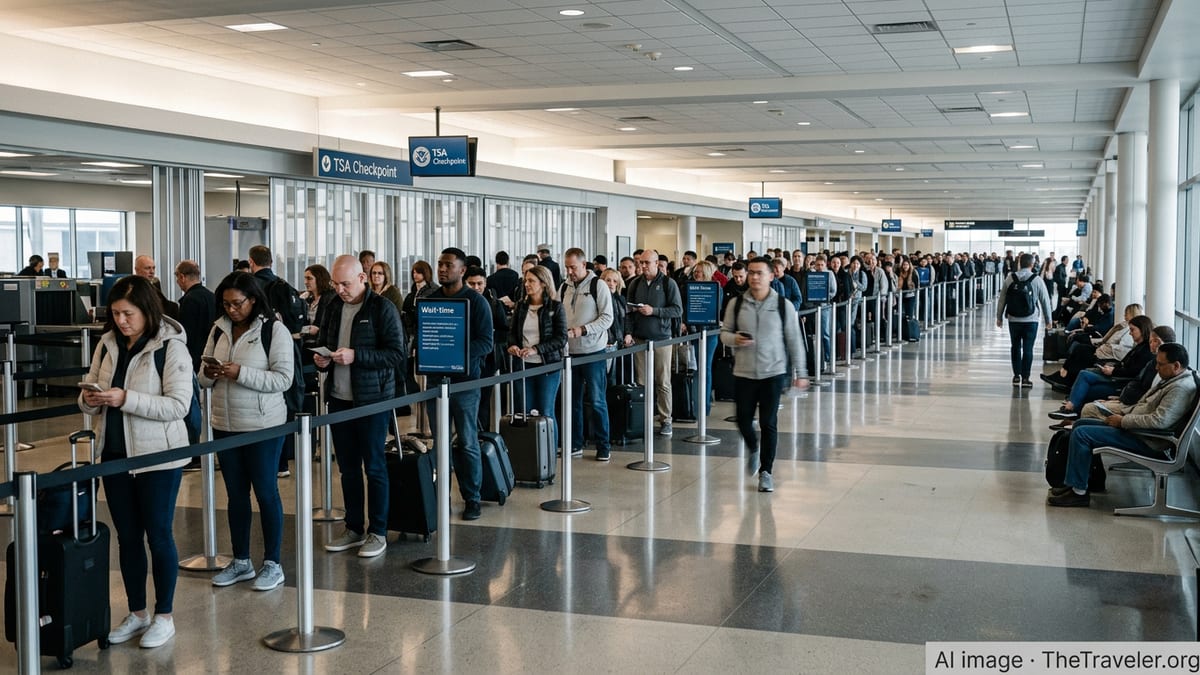
Operational updates cited in German media show that the evacuation of the security zone meant all passengers beyond the checkpoints were required to leave and undergo screening again. This reset process significantly slowed the flow of travellers and led to long lines throughout the late morning and early afternoon.
Hamburg Airport had to temporarily suspend most departures, while arriving flights continued to land but faced gate shortages and turnaround delays. Some inbound aircraft reportedly held on the tarmac or at remote stands while the security situation was being clarified, contributing to a backlog in ground handling and connections.
Published flight data and local reporting indicate a mix of delays and cancellations across multiple airlines serving domestic and European routes. Travellers heading to popular destinations such as Munich, Frankfurt, London, and Mediterranean holiday airports were advised to expect major disruptions and to check the latest status of their flights before travelling to or from Hamburg.
The airport operator signalled that knock-on effects would continue into the afternoon and evening as carriers worked through the backlog of affected services, even after security checks resumed.
Security Protocols Prioritise Safety Over Schedule
The Hamburg disruption illustrates how quickly a single misstep at a critical checkpoint can cascade into a full-scale operational shutdown. Aviation security rules in Germany and across the European Union require that if an unscreened person enters a sterile area, all passengers and staff in that zone may need to be cleared again to restore the integrity of the security perimeter.
In practice, that means evacuating waiting areas, closing boarding gates, and in some cases removing passengers from aircraft that are already preparing for departure. Only once the zone is empty can security personnel re-open checkpoints and begin re-screening everyone destined for that part of the terminal.
Travel industry analysts regularly note that such procedures are designed to err heavily on the side of caution. Even when subsequent information points to a misunderstanding or navigational error by a lost traveller, as reports suggest in Hamburg, authorities are required to follow the full protocol before normal operations can resume.
For passengers, the result is often a long day of waiting, missed connections, and rebooked journeys, but the incident also highlights how tightly controlled access to airside areas has become throughout Europe’s major airports.
Confusion for Travellers on the Ground
Accounts shared in German media and traveller forums describe scenes of confusion as passengers were instructed to leave aircraft, return to the terminal and queue again at security. Many travellers reported receiving only brief loudspeaker announcements referring to a “police operation” or a “security incident,” without immediate detail on the underlying cause.
Passengers already through passport control for non-Schengen flights were particularly affected, as they were required to retrace their steps through corridors and stairways normally used only in one direction. Families with small children and travellers with tight onward connections faced added stress as estimated departure times continued to shift.
Publicly available footage from the terminal shows crowded departure halls and long lines curling through the check-in and security areas. Airport staff attempted to manage queues and answer questions, while airlines worked to prioritise passengers with imminent long-haul and connection-critical itineraries once screening resumed.
For visitors unfamiliar with Hamburg, the unexpected shutdown turned what should have been a routine start to a city break or business trip into an extended test of patience, with many travellers seeking alternative rail connections or later flights once the scale of disruption became clear.
Hamburg Airport’s Recent Security Spotlight
The latest disruption arrives less than a year after Hamburg Airport drew international attention due to a separate, unrelated security lockdown involving an armed individual on the tarmac, an episode that also halted operations for an extended period. While the current case appears to stem from a lost or disoriented traveller rather than a deliberate threat, the repetition of high-profile incidents keeps the airport firmly in the security spotlight.
Hamburg is one of Germany’s busiest regional hubs, serving as a key gateway for northern Germany and southern Scandinavia. Any extended interruption to its operations reverberates across the wider European network, particularly on short-haul routes that rely on high-frequency connections.
In response to previous events, publicly available information shows that the airport and security agencies have already tightened some procedures around perimeter access, terminal screening, and emergency responses. Analysts will now be watching for any additional adjustments to passenger guidance, signage, or staffing to reduce the risk of another traveller inadvertently breaching controlled areas.
For now, the Hamburg incident stands as a reminder to passengers of how crucial it is to follow wayfinding signs carefully, remain within designated public spaces until called forward, and avoid opening or pressing emergency devices unless instructed to do so, as a single wrong turn can ripple into an airport-wide shutdown.