


More news on this day
Germany’s main aviation gateways in Frankfurt and Munich are facing severe disruption after the Vereinigung Cockpit pilots’ union called a two-day strike at Lufthansa, with reports indicating that up to 80 percent of flights at the hubs are being cancelled or heavily delayed.
Get the latest news straight to your inbox!
Walkout Targets Lufthansa’s Core Operations
The 48-hour work stoppage by pilots affects Lufthansa’s mainline passenger services, as well as units such as Lufthansa Cargo and Lufthansa CityLine. Publicly available information shows that the strike began in the early hours of Monday, April 13, and is scheduled to run through late Tuesday, April 14, directly hitting Germany’s two busiest airports.
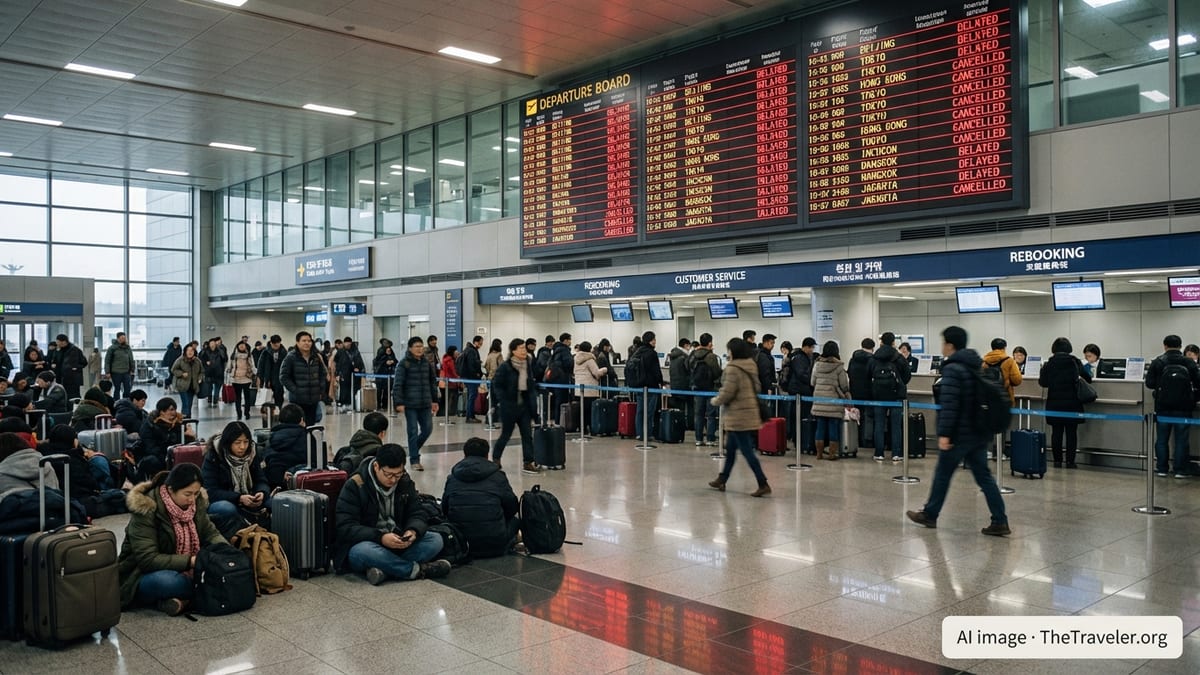
Frankfurt Airport and Munich Airport together handle thousands of Lufthansa departures each week, and the carrier relies on these hubs as the backbone of its global network. Reports from German and international outlets indicate that roughly four out of five scheduled Lufthansa flights at the two airports are being cancelled, leaving check-in halls and departure boards dominated by notices of scrapped services.
The pilots’ union has framed the walkout as part of a broader campaign over pay scales, retirement provisions and future staffing levels. Industry coverage notes that this is not an isolated incident but an escalation in a months-long dispute that has already produced several warning strikes and short-term stoppages across the Lufthansa Group.
The walkout comes at a sensitive moment for the airline, with the April travel period traditionally seeing strong demand from business travelers and families taking advantage of late Easter and spring breaks across Europe.
Mass Cancellations at Frankfurt and Munich
Operational data from the affected airports show that Frankfurt, Lufthansa’s largest hub, is bearing a substantial share of the cancellations. Over the course of the two-day strike, reports indicate that several hundred takeoffs and landings linked to Lufthansa and its subsidiaries have been scrubbed, forcing widespread rebooking and overnight stays for passengers who had planned to connect through the hub.
Munich, the group’s second major hub and a key gateway for southern Germany, Austria and parts of Eastern Europe, is experiencing similar disruption. Regional coverage suggests that hundreds of flights have been grounded there as well, effectively reducing the schedule to a handful of long-haul and essential services operated either by partner airlines or by Lufthansa units not covered by the strike call.
Travelers passing through both airports are encountering long queues at service counters and self-service kiosks as they seek alternative options. Airline statements and publicly available guidance emphasize that affected customers are being rebooked free of charge where possible, including on rail services within Germany and on partner carriers on key European and transatlantic routes.
Despite these measures, capacity constraints mean that many passengers are facing multi-day delays before they can reach their destinations, particularly on popular business routes and long-haul connections that typically operate only once per day.
Pay, Pensions and Job Security at the Heart of the Dispute
The pilots’ union Vereinigung Cockpit has been pressing for what it describes as sustainable improvements in pay and pension arrangements, as well as clearer guarantees on career development for cockpit crew within the Lufthansa Group. According to published coverage of recent bargaining rounds, union negotiators argue that productivity gains and the airline’s post-pandemic recovery justify higher compensation and stronger protections against outsourcing.
For its part, Lufthansa has publicly emphasized the need to keep costs under control in a competitive European aviation market, citing pressure from low-cost carriers and volatile fuel prices. Company statements ahead of earlier industrial actions highlighted the carrier’s investments in new aircraft and digital systems, while stressing that labor agreements must be “future-proof” and aligned with long-term profitability targets.
The current confrontation follows a series of earlier disruptions. In March, a separate pilots’ strike led to widespread cancellations across the network, and cabin crew organized under the Independent Flight Attendants’ Organization recently staged their own walkouts at Frankfurt and Munich. Analysts following the company describe a pattern of rolling labor disputes that has repeatedly unsettled schedules during what was expected to be a strong recovery year for German aviation.
Industry observers note that the stakes are particularly high this week because the latest pilots’ action coincides with, and in some cases overlaps, additional strike calls from cabin crew. The combined effect is a multi-day period in which large portions of the Lufthansa schedule are subject to last-minute changes.
Airline Response and Passenger Options
Lufthansa has activated extensive contingency plans in an effort to keep parts of its operation running. Reports from airline and airport channels show that unaffected Lufthansa Group carriers and codeshare partners are taking over certain routes to and from Frankfurt and Munich, often using larger aircraft to consolidate passengers from canceled flights.
Domestic travelers are being encouraged to switch to rail where feasible, with publicly available information pointing to broad acceptance of Lufthansa tickets on Germany’s long-distance train services during the strike window. This measure is particularly important on high-frequency city pairs such as Frankfurt to Berlin or Munich to Hamburg, where trains can substitute for multiple short-haul flights.
International passengers, especially those connecting between Europe, North America and Asia, face more complex rebooking scenarios. Industry reports describe travelers being rerouted through alternative hubs, including Zurich, Vienna and Brussels, on partner airlines that are not affected by the German pilots’ action. In some cases, passengers are being shifted to departures a day or more later, depending on seat availability.
Consumer advocates are reminding travelers that European passenger-rights rules continue to apply, even during strikes, and that affected customers may be entitled to care such as meals, hotel accommodation and alternative transport when flights are canceled at short notice. However, the exact scope of financial compensation can depend on how the disruption is classified and on court interpretations of similar disputes.
Further Disruptions Expected in the Days Ahead
Travelers and travel planners are being cautioned that the current two-day pilots’ strike may not be the final chapter in this dispute. According to recent union communications reported in the German and international press, Vereinigung Cockpit has indicated that additional industrial action cannot be ruled out if no agreement is reached on key contract issues.
At the same time, cabin crew represented by the UFO union have already scheduled a further two-day strike to begin shortly after the pilots return to work, targeting departures at Frankfurt and Munich and several other German airports. Aviation analysts warn that this sequence of overlapping work stoppages could leave Lufthansa operating with serious constraints for much of the week, even if management and unions return to the negotiating table.
For business travelers, the unrest is prompting a reassessment of routing choices, with some corporate travel managers reportedly favoring itineraries that rely on alternative European hubs in the near term. Leisure travelers with flexible plans are being advised by travel agencies and booking platforms to monitor their reservations closely, consider travel insurance where appropriate and remain open to rerouting through other cities.
While the exact duration of the standoff remains uncertain, the experience of past strikes at Lufthansa suggests that the carrier’s main hubs can take several days to return to normal operations once large numbers of flights and crews have been disrupted. For now, Frankfurt and Munich are bracing for continued turbulence as the pilots’ walkout runs its course and the next round of industrial action looms.