


More news on this day
Saudi Arabia’s domestic travel market is off to a historic start in 2026, with nearly 29 million trips recorded in the first quarter and Madinah rapidly joining Makkah and Jeddah as one of the Kingdom’s fastest rising tourism hubs.
Get the latest news straight to your inbox!
Record First Quarter Underscores Strength of Domestic Demand
Preliminary data published by Saudi-focused tourism outlets indicate that domestic tourist trips in the Kingdom climbed to about 28.9 million in the first quarter of 2026, a year on year increase of roughly 16 percent. Industry reporting notes that associated spending reached around 34.7 billion Saudi riyals during the period, signaling robust confidence among residents who are choosing to travel more frequently within national borders.
The latest numbers build on several years of steady growth in domestic tourism. Prior analyses of the sector showed nearly 82 million domestic tourists in 2023 and continued expansion through 2024, supported by improved connectivity, new attractions and wider accommodation options across the country. The 2026 first quarter performance suggests that this momentum is accelerating as new destinations and seasonal events reach a broader local audience.
Domestic travel has also been buoyed by a dense calendar of holidays and events, from winter festivals and sports gatherings to the busy Ramadan and Eid periods. Travel trade coverage points to particularly strong movement on core routes linking Riyadh, Jeddah and Al Madinah, as residents capitalize on expanded flight schedules and competitive fares for short city breaks and pilgrimage related stays.
Observers of the sector note that domestic demand is playing a central role in Saudi Arabia’s wider tourism transformation. While international arrivals continue to rise, trips by residents are helping to stabilize occupancy, lengthen peak periods and support investment decisions in both established gateways and emerging secondary destinations.
Madinah’s Hospitality Metrics Catch Up With Makkah and Jeddah
Recent hospitality data highlight how Madinah has moved to the forefront of the country’s tourism map. A report released in late 2025 by Saudi Arabia’s official press agency cited Madinah as recording the highest occupancy rate among Saudi cities in the first half of that year, reaching nearly 75 percent and reflecting an expanding base of hotels and serviced apartments in the city.
Complementary hospitality market analysis has since pointed to strong average daily rate and revenue per available room performance in Madinah, in several cases surpassing other major destinations. Industry research published in 2025 identified Madinah as registering the highest average daily room rate in the Kingdom for a recent quarter, underlining sustained demand from both religious visitors and domestic leisure travelers who are increasingly combining pilgrimage with extended stays.
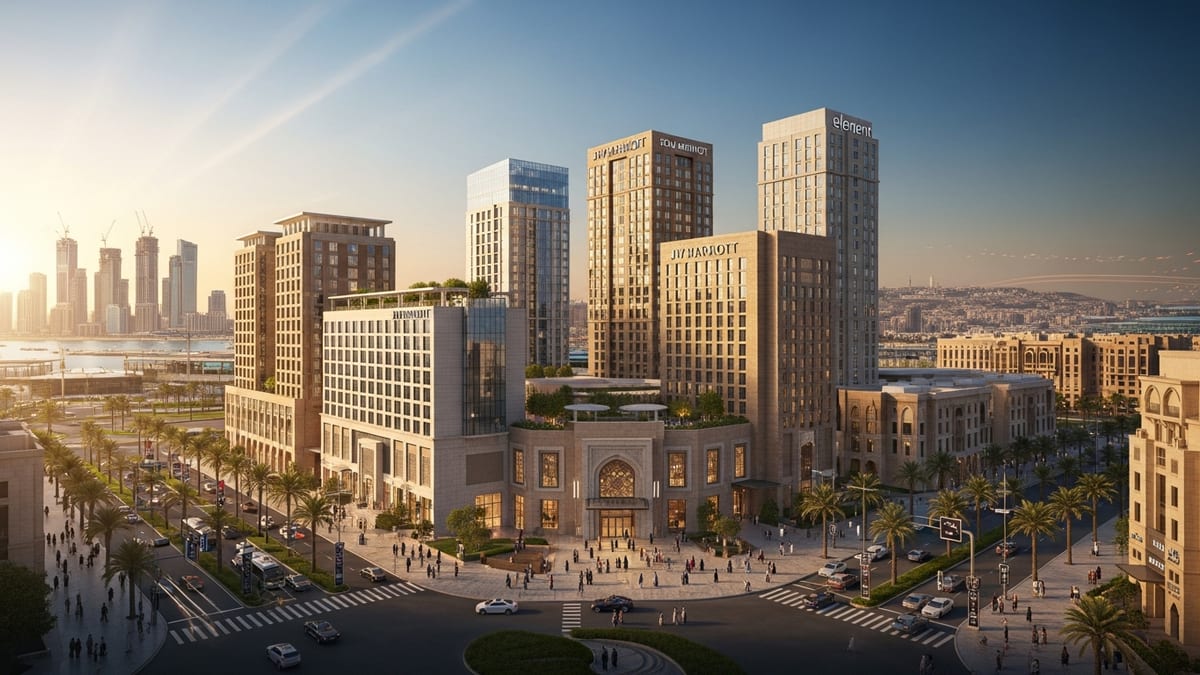
In parallel, accommodation supply in the city has grown rapidly. Ministry reporting for 2025 referenced more than 500 licensed hospitality facilities in Madinah, with thousands of new rooms added in a single year as global brands and local investors accelerated pipeline projects. Large scale developments such as the Rua Al Madinah urban regeneration initiative, planned around the Prophet’s Mosque, are expected to further increase capacity and diversify lodging categories through 2030.
Market watchers suggest that the convergence of high occupancy, rising room rates and ongoing construction activity positions Madinah in a similar league to Makkah and Jeddah in terms of tourism fundamentals. While Makkah continues to draw the highest volumes of domestic visitors overall, Madinah’s rapid catch up is reshaping how domestic travelers distribute their time and spending between the two holy cities.
Makkah and Jeddah Remain Pillars of Saudi Domestic Tourism
Even as Madinah gains prominence, Makkah and Jeddah remain the primary anchors of Saudi Arabia’s domestic tourism landscape. Statistical reports covering 2024 show that Makkah Province attracted the largest share of domestic tourist trips nationwide, underscoring the enduring pull of Umrah, year round religious visits and family oriented travel.
Jeddah continues to consolidate its role as the Red Sea gateway for both domestic and international visitors. Official tourism statistics for 2024 placed Jeddah governorate second nationally in terms of domestic visitor share, supported by its airport hub status, seafront leisure districts and growing calendar of concerts, festivals and sports events. Improvements to Jeddah’s waterfront, Corniche and historic district have further diversified its appeal for short breaks and weekend stays.
These coastal and holy city hubs have also benefited from large scale infrastructure upgrades in recent years, ranging from airport expansions and rail links to new roads and urban public spaces. Travel industry commentary credits such investments with helping to manage rising traffic during peak religious seasons while also making off peak domestic travel more attractive for residents from across the Kingdom’s regions.
As a result, Makkah, Jeddah and Madinah now form a powerful triangle of high performing destinations that together capture a substantial share of the 2026 domestic tourism surge. Many travelers are combining stays in at least two of these cities within a single trip, whether for religious observance, medical tourism, shopping or family gatherings.
Vision 2030 Projects and Events Extend the Tourism Map
The historic rise in domestic trips is taking place alongside the rollout of Saudi Arabia’s Vision 2030 tourism portfolio, which is broadening the country’s visitor offering far beyond its traditional centers. Coastal megaprojects on the Red Sea, including flagship island and resort developments, are moving from construction into early operation, with new luxury and mid market properties opening through 2025 and 2026.
In February 2026, one of the Red Sea destinations received destination wide verification from an international hospitality rating organization, a milestone that industry commentators regard as a signal of maturity for the nascent resort cluster. This recognition is expected to raise the profile of Saudi coastal tourism domestically, encouraging residents to substitute or complement overseas beach trips with holidays inside the Kingdom.
Event led tourism continues to play a complementary role. Entertainment seasons in Riyadh and other cities have previously demonstrated their capacity to generate millions of visits within a matter of weeks, boosting hotel occupancy and air traffic between regions. Analysts anticipate that as newer cultural, sports and leisure events spread to additional cities, domestic travelers will be more inclined to explore lesser known destinations beyond the traditional holy and coastal hubs.
Sector research notes that government and private sector investment in tourism infrastructure, transport connectivity and hospitality training is designed not only to attract foreign visitors but also to retain local spending that might otherwise go abroad. The strong first quarter figures for 2026 suggest that this objective is gaining traction, with more residents choosing Saudi destinations for both short breaks and longer holidays.
Outlook: Domestic Momentum Sets the Pace for Wider Growth
Tourism consultancies and multilateral organizations have repeatedly identified Saudi Arabia as one of the world’s fastest growing tourism economies, with expectations of continued expansion in the years leading to 2030. Forecasts released in recent sector reports project the tourism industry to contribute several hundred billion riyals to national GDP by the middle of the decade and support millions of jobs across hospitality, transport and entertainment.
The performance of the domestic segment in early 2026 will be closely watched as an indicator of how resilient this growth path may prove in a more competitive global travel market. The ability of cities like Madinah, Makkah and Jeddah to maintain high occupancy while absorbing additional room supply will be particularly important for investor confidence and for the pace at which new projects move from planning to completion.
Publicly available information shows that sector stakeholders are placing emphasis on diversifying the range of products available to domestic travelers, from budget friendly stays and family resorts to cultural tours and nature escapes. If current trends persist, Saudi residents are likely to remain a foundational pillar of the Kingdom’s tourism economy, even as international arrivals continue to climb.
For now, the first quarter of 2026 stands out as a milestone in the Kingdom’s travel story. Nearly 29 million domestic trips in just three months, underpinned by Madinah’s rapid ascent alongside Makkah and Jeddah, point to a tourism landscape that is not only larger than before but also more geographically balanced and seasonally resilient than at any point in its recent history.