


More news on this day
Travelers across Germany and wider Europe are facing fresh disruption as around 20 short notice flight cancellations at major German hubs ripple through schedules at Air Canada, Icelandair, Lufthansa, British Airways, Air France and other carriers, interrupting key routes linking Frankfurt, Berlin, Hamburg, Munich, Düsseldorf and Cologne Bonn with the rest of the continent.
Get the latest news straight to your inbox!
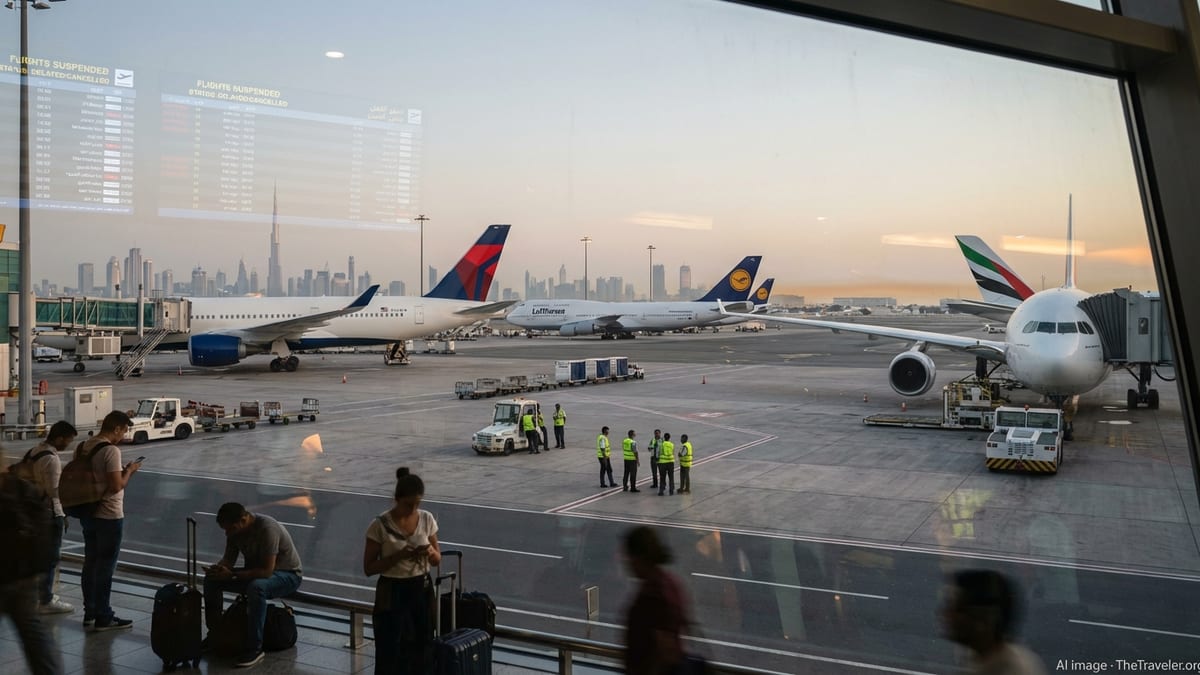
Fresh Wave of Cancellations Hits German Hubs
Publicly available disruption trackers and aviation data from late May 2026 indicate that a new cluster of cancellations has emerged across Germany’s busiest airports, with around 20 flights pulled from schedules in a single operating window. The affected services are concentrated at Frankfurt, Berlin Brandenburg, Munich, Hamburg, Düsseldorf and Cologne Bonn, airports that collectively serve as the backbone of Germany’s domestic and European connectivity.
The latest cancellations are cutting into already fragile spring schedules, which have been under pressure from successive rounds of industrial action, staffing constraints and broader capacity adjustments. Earlier weeks in March and April saw large-scale cancellations tied to strikes at Lufthansa and related operators, and the network remains sensitive to further operational shocks.
Although the newest disruption is numerically far smaller than the hundreds of flights lost during recent strike days, the impact is magnified by the strategic role of these hubs. Many of the canceled services are feeder flights that connect long haul passengers onto intra-European legs, turning a single dropped sector into missed onward journeys across multiple countries.
Reports from passenger forums and schedule-monitoring sites show that cancellations are not confined to one carrier or alliance. Instead, they are spread across a mix of German and foreign airlines, with major flag carriers forced to trim or consolidate individual rotations as they adjust to short term operational constraints.
Flag Carriers and Codeshares Caught in the Crossfire
The disruption is most visible at Frankfurt and Munich, where Lufthansa operates its principal hubs and underpins extensive codeshare activity with partners such as Air Canada and United Airlines. When a Lufthansa-operated sector is canceled between German cities or to nearby European capitals, the impact cascades to ticketed passengers on partner airlines whose flight numbers are tied to the same aircraft.
Air Canada is among the non-European carriers most exposed to the current pattern of changes, given the heavy use of codeshares on Lufthansa-operated European feeder routes serving transatlantic passengers. Public data on current schedules and traveler accounts suggests that some Canada-bound itineraries are being reassembled with new routings via alternative European hubs or later connections, increasing total journey times and tightening minimum connection windows.
Other European flag carriers are also being drawn into the disruption. British Airways and Air France, which maintain dense networks from London Heathrow and Paris Charles de Gaulle into German cities including Frankfurt, Berlin and Munich, are seeing pockets of short notice adjustments. In several cases, passengers whose original segments within Germany have been dropped report being shifted to itineraries that route them via London or Paris instead of connecting through a German hub.
Icelandair, which relies on its Reykjavik hub to bridge North America and mainland Europe, has a smaller footprint in Germany than the largest alliance members but is sensitive to any instability in German feeder traffic. When German domestic or regional links are cut, some travelers with Icelandair transatlantic connections are finding themselves rebooked through alternative gateways or onto different operating days.
Key Routes and Cities Most Affected
Frankfurt remains the focal point of the disruption, both because of its size and its role as Germany’s primary long haul gateway. Many of the cancellations being reported involve high frequency routes linking Frankfurt to Berlin, Hamburg, Munich, Düsseldorf and Cologne Bonn, as well as onward services into major European capitals such as London and Paris. The loss of even a small number of rotations on these corridors can create knock-on delays and bottlenecks as airlines attempt to consolidate passengers onto remaining flights.
Berlin Brandenburg is seeing a smaller but still notable share of cancellations, particularly on routes that connect the German capital to other domestic hubs and secondary European cities. Travelers have reported instances where short haul flights from Berlin have been pulled while long haul or higher yielding routes are preserved, a pattern that reflects the commercial priority many airlines are placing on intercontinental services during constrained periods.
Further north, Hamburg is affected mainly through domestic and near-European sectors that funnel traffic into Frankfurt and Munich. Since these flights frequently act as the first leg of longer journeys, their cancellation leaves travelers with limited same day alternatives, especially when remaining seats on later departures are already heavily booked.
Düsseldorf and Cologne Bonn, two of the key airports in western Germany, are bearing additional pressure as airlines redistribute capacity away from weaker-performing regional segments. Publicly available schedule data for the current season shows that links from these airports to major hubs, including Frankfurt and Munich, have already seen trimming and retiming in recent months, leaving schedules more vulnerable when additional cancellations occur.
Ongoing Strikes and Capacity Cuts Shape the Backdrop
The latest wave of cancellations comes against a backdrop of repeated industrial action in Germany’s aviation sector in 2026. Earlier this year, strikes by pilot and cabin crew unions prompted Lufthansa and its affiliates to cancel hundreds of flights across Frankfurt and Munich over several days, stranding tens of thousands of passengers and forcing widespread rebooking across Europe. Those stoppages have left airlines with limited slack in their networks and crews.
Operational reports and aviation industry analyses for the spring season describe a system still recalibrating after those strike episodes. To stabilize timetables and reduce last minute disruption, Lufthansa and other operators have been paring back some frequencies, pulling individual aircraft from service, and rationalizing their short haul networks. While such moves are meant to create more reliable schedules, they also mean there are fewer spare flights available when irregular operations occur.
Other factors continue to weigh on reliability, including air traffic control constraints in neighboring regions, tight staffing in ground handling, and seasonal weather volatility. Even when Germany’s skies are clear, knock-on effects from airspace restrictions or staff shortages in other European countries can force last minute changes to aircraft rotations that begin or end at German airports.
A combination of these elements appears to be feeding into the current series of cancellations, which present as scattered but persistent cuts rather than a single headline-grabbing shutdown. For passengers, the practical effect is similar: a need to navigate rebookings, rerouting and, in some cases, overnight stays.
What Passengers Are Experiencing on the Ground
Accounts shared on traveler forums and social platforms in recent days describe a patchwork of experiences for those caught up in cancellations at German airports. Some passengers receive automated rebooking notifications that place them on later Lufthansa services or alternative carriers such as British Airways, Air France or Icelandair, often with different connection points. Others report being rebooked only on a downline sector and instructed to arrange their own transport to a hub city after the original feeder flight is canceled.
These reports suggest that responsiveness varies widely depending on the airline, booking channel and timing. Travelers who act quickly through mobile apps or online customer service tools often secure same day alternatives, while those who wait or rely on airport desks may face longer queues and more limited options. Several passengers connecting from regional German cities into Frankfurt or Munich have described having to piece together their own domestic positioning flights when codeshare segments were withdrawn.
Consumer rights organizations and specialist claims firms continue to highlight that many cancellations within the European Union can trigger compensation and assistance obligations for airlines, particularly when caused by staffing or operational decisions rather than external factors such as severe weather. Passengers are being encouraged, in public guidance and media coverage, to keep documentation of delays and cancellations and to check whether their disrupted flights fall under applicable compensation rules.
For now, schedules for the coming weeks remain in flux as airlines update their timetables day by day. Travelers booked on services operated by or in partnership with Air Canada, Icelandair, Lufthansa, British Airways, Air France and other major carriers through German hubs are being advised in public travel alerts and media coverage to monitor their bookings closely, verify departure status before heading to the airport, and be prepared for short notice changes to routing or departure time.