


Václav Havel Airport Prague is the main international gateway to the Czech capital and the country’s busiest airport. For a first-time visitor, the layout of two main terminals, new trolleybus links, changing lounge access rules and a mix of official and private transport options can feel confusing. This guide walks you through the airport step by step, from landing and clearing formalities to getting into the city, choosing a lounge, finding a nearby hotel and navigating parking, so you can arrive prepared instead of overwhelmed.
Get the latest updates straight to your inbox!
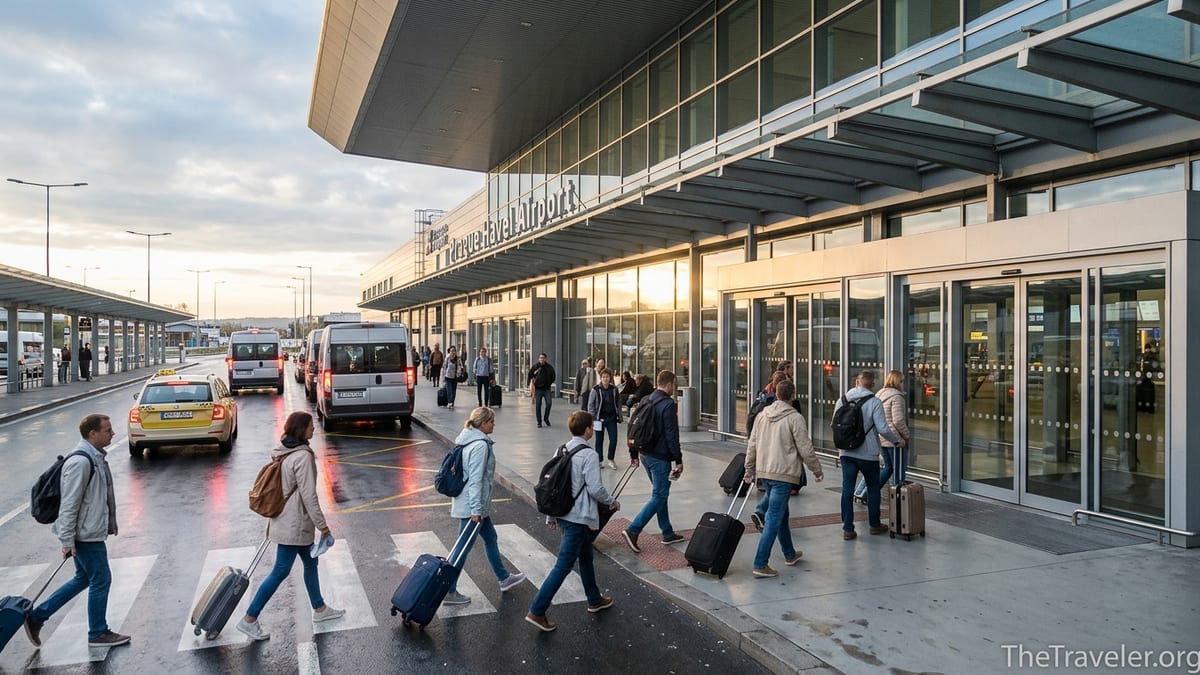
Understanding Prague’s Airport and Terminals
Prague’s Václav Havel Airport (code PRG) sits about 15 to 17 kilometers west of the historic center, in the Ruzyně district. For most international visitors it is the only airport they will use in the Czech Republic. The airport has two main passenger terminals that sit within a few minutes’ walk of each other, plus a small Terminal 3 used for private and special flights. First-time travelers mainly need to understand the split between Terminal 1 and Terminal 2, as this determines where you arrive, depart and which transport stop or lounge you use.
Terminal 1 serves flights to and from non-Schengen destinations. This includes long-haul services and routes from the United Kingdom, North America, the Middle East and many parts of Asia. If you are flying from cities such as London, Dublin, New York, Dubai or Doha, you will usually arrive and depart through Terminal 1. Passport control takes place here, so queues can be longer at peak times when multiple intercontinental flights arrive close together.
Terminal 2 handles flights within the Schengen Area, which covers most of continental Europe. If you are arriving from destinations like Paris, Amsterdam, Rome or Munich, you will generally use Terminal 2 and will not pass full passport control on arrival, which often makes the process slightly quicker. Both terminals have separate arrival halls, but they are close enough that you can walk between them in roughly 5 to 10 minutes along a covered outside walkway, a useful detail if you are meeting friends or connecting between airlines on separate tickets.
Inside, each terminal has its own check-in island areas, security lanes, shops and restaurants. You will find similar facilities in both: currency exchange booths, ATMs of major Czech banks, mobile operators selling SIM cards, and small supermarkets for last-minute snacks. English is widely spoken at information desks. For a smoother first visit, it is worth checking your ticket to confirm the correct terminal in advance and then following the large “Terminal 1” or “Terminal 2” signs on arrival.
Arrivals: From Landing to the City Center
On landing, aircraft usually park at contact gates with jet bridges, though remote stands with bus transfers are common during busy hours. After you disembark, follow the yellow “Arrivals” signs. At Terminal 1 you will pass through passport control before collecting your baggage, while at Terminal 2 you usually walk straight to the baggage claim hall. Baggage belts are clearly numbered, and overhead displays show the flight number and origin. If your luggage is delayed, each terminal has a dedicated lost and found office near the carousels where airline ground handlers can file a report.
Customs in Prague is generally straightforward. After you collect your bag, you walk through either the green channel if you have nothing to declare or the red channel if carrying restricted goods. Random checks are possible but not frequent. As you step into the public arrivals hall, you will see currency exchange counters and ATMs. ATMs from major Czech banks are usually preferable to currency kiosks, which may offer less favorable rates. The arrivals halls also have information counters where staff can explain current public transport options and provide free city maps.
If you plan to use public transport, one of the first useful stops in the arrivals area is the Prague Public Transit (PID) ticket counter or the orange ticket machines. Here you can buy a 30- or 90-minute ticket or longer passes that cover the entire integrated network, including the airport trolleybus and metro. For example, many travelers purchase a 90-minute ticket which is enough to get from the airport to central districts like Staroměstská or Můstek, even with a transfer from trolleybus to metro. Machines can be switched to English and accept contactless bank cards, which means you do not need local cash immediately.
If someone is meeting you, both terminals have clearly marked meeting points in the arrivals halls. Real-time arrival boards show which flights have landed and when bags are being delivered. Because Terminal 1 and Terminal 2 are a short walk apart, a practical strategy for families arriving on different flights is to agree in advance to meet at a single terminal, usually Terminal 2, and then follow the pedestrian signs between the buildings after exiting customs.
Departures, Check-in and Security
For departures, airlines operating out of Prague typically recommend arriving at least two hours ahead for European flights and around three hours for long-haul routes, particularly at busy times such as Friday evenings or holiday peaks. On arrival at the correct terminal, you will find rows of check-in desks divided into islands. Overhead displays list airlines and flight numbers above each island. Many carriers, including large European and Gulf airlines, offer online check-in, but you may still need to drop bags or have documents checked for destinations that require visas or additional screening.
After check-in and any necessary document checks, you proceed to security control. At Terminal 2, passengers can use a paid Fast Track lane that allows an expedited security screening experience. This is particularly valuable during morning rush hours when many flights to business hubs depart. Families with small children will find special lanes with extra space for strollers and liquids, and security staff are accustomed to explaining the tray process in English. Liquids are still subject to the usual restrictions, so packing toiletries in a transparent plastic bag remains wise.
Once through security, the departure areas open into airside shopping and dining zones. In both terminals you will find duty-free shops with liquor, cosmetics and local Czech products such as Becherovka herbal liqueur and spa wafers, as well as international fashion and electronics stores. Food options range from international chains selling coffee and sandwiches to local-style cafés serving open-face sandwiches and simple hot dishes. Prices are typically higher than in the city, so many travelers opt for a light snack rather than a full meal before boarding.
Boarding gates are grouped by concourses and are within a manageable walk from security. Information screens are clear and bilingual, and staff usually announce boarding in both Czech and English. Passengers with lounge access or business class tickets often head to lounges at this stage; otherwise, there are standard seating areas with power outlets and free Wi‑Fi. If you are connecting on separate tickets, remember that there is no automatic airside transfer system; you usually need to exit to arrivals and check in again, so plan sufficient buffer time.
Getting Between the Airport and Central Prague
Public transport is one of the most popular and cost-effective ways to travel between Prague Airport and the city. A frequent trolleybus, currently numbered 59, links both Terminal 1 and Terminal 2 to the Nádraží Veleslavín metro station on Line A. The ride typically takes about 15 to 20 minutes in normal traffic. From Nádraží Veleslavín, you can continue by metro to central stops such as Malostranská for Lesser Town, Staroměstská for Old Town or Můstek for Wenceslas Square. A single integrated ticket covers both segments, so you only validate it once at the airport stop or in the vehicle.
Another widely used option is the Airport Express bus service that runs between Terminal 1 and Praha hlavní nádraží, the city’s main railway station. This service is convenient if you have a train connection further into the Czech Republic or to neighboring countries such as Germany, Austria or Slovakia. Travel time to the station varies with traffic but is often around 35 to 45 minutes. Tickets can typically be bought from the driver or at designated counters at the station. Because this route is designed for air-rail connections, luggage space is generous compared with regular city buses.
Several private shuttle operators and shared transfer services also operate from outside the arrivals halls. These range from pre-booked minibuses that drop passengers at major hotels to door-to-door ride services. Costs can vary significantly, but a shared minibus into central Prague may cost roughly the same as two or three public transport tickets, making it a reasonable option for small groups with heavy luggage. When booking, always confirm the pickup point, which is usually marked as a specific exit door number at your terminal.
Taxis and app-based ride services are widely available at Prague Airport, but first-time visitors should take simple precautions to avoid overpaying. Official taxi stands are signposted outside the terminals and usually display estimated fares to key city districts. For example, a metered trip to the Old Town or Wenceslas Square often comes to a moderate flat-style amount depending on traffic. Many travelers now prefer ride-hailing apps, which provide a clear price estimate before pickup. Regardless of the option, it is wise to avoid unsolicited drivers inside the terminal and to ensure the taxi meter is running or the app confirms your ride before you leave the curb.
Lounges, Hotels and Sleeping at the Airport
For passengers with long layovers or early-morning departures, Prague Airport offers several lounges with varying access rules. In Terminal 2, popular options include the Erste Premier Lounge and the VISA-branded lounge, both located airside and serving Schengen flights. In Terminal 1, an Erste Premier lounge covers many non-Schengen departures. These lounges typically offer comfortable seating, Wi‑Fi, hot and cold buffets, alcoholic and soft drinks, newspapers, showers in some cases and quiet work areas. Access may be granted through business class tickets, elite frequent flyer status, or paid entry at the door, and many are connected to international lounge networks such as Priority Pass or LoungeKey, although specific card partnerships can change over time.
Recent changes in bank-card lounge access are particularly relevant for travelers relying on premium payment cards from European banks. For example, some banks have announced that certain Mastercard-branded cards will no longer include free access to Prague’s formerly named Mastercard Lounge, and cardholders are being redirected to other arrangements. Because of this, it is essential to check the current benefits in your bank’s mobile app or on its website shortly before travel, rather than assuming previous lounge access still applies. As a backup, consider budgeting for one-time paid entry if you know you will want a quiet place to work or rest.
If you need to sleep at the airport or stay very close by, several options exist. Inside the terminal complex, a small airside hotel known under the AeroRooms brand offers rooms directly within the public area of the terminals. These rooms are useful for very early departures, overnight layovers with an early connection, or families who prefer to stay within walking distance of check-in. Standard city hotels and international chains are clustered just outside the airport area, often within a 5- to 10-minute shuttle ride or a short taxi journey. Many of these properties run their own free shuttle buses that pick up guests from the designated hotel shuttle bay outside arrivals.
Sleeping directly in the terminal overnight is generally possible but not especially comfortable. Seating is mostly individual chairs rather than padded benches, and lighting remains bright for security reasons. Travelers who choose to stay airside during a long overnight layover commonly bring neck pillows and extra layers, as temperatures can feel cool in the early morning. If your budget allows, a nearby airport hotel usually offers a much better rest before an early flight than trying to sleep in the gate area.
Parking, Car Rentals and Meeting Arriving Passengers
For those arriving by car, Prague Airport offers several official car parks under the AeroParking brand, as well as private competitors in the surrounding area. Closest to the terminals are short-term parking facilities, often signed as P1 or P2, which are suitable for quick drop-offs or for picking up arriving passengers. These structured car parks are directly opposite the terminals and connected by covered walkways. Pricing here is higher, especially beyond the first tens of minutes, but the convenience is considerable if you are assisting someone with heavy luggage or mobility issues.
For longer trips, multi-day car parks such as larger covered garages and open-air lots are available slightly further from the terminal entrances but still within walking distance or a short shuttle ride. Booking in advance online typically provides noticeable discounts compared with drive-up rates and sometimes includes extras like valet service or guaranteed covered spaces. As an example, families going on a week-long holiday from Prague often reserve a space in a long-stay garage several weeks in advance, securing a more predictable price and avoiding stress on departure day when short-term lots may be full.
In addition to official airport parking, private off-airport parking providers operate nearby fenced lots with 24-hour security and regular shuttle transfers to the terminals. These services are popular with price-conscious travelers on longer trips. A typical experience involves driving to the private lot, checking your car in at a small office, then boarding a dedicated shuttle van that brings you directly to the departures curb. On your return, you call the provider or follow instructions in an app to be picked up and brought back to your car. Conditions and service levels vary, so reading recent reviews is important before committing to a reservation.
Car rental desks from major international brands and local companies are located in a dedicated area between the terminals in the public zone. After clearing arrivals, you follow signs for “Car Rental” and complete paperwork at the counter, then pick up the car from a nearby parking structure. Because Czech roads are well signposted and Prague’s ring road system is comprehensive, many visitors choose to rent a car when continuing to regions such as South Bohemia or Moravia. However, driving into the historic city center is not recommended for first-timers due to narrow streets, tram lines and limited parking, so a smart strategy is to rely on public transport while in central Prague and only use a car for onward regional travel.
Essential Tips for First-Time Travelers
A bit of preparation goes a long way at Prague Airport. One of the most practical tips is to decide on your route into the city before you land. For solo travelers or couples with manageable luggage arriving during the day, the trolleybus 59 plus metro combination is usually the best balance of price and convenience. For example, you might step out of Terminal 2, buy a 90-minute ticket at the machine using your contactless card, board the next trolleybus 59 to Nádraží Veleslavín, then continue on Line A to Staroměstská for Old Town, all within a single ticket’s validity. If you are arriving late at night with children or several heavy suitcases, budgeting for a taxi or pre-booked car can be worth the extra cost.
Another key tip is to be cautious around currency exchange services and unofficial transport offers. At the airport, prioritize ATMs from major Czech banks for withdrawing crowns and use official public transport ticket machines or staffed counters. If someone approaches you near the ticket machines offering help while steering you toward an alternative taxi or shuttle, it is fine to politely decline and instead focus on the on-screen English instructions. Official airport taxis queue at clearly marked ranks, and ride-hailing drivers usually meet passengers at designated pickup zones identified in the app.
For security and immigration, having documents ready and understanding the Schengen versus non-Schengen split can reduce last-minute stress. Passengers on non-Schengen flights should allow extra time for passport control, especially during busy periods when several flights arrive or depart close together. If you are connecting between a Schengen and a non-Schengen flight on separate tickets, often the simplest method is to fully exit through arrivals at one terminal and then walk outside to the other terminal, following the large overhead signs. This avoids confusion inside the building and gives you a chance to re-check your gate and security requirements.
Finally, use the airport’s services to your advantage. Free Wi‑Fi allows you to confirm hotel reservations, check public transport schedules or order ride-hailing services without using mobile data. Information desks can advise on current construction or temporary changes, such as diversions affecting buses or altered check-in zones. Families can look out for children’s play areas in the departure zones, while travelers with reduced mobility can pre-book assistance that includes help from check-in through security and up to the aircraft door. All of these small actions help turn an unfamiliar hub into a manageable and even pleasant gateway to one of Europe’s most beautiful cities.
FAQ
Q1. Which terminal will I use when flying into Prague?
Most non-Schengen flights, such as those from the United Kingdom, North America or the Middle East, use Terminal 1, while flights from most EU Schengen countries use Terminal 2. Your ticket or airline confirmation will list the exact terminal.
Q2. How do I get from Prague Airport to the city center by public transport?
The most common route is trolleybus 59 from outside Terminals 1 and 2 to Nádraží Veleslavín metro station, then metro Line A to central stops like Malostranská, Staroměstská or Můstek, all on a single integrated ticket.
Q3. How long does it take to reach central Prague from the airport?
In normal traffic, public transport via trolleybus and metro usually takes around 35 to 45 minutes to reach central stops. Taxis or ride-hailing services can take a similar time, although rush-hour congestion may extend the journey.
Q4. Are taxis from Prague Airport reliable and how much do they cost?
Official taxis from the marked ranks are generally reliable. Fares to central areas such as Old Town or Wenceslas Square are typically in a moderate range depending on traffic. Always confirm that the meter is running or that a ride-hailing app has shown a fixed price before departure.
Q5. Does Prague Airport have lounges I can pay to enter?
Yes, several lounges in both terminals offer paid entry, subject to space. You can usually purchase access at the lounge reception even without elite status or a business class ticket. Many lounges also accept memberships like Priority Pass, though bank card partnerships can change, so check current conditions before travel.
Q6. Is it possible to sleep at Prague Airport overnight?
Staying overnight in the terminal is possible but basic, with individual seats and bright lighting. For better rest, many travelers book a room at the on-site AeroRooms hotel or at nearby airport hotels offering shuttle transfers to the terminals.
Q7. What are my options if I am picking someone up by car?
For quick pick-ups, you can use short-term parking structures close to the terminals, which allow you to park for a limited time within a short walk of arrivals. For longer waits, consider slightly more distant car parks that offer better rates or use private off-airport parking with a shuttle if you are combining pickup with your own trip.
Q8. Where can I buy public transport tickets at the airport?
Ticket machines and staffed counters for Prague’s integrated transport system are located in the arrivals halls and near bus and trolleybus stops. Machines can be switched to English and accept coins, banknotes in local currency and usually contactless bank cards.
Q9. Is Wi‑Fi available at Prague Airport?
Yes, free Wi‑Fi is available throughout the terminals. You typically connect to the airport network, accept the terms, and then browse without needing a password, which is handy for checking directions, hotel bookings or ride services.
Q10. How early should I arrive at Prague Airport before my flight?
For flights within Europe, arriving around two hours before departure is usually sufficient. For long-haul or non-Schengen flights, or during peak holiday periods, aim for about three hours to allow for check-in, security and any passport control queues.