


Santorini and Mykonos might dominate Instagram, but they also dominate Greek travel budgets. In peak summer, it is common to see simple double rooms on these islands starting around 200 to 300 euros per night, with cocktails at 18 euros and basic beach beds selling for the price of a decent dinner elsewhere. The good news is that the rest of Greece offers equally beautiful islands, often at a fraction of the cost, if you know where to look and how to plan.
Get the latest updates straight to your inbox!
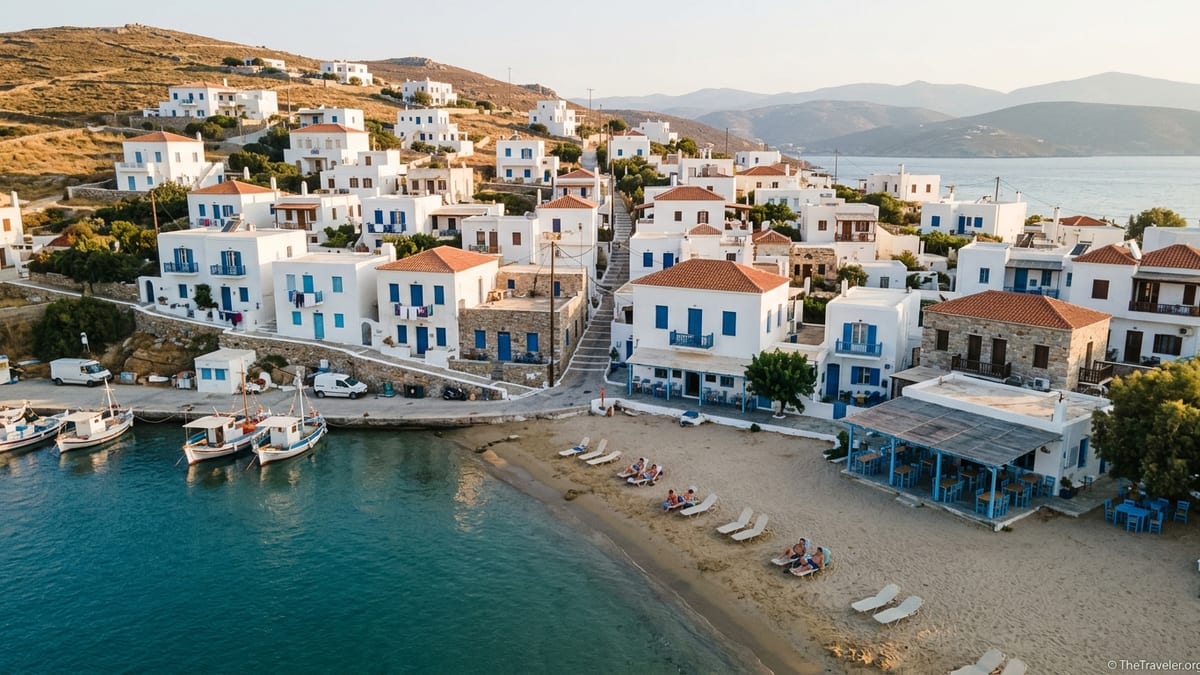
Why Some Greek Islands Are Much Cheaper Than Others
Prices in Greece vary dramatically from island to island. Santorini and Mykonos attract cruise ships, luxury brands, and big-spending visitors, which pushes up the cost of everything from hotel rooms to sun loungers. On these islands, a mid-range hotel in August can easily cost 250 to 400 euros per night, while a simple seafront taverna meal with wine for two might come to 60 to 80 euros. By contrast, on quieter islands like Naxos, Samos, Ikaria, or Serifos, travelers routinely report paying 70 to 120 euros for a pleasant double room in high summer and 25 to 40 euros for a generous dinner for two at a family-run taverna.
Another factor is size and supply. Larger islands such as Crete, Lesvos, and Rhodes have more year-round residents and more competition among hotels, apartments, and restaurants. This helps keep prices lower, especially outside August. Smaller, fashionable islands with limited beds, like Santorini’s caldera villages or Mykonos Town, can raise prices because demand exceeds supply. Lesser-known islands in the Cyclades, Dodecanese, and North Aegean still receive far fewer international visitors, so their economies rely more on domestic tourism and regulars who expect fair, local prices.
Transport patterns matter too. Islands with direct international flights or fast-ferry links to Athens see big summer surges. Remote islands, served mainly by slower conventional ferries from Piraeus, often attract a more budget-conscious crowd. For example, a family of four traveling in August from Piraeus to Syros on a conventional ferry pays a few hundred euros round trip, while a similar family journey on a high-speed vessel can easily exceed 500 euros, which shows how transport choices alone can shift your total budget.
Finally, the calendar makes a huge difference. Greece’s high season runs roughly from late June through August. Shoulder season, typically April to May and September to October, brings noticeable drops in hotel rates, better availability, and lower ferry and flight prices. Many travelers report paying around 30 to 40 percent less for the same room in May or late September compared with August, particularly outside the most famous islands.
Affordable Alternatives to Santorini
If you want whitewashed villages, sea views, and good food without Santorini prices, several islands stand out as strong alternatives. Milos is one of the best known. It has dramatic volcanic landscapes, colorful fishing villages like Klima, and beaches such as Sarakiniko that often feature in travel magazines. Yet typical guesthouses in Milos in July and early August often list around 100 to 160 euros per night for a comfortable double, noticeably less than a similar-quality room facing the caldera in Santorini, which can be two to three times that price. Boat trips around Milos, including swimming stops and a light lunch, commonly run in the 60 to 90 euros per person range, similar to Santorini excursions but set in a more relaxed, less crowded environment.
Serifos and Sifnos, two neighboring Cycladic islands, are also strong substitutes. Serifos offers quiet beaches and a hilltop Chora with classic blue-and-white architecture. In peak months, simple studios near the beach can still be found in the 70 to 110 euros range if booked ahead, and a plate of fresh grilled fish at a taverna often costs around 12 to 18 euros, with house wine by the half liter typically 4 to 6 euros. Sifnos is known for excellent food and hiking; while it has grown more popular, it remains noticeably cheaper than Santorini’s headline villages for accommodation of comparable standard.
For travelers who primarily want sunset views and Cycladic charm, consider staying in islands like Folegandros or Anafi for several nights and visiting Santorini as a day trip. In practice, that might mean paying around 80 to 130 euros per night for a room with a terrace on Folegandros in shoulder season, then splurging once on a high-speed ferry and a single evening in Oia. You get the famous caldera view without committing a whole week’s budget to one of the priciest islands in the country.
Naxos is another excellent, wallet-friendly stand-in for Santorini for many travelers. It combines a historic main town, long sandy beaches, and mountain villages. Budget-friendly hotels and studios within walking distance of Agios Georgios beach often start around 60 to 90 euros per night in June and September and 90 to 130 euros in late July and August. The island’s size means a wide range of supermarkets and bakeries, where you can buy picnic supplies or simple breakfasts for a few euros, reducing the need to eat every meal out.
Cheaper Alternatives to Mykonos for Beaches and Nightlife
Mykonos is known for design hotels, upscale beach clubs, and high-end nightlife. In summer it is not unusual to pay 250 to 500 euros per night for a standard double room near the main town, while a sunbed at a fashionable beach club can cost 40 to 100 euros per person, with cocktails starting around 18 to 20 euros. If you like beaches and a bit of nightlife but not those prices, several islands provide a more accessible experience.
Paros is the most obvious alternative. It receives regular ferries and has charming towns like Naoussa and Parikia with plenty of bars and restaurants. Standard double rooms in guesthouses or small hotels in July often fall in the 90 to 150 euros range, considerably less than similar properties on Mykonos. An evening out in Naoussa, with shared meze plates, local wine, and a couple of drinks at a bar, might cost a couple around 50 to 70 euros, compared with easily over 100 euros for a similar night on Mykonos when you factor in cover charges at clubs.
Ios is another strong candidate, especially for younger travelers. Historically known for party scenes, it now combines that reputation with low to mid-range prices. Budget hotels and simple studios in and around Ios Chora can be found between 50 and 100 euros in peak months, and many bars offer happy hour deals where beers cost about 3 to 4 euros and simple mixed drinks 6 to 8 euros. Beach life is more casual, with lower fees for sunbeds and plenty of inexpensive snack bars near the sand.
For those who want a more laid-back vibe, islands like Tinos and Syros offer local nightlife without the flash. In Hermoupolis, the main town on Syros, you can drink in lively squares where a glass of house wine might cost 3 to 4 euros and a simple ouzo with a plate of small appetizers 6 to 8 euros. Rooms overlooking the harbor often price around 70 to 120 euros in summer if booked in advance. On Tinos, many visitors stay in family-run guesthouses in or near Chora, where double rooms in high season often remain below 120 euros, and dinner in a traditional taverna with shared dishes and dessert can fall under 25 euros per person.
Realistic Costs: Hotels, Ferries, and Food on Cheaper Islands
Understanding typical price ranges helps you build a realistic budget. For accommodation on cheaper Greek islands, a modest but clean double room with air conditioning and private bathroom in July or August often costs around 60 to 120 euros per night, depending on how early you book and how close you are to the beach or town center. In shoulder season, that same room can drop toward 40 to 80 euros. On very quiet islands or in simple inland villages, travelers sometimes report finding rooms even around 35 to 50 euros in late spring or early autumn.
Ferry costs can vary a lot by distance and speed. A conventional ferry from Piraeus to a nearby Cycladic island such as Syros or Kythnos often costs around 30 to 45 euros one way for a standard economy seat in summer. High-speed catamarans can roughly double that price on some routes. On shorter inter-island hops, tickets between neighboring islands like Paros and Naxos or Naxos and Ios often run about 10 to 25 euros each way, especially on slower vessels. Where multiple ferry companies operate the same route, checking schedules across several days can reveal cheaper sailings at off-peak hours or on less direct routes with more stops.
Food and drink is one of the easiest areas to save. On cheaper islands, a sit-down lunch at a local taverna, such as a Greek salad, a plate of grilled meat or fish, and a soft drink, often totals around 10 to 15 euros per person. A simple dinner with shared starters, mains, house wine, and maybe a dessert commonly falls between 18 and 30 euros per person outside high-end venues. Street food like souvlaki or gyros can cost as little as 3 to 5 euros, and bakeries sell fresh spanakopita or cheese pies often for under 3 euros. A cappuccino at a non-touristy cafe typically costs 3 to 4 euros, while a half liter of house wine in a taverna can be 4 to 7 euros, depending on the island and location.
Local transport also stays manageable on cheaper islands. Bus tickets within an island often cost 1.80 to 3 euros per ride. Daily scooter or small car rentals in July and August commonly start around 25 to 45 euros, sometimes higher on very popular islands. On islands with good bus networks, such as Naxos or Paros, you could spend less than 5 to 7 euros per day per person on local transport by relying mostly on buses and occasional taxis, especially if you choose accommodation within walking distance of a good beach.
Best Budget Islands by Type of Traveler
Different islands shine for different styles of budget travel. For first-time visitors who want a mix of beaches, villages, and good infrastructure without breaking the bank, Naxos and Paros are ideal. They combine relatively affordable rooms, frequent ferries, good bus networks, and plenty of dining options at local prices. Typical daily budgets including a mid-range room, two taverna meals, a couple of drinks, and simple transport often come in around 70 to 120 euros per person, especially in shoulder season.
For slow travelers and digital nomads looking to stay longer on a tighter budget, larger and less touristy islands such as Crete, Lesvos, and Samos can be very cost-effective. Monthly apartment rentals on these islands can sometimes be negotiated for prices similar to a week in a mid-range hotel on Santorini. Cooking at home using produce from local markets, where a bag full of seasonal vegetables and fruit might cost under 10 euros, brings the daily cost of food to the level of a single restaurant meal in more famous resorts. These islands also have more year-round services, making them comfortable beyond the classic summer season.
For hikers and culture enthusiasts, islands like Ikaria, Tinos, and Syros balance affordability with authenticity. Ikaria has a reputation for its relaxed pace and longevity, and reports from recent visitors suggest daily expenses around 50 to 80 euros per person are achievable, including simple accommodation, meals, and local transport. Tinos and Syros offer impressive churches, neoclassical architecture, and local festivals, along with prices closer to mainland Greece than to luxury island levels.
Travelers seeking near-empty beaches and very quiet nights might look to islands such as Serifos, Kythnos, or Skyros. These islands remain under the radar for many international visitors. Basic rooms often cost significantly less than on the marquee islands, even in August, and beach tavernas still serve hearty portions at local prices. The trade-off is that nightlife is limited, shopping is minimal, and ferry schedules may be less frequent, which suits guests who prefer to read on the beach rather than hop between bars.
How Shoulder Season Can Cut Your Costs Dramatically
Timing your trip is one of the most powerful ways to save money in Greece. The shoulder seasons of April to May and September to October offer a sweet spot between price and experience. Many hotels and guesthouses publish different seasonal rates. A room that costs 150 euros per night in late July might be listed at 90 to 110 euros in May or late September. Similarly, ferry companies sometimes introduce small seasonal discounts or cheaper midweek sailings before and after the busiest period.
Weather in shoulder season is another advantage. In May and late September, daytime temperatures on the islands often sit in the low to mid-20s Celsius, warm enough for the beach without the oppressive heat of mid-August. Sea temperatures in late May and early June are usually comfortable for swimming, and in late September they can be pleasantly warm after the summer heat. With fewer crowds, you spend less time queuing for buses, table service is faster at restaurants, and sunsets in scenic villages can be enjoyed without jostling for a spot on the street.
Travelers often report that their daily spending in shoulder season falls simply because there are fewer opportunities and pressures to splurge. Beach clubs that charge premium prices in August may be closed or operating on a lighter schedule, and high-end venues sometimes reduce hours. Supermarket prices remain steady year-round, so it becomes easier to lean on self-catering and picnics without feeling like you are missing out. Car rental firms may also offer lower rates in April, May, and October; quotes in those months can be 20 to 30 percent lower than the same vehicle in August on many islands.
There are a few trade-offs. On very small or remote islands, some accommodations, boat tours, and seasonal restaurants might not be open in early April or after mid-October. Ferry schedules can also be reduced. If you plan to travel at the very start or tail end of shoulder season, it pays to double-check opening dates and timetables and to book at least your first and last island stays in advance. For most travelers, though, visiting between early May and mid-June or in September offers the best balance of cost, weather, and choice.
Practical Money-Saving Tips on the Islands
Beyond choosing cheaper islands and shoulder season dates, small daily habits can significantly reduce your overall costs. One of the easiest is to stay slightly back from the most famous view. On any island, the premium waterfront or cliff-edge strip commands the highest prices. Staying two or three streets inland, or in a village a short bus ride from the main resort, can cut your accommodation budget by 20 to 40 percent. For example, choosing a room in a village outside a busy harbor town may cost 70 euros instead of 120 euros for a similar standard closer to the water, while still keeping you within a 10 to 15 minute walk or bus ride of the action.
Food is another major lever. Many budget travelers structure their days around one main restaurant meal. Breakfast might be a coffee and pastry from a bakery for 3 to 5 euros. Lunch could be fruit, cheese, and bread from a supermarket for under 10 euros for two people. Then dinner becomes the main taverna meal, where you can comfortably spend 20 to 30 euros per person for multiple courses and drinks. On islands where self-catering studios are common, cooking a few simple dinners with local produce can reduce that cost further, especially for families and groups.
When it comes to transport, consider whether you truly need a car every day. On islands with reliable buses serving popular beaches and villages, it can be cheaper to rent a car only for one or two days to reach remote spots and use buses the rest of the time. If you do rent, booking early and comparing local agencies against big international brands often yields lower prices. In some cases, local companies will offer discounts for cash payment or longer rentals, bringing daily rates down closer to 25 to 30 euros per day outside August.
Alcohol and beach extras are where many budgets quietly inflate. Cocktails in popular bars on fashionable islands can reach 15 to 20 euros each. On cheaper islands, you can still find simple drinks for 6 to 8 euros and local beer for 3 to 5 euros if you avoid the trendiest waterfront venues. For the beach, look for areas where locals go. Public sections without organized sunbeds are always free if you bring your own towel and umbrella. Where sunbeds are rented, prices on quieter islands sometimes range from 8 to 15 euros for two beds and an umbrella for the day, compared with 40 euros or more at high-end clubs on Mykonos and Santorini.
The Takeaway
Greece rewards travelers who look beyond the obvious. Santorini and Mykonos are beautiful, but they represent only a small slice of the country and its islands, and they carry some of the highest prices in the Mediterranean. By choosing alternatives such as Naxos, Paros, Milos, Serifos, Ikaria, Syros, or Samos, you can enjoy whitewashed villages, clear water, and excellent food at a fraction of the cost, often with friendlier crowds and a more relaxed pace.
Focusing on shoulder season, staying a street or two back from the waterfront, using slower ferries, and eating like a local in family-run tavernas will all help keep your budget under control. Practically, that can be the difference between a rushed four-night stay in one expensive resort and a two-week island-hopping trip that includes multiple islands, boat excursions, and more meals out. With thoughtful planning and realistic expectations, the cheapest Greek islands can deliver the classic Greek holiday experience without the classic price tag.
FAQ
Q1. Which Greek islands are generally the cheapest alternatives to Santorini and Mykonos?
Some of the most budget-friendly alternatives include Naxos, Paros, Milos, Serifos, Ikaria, Samos, Tinos, Syros, and Kythnos. These islands offer similar beaches, villages, and food culture to the famous destinations but with more local pricing for hotels, tavernas, and beach services.
Q2. How much should I budget per day on a cheaper Greek island?
On a cheaper island, a realistic daily budget for a mid-range traveler can fall around 70 to 120 euros per person in high season. This would typically cover a comfortable double room shared between two people, two taverna meals or a mix of restaurant and picnic food, local bus transport or occasional scooter rental, and a few drinks or small extras.
Q3. When is the best time to visit Greek islands to save money?
The shoulder seasons of April to May and September to October usually offer the best balance between lower prices and pleasant weather. Hotel rates can be noticeably lower than in July and August, ferry tickets may be easier to find at reasonable prices, and you will encounter fewer crowds at beaches and major sights.
Q4. Are ferries between the cheaper islands also affordable?
Yes, especially if you choose conventional ferries rather than high-speed vessels. Short inter-island hops often cost between about 10 and 25 euros per person one way, while longer routes from Piraeus to nearby Cycladic islands typically run in the 30 to 45 euros range for a standard seat in summer. High-speed ferries can cost significantly more but save time on busy itineraries.
Q5. Is it cheaper to fly or take the ferry from Athens?
For most nearby islands, ferries from Piraeus or Rafina are usually cheaper than flights, particularly in peak season when direct island flights attract high demand. For more distant islands like Crete or Rhodes, budget-friendly advance airfares sometimes compete with ferry prices, especially when you factor in cabin upgrades. Comparing both options for your specific dates is the best approach.
Q6. How can I save money on food and drink on the islands?
Eat your main meal at local tavernas rather than upscale waterfront restaurants, choose house wine instead of imported bottles, and use bakeries and supermarkets for breakfast and picnic lunches. Ordering shared meze plates instead of individual mains is another way to reduce costs while trying more dishes. Street food such as gyros or souvlaki remains one of the best-value meals almost everywhere in Greece.
Q7. Do I need to rent a car on budget islands?
Not always. On islands with good bus networks, such as Naxos, Paros, and Samos, you can see many main beaches and villages using public transport, which costs only a few euros per journey. Renting a car for just one or two days to explore more remote areas can be a good compromise. On very small or hilly islands with limited buses, a scooter or small car may be more practical but still represents a modest daily cost if shared.
Q8. How far in advance should I book accommodation on cheaper islands?
For July and August, booking three to four months in advance is sensible, even on cheaper islands, to secure good value rooms in convenient locations. For May, June, September, and early October, you often have more flexibility, but it is still wise to reserve your first and last nights in advance and then keep some freedom in between if you want to change islands spontaneously.
Q9. Are there hidden costs I should watch for on a tight budget?
Common hidden costs include baggage fees on domestic flights, high prices for beach club sunbeds, taxi fares when buses are infrequent, and last-minute ferry bookings at peak times. Paying attention to these extras, packing light where possible, choosing public sections of beaches, and checking bus timetables can prevent unpleasant surprises.
Q10. Can I visit Santorini or Mykonos briefly without overspending?
Yes. A popular strategy is to base yourself on a cheaper neighboring island like Naxos, Paros, or Tinos and visit Santorini or Mykonos as a day or one-night side trip. That way you pay for just one or two nights of premium accommodation and a single ferry journey to see the famous views, while keeping the bulk of your stay on islands with far lower daily costs.