


More news on this day
Malaysia Aviation Group is accelerating its regional expansion strategy across Southeast Asia as fresh joint ventures, codeshare partners and a more coordinated multi-airline network broaden travel options and strengthen Kuala Lumpur’s role as a hub for ASEAN connectivity.
Get the latest news straight to your inbox!
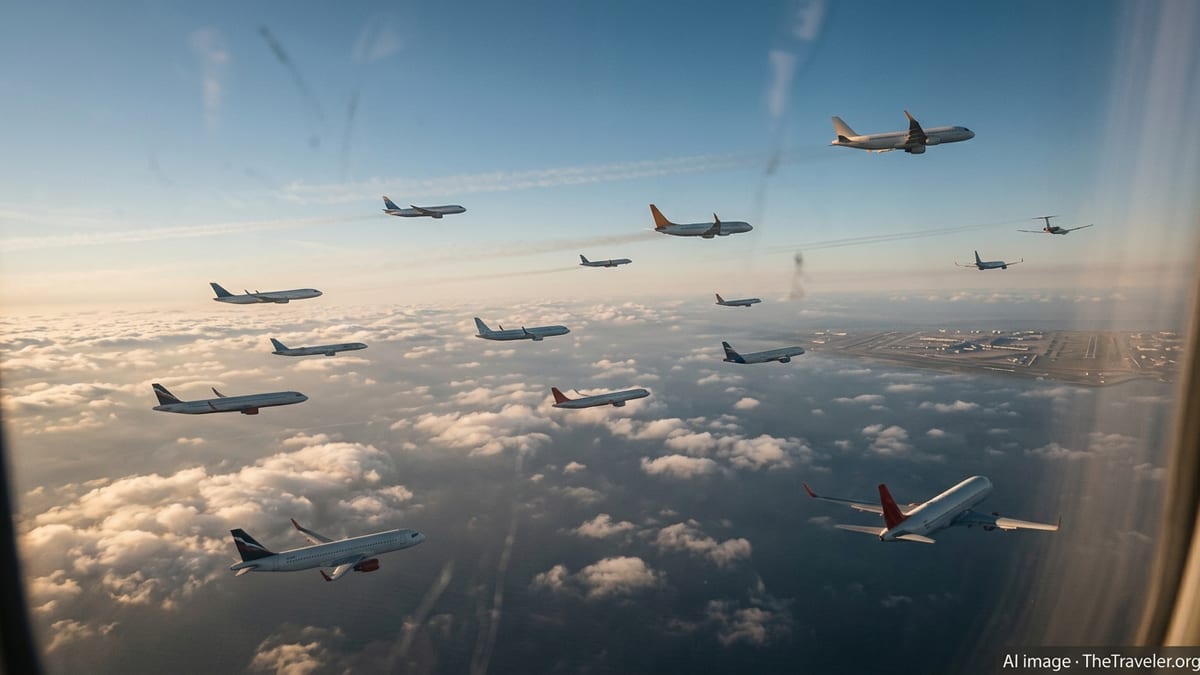
Joint Business With Singapore Airlines Anchors Regional Strategy
Publicly available information shows that Malaysia Aviation Group (MAG) has made a joint business partnership between Malaysia Airlines and Singapore Airlines one of its key levers to deepen access across ASEAN. The agreement, formally implemented in early 2026 following regulatory approvals, aligns schedules and capacity on routes between Malaysia and Singapore, with the intention of offering more frequencies and coordinated connection banks for travelers using both carriers’ networks.
According to the airlines’ published materials, the partnership builds on a progressive expansion of codeshares that began after an initial cooperation agreement in 2019. That collaboration has since extended to reciprocal frequent-flyer recognition, allowing Malaysia Airlines’ Enrich and Singapore Airlines’ KrisFlyer members to earn and redeem rewards on selected flights. By tying loyalty programmes together, the joint business is designed to encourage passengers to treat Kuala Lumpur and Singapore as interchangeable gateways for connections deeper into Southeast Asia.
Reports indicate that the joint business also positions Malaysia Airlines to compete more effectively on high-demand city pairs in the sub‑region, where low-cost carriers have historically dominated point‑to‑point traffic. With Singapore Airlines bringing strong long‑haul feed into Changi and Malaysia Airlines providing extensive coverage across secondary Malaysian and ASEAN destinations, the combined proposition aims to deliver denser connectivity and shorter transit times for regional travelers.
The broader context, as outlined in company disclosures and investor documents, is a wave of new and renewed partnerships across the Singapore Airlines Group with major Southeast Asian flag carriers. Within that landscape, Malaysia Airlines is presented as a core oneworld member in ASEAN whose aligned schedules and joint marketing with Singapore Airlines are expected to support traffic flows throughout the region rather than on a single trunk route alone.
Codeshares and Alliances Expand the ASEAN and Near-ASEAN Map
Published coverage of Malaysia Airlines’ partnership portfolio highlights how MAG is using codeshare and interline agreements to extend its reach beyond its own-operated network, particularly around ASEAN and adjacent markets. The group’s list of codeshare partners includes regional players such as Firefly, its own subsidiary carrier, alongside long-haul partners and fellow oneworld members. These arrangements allow Malaysia Airlines to place its “MH” code on flights operated by partner airlines, making one‑ticket itineraries possible to a much wider set of cities.
For Southeast Asia, publicly available partner information shows that the Firefly–Malaysia Airlines codeshare underpins domestic links within Malaysia and feeds cross‑border services to Indonesia and Singapore. Travelers can, for example, book a single itinerary that combines a Malaysia Airlines trunk sector into Kuala Lumpur International Airport with a Firefly turboprop or jet connection to smaller Malaysian cities, all under one booking reference and baggage check‑through.
Beyond the immediate ASEAN core, MAG has been reinstating and expanding codeshares that create additional entry points into the region. Recent examples include renewed cooperation with Air Mauritius and Uzbekistan Airways, which, while not ASEAN carriers, funnel traffic into Kuala Lumpur from the Indian Ocean and Central Asia. These flights are then connected onwards across Southeast Asia on Malaysia Airlines’ and Firefly’s networks, reinforcing Kuala Lumpur’s positioning as a bridge between emerging markets and ASEAN destinations.
The overall strategy, as described in corporate communications, is to blend membership in the oneworld alliance with a web of bilateral partnerships in Asia, Europe, the Middle East and Africa. This layered approach gives MAG the flexibility to route passengers through Kuala Lumpur or partner hubs depending on demand, aircraft availability and schedule fit, while maintaining a consistent customer experience through common booking channels and loyalty recognition.
Firefly and Regional Units Support Secondary ASEAN Connectivity
MAG’s strengthening of ASEAN connectivity is not limited to its mainline widebody and narrowbody operations. Publicly accessible profiles of Firefly describe the subsidiary as a regional airline focused on point‑to‑point flying, historically with a turboprop fleet and, more recently, a reintroduction of jet services on selected domestic and regional routes. Operating from both Kuala Lumpur International Airport and Subang, Firefly targets secondary cities and underserved markets that may not sustain larger mainline capacity.
Industry reporting notes that Firefly’s growth strategy since 2023 has involved taking over selected domestic services from Malaysia Airlines and opening new links that feed into the group’s broader network. Recent route announcements show an emphasis on coastal and regional centres in Peninsular and East Malaysia, with schedules timed to connect with Malaysia Airlines’ departures to key ASEAN and North Asian cities. This division of labor allows MAG to tailor aircraft size and product to each market while keeping itineraries integrated from a customer perspective.
In East Malaysia, the group has also restructured its rural and intra‑Borneo operations to maintain essential air services while preparing for future growth. Historical subsidiaries such as MASwings have been repositioned within the group structure, with publicly available information outlining plans to transition to a new regional brand and to harmonise operations more closely with Malaysia Airlines and Firefly. The aim is to ensure that communities in Sabah and Sarawak continue to enjoy reliable access to national and regional hubs, opening up smoother connections to ASEAN capitals.
By leveraging these specialised regional units, MAG increases the number of “spokes” feeding into its primary hubs. For travelers, the result is a wider choice of departure points, more one‑stop options to neighbouring countries and, in many cases, shorter travel times compared with legacy routings that previously required multiple stops or bus‑air combinations.
Network Expansion Aligns With Visit Malaysia 2026 and Tourism Goals
MAG’s alliance‑led approach is unfolding alongside a broader program of network expansion that publicly available releases link to Malaysia’s tourism ambitions and the upcoming Visit Malaysia 2026 campaign. The group has signalled plans for new routes, increased frequencies and additional charter services into key Chinese and regional markets, several of which are expected to carry onward flows into ASEAN leisure destinations popular with regional travelers.
According to the group’s historical timeline and recent announcements, Malaysia Airlines and Firefly are adding services to secondary Chinese cities and strengthening links to North Asia, while also increasing capacity into holiday destinations within Thailand, Indonesia and Vietnam. These moves are designed to capture both inbound tourism to Malaysia and sixth‑freedom traffic connecting through Kuala Lumpur and other Malaysian gateways to beaches, heritage towns and island destinations across Southeast Asia.
Additional fleet investments, including new narrowbody and widebody aircraft for Malaysia Airlines, are framed in corporate communications as necessary to support this growth. New-generation aircraft with improved fuel efficiency and range give MAG more flexibility to right‑size capacity on thinner ASEAN routes, introduce new point‑to‑point links and improve connectivity patterns without significantly raising operating costs. This, in turn, is expected to help sustain competitive fares while maintaining or improving service levels.
For regional tourism boards and travel operators, the combination of extra capacity, deeper codeshares and integrated marketing partnerships offers more tools to package multi‑country itineraries. Kuala Lumpur’s increasing role as a transfer hub within this network means that travelers can more easily combine, for example, a Malaysian city break with a resort stay in Thailand or Indonesia, using a mix of Malaysia Airlines and partner flights ticketed as a single journey.
What the Expanded Network Means for Travelers
For passengers across ASEAN and neighbouring regions, MAG’s evolving alliance strategy translates into a denser and more flexible network without the need to keep track of multiple separate bookings. A traveler in a secondary Malaysian city can use Firefly or another MAG carrier to reach Kuala Lumpur or Singapore, then board a Malaysia Airlines or partner flight onward to another ASEAN capital, all purchased as one itinerary with through‑checked baggage.
According to publicly available partner information, travelers also benefit from better alignment of schedules, which reduces layover times on popular connection flows. Frequent‑flyer earn and burn opportunities across Malaysia Airlines, Singapore Airlines and other partner carriers provide additional incentives, particularly for business travelers who fly regularly within the region and prefer to consolidate their activity within a limited set of programmes.
The risk for any multi‑carrier strategy lies in operational complexity, especially where different fleets, airport terminals and service standards intersect. MAG’s recent statements emphasise efforts to maintain operational stability while it reallocates capacity and refines schedules across Malaysia Airlines, Firefly and other units. For travelers, the key indicators will be on‑time performance, clarity of information during irregular operations and ease of rebooking when disruptions occur.
As ASEAN’s aviation market becomes more competitive and interconnected, MAG’s expanded alliances and regional strategy position it as a central player for itineraries that begin, end or connect in Malaysia. The effectiveness of this approach will be measured in how consistently travelers experience the promised seamlessness across multiple airlines, airports and countries.
Sources:
Malaysia Airlines codeshare partners overview
Malaysia Aviation Group historical milestones
Malaysia Aviation Group operational stability update
Malaysia Airlines and Singapore Airlines joint business partnership
Firefly airline profile and network focus