


More news on this day
Malaysians stranded in Jakarta after the eruption of Indonesia’s Anak Krakatau volcano are reporting return airfares up to three times higher than their original tickets, as sudden flight cancellations and a temporary shutdown of Soekarno-Hatta International Airport leave travellers scrambling for limited seats home.
Get the latest news straight to your inbox!
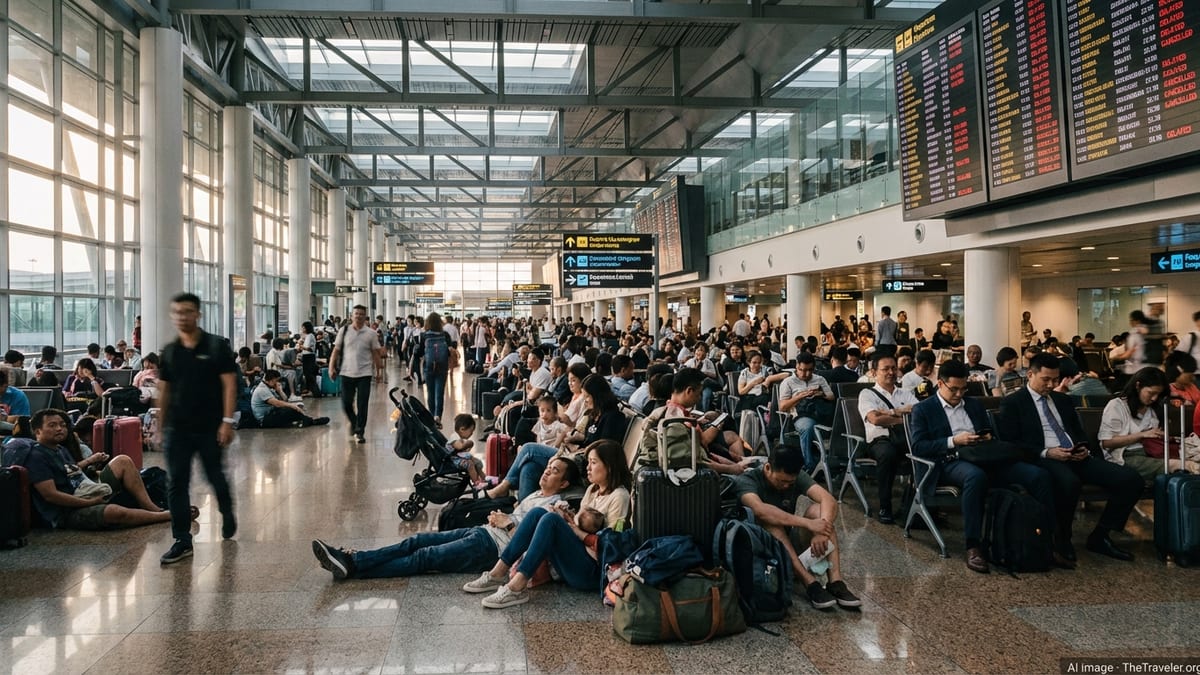
Volcanic ash closes Jakarta airport and disrupts regional routes
The current disruption began on 6 September 2026, when continuous eruptions at Mount Anak Krakatau in the Sunda Strait sent volcanic ash across key air corridors serving Jakarta. Publicly available notices from airlines indicate that ash clouds affected airspace used by flights to and from Soekarno-Hatta International Airport, one of Southeast Asia’s busiest hubs.
According to published coverage, the presence of ash prompted Indonesian authorities to temporarily close Soekarno-Hatta to ensure flight safety, halting departures and arrivals for several hours and triggering a wave of cancellations and rescheduling across multiple carriers. Regional media reports show that the closure also affected services between Jakarta and Malaysian airports including Kuala Lumpur International Airport and Penang International Airport, as well as connecting traffic to other Southeast Asian destinations.
Malaysia-based and Indonesian carriers operating the Malaysia–Jakarta corridor responded by suspending or adjusting schedules. Statements on airline news portals describe wholesale cancellations of Jakarta-bound services and advise affected passengers to monitor digital channels for revised timings, rebooking options or refunds. The sudden suspension of dozens of services reduced available capacity at short notice, setting the stage for a spike in fares once flights resumed.
Transport bulletins from Malaysia and Indonesia also highlight that the impact has extended beyond direct Malaysia–Jakarta routes. With Jakarta functioning as a regional transfer point, disruptions there have rippled across networks serving other Indonesian cities and onward international connections, amplifying demand for any remaining seats on alternative routings.
Stranded Malaysians report return fares surging to three times original price
Against this backdrop, Malaysian travellers in Jakarta have taken to news outlets and social platforms to describe sharp fare increases on remaining flights home. Coverage in Malaysian-language and English-language portals cites examples of passengers who bought relatively affordable tickets for early-September trips, only to find that replacement one-way fares back to Malaysia were now quoted at more than 1,000 ringgit.
One widely shared report details how a Malaysian visitor who had flown to Jakarta on 4 September for a concert found her 5am Batik Air return flight cancelled on 6 September. When she searched for alternatives, published screenshots and descriptions showed the lowest one-way fare to Malaysia the following day starting from around RM1,071, not including additional hotel and transport costs. She compared this to her original booking and estimated that available return fares had risen to roughly three times what she initially paid.
Other Malaysian travellers interviewed by local media described similar experiences, noting that options on popular routes between Jakarta and Kuala Lumpur were extremely limited for the next several days. Some reported that their preferred departure dates were fully booked, while remaining seats on alternative flights or via different Malaysian cities were markedly more expensive than before the eruption.
Travel industry observers say this pattern is consistent with what typically happens when major hubs are suddenly shut. Once operations start to resume, thousands of disrupted passengers compete for a narrow window of available seats, driving prices higher on any route that can get them home. For many stranded Malaysians, this means weighing whether to pay inflated fares immediately or wait in the hope that more capacity will be added and prices will ease.
Airlines cancel and reschedule services as Malaysia–Jakarta traffic stalls
In the first 24 hours after Anak Krakatau’s latest eruptions, multiple airlines serving the Malaysia–Jakarta corridor announced cancellations and schedule changes. According to reports carried by Malaysia’s national news agency, Malaysia Airlines and Batik Air together cancelled around 20 flights between Malaysia and Jakarta on 6 September. These included services linking Kuala Lumpur and other Malaysian cities to Soekarno-Hatta, affecting hundreds of passengers on both sides of the route.
Low-cost carrier AirAsia also adjusted its operations. Updates posted on the airline’s newsroom indicate that all AirAsia flights to and from Jakarta on 6 September were cancelled or rescheduled following the ash-related closure of Soekarno-Hatta. The carrier stated that affected guests were being notified of their new flight status and given options such as moving to the next available service or requesting changes according to existing policies.
Regional broadcasters and online business channels in Malaysia further reported that flights by other Indonesian operators, including members of the Lion Air Group and TransNusa, were impacted. In Penang, local authorities cited by news outlets said that six flights from Penang International Airport to Jakarta were cancelled on 6 September alone, leaving an estimated 1,000 passengers affected.
While many airlines are offering rebooking or refunds, the combination of cancelled flights and high demand has resulted in a bottleneck. With a large pool of disrupted travellers all seeking replacement journeys over a short timeframe, the number of passengers now competing for a reduced inventory of seats has intensified upward pressure on prices.
Why fares spike after sudden disruptions
Aviation analysts note that the dramatic fare increases reported by Malaysians in Jakarta reflect broader market dynamics whenever major disruptions occur. Airlines typically manage pricing through automated systems that raise fares as remaining seat availability decreases. When an event such as a volcanic eruption abruptly removes a significant number of flights from the schedule, many passengers from cancelled services shift into a smaller pool of future flights.
Economic research on post-pandemic recovery in Southeast Asian aviation has highlighted similar patterns. Studies of regional routes show that when demand rebounds or is compressed into a short period while capacity remains constrained, one-way fares on busy city pairs can climb well above historical averages. Observers point out that this effect is amplified on routes dominated by a limited group of carriers, where there may be fewer alternative operators able to step in quickly with extra capacity.
In addition, disruptions that originate at a hub like Jakarta can tie up aircraft and crew rotations across wider networks. Airlines may need to reposition planes, adjust maintenance schedules or secure regulatory approvals before restoring full frequencies. Until that process is completed, the number of seats available between Malaysia and Indonesia is likely to remain below normal, making it harder for affected travellers to find affordable options.
Travel comparison tools active on the Malaysia–Jakarta market also show how sensitive prices can be to shifts in demand. Even in normal conditions, one-way fares on popular dates often rise sharply as departure approaches. With thousands of passengers now rebooking at once, the algorithms setting those prices are reacting to an unusually high volume of last-minute searches and purchases.
Travellers weigh options as airlines gradually restore capacity
As airspace conditions are reassessed and Jakarta’s main airport works to restore regular operations, airlines are expected to gradually rebuild their schedules on Malaysia–Indonesia routes. However, industry watchers caution that it may take several days for capacity to return to pre-eruption levels, particularly if ash activity continues to fluctuate.
In the meantime, reports suggest that some Malaysians stranded in Jakarta are exploring indirect routings through other Indonesian or regional hubs, including flights via Surabaya, Bali or Singapore, although these options can involve longer travel times and additional costs. Others are choosing to extend their stays and wait for fares to moderate as more seats become available.
Travel advisories from regional media outlets encourage passengers to monitor airline apps and websites for the latest information, to make use of any fee waivers or flexible rebooking policies on offer, and to keep records of expenses in case they are eligible for insurance claims. With Anak Krakatau’s activity under close observation, passengers planning upcoming travel between Malaysia and Indonesia are also urged to check the status of their flights before heading to the airport.
For now, the experience of those already stranded in Jakarta underscores how quickly a leisure trip or business visit can turn costly when natural hazards intersect with tight airline capacity. With some Malaysians facing return fares triple their original ticket price, the Anak Krakatau eruptions have become another reminder of the financial risks that come with flying in a region where active volcanoes sit astride major air routes.
New Straits Times: Return flights cost three times more, say Malaysians stranded in Jakarta
Bernama: AirAsia flights to and from Jakarta cancelled, rescheduled due to Anak Krakatau eruption
RTM: AirAsia adjusts Jakarta flights after Anak Krakatau eruption
AirAsia newsroom: Flights impacted by Mount Anak Krakatau volcanic eruption