


More news on this day
Russia’s civil aviation network is confronting an unprecedented level of operational turbulence, as new analysis shows nearly 1,000 temporary airport closures were recorded in August alone due to Ukrainian drone activity and related airspace alerts.
Get the latest news straight to your inbox!
Data Shows Steep Surge in Airport Disruptions
Publicly available aviation security data cited in recent coverage indicates that Russian airports implemented close to 1,000 temporary closures in August, a sharp escalation from fewer than 200 such events in the same month a year earlier. The figures, drawn from risk intelligence firm Osprey Flight Solutions, suggest that what began as sporadic interruptions has evolved into a systemic strain on Russian civil aviation.
Reports indicate that these closures range from brief ground stops and diversions to multi-hour suspensions of arrivals and departures at major hubs. Many of the shutdowns have occurred at airports serving Moscow and western Russia, where airspace is repeatedly restricted whenever possible drones are detected or ongoing attacks are reported. Even when facilities reopen quickly, the cumulative effect on schedules, aircraft rotations, and crew planning has become significant.
Over the wider summer period, more than 2,100 temporary closures were logged across Russia, according to the same dataset. Commentators tracking the trends describe August as a watershed month, with drone-related alerts, interceptions, and suspected incursions pushing the aviation system into near-constant contingency mode rather than isolated emergency response.
Drone Incursions Redefine Risk for Russian Airspace
Published analysis of Russian airspace activity suggests that August also saw a record volume of Ukrainian drones entering sectors that remain open to civilian traffic. Osprey Flight Solutions data referenced in international coverage points to roughly 16,000 Ukrainian drones crossing into Russian-controlled airspace over the course of the month, compared with a monthly range of about 4,000 to 5,000 earlier in the year.
This surge has complicated the risk calculus for flight planners and insurers. Each new wave of drones prompts immediate airspace restrictions, as military and air defense systems respond to real or suspected threats. While many drones are intercepted before they reach critical targets, their mere presence has increased the likelihood of short-notice airspace closures, forcing pilots to hold, divert, or delay departure.
In several documented incidents, temporary restrictions have extended far beyond active combat zones, affecting airports in regions such as Moscow, the Arctic cities of Murmansk and Apatity, and the northwestern hub of Pskov. Publicly accessible notices and regional reporting show that these facilities typically resume operations once alerts are lifted, but repeated closures over successive days have created a new operational baseline defined by uncertainty.
Impact on Travelers, Airlines, and Holiday Traffic
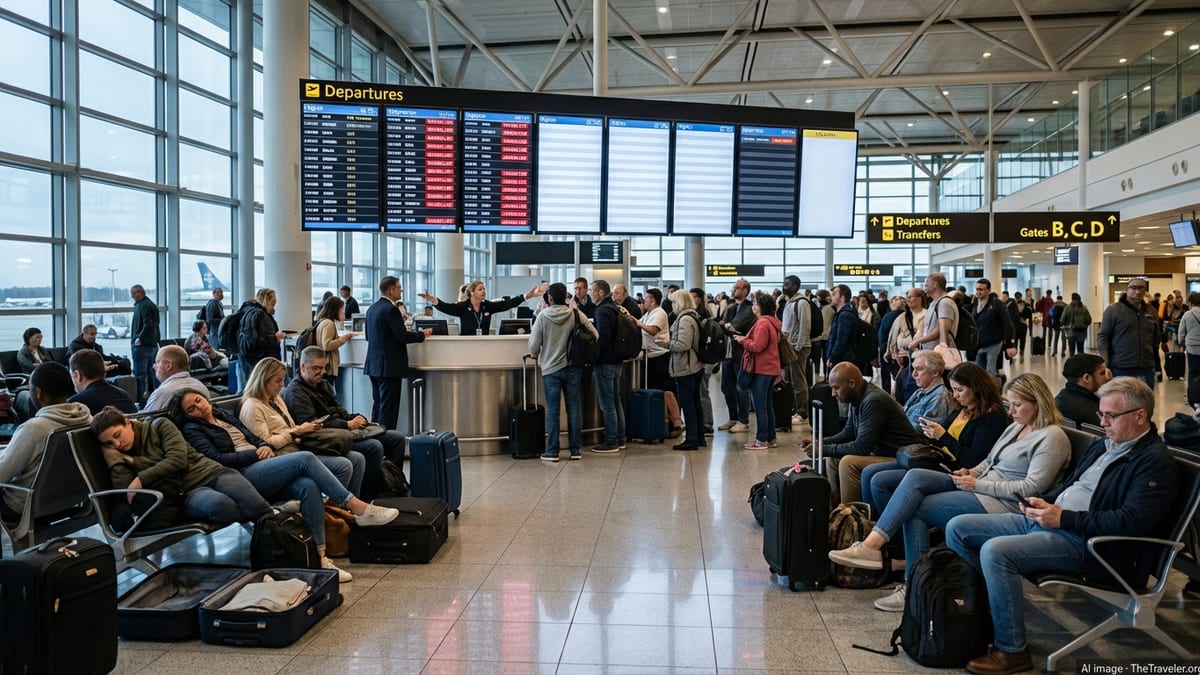
The accumulation of closures has translated into mounting disruption for passengers. Data referenced from flight-tracking services in early September shows that dozens of flights per day have been canceled inside Russia as a direct or indirect consequence of drone-related alerts. Many more services experience delays or reroutings, particularly on routes connecting provincial centers with Moscow’s busy airport system.
Reports from international media note that the disruptions have increasingly affected popular leisure routes, with flights to domestic holiday destinations among those subject to cancellations or diversions. For travelers, the pattern has meant same-day schedule changes, extended waits on the ground, and abrupt rerouting via alternative airports when airspace restrictions are triggered mid-flight.
Russian carriers have also had to adjust network planning and fleet utilization in response to the volatile security environment. Aircraft and crews can be left out of position when hubs close without warning, feeding into a wider cycle of cancellations and rolling delays. Some foreign airlines have reassessed their exposure as well, with coverage highlighting decisions by certain carriers to suspend or limit services to Russian cities in light of evolving drone threats.
Operational and Safety Challenges for Civil Aviation
Aviation analysts monitoring the conflict argue that the volume of temporary closures seen in August highlights a complex new safety challenge. Even when drones are not aimed specifically at civilian aircraft, their presence in or near controlled airspace requires rapid, conservative responses by air traffic managers to avoid any chance of collision or misidentification.
For Russian regulators and airport operators, this has meant frequent reliance on precautionary ground stops, rerouting of traffic flows, and use of holding patterns while air defense assessments are carried out. Publicly available information from Russia’s aviation watchdog shows repeated cycles in which airports halt arrivals and departures during drone alerts, then resume operations once the immediate threat is assessed as contained.
The risk picture extends beyond physical safety to include infrastructure vulnerability. Drone attacks have previously damaged airfields and related assets, including in regions such as Pskov, where commercial operations were temporarily suspended following reported strikes before later resuming. Each such incident underscores the need for additional protective measures around runways, fuel facilities, and navigation equipment that support civil flights.
Longer-Term Implications for Routes and Regional Connectivity
The pattern emerging in August has prompted wider questions about the future configuration of air routes over western Russia and adjacent regions. Specialty security briefings characterize the recent spate of closures as a shift from episodic risk to sustained pressure on civil aviation in the European part of the Russian Federation, with implications for hub connectivity and overflight corridors.
In practical terms, airlines and route planners may increasingly factor recurrent airspace alerts into decisions about which airports to serve, what frequencies to operate, and whether to maintain certain night-time or early-morning services. Higher insurance costs, increased fuel burn from diversions, and the need for more conservative scheduling buffers could translate into fewer options and higher fares for travelers using affected routes.
For international aviation, the evolving drone campaign further complicates an already fragmented airspace map in Eastern Europe. Multiple carriers had previously rerouted flights to avoid Ukrainian and certain Russian airspace sectors, and the latest wave of drone-related closures adds another layer of complexity. Industry observers note that the August figures may serve as a reference point for regulators and airlines worldwide as they consider how emerging unmanned threats can disrupt large-scale civil aviation networks far beyond traditional front lines.
Coverage of Osprey Flight Solutions data on Russian airport closures
Associated Press analysis of drone attacks and transport disruption
Reporting on temporary closures at Murmansk and Apatity airports
Information on the resumption of operations at Pskov airport