


More news on this day
Lebanon moved further into the international spotlight in October 2026 as several governments reinforced or updated strict travel warnings, highlighting rising security concerns and urging foreign nationals to avoid non essential trips to the country.
Get the latest news straight to your inbox!
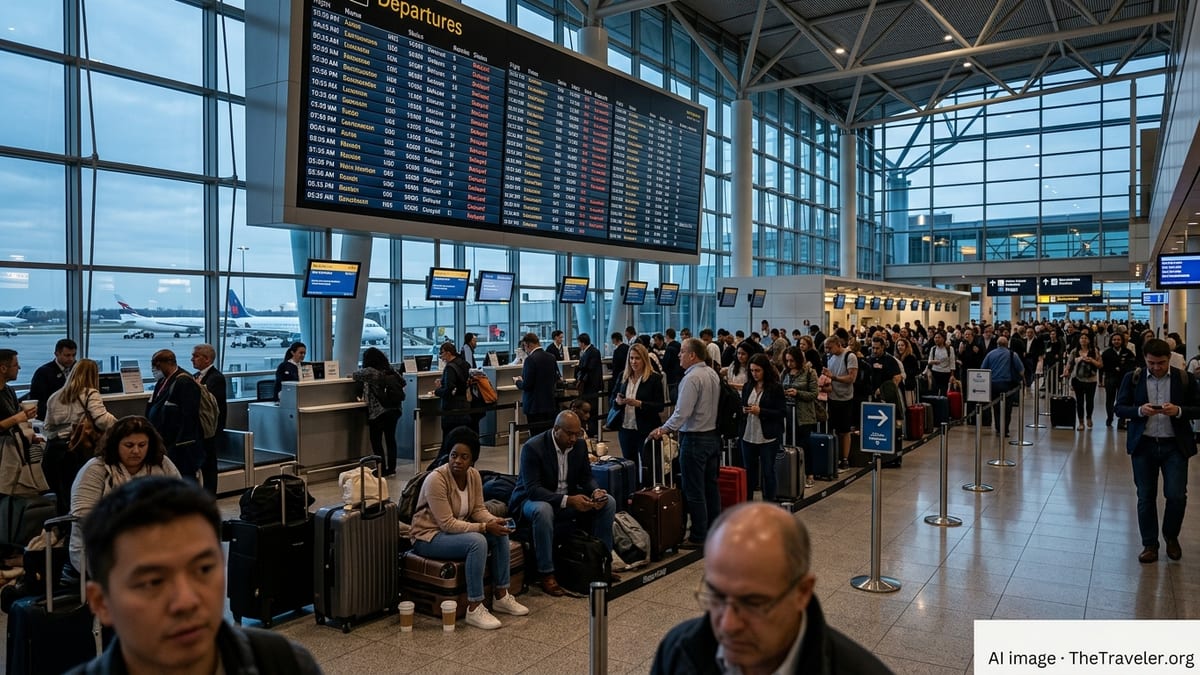
US Reissues Level 4 Warning With Updated Risk Factors
The United States Department of State maintained its Level 4 “Do not travel” advisory for Lebanon and updated its wording on October 23, 2026. Publicly available information shows that the advisory continues to cite the risks of crime, terrorism, civil unrest, kidnapping, landmines and armed conflict, and states that travel to Lebanon should not take place for any reason.
The October update did not change the overall warning level but revised the summary to reflect growing concern over potential armed attacks linked to Iranian supported groups in the region. The advisory now explicitly highlights an increased risk of attacks attributed in open reporting to the Houthis and of efforts to target United States government interests in the broader Middle East.
Information on the advisory history indicates that Lebanon has remained at Level 4 throughout 2026, with earlier notices in February, May and August focused on the fragile security environment and limited ability of United States personnel to move around the country. The latest revision underscores that the United States government has restricted the personal travel of embassy staff within Lebanon and has limited capacity to provide emergency assistance to its citizens outside Beirut.
For leisure travelers, the practical effect is that any discretionary visit to Lebanon now runs directly against the strongest advisory level in the United States system. Travel insurance policies that reference government advice may treat such trips as higher risk, and some operators have already adjusted their offerings by suspending departures that include Beirut or other Lebanese stops.
Australia, Canada and the UK Maintain Tough Guidance
Australia, Canada and the United Kingdom enter late October with similarly strict positions on travel to Lebanon. The Australian government’s Smartraveller platform currently lists Lebanon at its highest advisory level of “Do not travel,” with the most recent update dated September 24, 2026. The notice cites a volatile regional security situation, recent military strikes across parts of the Middle East and the potential for further rapid deterioration.
Australian guidance also draws attention to the possibility of sudden changes to Lebanon’s airspace status. Public information notes that commercial flights may be disrupted at short notice, and travelers are advised to leave while flights remain available if it is safe to reach the airport. Australian messaging stresses that routes to and from Beirut, as well as land border crossings, can open or close with little warning.
Canada’s official travel advisory for Lebanon, last updated on July 23, 2026, categorizes the country under “Avoid all travel.” The Canadian notice points to armed conflict, civil unrest and limited consular access, and directs citizens already in Lebanon to monitor regional developments closely and maintain contingency plans for departure.
In the United Kingdom, Foreign, Commonwealth and Development Office travel advice continues to advise against all travel to several parts of Lebanon and against all but essential travel to others, reflecting the patchwork of risks between the southern border areas, parts of the Bekaa Valley and Beirut. Safety and security information highlights previous attacks near diplomatic sites, ongoing tensions along the frontier with Israel and longstanding restrictions affecting flights departing Beirut to the UK.
Security Concerns Behind the October Tightening
The October 2026 tightening of Lebanon related advisories does not stem from a single incident, but rather from an accumulation of risk indicators across the region. Published coverage from international and local outlets points to continuing exchanges of fire along Lebanon’s southern border, the presence of armed non state groups and heightened rhetoric involving regional actors.
The latest State Department update refers to the potential for attacks by groups aligned with Iran and warns of efforts to target Western interests in the wider Middle East. Combined with Lebanon’s own complex domestic landscape, the concern is that developments outside the country’s borders might rapidly spill over into its territory or airspace, affecting both residents and visitors.
Other governments reference similar dynamics. Australian and Canadian advisories focus on the unpredictability of military activity and the prospect of further strikes affecting transport infrastructure or densely populated areas. United Kingdom guidance lists terrorism, civil unrest and border instability as key drivers of risk, and notes that the security situation can change with little or no warning.
Beyond direct physical threats, these advisories also take into account the pressures on Lebanon’s essential services. Publicly available information describes longstanding strain on health care, power supply and basic infrastructure, all of which can affect a traveler’s ability to access medical care or leave quickly during a crisis.
Impact on Flights, Insurance and Itineraries
For travelers and the tourism industry, the reinforced warnings have concrete implications. Airlines continue to operate into Beirut Rafic Hariri International Airport, but advisories from several governments emphasize that airspace closures are possible at short notice. Travelers are encouraged in public guidance to confirm flight status close to departure and to have backup plans if services are suspended or diverted.
Tour operators that previously included Lebanon in regional itineraries have already scaled back or suspended departures. While some specialist providers still advertise packages that feature Beirut’s cultural sites or mountain villages, many flag that these offerings remain contingent on security conditions and may be withdrawn if advisories remain at their highest levels.
Travel insurance is another critical factor. In many markets, standard policies limit or exclude coverage when a destination is subject to an official “do not travel” or “avoid all travel” warning. Travelers considering Lebanon in late 2026 are therefore facing not only elevated security risk but also the prospect of reduced financial protection in the event of cancellation or emergency evacuation.
Even those transiting the country, rather than staying, may encounter complications. Some policies treat transit through high risk locations as equivalent to a visit, and connecting flights routed through Lebanese airspace could theoretically be revised if risk assessments change. Potential visitors are increasingly advised in open guidance to speak directly with insurers and carriers before finalizing any bookings.
What Prospective Travelers Should Watch Now
With Lebanon under its strictest advisory levels across several major outbound markets, prospective travelers are being urged by publicly available guidance to undertake cautious, ongoing risk assessments. This includes monitoring several national advisory systems rather than relying on a single source, paying particular attention to effective dates and recent updates.
Governments stress in their public information that conditions can shift quickly and that advisories may change without advance notice. This means that a trip booked during a relatively quiet period could still be affected by later developments, from new restrictions on movement within Lebanon to sudden changes in flight operations or border access.
For those with family, business or humanitarian reasons to be in Lebanon, the latest notices highlight the importance of detailed contingency planning. Recommendations found in official travel advice include maintaining up to date travel documents, having flexible exit options and ensuring communication channels are in place should commercial services be disrupted.
As October 2026 draws to a close, the overall picture for Lebanon bound travel remains challenging. While the country continues to attract interest for its culture, cuisine and historic sites, the current wave of tightened advisories places safety and risk management at the center of any decision to visit, whether for a short stay or an extended trip.