


More news on this day
Storm Boelo has plunged travel to and from London Stansted Airport into chaos, with a fallen tree blocking the rail line, overhead power damage and a rare ‘do not travel’ warning leaving air passengers scrambling for alternatives.
Get the latest news straight to your inbox!
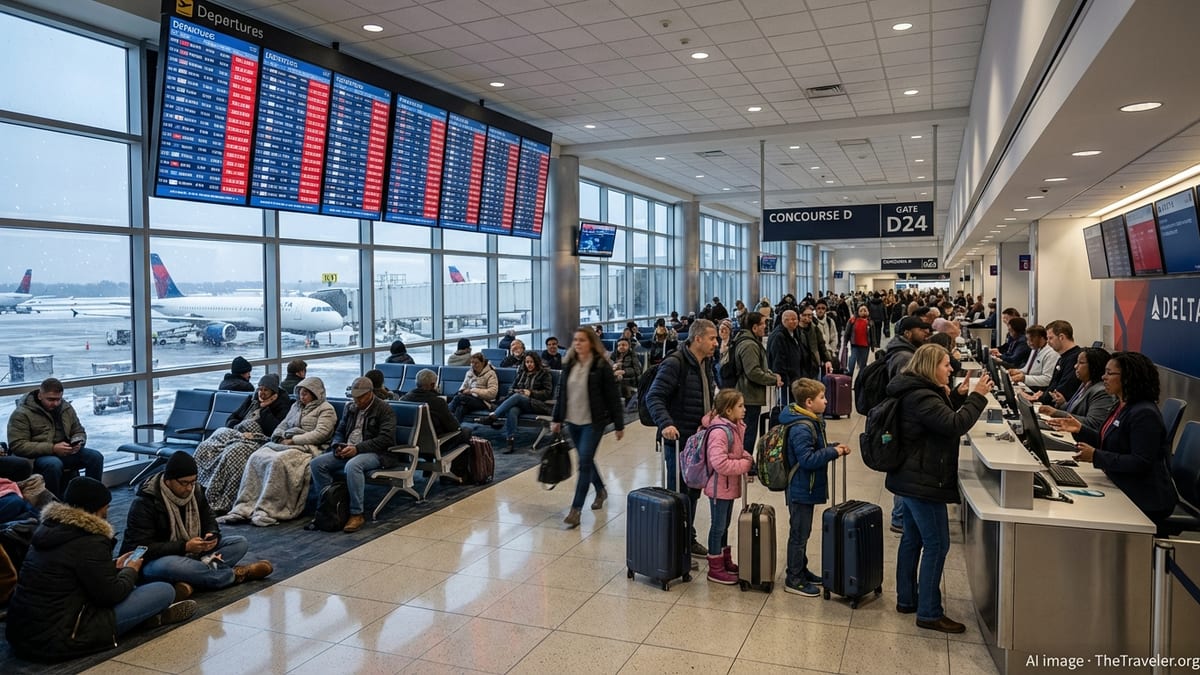
Fallen tree blocks key airport rail corridor
Rail services between Bishop’s Stortford and Stansted Airport were suspended on Saturday after a tree came down near Stansted Mountfitchet, blocking both tracks and damaging overhead electrical equipment. Journey planners and disruption feeds for Greater Anglia and Stansted Express show all trains on the London Liverpool Street to Stansted Airport route cancelled or heavily revised, effectively cutting the airport’s primary rail artery.
National disruption summaries and third-party journey tools report repeated messages advising, “Please do not travel between Bishop’s Stortford and Stansted Airport today,” highlighting the severity of the incident and the limited ability to provide rail replacement capacity while Storm Boelo continues to affect the region.
The blockage has also impacted services towards Cambridge and beyond, as rolling stock normally used on airport shuttles is displaced or trapped on the wrong side of the obstruction. Publicly available information indicates that there is no firm estimate yet for when full power and track access will be restored, with engineering teams described as working into the evening to assess the extent of the damage.
The disruption at Stansted sits within a wider pattern of weather-related problems across the UK rail network as high winds and heavy rain from Storm Boelo topple trees, undermine embankments and force temporary speed restrictions on exposed lines.
‘Do not travel’ warning hits airport and regional passengers
Live rail disruption feeds and journey check pages show that operators on the Stansted corridor have escalated their advice from generic “check before you travel” messaging to a more explicit “do not travel” warning for the affected stretch between Bishop’s Stortford and the airport. This mirrors broader storm-related guidance across parts of Britain, where amber and yellow weather alerts are in force through the weekend.
According to national status dashboards summarising the impact of Storm Boelo, Greater Anglia and the dedicated Stansted Express service are among the operators advising that journeys to the airport by train should be considered non-viable for the remainder of Saturday. Passengers who had planned to use rail links to connect with flights are being urged to consider whether they can postpone trips or rebook to another day.
Elsewhere on the network, information compiled by National Rail and independent tracking sites indicates that multiple train companies are reducing timetables, placing speed restrictions on coastal and upland routes, or telling customers to travel only if essential. For some long-distance services in northern England and Scotland, advance guidance issued earlier in the week already warned that Storm Boelo could make journeys difficult throughout the weekend.
Travel insurance documentation and recent case studies suggest that while severe weather disruption rarely gives passengers a right to compensation from rail operators for the cause of delays, many companies will offer delay-repay or ticket flexibility within the existing regulatory framework. Travellers affected by the “do not travel” message around Stansted are being directed via public information pages to keep tickets and records of their planned journeys when seeking refunds.
Knock-on disruption for flights and airport access
While London Stansted’s runway operations have continued with fewer issues than some coastal airports, media coverage and social media posts from passengers describe a highly disrupted passenger experience on the ground. Earlier in the day, a separate breakdown of the internal transit shuttle between some aircraft stands and the main terminal left arriving travellers queuing for alternative buses, with reports of limited access to drinking water and toilets as the backlog grew.
Airport statements reproduced in news reports acknowledge the shuttle outage and apologise for the inconvenience, noting that contingency bus services were deployed but struggled to keep pace during a peak arrival period. Combined with the rail closure outside the airport perimeter, the incident has added to the perception of a system under strain as Storm Boelo’s weather fronts move across eastern England.
Road approaches to Stansted, including the M11 and local access routes, have remained the primary option for most passengers seeking to reach the airport. However, national motoring organisations have warned in public forecasts that driving conditions in parts of England and Wales could be challenging, citing surface water, fallen branches and strong crosswinds as recurring hazards during the storm.
Published coverage of the broader aviation picture indicates that dozens of flights across the UK have been cancelled or delayed as airlines adjust schedules to cope with slot restrictions, strong crosswinds and the risk of holding patterns in already congested airspace. At Stansted, some departures have been retimed or consolidated, and airlines are advising customers by text and app notifications to monitor their bookings closely and allow extra time for journeys to and from the airport.
Storm Boelo batters UK transport networks
The problems at Stansted are one local manifestation of a much larger storm system that has spread heavy rain and gale-force winds across much of the UK. Met Office alerts for strong winds and intense rainfall cover large parts of Scotland, northern England and Wales, with weather maps showing Storm Boelo’s circulation enveloping the British Isles.
24-hour news channels and online live blogs report widespread transport disruption, including reduced timetables on key intercity rail corridors, temporary suspensions of some coastal and rural lines, and ferry cancellations on exposed sea crossings. Road networks are also under pressure, with fallen trees blocking lanes, surface flooding closing minor routes, and emergency services responding to collisions in difficult driving conditions.
In Scotland and parts of northern England, forecasters have highlighted the risk of localised flooding and power cuts as saturated ground struggles to absorb further rainfall. Environmental agencies have issued multiple flood warnings and alerts, particularly for coastal stretches and river catchments already running high after earlier storm systems this season.
Energy network updates indicate that line damage and tree falls have left thousands of homes without power in storm-affected regions at various points during the weekend. Repair crews are working in windows of calmer weather to restore supplies, though some customers in remote areas face extended outages while access routes are made safe.
What passengers heading to Stansted can do today
For travellers due to fly from Stansted while the rail line between Bishop’s Stortford and the airport remains closed, publicly available advice from operators and transport agencies emphasises careful forward planning. Passengers are being encouraged to check both flight status and ground transport options before setting out, rather than assuming that usual connections are operating.
National Rail journey planners and operator-specific apps are flagging the Stansted route as blocked, and third-party disruption trackers reiterate that tickets for the affected section can generally be used on later dates or alternative routes, subject to the terms set out on each operator’s website. Some airlines have introduced limited flexibility for customers booked on flights during the peak of the storm, allowing rebooking without change fees where space permits.
For those who must travel, public information sources recommend considering coach services from central London, pre-booked taxis, or shared road transfers, while remaining mindful that road conditions may worsen during periods of intense rainfall or strong gusts. Allowing significantly longer journey times than normal, keeping fuel or battery levels high, and carrying water, snacks and essential medications are widely suggested practical measures during severe weather events.
Transport agencies and weather services stress that conditions associated with Storm Boelo are expected to evolve through the rest of the weekend. Passengers using Stansted and other UK airports are advised to keep rechecking official travel and forecast channels throughout the day, as “do not travel” messaging, rail closures and road advisories may be tightened, extended or gradually lifted as the storm system moves away.