


More news on this day
The United States has tightened its travel warning for Israel, updating public guidance to emphasize a growing threat from Yemen’s Iran-aligned Houthi movement and the risk of sudden regional escalation affecting flights, border crossings, and the security environment for visitors.
Get the latest news straight to your inbox!
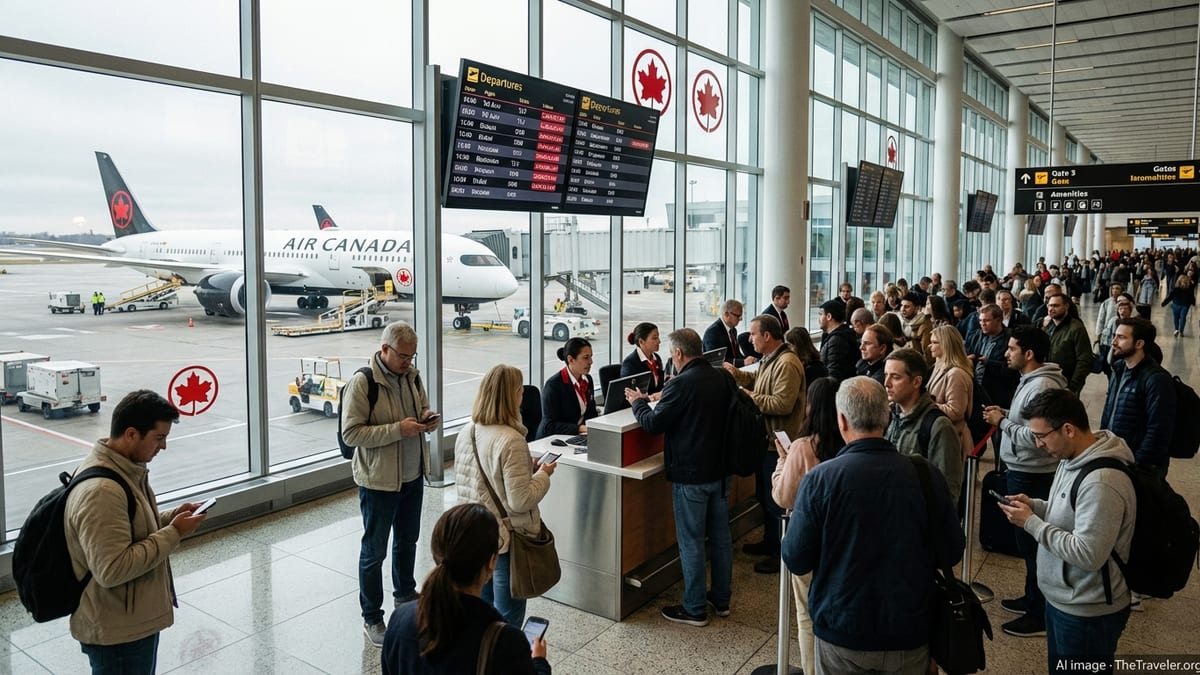
Advisory Updated Amid Expanding Regional Conflict
According to publicly available information from the US State Department and recent media coverage, Washington revised its Israel advisory on October 24, 2026, keeping the country at Level 3, which urges US citizens to reconsider travel, but adding new language on the threat posed by Houthi forces operating from Yemen. The changes were issued alongside parallel updates covering Saudi Arabia, Qatar, the United Arab Emirates, Iraq and Lebanon, forming part of a wider regional risk assessment.
Published reports indicate that the advisory language now underscores the possibility of armed attacks, including missile and drone strikes, that could reach Israeli territory or transit routes in the wider region. The warning highlights the potential for the security situation to deteriorate with little or no notice, affecting not only traditional conflict zones but also major hubs used by international travelers.
Coverage in Israeli and regional outlets notes that the update follows months of heightened tensions after the war between the United States, Israel and Iran earlier in 2026, during which Iran-backed groups, including the Houthis, expanded their operational reach. The advisory reflects concern that those dynamics continue to reverberate across the Middle East even as direct hostilities have ebbed and flowed.
For travelers, the key practical impact is a clearer signal that planning a trip to Israel now requires factoring in regional missile and drone activity, not only local security conditions on the ground. The United States is not formally prohibiting travel, but it is asking its citizens to make more cautious, fully informed decisions.
Houthi Missile and Drone Campaign Raises New Concerns
In 2026, Yemen’s Houthi movement has shifted from primarily targeting shipping lanes and Saudi border areas to a series of high-profile strikes on civilian airports and infrastructure, according to open-source reporting and multilateral assessments. A deadly October 10 attack on Riyadh’s King Khalid International Airport, reported by multiple outlets, killed at least one American citizen and disrupted air traffic for hours, drawing international condemnation.
Security-focused publications and risk advisories describe a pattern of long-range missile and drone launches that demonstrate improved technical capability and extended range. Analysts cited in recent coverage argue that if Houthis can repeatedly hit airports deep inside Saudi Arabia, the threat envelope for regional aviation, including flights to and from Israel, becomes substantially wider.
US and allied governments have publicly linked the Houthi arsenal to Iranian support, noting transfers of missile technology, drones and training. While responsibility for each individual incident is often the subject of competing claims, the cumulative trend has persuaded many governments that civil aviation, energy facilities and symbolic targets are at elevated risk in the current environment.
The updated US travel language reflects that shift. Rather than focusing solely on unrest in Israel and the Palestinian territories, it now stresses that hostilities involving the Houthis and other Iran-aligned groups could quickly spill across borders, affecting air corridors, diversion routes and emergency landing options that travelers usually take for granted.
Flight Disruptions, Airspace Closures and Itinerary Risks
Recent travel alerts issued by US missions in the region, as summarized in local media, repeatedly warn citizens to be prepared for flight cancellations, last-minute airspace closures and broader disruptions to international travel. After the Riyadh airport strike and other attempted attacks, regional aviation authorities have temporarily halted operations, rerouted planes and imposed short-notice restrictions on certain routes.
In Israel’s case, publicly available alerts have urged travelers to monitor airline notifications closely and maintain flexible itineraries. Reports indicate that carriers operating to and from Ben Gurion Airport have adjusted schedules at short notice during previous rounds of regional tension, sometimes consolidating flights or switching aircraft types in response to security assessments and insurance requirements.
Beyond Israel’s main international gateway, connections that rely on major Gulf hubs are also vulnerable. Coverage of the latest US advisories highlights that travelers transiting through airports in Saudi Arabia, Qatar and the United Arab Emirates could face knock-on delays or temporary route suspensions if missile or drone threats intensify, even if Israel itself remains comparatively calm.
Travel insurers and corporate security consultants quoted in recent reporting note that policies may treat war and terrorism risks differently from routine operational delays. Travelers are therefore encouraged to review policy wording carefully, consider the availability of “cancel for any reason” coverage and keep receipts and documentation if they need to rearrange trips at short notice because of security-related disruptions.
Security Posture and Preparedness Inside Israel
Within Israel, the updated US advisory interacts with an already complex security environment. Publicly available Israeli government information shows that authorities continue to maintain layered missile-defense systems and a nationwide network of sirens and public shelters to respond to rocket and drone threats. During periods of heightened alert, municipalities have reviewed procedures for opening shelters and issuing real-time guidance to residents and visitors.
Local media coverage notes that civil defense bodies periodically test siren systems and publish instructions on where people should go in the event of an alert. For foreign travelers in Israel, this means that basic situational awareness is essential: knowing the nearest shelter, paying attention to local news, and following the instructions of airport staff or hotel management when alarms sound.
Tourism operators interviewed in recent months have described a pattern of sharp slowdowns followed by rapid rebounds when security conditions stabilize. While some tour groups have postponed or rerouted journeys in response to the latest Houthi-related warnings, others have continued operating with adjusted itineraries that favor areas assessed as lower risk by local partners and security consultants.
The US advisory does not provide detailed location-by-location guidance inside Israel, but it emphasizes that individuals should maintain a high level of vigilance, enroll in traveler notification programs where available, and develop personal contingency plans. That can include keeping copies of travel documents, knowing alternative routes to the airport and maintaining channels to receive real-time safety updates.
What the Tightened Warning Means for Future Travel Plans
For Americans contemplating travel to Israel in late 2026 and into 2027, the tightened warning signals that risk calculations are changing even for seasoned visitors. Published commentary from regional analysts suggests that as long as tensions between the United States, Israel, Iran and Iran-aligned groups remain unresolved, periods of relative calm could alternate with sudden spikes in missile and drone activity.
From a practical standpoint, travel planners now face a more volatile backdrop. Airlines could adjust capacity into Tel Aviv if insurance costs rise or if regional airspace corridors are disrupted. Cruise itineraries touching Israeli ports may be revised, and organized tours may adopt more conservative routing that avoids border areas or locations near sensitive infrastructure.
At the same time, the advisory underscores that travel decisions are ultimately individual. The United States is not imposing a ban but highlighting specific, documented threats so that citizens can weigh personal risk tolerance against the value of their trip. For some, that may mean postponing nonessential leisure travel; for others with family, business or study commitments in Israel, it may mean proceeding with enhanced precautions and better contingency planning.
Publicly available information from diplomatic missions and airlines suggests that the situation remains fluid. Travelers are encouraged to check the latest advisories shortly before departure, maintain contact details for their country’s embassy or consulate in Israel, and remain prepared for rapid adjustments to routes and schedules if Houthi activity or other regional flashpoints trigger a new round of restrictions.