


More news on this day
The U.S. State Department has renewed a broad travel warning tied to heightened Middle East tensions, urging Americans in the region to exercise increased caution and prepare for sudden flight disruptions and airspace closures.
Get the latest news straight to your inbox!
What the latest State Department warning says
The State Department’s current worldwide security alert, last updated on July 22, 2026, flags the Middle East as a region where conditions can shift quickly. Publicly posted guidance indicates the security environment remains complex, with a risk of unforeseen escalation.
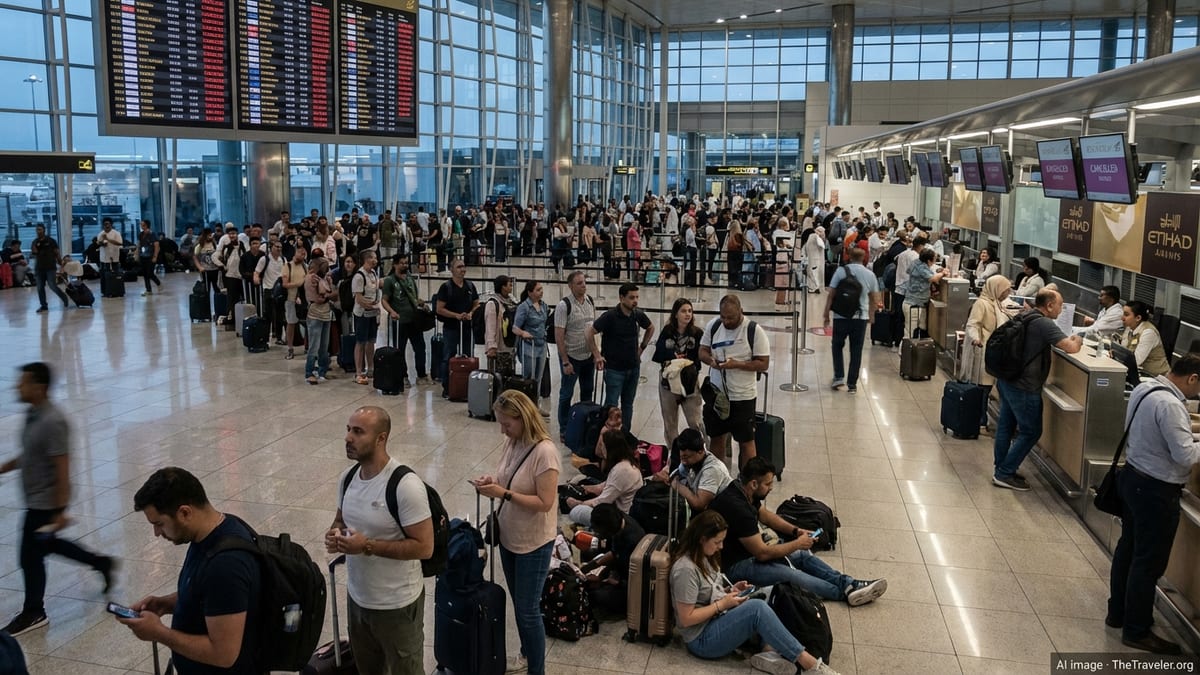
The alert also highlights practical travel impacts beyond personal safety. Americans traveling to or from the region are urged to monitor airport and airline operations closely, with the warning specifically calling out possible flight cancellations, periodic airspace closures, and broader travel disruptions.
In addition to regional risks, the State Department’s advisory language notes that U.S. diplomatic facilities have faced targeting, including locations outside the Middle East. The same alert warns that Iran and groups supportive of Iran may target U.S. interests overseas or places associated with Americans, including U.S. businesses and institutions.
How this fits into country-by-country travel advisory levels
The Middle East warning is being issued alongside a patchwork of country-specific advisory levels that can differ sharply even for neighboring destinations. On the State Department’s public Travel Advisories list, several countries in the region remain at the highest caution level, reflecting security conditions that can affect tourism, business travel, and transit routing.
As of late August 2026 updates, Iraq is listed at Level 4, “Do not travel,” with the advisory describing risks that include terrorism, civil unrest, kidnapping/hostage taking, armed conflict, and limited U.S. government ability to provide emergency services. Iran is also listed at Level 4, with publicly posted guidance emphasizing that the U.S. government cannot provide emergency or routine consular services there and highlighting risks including detention of U.S. nationals.
Other major travel hubs and transit countries across the broader region show different levels, such as Level 3 “Reconsider travel” for destinations that still see significant security concerns but remain frequented for business and connecting flights. The State Department’s approach means travelers should not assume that a regional alert replaces a destination’s individual advisory, or vice versa.
Air travel disruptions: what passengers are seeing now
Airline operations across the Middle East continue to be uneven, with carriers adding, pausing, or extending suspensions as airspace constraints and operational risk assessments evolve. Recent airline-industry coverage indicates that some routes are returning, while others remain suspended into the fall, particularly on services that depend on predictable overflight corridors and stable airport operations.
Reuters factboxes published in July and September 2026 described a gradual restoration of service on certain Middle East routes alongside continued disruptions across multiple airline groups. The reporting also pointed to staggered restart plans and extended suspensions for some destinations, reflecting how quickly schedule assumptions can change.
For travelers, the practical takeaway is that booking a ticket is not the final confirmation a flight will operate as planned. Schedules can be revised close to departure; re-routings can lengthen travel times; and limited airspace capacity can ripple into missed connections even when the departure airport itself appears to be operating normally.
What travelers should do before flying or transiting through the region
The State Department’s public guidance emphasizes staying connected to official alerts for the specific country and city where a traveler will be present, not only the destination country. That matters in the Middle East, where conditions can vary by province, border zone, or metropolitan area, and where airport operations can be affected by events far from terminals.
One practical step included in State Department guidance is enrolling in the Smart Traveler Enrollment Program (STEP) to receive security updates from the nearest U.S. embassy or consulate. The State Department also points travelers to its destination pages for the latest location-specific security alerts.
Given the repeated references to flight cancellations and airspace closures, travelers with near-term plans may want to build flexibility into itineraries, including longer connection windows and refundable or changeable bookings where possible. If a trip is essential, travelers can reduce exposure to last-minute disruptions by checking airline rebooking policies in advance and confirming whether travel insurance covers conflict-related cancellations or rerouting.
What this means for fall and winter trip planning
For Americans planning travel in late 2026, the renewed warning is likely to influence both route selection and destination choices, especially for travelers who typically connect through major Gulf hubs or use Middle East stopovers to break up long-haul itineraries to Africa or Asia.
Even when a traveler is not headed to a higher-risk destination, publicly posted State Department language suggests extra caution is warranted when traveling to and through the region. That framing is important for passengers who treat the Middle East as a transit point, because disruptions can strand travelers in airports or force unplanned overnight stays in places where entry rules, security conditions, and consular access differ by nationality and by circumstance.
For now, the State Department’s messaging and ongoing airline adjustments point to the same planning logic: assume that conditions can change quickly, verify flight operations repeatedly as departure approaches, and consult the current country-by-country advisory level for any destination or layover city before committing to nonrefundable arrangements.