


More news on this day
The U.S. government has renewed warnings against travel to Iran and is again urging U.S. citizens currently in the country to leave as quickly as conditions allow, as West Asia tensions drive fresh concerns about sudden security changes and transportation disruptions.
Get the latest news straight to your inbox!
What the latest US warning says
Publicly available State Department guidance continues to place Iran under a Level 4 “Do Not Travel” advisory, with a specific directive that U.S. citizens in Iran should leave immediately. The advisory highlights risks that include terrorism, civil unrest, kidnapping, arbitrary arrest, torture, and wrongful detention, and it emphasizes that Americans can face questioning or detention with little warning.
The advisory also underscores a practical constraint for travelers: the United States has no embassy or consulate in Iran. That limitation can matter during emergencies ranging from sudden exit restrictions to disruptions in communications or transportation.
Adding to the uncertainty, State Department messaging in 2026 has also pointed to the possibility of rapid regional escalation and urged travelers to monitor airline and airport operations closely when moving to, from, or through the Middle East.
Consular reality: no US embassy, limited options for help
For Americans who need assistance while in Iran, official information indicates that Switzerland serves as the protecting power for U.S. interests. However, the State Department’s Iran advisory notes that the Embassy of Switzerland’s Foreign Interests Section in Tehran is temporarily closed due to the security situation, reinforcing the broader message that travelers should not expect normal consular services inside the country.
In practical terms, this means routine services that many travelers rely on elsewhere, such as passport replacement, notarials, or in-person welfare checks, may be difficult to access quickly. The State Department directs Americans who need help to contact the U.S. Embassy in Bern, Switzerland, rather than seeking U.S. in-country consular support.
The same advisory warns that dual U.S.-Iranian nationals may face additional complications, including Iran’s non-recognition of U.S. citizenship for dual nationals and limits on outside consular access in detention cases. That issue can become especially acute during heightened tensions, when governments may tighten controls on travel and communications.
Why tensions matter to travelers: flight and airspace disruption risk
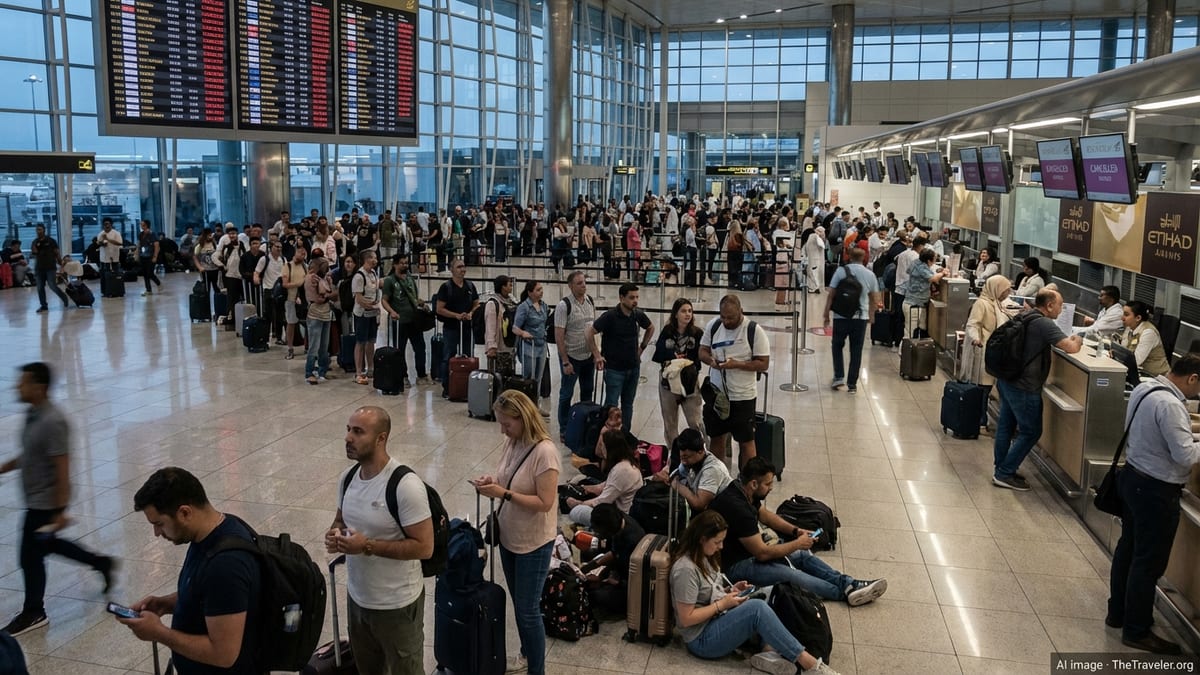
Beyond personal security concerns, the travel warning lands as the region remains vulnerable to sudden airspace restrictions, flight cancellations, and reroutings. In a worldwide caution update this year, State Department guidance warned that travelers to and through the Middle East should monitor airport and airline operations and be prepared for disruptions linked to escalating tensions.
For U.S. civil aviation, separate federal guidance has long restricted certain flight operations involving Iranian airspace. The State Department’s Iran advisory flags aviation safety concerns and points travelers toward Federal Aviation Administration prohibitions and notices, reflecting ongoing risk assessments for flight operations within or near Iran.
Recent Iran-related sanctions activity has also focused attention on aviation. Published coverage has described expanded U.S. sanctions targeting additional elements of Iran’s aviation industry, a step that can further complicate commercial connections, insurance, and operational decisions that influence air service availability and reliability.
What Americans in Iran should consider right now
Official guidance centers on departure planning that does not depend on U.S. government help. The State Department advisory urges travelers to have an emergency exit plan and notes that the United States may have very limited ability to assist during a crisis.
For those trying to leave, the most important near-term variable is often transportation availability. State Department messaging in 2026 has repeatedly advised travelers to confirm that flights are operating as scheduled and to stay alert to sudden changes in routes, airport operations, or airspace status that can ripple through the region quickly.
Document readiness can also become decisive. The Iran advisory reiterates passport validity expectations and warns that travelers may face heightened scrutiny. In parallel, travelers should factor in the possibility of exit bans and other restrictions that could prevent departure even after release from detention or other legal proceedings, as recent published coverage about Americans in Iran has indicated can occur.
Ripple effects for US travelers across the region
While the Iran advisory is country-specific, regional alerts have signaled broader volatility. Recent coverage has described the State Department renewing a blanket travel alert for Americans in or traveling to the Middle East and warning that conflict dynamics “have the potential to escalate rapidly,” with multiple U.S. diplomatic posts in the region echoing similar disruption warnings.
For travelers with itineraries that transit Gulf hubs or connect through the broader Middle East, this can translate into practical planning changes: longer routings if airspace constraints return, last-minute schedule adjustments, and tighter airline rebooking conditions during peak disruption periods.
For Americans who are not currently in the region but have upcoming plans, the core message from official guidance is to reassess the necessity of travel to higher-risk destinations, track advisories closely, and plan for contingencies such as rapid itinerary changes, communications disruptions, and reduced consular capacity if tensions worsen.