

More news on this day
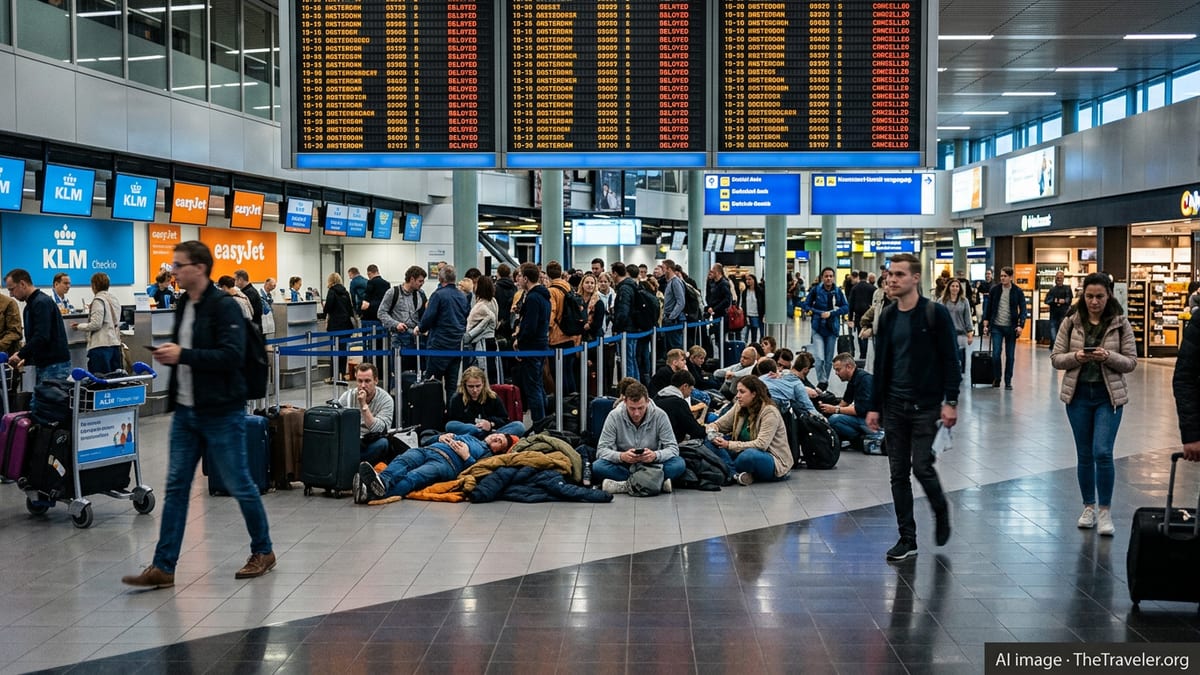
Travelers at Amsterdam Schiphol Airport faced hours of disruption today as 227 flights were reported delayed and four canceled, snarling schedules for KLM, Delta Air Lines, British Airways, Lufthansa, Air France and other carriers on key European and long haul routes.
Get the latest news straight to your inbox!
Widespread Knock-On Effects Across Major Airlines
The latest disruption at Schiphol rippled quickly across airline networks, affecting services to and from major hubs including London, Paris, New York and other European capitals. Publicly available flight tracking data showed numerous late departures and arrivals on routes jointly operated or codeshared by KLM with Delta Air Lines, Air France and Virgin Atlantic, as well as competitive services from British Airways and Lufthansa.
Schiphol functions as the primary hub for KLM and an important transfer point for Delta and other SkyTeam partners, so irregular operations in Amsterdam tend to spread rapidly across connecting banks of flights. Even a relatively small number of outright cancellations can cause extensive rebookings, missed connections and extended layovers when aircraft and crew are no longer in the right place at the right time.
Recent schedule adjustments and capacity trimming across several European airlines have left networks more vulnerable to sudden disruption. With fewer spare aircraft and leaner staffing, unexpected delays in one part of the system can be more difficult to absorb, increasing the risk that late-running flights cascade into missed slots and further delays at busy hubs such as Schiphol.
For transatlantic travelers in particular, disruptions in Amsterdam can have immediate consequences for itineraries linking North America with continental Europe and beyond, because many itineraries rely on tightly timed connections from long haul flights to regional services.
Passenger Experience: Long Queues and Uncertain Timelines
The operational problems translated into long waiting times in departure halls and at service counters, as stranded passengers sought new itineraries or overnight accommodation. Reports from travelers described queues at check in and transfer desks, along with busy self service kiosks as customers tried to rebook onto later flights to London Heathrow, Paris Charles de Gaulle, New York area airports and other destinations.
Publicly accessible posts on social platforms and travel forums indicated that some passengers were rebooked on later KLM departures or transferred to partner airlines such as Air France and Delta, while others were offered flights the following day. In some cases, travelers reported that they were advised to seek alternative routings through other hubs or to consider rail options for shorter European journeys.
As delays lengthened, the situation in seating areas and at departure gates became increasingly crowded. Families with children, business travelers and tourists alike faced uncertainty over departure times, with rolling estimated departure boards showing repeated pushes of scheduled takeoff slots. For many, the difficulty was not just the delay itself but the lack of clear information on when replacement flights would operate.
The disruption also created challenges for passengers with checked baggage. Travelers reported concerns about whether luggage would be automatically retagged to new flights or held in Amsterdam, particularly when rerouted onto different airlines or via alternate hubs.
Operational Strain at a Critical European Hub
Amsterdam Schiphol ranks among Europe’s busiest airports and is a key connecting point on routes between northern Europe, the United Kingdom, North America and destinations further afield. High traffic volumes, a complex runway system and tight scheduling mean that relatively modest operational issues can quickly erode available buffers.
In recent seasons, Schiphol and its home carrier KLM have already grappled with capacity constraints, staffing pressures and earlier episodes of mass cancellations, leaving limited room for error during peak travel periods. Network adjustments such as planned capacity cuts and altered frequencies on routes to and from Amsterdam have underlined the sensitivity of operations to fuel costs, weather and air traffic control limitations.
According to industry analysis and recent historical data, Schiphol’s busiest international links include London Heathrow, Paris Charles de Gaulle, Frankfurt, Munich and several major North American gateways. When disruptions hit this connecting structure, both point to point travelers and transfer passengers can be affected, as missed inbound aircraft force airlines to reshuffle fleets and sometimes remove entire round trips from the schedule.
The presence of multiple alliances and independent carriers at the airport further complicates coordination, as airlines juggle limited gate space, runway slots and ground handling resources while seeking to protect their most commercially important flights.
Rebooking Options and Passenger Rights
With four flights canceled outright and many more significantly delayed, attention quickly turned to rebooking options and consumer protections. Publicly available information from airline conditions of carriage and European regulations indicates that travelers departing from or arriving into Schiphol on flights operated by European carriers may, in many cases, have specific rights when services are heavily disrupted.
Under the applicable European framework, passengers whose flights are canceled or subject to very long delays may be entitled to rerouting at the earliest opportunity, reimbursement of unused tickets in certain situations, and care in the form of meals, refreshments and accommodation during extended waits. Cash compensation can also apply in some circumstances, depending on the cause of the disruption and the length of delay upon arrival.
Published guidance from consumer organizations and specialist advisory services encourages travelers to keep all boarding passes, booking confirmations and receipts for expenses incurred while stranded, as these documents can be important when submitting claims. Passengers are typically advised to use official airline channels such as websites, mobile apps and airport service desks to manage immediate rebookings, and then pursue any formal compensation requests in writing afterwards.
For itineraries involving multiple airlines, especially on transatlantic journeys that combine European and non European carriers, the applicable rules can be more complex. Travel experts often recommend checking which airline actually operated the disrupted flight segment, because this can determine which regulations and policies apply.
Outlook for Upcoming Travel Through Amsterdam
While the number of canceled flights remained limited compared with the total daily schedule, the 227 delays recorded at Schiphol underscored how fragile operations can be at a major European hub as the summer travel season approaches. Even relatively small disruptions can produce visible congestion when aircraft, crews and passengers are out of position.
Industry observers note that airlines operating at Amsterdam have been working to streamline schedules and add resilience, but high load factors and tight timetables leave little unused capacity to absorb sudden shocks. Travelers with upcoming itineraries via Schiphol are being advised by travel planners and online forums to allow extra connection time, monitor flight status closely and consider earlier departures when possible.
Publicly available operational summaries show that long haul services linking Amsterdam with major cities such as London, Paris and New York remain in high demand, and airlines are keen to avoid large scale cancellations on these core routes. Nonetheless, the latest wave of delays serves as a reminder that even well established hubs can experience significant disruption, particularly when external pressures on staffing, infrastructure or airspace coincide.
For passengers planning journeys through Amsterdam in the coming days, experts suggest preparing for potential schedule changes by enabling airline notifications, reviewing minimum connection times and keeping necessary travel documents and essentials easily accessible in carry on baggage, in case of extended waiting periods within the terminal.