


More news on this day
Travellers across Europe are confronting a new wave of mass flight disruptions, with mounting delays and cancellations stranding passengers at key hubs just as the summer holiday season accelerates.
Get the latest news straight to your inbox!
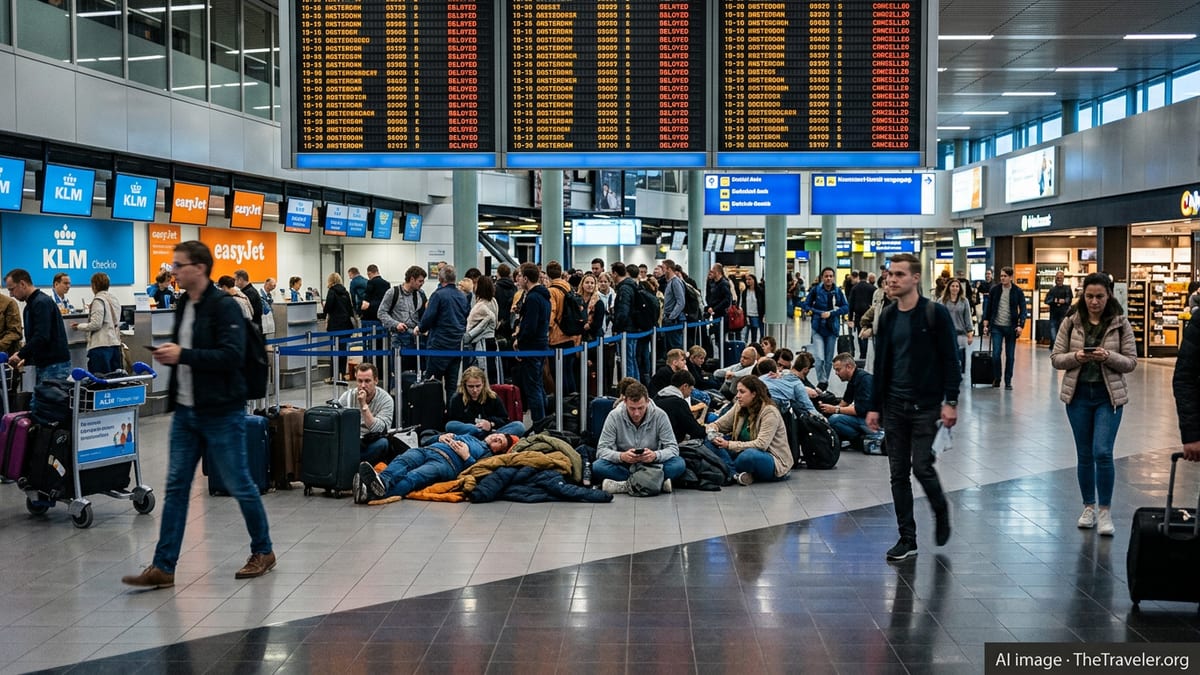
Major Hubs Buckle Under Congestion and Scheduling Strain
Across the continent’s biggest airports, flight-tracking data and travel reports indicate a sharp spike in disruption over the past 48 hours, with London Heathrow, Amsterdam Schiphol, Paris Charles de Gaulle, Copenhagen and Zurich all reporting elevated levels of delays and cancellations. Recent tallies cited in European travel coverage point to more than 1,200 delays and dozens of cancellations in a single day at major hubs, underscoring how stretched the system has become at the outset of peak season.
Capacity has broadly recovered to pre-pandemic levels, but updated aviation overviews show that average delays per flight remain higher than airlines and regulators had targeted for early summer. Operational buffers are thin, meaning a relatively modest issue at one airport can quickly reverberate across the wider network as crews, aircraft and runway slots fall out of position.
In practical terms, that fragility has translated into rolling disruption for travellers heading to and from popular leisure destinations in Spain, Italy, Greece and Portugal, as well as for those connecting through northern European hubs on long-haul itineraries. Passengers are increasingly reporting missed onward flights and unplanned overnight stays when tight connections evaporate amid cascading delays.
Industry monitoring suggests that, while weather has played a role in some locations, the larger drivers in this latest episode are congestion, air traffic flow restrictions and scheduling complexity. With traffic trending up compared with last year in several regions, aviation analysts warn that today’s disruption may foreshadow a difficult summer if no additional resilience measures are introduced.
Zurich and Copenhagen Highlight Network Vulnerabilities
Zurich and Copenhagen, two of Europe’s most efficient mid-sized hubs, have emerged as focal points in the current wave of disruption. Publicly available aviation and travel reports describe a “meltdown” scenario at Zurich, where a squeeze on runway capacity and knock-on scheduling issues forced Swiss and partner carriers to cancel flights and contend with numerous late departures on June 14.
Because Zurich serves as a critical transfer point between Europe and long-haul destinations in North America, Africa and Asia, even a small cluster of cancellations can ripple widely. Passengers arriving from regional European cities have found themselves unable to board onward flights when aircraft are reassigned or rotations are curtailed to stabilise the schedule.
A similar pattern has been visible in Copenhagen, where reports detail sudden cancellations affecting carriers including SAS and other European and transatlantic operators. The airport functions as a central node for Nordic and Baltic traffic, so disruptions there have had outsize effects on itineraries linking Scandinavia with the United Kingdom, continental Europe and North America.
Analysts point to these events as further evidence of the vulnerability of Europe’s interconnected hub-and-spoke system. With aircraft and crews operating close to maximum utilisation, any localised problem can quickly translate into missed flights and overnight stranding for travellers hundreds or even thousands of kilometres away.
Strikes and Border-Check Bottlenecks Compound the Chaos
Operational pressures at airports have been compounded by industrial action and tighter border checks in parts of Europe. Earlier in June, a nationwide air traffic control strike in Belgium brought most flights in and out of the country to a halt for several hours, forcing carriers to cancel or reroute hundreds of services. Travel outlets reported that the action created immediate knock-on effects for routes using Belgian airspace as a corridor between other European states.
At the same time, passengers travelling between the United Kingdom and European Union countries are facing longer processing times at some border control points. Reports from recent days describe waits of several hours at peak periods as new entry and exit requirements are implemented and authorities adjust staffing and procedures.
These bottlenecks do not always appear in airline punctuality statistics, but they have tangible consequences for travellers. Lengthy queues at passport control can cause passengers to miss departures even when flights leave on time, while arrivals may find themselves stuck in terminals long after landing, complicating train connections or domestic flights.
Labour groups in several member states have signalled that further industrial action remains possible over the summer if disputes about pay and working conditions are not resolved. Travel analysts caution that, combined with existing congestion and staffing challenges, any renewed strike activity could intensify the disruption already visible this month.
Rising Delays Test Passenger Protections and Airline Support
The latest wave of disruption arrives as European institutions reiterate passenger rights in the face of widespread travel difficulties. Recent guidance from the European Commission on air passenger regulations emphasises that travellers affected by cancellations are generally entitled to reimbursement, rerouting or a return flight, along with basic assistance at the airport. In many cases, compensation is also due when flights are cancelled or significantly delayed at short notice and the cause is within the airline’s control.
European Parliament discussions earlier this year signalled resistance to any weakening of those protections, with lawmakers aiming to maintain existing compensation thresholds for long delays and cancellations. Consumer advocates argue that clear rules are essential at a time when travellers are again facing regular disruption across the network.
In practice, however, stranded passengers often struggle to access support quickly when large numbers of flights unravel at once. Airlines and airports have encouraged travellers to rely on apps and digital self-service tools for rebooking, but high call volumes and long queues at service desks remain common during peak disruptions. For those with complex itineraries involving multiple carriers, resolving missed connections can be especially challenging.
Travel experts advise that passengers keep documentation of boarding passes, delay notifications and additional expenses such as hotels or meals, which may be required when filing claims later. They also recommend monitoring airline status pages closely, as some carriers are proactively adjusting schedules and offering free rebooking on affected routes when sustained disruption is expected.
What Today’s Disruptions Mean for Summer Travel Plans
For travellers preparing to fly in the coming weeks, Europe’s latest bout of disruption serves as a warning that conditions at airports may remain unpredictable. Aviation data indicates that overall traffic levels are set to climb further through July and August, increasing the risk that any operational glitch, staffing shortage or weather event could trigger another cascade of delays.
Industry observers suggest that travellers build more flexibility into their plans where possible, allowing additional connection time and avoiding last flights of the day on critical legs. Direct services are generally less vulnerable to complex knock-on effects than multi-stop itineraries, though they are not immune to cancellations when aircraft or crew schedules are disrupted.
Popular holiday markets in Spain, Greece and other Mediterranean destinations are likely to feel particular strain as demand peaks. Regional airports that depend heavily on a handful of carriers may be especially exposed if those airlines are forced to consolidate schedules in response to network-wide disruption.
While there is no single cause behind the current wave of flight problems, the combination of high demand, infrastructure constraints, labour tensions and tight scheduling has created a fragile operating environment. Unless additional capacity and contingency measures can be brought online quickly, observers expect that mass disruptions like those stranding travellers this weekend could recur throughout the European summer.