


Renting a car at Mauritius’ Sir Seewoosagur Ramgoolam (SSR) International Airport can turn a resort holiday into a flexible, see-it-all trip. It can also be confusing, with competing rental desks in the arrivals hall, a maze of insurance options, cash deposits, and the added challenge of driving on the left. This guide walks you through how airport car rental works in Mauritius in 2026, what to expect at the counters, how to avoid common pitfalls, and whether hiring a car is really worth it for your itinerary.
Get the latest updates straight to your inbox!
Where to Rent: Airport Counters and Local vs Global Brands
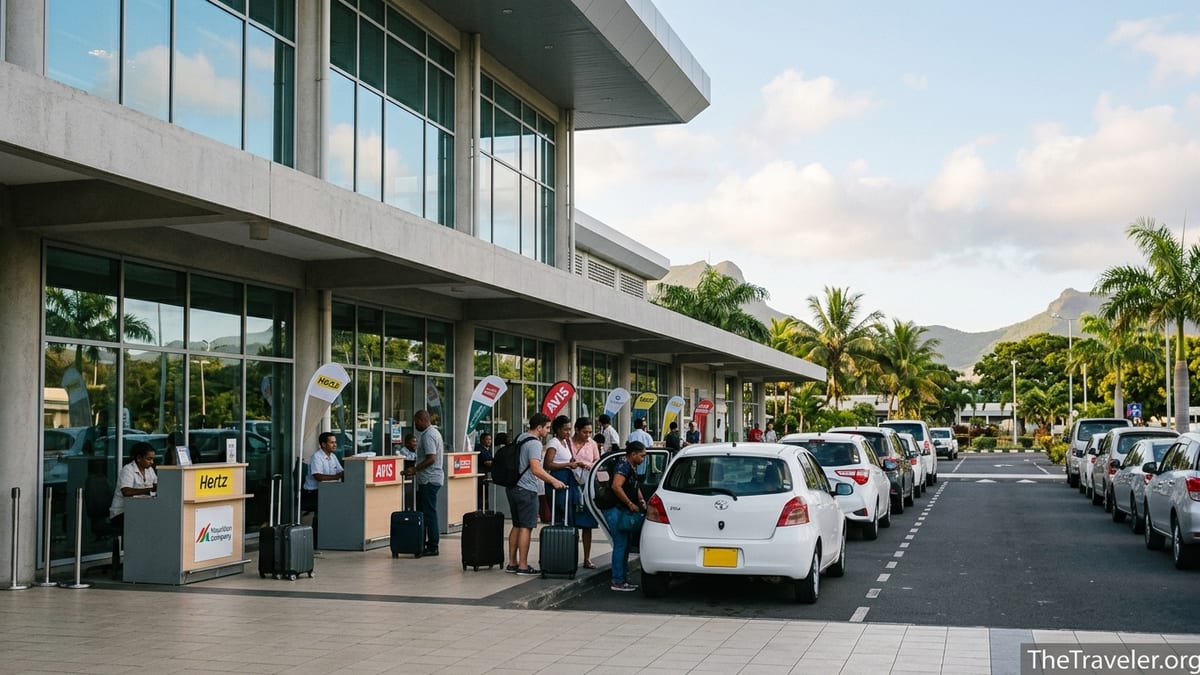
SSR International Airport is the main international gateway to Mauritius and the easiest place to pick up a car. On Level 0 of the terminal, just after you exit customs, you will find a row of dedicated car rental booths in the restricted parking area. These are clearly signed and grouped together, which makes comparing offers relatively straightforward after a long flight. The counters are typically staffed during all major flight arrivals, including late-night European and Middle Eastern services, so pre-booked customers can collect cars even on red-eye landings.
At the airport itself you will see familiar global names such as Hertz, Avis, Budget, Europcar and Sixt, alongside established Mauritian brands like Pingouin Car Rental, OLA Mauritius, AKD, Royal, Race and a handful of other local operators. For example, Pingouin operates from Counter 6 at Level 0, while Hertz and Sixt occupy neighboring counters. Many of these companies also allow you to book in advance and simply show your voucher and passport at the desk before being escorted to the adjacent parking lot where your car is parked.
Beyond the booths inside the terminal, a growing number of local companies offer “meet and greet” at SSR Airport. Firms such as Mauritius Rentacar and other small agencies will not have a permanent desk but instead send a representative to meet you in the arrivals hall or at the VIP parking area with your vehicle. This model is popular with repeat visitors and budget-conscious travelers, since these operators often advertise perks like no-deposit rentals, free delivery to hotels and unlimited mileage, provided you are comfortable handling everything by email or messaging before arrival.
In practical terms, the choice comes down to your risk tolerance and travel style. International brands are usually more expensive per day but work within familiar processes, especially for things like chargebacks or post-rental damage disputes. Local companies often offer better prices and more flexible inclusions, but you rely more heavily on reviews and word of mouth to gauge reliability. If you are staying for a week or more and plan to drive extensively, the potential savings with a reputable local agency can be substantial.
Prices, Deposits and Payment: What to Expect in 2026
Daily rental rates at SSR Airport vary widely depending on season, car class and whether you book through a comparison site or directly. As a rough guide, in mid-2026 a compact hatchback with air conditioning from a local operator might start around the equivalent of 25 to 35 euros per day outside peak periods, rising to 45 to 60 euros with a major international brand for similar dates. Automatic transmission, which many visitors prefer for left-side driving, typically adds several euros per day. During the southern hemisphere winter peak between July and September, and again around December holidays, prices can climb well above those ranges.
The area that surprises many first-time visitors is the security deposit. Most on-airport companies require a pre-authorized deposit on a credit card, commonly around 20,000 Mauritian rupees, roughly in the 400 euro range. This is not charged outright but blocked on your card until the car is returned and any damage checks are completed. If you decline the highest level of insurance or choose a bargain deal with a high excess, the deposit or excess amount may be higher. For example, an economy manual car with basic cover may hold a 400 euro deposit, while a mid-size SUV could see an excess closer to 700 or 800 euros.
Some local agencies market “no deposit” rentals, particularly when you book directly through their websites. In practice, this usually means they combine slightly higher daily rates with more comprehensive insurance, and sometimes take a smaller cash guarantee at pick-up instead of a large card block. For instance, a company might advertise no security deposit but still ask for a small refundable cash amount to cover fuel discrepancies or traffic fines. Before you commit, it is worth reading the rental conditions carefully and asking for the exact amount that may be blocked or charged under different damage scenarios.
Visa and Mastercard credit cards are widely accepted at the airport, and many desks can process payments in both Mauritian rupees and major foreign currencies. Debit cards and prepaid cards, however, are more problematic for deposits. Some international brands will not accept a debit card for the security hold, while others may do so but apply a higher excess. If you plan to rely on a debit card only, confirm in writing with your chosen company before flying, and consider bringing a backup option such as a second card, as few agencies will release the vehicle without a guarantee in place.
Understanding Insurance: From Basic Cover to Full Protection
Insurance terminology in Mauritius can be confusing, especially when it is a mix of French and English. Most airport rentals include some form of basic cover, often described as comprehensive insurance with an excess. This typically meets local legal requirements and covers damage to third parties, but you remain liable for an excess amount per incident. For many economy cars, that excess can be several hundred euros, while for larger vehicles it can be higher. What counts as “damage” can also be broad, including items like cracked windscreens or damaged alloy wheels.
To lower or remove that excess, agencies offer additional packages under names like “Super Cover,” “Full Protection,” or “Zero Excess.” When you are standing at the counter after a long flight, it is tempting to either accept the most expensive add-on without reading, or refuse everything to save money. A more balanced approach is to ask exactly what each tier covers and what it excludes. For example, some local firms include windscreen, glass and tyre cover in their top-tier package, while still excluding undercarriage damage or incidents that occur on unpaved tracks. Others extend coverage to single-vehicle accidents but only on officially classified roads.
Real-world experiences shared by recent visitors show the value of clear, written terms. One traveler who rented from a local airport company appreciated that, after a minor collision in 2025, the firm handled paperwork at the police station and confirmed that their insurance would cover all vehicle costs as long as there was no drunk driving involved. In another case, a visitor renting through an international brand paid more upfront but felt reassured by clearly documented inspection reports and established dispute procedures. Both situations highlight that, in Mauritius, good communication about cover can be as important as the theoretical policy level.
Travelers should also check how their own credit card insurance or separate excess reimbursement policies interact with Mauritian rentals. Many premium cards offer cover for collision damage, but only if you decline the rental company’s extra insurance and pay with the card. That can leave you with a high excess at the counter and require you to claim back later if something goes wrong. Given the island’s narrow roads, parking dings and the odd roadside rock are commonplace. For risk-averse visitors, paying for a reduction to a manageable excess, or choosing a local operator that bundles a sensible level of cover into the rate, can be worth the peace of mind.
Driving on the Left: Roads, Habits and Safety
Mauritius drives on the left-hand side of the road, similar to the United Kingdom, Australia, South Africa and India. Most rental cars have right-hand drive, and the default transmission for cheaper vehicles is manual, though automatics are increasingly available. Visitors coming from right-hand-drive, left-side-driving countries often adapt quickly. Those from continental Europe or North America, where people drive on the right, tend to appreciate renting an automatic to reduce the mental load, especially during the first 24 hours.
The main motorways and primary roads are generally well surfaced, with a dual carriageway linking the airport area at Plaine Magnien to the capital Port Louis via Curepipe and Phoenix. Once you leave these corridors, however, roads narrow quickly. Coastal routes around Flic-en-Flac, Grand Baie and Belle Mare can alternate between smooth tarmac and patched sections with speed bumps, sharp bends and local traffic such as buses and delivery vans. It is common to share the road with pedestrians and stray dogs, particularly in villages, and you should not assume that all motorbikes will follow lane discipline.
New arrivals often underestimate the number of speed bumps and traffic calming measures outside the motorway network. Many are poorly marked or hidden in shade, which can surprise drivers in unfamiliar cars. Hitting a bump too fast can cause undercarriage or exhaust damage, which is frequently excluded from basic insurance. Driving conservatively, especially at night and in rain, is the best defense. Google Maps and other navigation apps work well on the island, but they will not warn you about sudden humps or deep roadside drains, so local caution is still essential.
Seat belts are compulsory for all occupants, and driving under the influence is taken seriously, with random roadside checks not uncommon. Parking in major resort zones feels relatively safe, but you should avoid leaving visible valuables in cars and be careful with beach car parks after dark. Many hotels and guesthouses have secure on-site parking, either free or included in resort fees. When visiting busy public beaches like Mont Choisy or Pereybere on weekends, arrive earlier in the morning if you can, because informal parking areas fill fast and latecomers may end up on rough verges or tight side streets.
Key Routes from the Airport to Major Resorts
Most visitors arrive at SSR International Airport and head straight to one of the island’s main resort belts. From the terminal, a well-signed road leads onto the M2 motorway. For south and southwest stays around Bel Ombre, Le Morne or the Black River region, you typically exit early and follow coastal or regional roads west. This route is scenic, with sugarcane fields, glimpses of the sea and occasional mountain backdrops, but it includes narrower segments, roundabouts and village traffic. With light traffic, the drive to a resort in Le Morne might take about an hour; in heavier conditions or at night, it can stretch closer to ninety minutes.
Heading to the west coast hubs around Flic-en-Flac and Tamarin, many drivers take the motorway north towards Phoenix and then branch off towards the coast. This route spends more time on faster dual carriageway before dropping into smaller roads near the resorts. It avoids some of the winding southern stretches, though you still encounter busy junctions and traffic lights in suburban areas. For a first-time driver nervous about left-side driving, using more of the motorway can feel easier until you become comfortable with local habits.
Travelers bound for the popular north coast, including Grand Baie, Trou aux Biches and Pereybere, usually stay on the motorway past Curepipe and Phoenix, then continue on the main route skirting Port Louis before following signs to the northern coastal villages. The full journey from airport to Grand Baie can take an hour and a half or more depending on traffic near the capital. While navigation apps give efficient route options, remember that rush hours around Port Louis on weekday mornings and late afternoons can be congested. If your arrival coincides with these peaks, consider a short break en route rather than trying to push through when tired.
For east coast resorts such as Belle Mare and Trou d’Eau Douce, a common approach is to drive from the airport towards Flacq and then follow the well-marked coastal road down to the hotels. This side of the island is less urbanized, and the drive can be very enjoyable in daylight, with glimpses of lagoons and palm-lined beaches. After dark, however, the same route can feel more challenging due to limited street lighting and stretches of unlit countryside. Planning arrivals during daylight hours, when possible, makes the first drive significantly easier, particularly if you will be sharing the car with children or older relatives.
Parking at the Airport, Resorts and Around the Island
SSR International Airport offers a large public parking area within walking distance of the terminal, divided into several blocks. Short-stay parking includes a grace period of around 15 minutes for quick drop-offs and pick-ups; beyond that, you pay at automated pay stations or a cashier booth before exiting. The car rental vehicles are typically parked in a designated section of this area, making returns relatively simple. When you bring your rental back, you usually follow signs for “Car Rental Return” or your agency’s logo, then meet an attendant who inspects the vehicle and confirms fuel level and mileage before you proceed to check-in.
Across Mauritius, parking norms vary by area. In major resort districts such as Grand Baie, Flic-en-Flac and Belle Mare, most higher-end hotels and many mid-range guesthouses provide free on-site parking for guests. Gated properties often have night guards or CCTV, which adds a sense of security. Boutique hotels and smaller B&Bs may have tighter parking situations, with only a few spaces inside the gate and additional cars parked on the street outside. When booking, it is worth asking whether parking is guaranteed or first-come, first-served, especially during peak school-holiday periods when properties are full.
In shopping and dining hubs, such as La Croisette mall in Grand Baie or the central area of Quatre Bornes, you may encounter multi-storey or open-air paid parking with machines issuing tickets on entry. Fees are usually modest by international standards, but maximum stay limits can apply in busy zones. At popular public beaches, informal parking areas fill quickly on weekends and public holidays. Locals often park creatively along verges or in tight rows; as a visitor, it is safer to avoid blocking anyone in and to leave sufficient clearance around your car to prevent low-speed knocks.
Wherever you park, common-sense precautions apply. Do not leave cameras, laptops or handbags visible on seats, and avoid keeping passports or large sums of cash in the glove box. If you are stopping briefly at a viewpoint or roadside snack stand, choose spots where other cars are present and lighting is adequate. Overall, car break-ins on the island are not rampant, but opportunistic theft can occur, especially in tourist-heavy areas. Treat your rental as you would at home in an unfamiliar city: lock it, close the windows and avoid advertising valuables.
Is Renting a Car in Mauritius Worth It?
Whether a rental car is worth the cost in Mauritius depends largely on your itinerary, budget and comfort with driving on the left. If you plan to stay at a single all-inclusive resort and rarely leave except on organized excursions, airport transfers plus a few guided tours may be easier. Many hotels in areas like Belle Mare, Le Morne or the north coast offer shuttle services or can arrange private drivers for day trips to attractions such as Chamarel, the Black River Gorges, or the Pamplemousses Botanical Garden. For couples who prefer not to drive on holiday, this combination can feel more relaxing, even if it is not the cheapest option.
On the other hand, a rental car offers a level of flexibility that is hard to match. With your own wheels, you can visit quiet beaches at off-peak times, head inland to tea plantations or waterfalls on a whim, and dine at small local restaurants that may be off the standard tour routes. Over a week, the cost of a mid-range rental can easily compare favorably with several private taxi days, especially for families or groups splitting expenses. For example, if a full-day private driver from a resort costs roughly what a compact rental would per day, driving yourself for five or six days quickly becomes more economical.
There is also a middle ground: some visitors rent a car only for part of their stay. A common pattern is to arrange a hotel transfer on arrival, unwind for two days without driving, then have a car delivered to the resort for three or four days of exploring before returning it. Several local agencies offer free hotel delivery and pick-up, including to resorts in Grand Baie, Flic-en-Flac and the east coast, making this hybrid approach straightforward. It reduces the stress of driving immediately after a long-haul flight, while still giving you independent mobility for the bulk of your sightseeing.
For risk-averse travelers, the key to making car rental “worth it” is preparation. Book with a well-reviewed company, clarify insurance and deposits in advance, choose a car size and transmission you feel comfortable handling on narrow roads, and avoid ambitious cross-island drives at night on your first day. With these precautions, many visitors report that driving in Mauritius feels no more challenging than in other small island nations. For them, the ability to discover hidden coves, stop for roadside snacks and follow their own schedule is one of the trip’s highlights.
The Takeaway
Renting a car at Mauritius’ SSR International Airport in 2026 is a practical way to turn a resort-based holiday into a more independent island exploration. The airport’s centralised rental area on Level 0 brings together major global brands and reputable local operators, giving you a genuine choice between familiarity and value. Daily rates, deposits and insurance options vary, but with a clear understanding of what is included and a realistic sense of your driving comfort, it is possible to secure a car that suits both your budget and your itinerary.
Driving on the left, navigating narrow coastal roads and managing parking in busy beach areas all add layers of complexity, especially for those used to right-hand traffic. Yet the road network is generally good, distances are manageable, and navigation apps work well. The main challenge is adjusting your pace: slowing down for speed bumps and village stretches, planning daytime drives on unfamiliar routes, and allowing extra time around Port Louis during weekday peaks.
If you are the type of traveler who enjoys the freedom to stop spontaneously at viewpoints, explore inland villages or chase a sunset beach away from the crowds, a rental car will likely feel indispensable. Those who prefer to stay put in a single resort and rely on organized tours may find that transfers and occasional taxis serve them just as well. Understanding your own preferences is crucial; the good news is that in Mauritius, both styles of travel are well supported.
Ultimately, the decision is not simply about saving money over taxis or tours, but about how you want to experience the island. A thoughtfully chosen rental, backed by sensible insurance and realistic route planning, can make Mauritius feel smaller, friendlier and more accessible. With a bit of homework before you land at SSR International Airport, you can step off the plane confident that the keys you collect at the counter will enhance, rather than complicate, your time in this Indian Ocean paradise.
FAQ
Q1. Do I really need to rent a car in Mauritius, or are taxis and tours enough?
For a single-resort stay with a few excursions, taxis and organized tours can be sufficient. If you want to explore multiple coasts, eat at local spots and visit beaches at your own pace, a rental car offers far more flexibility and can work out cheaper over a week, especially for families or small groups.
Q2. How much is a typical security deposit for a Mauritius airport car rental?
Many airport agencies pre-authorize around 20,000 Mauritian rupees, roughly 400 euros, on a credit card for an economy car. Higher classes and lower insurance levels can increase this amount. Some local companies advertise no-deposit deals, but they may build extra protection into the daily rate or ask for a smaller cash guarantee instead.
Q3. Is driving on the left in Mauritius difficult for visitors from right-hand-drive countries?
Travelers from countries that already drive on the left, such as the United Kingdom, India or Australia, usually adapt quickly. Visitors from right-hand-traffic countries often prefer renting an automatic and taking their first drives in daylight on main roads. After a day or two, most report feeling comfortable, provided they keep speeds moderate and stay alert in villages.
Q4. What kind of insurance should I choose for a Mauritius rental car?
At minimum, ensure you have basic cover with a clear excess amount. Many visitors choose an additional package to reduce the excess and include items like windscreen, glass and tyre damage. If you rely on credit card insurance or an external excess policy, confirm the terms and be prepared to pay a higher deposit at the counter, then claim back later if needed.
Q5. Can I rent a car at Mauritius Airport without a credit card?
Some local agencies may accept debit cards or limited cash deposits, but most international brands require a credit card in the main driver’s name for the security hold. If you only have a debit card, contact your chosen company in advance, get written confirmation of their policy, and consider arranging a backup payment method to avoid last-minute issues at the counter.
Q6. How long does it take to drive from SSR International Airport to the main resort areas?
In light traffic, expect roughly an hour to Le Morne or Flic-en-Flac, around ninety minutes to Grand Baie in the north, and about an hour to popular east coast resorts like Belle Mare. Traffic near Port Louis and in suburban zones can extend these times, especially during weekday rush hours or in bad weather.
Q7. Is parking easy at hotels and beaches in Mauritius?
Most mid-range and upscale hotels include on-site parking, often gated and free for guests. At public beaches and in busy resort towns, spaces can fill quickly on weekends and holidays, and you may need to park on side streets or informal lots. Arriving earlier in the day and avoiding blocking other vehicles helps you steer clear of parking stress.
Q8. Are Mauritius roads safe to drive on at night?
Main roads and motorways are generally fine at night, but secondary and coastal roads can be challenging due to limited lighting, sharp bends, speed bumps and pedestrians. It is safer to avoid long cross-island drives after dark, particularly on your first days, and to slow down in villages and unlit stretches.
Q9. What documents do I need to rent a car at Mauritius Airport?
You will normally need a valid driver’s license, passport and a credit card in the main driver’s name. Many agencies accept standard foreign licenses for short tourist stays, though a few may request an International Driving Permit for non-Roman alphabet licenses. Always check your chosen company’s requirements before travel.
Q10. Can I have a rental car delivered to my resort instead of picking it up at the airport?
Yes. Several local operators offer free delivery and collection to major resort areas such as Grand Baie, Flic-en-Flac, Belle Mare and Le Morne. A common strategy is to arrange an airport transfer on arrival, relax at the hotel for a day or two, then have the car brought to your resort for the period when you plan to explore the island more extensively.