


Le Morne, on Mauritius’s dramatic southwest peninsula, feels a world away from the runway at Sir Seewoosagur Ramgoolam International Airport. In reality, your journey from plane door to beachfront suite is usually 70 to 90 minutes by road. For guests heading to high-end resorts such as LUX* Le Morne, JW Marriott Mauritius, Dinarobin Beachcomber or Paradis Beachcomber, choosing the right transfer makes the difference between a seamless arrival and a stressful start. This guide explains the main options, realistic costs and timings, and how to match them to the experience you want.
Get the latest updates straight to your inbox!
Understanding the Route from Mauritius Airport to Le Morne
Sir Seewoosagur Ramgoolam International Airport, Mauritius’s main gateway, sits in the southeast at Plaine Magnien. Le Morne lies on the far southwest tip of the island. The road distance is roughly 55 to 60 kilometers, depending on your exact resort, and the journey usually takes about 1 hour 10 minutes in light traffic and up to 1 hour 30 minutes when it is busy.
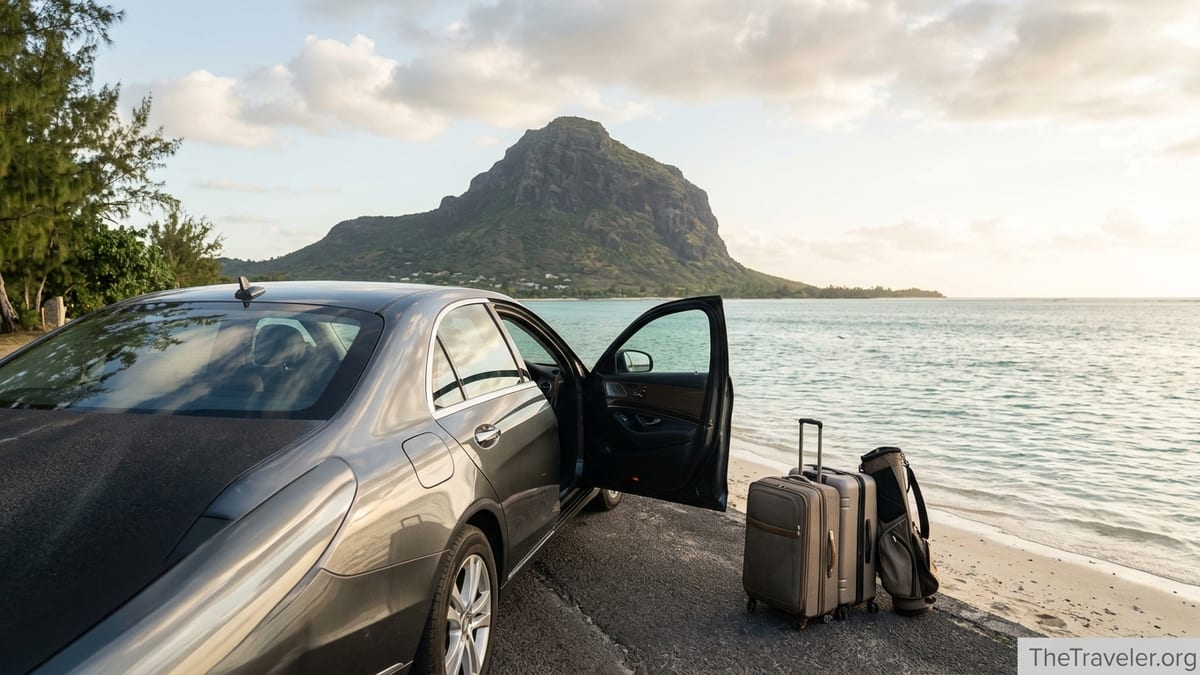
Most road transfers follow a similar pattern. You leave the airport on the M1 motorway heading west, then connect to secondary roads through the island’s green interior. After passing sugarcane fields and local villages such as La Flora and Chemin Grenier, the road joins the coastal route that curves south and then west toward Le Morne. The final 10 to 15 minutes are particularly scenic as Le Morne Brabant mountain comes into view and the road hugs the lagoon.
Because the route uses good-quality paved roads but passes through several settlements and roundabouts, average speeds are modest. Drivers typically budget 25 to 30 minutes for the first stretch from the airport to Curepipe or Phoenix, then another 40 to 50 minutes to reach Le Morne. Night-time arrivals can be slightly faster, while weekday late afternoons can be slower, particularly in school traffic zones.
Almost all luxury resorts in Le Morne sit either on the peninsula itself or within a short spur from the main coastal road. That means transfers are normally door to door with no rough tracks. Luggage is loaded directly at the airport and unloaded at your resort’s entrance, which is an important comfort factor if you are carrying golf bags, kite-surf gear or multiple suitcases.
Private Chauffeur Transfers: The Most Seamless Option
For a luxury resort stay, a pre-booked private transfer with a dedicated chauffeur is often the smoothest solution. Several specialist transfer companies and destination management firms offer direct routes from the airport to Le Morne in air-conditioned sedans, SUVs and minivans. Typical examples include services that quote around 45 to 60 euros per car for up to three passengers, and 70 to 90 euros for larger minivans that can carry families or small groups with luggage.
In practice, guests flying in for a week at properties such as LUX* Le Morne or the Beachcomber resorts often reserve a private car when they book the hotel. Many resorts partner with a preferred operator or run transfers through an in-house concierge team. A driver meets you in the arrivals hall with a name sign, helps with trolleys, escorts you to a waiting vehicle in the official parking area and coordinates any flight delay via real-time flight tracking. This style of service is especially useful on late-night arrivals or after long-haul flights from Europe, the Middle East or Asia.
The main advantages of a private chauffeur transfer are certainty and comfort. You receive a fixed price in advance, often payable in euros, pounds or dollars, which avoids haggling after a long flight. Vehicles are usually newer mid-range or premium models, such as Toyota Corolla and Hyundai Tucson sedans, or larger Toyota Noah and Hyundai H1 minivans, with working air conditioning and clean interiors. Many drivers offer complimentary bottled water and brief commentary about the island en route.
At the high end, some destination management companies and hotel partners can arrange luxury car transfers in vehicles like BMW 5 Series or Mercedes E-Class, or even SUVs for VIP guests. Prices for these premium options are considerably higher, sometimes roughly double a standard private car, but they align with the expectations of guests in top suites or those marking special occasions such as honeymoons. If you value privacy, space and a quiet, direct journey to the resort, a private chauffeur-driven car is the closest Mauritius offers to a classic “limo transfer” experience.
Standard Taxis and App-Based Rides: Flexible, But Know the Trade-Offs
Licensed airport taxis queue at a dedicated stand just outside the arrivals hall. Tariffs are regulated by the authorities, and updated fare tables are posted for different zones across the island. Le Morne is one of the more distant destinations, so the official one-way fare typically sits in the higher band. For a standard sedan taxi, you can expect a ballpark cost equivalent to around 55 to 80 euros, depending on time of day and exact location on the peninsula.
Using the taxi rank can work well if your flight is delayed and you have not pre-booked, or if you prefer to pay in Mauritian rupees in cash on the spot. However, regulars to Mauritius often note that hailing a taxi at the airport can be more expensive than booking a transfer in advance, and that negotiating with drivers after a long flight feels tiring. The best practice is to ask to see the fare card before you agree to the trip and confirm whether luggage or night surcharges apply.
Recently, ride-hailing apps have begun operating in parts of Mauritius, including connections to the airport. Pricing is dynamic and can vary with demand, but sample checks from local users suggest that a long trip from the airport to major coastal zones often costs a similar order of magnitude to a taxi, with the benefit of app-based pricing and card payment. However, coverage on the southwest coast is still building, meaning that while you may be able to depart from the airport using an app, finding a return driver from Le Morne may be less reliable, especially late at night.
For guests staying at luxury resorts, the main limitation of standard taxis and on-demand rides is the lack of tailored service. Sedans can be small for multiple large suitcases plus sports equipment, and drivers at the rank will not necessarily know your resort’s exact check-in arrangements. If you are traveling light and value spontaneity, taxis and ride-hailing are workable. If you are arriving with family, golf clubs and kite-surf bags, a pre-booked vehicle sized to your luggage is usually more comfortable.
Rental Cars: Independence for Explorers and Families
For travelers planning to explore beyond the resort, renting a car at the airport can be a cost-effective and flexible choice. Well-known international brands operate desks in the arrivals area, alongside reputable local agencies. A small hatchback suitable for two people and a couple of suitcases might start from roughly 30 to 40 euros per day, excluding fuel and insurance upgrades, while mid-size cars and compact SUVs command higher daily rates.
The drive from the airport to Le Morne is straightforward, but first-time visitors should be prepared for a few adjustments. Mauritius drives on the left, and many vehicles are automatic, though manual gearboxes are still common. Road signage is generally clear, but not as abundant as in large European countries, so most visitors rely on smartphone navigation. Data coverage along the route is usually good, especially once you leave the airport’s immediate zone and join main roads.
From a luxury resort perspective, the main benefit of a rental car is freedom. Once you are at a property such as JW Marriott or Paradis Beachcomber, it is easy to settle into a resort bubble, only moving between pool, spa and beach. Having your own car in the parking area gives you the option of spontaneous day trips to Chamarel’s viewpoints, Black River Gorges National Park, or the coastal villages of Tamarin and Flic en Flac. Families with children often appreciate being able to keep beach toys and snacks in the car and not rely on taxi availability.
On the other hand, there are trade-offs. After an overnight flight, collecting a rental car, inspecting it for prior damage, handling paperwork and then navigating unfamiliar roads can feel like a burden. Traffic around some inland junctions is busy at school and rush hours, and local driving styles may be more assertive than you are used to. Parking at luxury resorts is generally free, but parking in small villages or at public beaches is more informal. If your priority is a calm, restful start to the trip, you might prefer a private transfer on arrival and only collect a rental car from a local agency near Le Morne the following day.
Accessing Mountain and Beach Resorts: Terrain, Gates and Luggage
Le Morne’s luxury properties are clustered along a long, curved stretch of sand at the base of Le Morne Brabant mountain. Many share gated entrances off the main coastal road, with internal driveways that loop through gardens and along the shore. For example, guests at LUX* Le Morne or Dinarobin Beachcomber are driven through landscaped grounds before reaching open-sided lobbies facing the lagoon. Vehicles delivering guests typically stop under a porte-cochere right at reception, making the last steps of the journey seamless.
Because resorts handle large volumes of international guests, they are used to dealing with sizeable luggage loads. Golf bags, windsurf sails, kite-surf boards and dive gear are common sights on the trolleys. When booking any transfer, it helps to specify if you are traveling with oversized items. Transfer companies usually allocate a minivan rather than a standard sedan for these loads, at a modest supplement. For guests headed to properties with strong water-sports focus, such as resorts near popular kitesurfing beaches on the Le Morne peninsula, it is especially worth double-checking vehicle size.
For those planning to hike Le Morne Brabant itself, it is useful to know that the hiking trailhead is not directly inside any resort. Access is controlled from a separate entrance a short drive from the main hotel strip. Many guests arrange a separate local taxi or guided hike that includes transfers from the hotel to the trail and back. This means your airport transfer does not need to detour to the mountain; it should take you straight to your resort, where you can plan excursions later with the concierge.
Beach access from the road is generally easy. Even though resorts front the lagoon, the public has legal access to the shoreline in Mauritius, so there are designated public parking areas and beach entrances nearby. If you drive yourself in a rental car, be aware of small speed bumps, narrow side roads and pedestrians, especially children, near public beach zones. Professional chauffeurs and taxi drivers know these areas well and adjust speed accordingly, which is another argument in favor of hiring a driver if you are unfamiliar with the terrain.
Timing, Traffic and When to Travel
When planning your transfer from the airport to Le Morne, timing is almost as important as transport type. Traffic on Mauritius’s main roads tends to peak on weekday mornings between about 7:30 and 9:00, and again in the late afternoon from around 16:00 to 18:00, as schools and offices start and finish. If your flight lands at these times, build in extra margin. A trip that might take 1 hour 10 minutes in light traffic can stretch closer to 1 hour 30 minutes with more vehicles on the road.
Conversely, very early morning and late-evening arrivals are often faster on the motorway sections, though speeds drop again on unlit rural stretches in the final approach to Le Morne. Many drivers reduce speed slightly at night for safety, especially in areas where stray dogs or pedestrians sometimes cross the road. If you are arriving after dark, a professional driver or pre-booked transfer is usually preferable to self-driving, particularly if you are already jet-lagged.
Weather is another subtle factor. Mauritius’s summer months can bring heavy but short-lived rain showers. Wet roads are still passable, but drivers may slow down, especially on bends near the coast. Cyclones and major storms are rare during peak European winter travel season but can occur. In such events, airports and resorts coordinate closely with transfer companies, and having a pre-booked driver makes it easier to handle any schedule changes or delays.
From a luxury resort standpoint, transfers are also part of the arrival ritual. Many properties aim to time your welcome drink and check-in so that you step into the lobby just as the worst of the mid-day heat passes, or in time for sunset over the lagoon. Sharing your flight details early with the hotel allows them to suggest ideal transfer times and confirm whether they anticipate any roadworks or local events that might affect the route on your specific date.
Should You Pre-Book or Decide on Arrival?
For guests staying in upscale resorts around Le Morne, pre-booking a transfer is recommended in most situations. First, Le Morne is one of the more distant coastal areas from the airport, so fixed-price private transfers booked online in advance often work out similar in cost to, or slightly cheaper than, taking a taxi from the rank. Second, pre-booking gives you a written confirmation that specifies route, vehicle type, luggage capacity and meeting point, which reduces uncertainty.
As an example, a couple staying at a five-star resort on the peninsula might pre-book a standard private car for around 50 to 60 euros each way. That gives them a dedicated sedan, flight monitoring, a driver who is expecting them even if the flight is a little late, and the peace of mind of knowing exactly who they will meet in the arrivals hall. By comparison, turning up and taking the next available airport taxi may cost a comparable amount but without the same level of personalization.
There are a few situations where waiting until arrival can make sense. Independent travelers on flexible itineraries, for instance, sometimes prefer to check a few options once they land, especially if they want to compare car rental prices across several desks. Likewise, if you unexpectedly decide to upgrade to a larger vehicle because of extra luggage or sports equipment, discussing this face-to-face with a rental agent or driver at the airport can be easier than adjusting a pre-booking.
In general, though, peak travel periods such as December and January, school holidays and major events on the island are busy times for transfers. Vehicles serving Le Morne can be fully booked, particularly larger minivans and premium cars. If your stay is short, or you are arriving with children or elderly relatives, advance arrangements are strongly advisable. Your resort’s concierge team can coordinate with trusted partners, or you can use well-reviewed independent transfer providers that specialize in the airport-to-Le Morne route.
Practical Tips for Luggage, Payments and Comfort
Handling luggage efficiently is one of the small touches that elevate a transfer to luxury level. Before you travel, count your checked and cabin bags, as well as any special items such as golf clubs, surfboards or baby equipment. When you book a private transfer or taxi, state the number of pieces and their approximate size. Operators then assign an appropriate vehicle, which avoids last-minute reshuffling in the airport car park or the need for a second car.
Payment options vary by provider. Many private transfer firms serving Le Morne allow online payment in advance by card, or cash payment at the end of the journey in either euros or Mauritian rupees. Airport taxis traditionally operate on a cash basis, although some drivers now carry mobile card terminals. Rental cars are normally secured with a credit card, with the final bill settled when you return the vehicle. If you prefer not to use a personal card abroad, pre-paying for transfers through your resort can simplify matters and roll the cost into your hotel bill.
Comfort on the journey is another consideration. The route from the airport to Le Morne is generally smooth, but air conditioning is important in the island’s warm, humid climate. When booking, you can request vehicles with working climate control and, if traveling with young children, confirm that appropriate car seats are available. Many families bring their own booster seats to ensure familiarity and safety. A light snack and bottled water in your hand luggage will make the ride more pleasant, especially if you are arriving after a long flight without a meal service.
Finally, keep essential documents and valuables in a small bag that stays with you inside the vehicle. While reputable transfer companies and professional drivers are trusted partners for the resorts, passports, phones, cameras and medication are better kept at arm’s length rather than in the trunk. This is less about risk and more about convenience if you need something during the journey or at a quick stop along the way.
The Takeaway
Traveling from Mauritius’s main airport to Le Morne’s luxury beach resorts is straightforward, but the choices you make about transfers shape your first impressions of the island. Private chauffeur-driven cars offer the most seamless, resort-style arrival, with fixed prices, personalized service and vehicles tailored to your party size and luggage. Standard taxis and app-based rides add flexibility, particularly if your plans change at short notice, while rental cars provide independence for travelers who want to explore beyond their hotel.
For most guests staying in high-end properties along the Le Morne peninsula, pre-booking a private transfer through the resort or a reputable provider strikes the best balance between comfort, cost and certainty. The route is scenic, the roads are good, and drivers familiar with the area make light work of the journey. With a little planning around timing, luggage and payment, you can step off the plane and be on the sand with a welcome drink in hand in little more than an hour.
FAQ
Q1. How long does it take to drive from Mauritius Airport to Le Morne?
The drive usually takes about 1 hour 10 minutes in light traffic and up to 1 hour 30 minutes at busier times, depending on your exact resort location.
Q2. How much does a private transfer from the airport to Le Morne typically cost?
Most standard private transfers in an air-conditioned sedan cost in the region of 45 to 60 euros per vehicle, with larger minivans from about 70 euros upwards.
Q3. Are airport taxis more expensive than pre-booked transfers for Le Morne?
Airport taxi fares to Le Morne are set in higher distance bands and often end up similar to or slightly more than pre-booked transfers, but without the same tailored service.
Q4. Is it easy to rent a car at Mauritius Airport and drive to Le Morne?
Yes. Major international and local rental agencies operate at the airport, and the route is straightforward, but you drive on the left and should be comfortable with local traffic conditions.
Q5. Should I pre-book my transfer to a Le Morne resort or decide on arrival?
For luxury stays, pre-booking is strongly recommended, especially in peak seasons or when traveling with family and large luggage, as vehicles can be fully booked.
Q6. Can transfer companies handle large luggage like golf bags or kite-surf gear?
Most can, provided you mention it in advance. They will usually allocate a minivan or larger vehicle so that sports equipment and suitcases fit comfortably.
Q7. Do Le Morne resorts arrange transfers directly for guests?
Many high-end resorts coordinate transfers through their concierge teams, offering options from standard private cars to premium vehicles, billed through your hotel account or paid to the driver.
Q8. Is it safe to travel from the airport to Le Morne at night?
Night transfers are common and generally safe when handled by licensed taxis, reputable transfer companies or resort-arranged drivers who know the route well.
Q9. Are ride-hailing apps a reliable option for getting to or from Le Morne?
Apps may work from the airport, but coverage around Le Morne can be patchy and not all drivers accept long-distance trips, so do not rely on them as your only option.
Q10. What is the best option if I want both a smooth arrival and flexibility to explore?
A practical approach is to book a private transfer for arrival and departure, then rent a car locally near Le Morne for a few days of touring once you are rested.