


Standing in the shadow of a sandstone cliff dwelling or walking through a thousand-year-old great house in the high desert is an experience that stays with you long after the trip is over. In the American Southwest, travelers often face a very specific dilemma: should you focus on Mesa Verde National Park, with its world-famous cliff palaces, or aim for a broader circuit of Ancestral Puebloan sites like Chaco Culture, Aztec Ruins, Hovenweep, or Bandelier? The right answer depends less on which place is "best" and more on what kind of archaeological experience you want, how much time you have, and how comfortable you are with remote driving, hiking, and high places.
Get the latest updates straight to your inbox!
Mesa Verde in Context: What Makes It So Famous
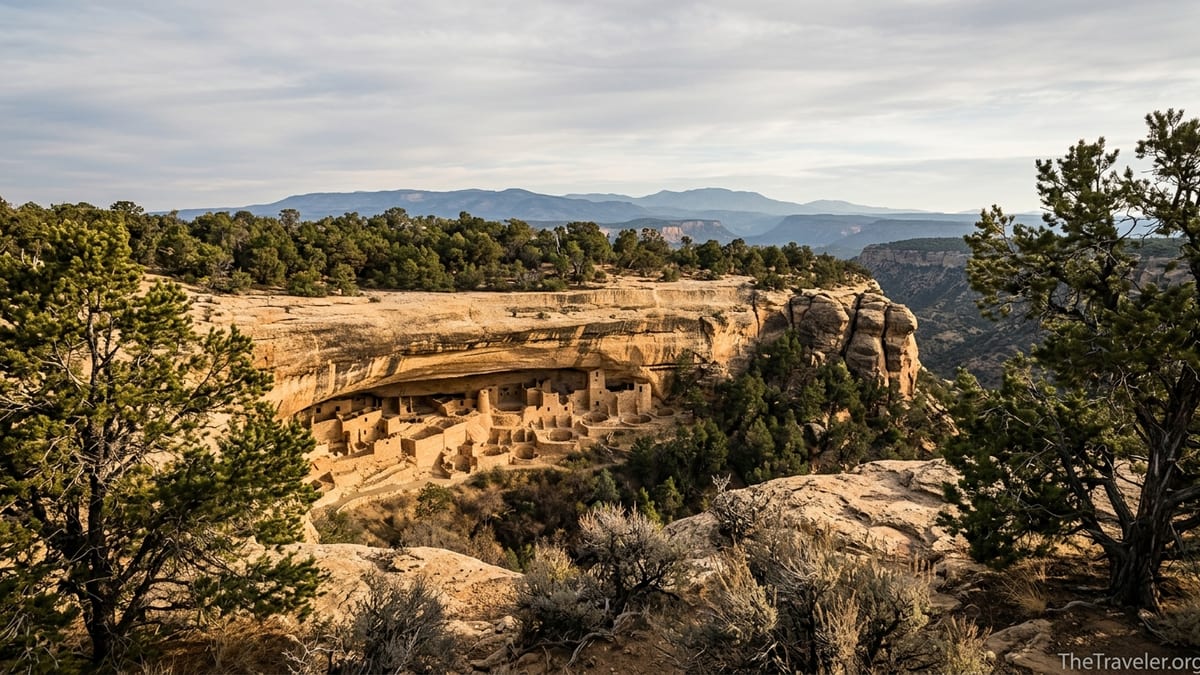
Mesa Verde National Park in southwest Colorado is one of the most recognizable Ancestral Puebloan destinations in North America. Established in 1906, it protects nearly 5,000 known archaeological sites, including around 600 cliff dwellings tucked into alcoves below the mesa top. The park is also a UNESCO World Heritage Site, cited for its concentration and preservation of cliff dwellings such as the iconic Cliff Palace, Balcony House, and Long House.
For many first-time visitors to the Four Corners region, Mesa Verde serves as the introductory classroom for understanding Ancestral Puebloan life. The park concentrates a huge amount of information and accessible ruins along a relatively compact road system on Chapin Mesa and Wetherill Mesa, with viewpoints, short walks, and a visitor center that pulls the story together. If you are flying into Durango or driving the classic loop between Moab, Monument Valley, and the San Juan Mountains, Mesa Verde is logistically straightforward and fits easily into a 1 to 2 day stop.
The park’s fame does come with tradeoffs. In peak summer, ranger-guided tours of the major cliff dwellings often sell out in advance, parking lots fill by late morning, and some overlooks can feel crowded. Still, compared with parks like Zion or Arches, Mesa Verde usually feels surprisingly calm. Many visitors report that while key tours are busy, there are long stretches of roadway and mesa-top villages where you might only pass a few other people during an afternoon’s exploration.
Understanding Mesa Verde’s role among Ancestral Puebloan sites is essential to deciding whether you should build a trip around it alone or pair it with other places. Think of Mesa Verde as the most polished and interpretive-heavy experience, with strong infrastructure and excellent introductory context.
Beyond Mesa Verde: The Wider Ancestral Puebloan Landscape
While Mesa Verde is the best-known cliff-dwelling park, Ancestral Puebloan culture stretched across a vast area of today’s Colorado, New Mexico, Arizona, and Utah. Sites such as Chaco Culture National Historical Park, Aztec Ruins National Monument, Hovenweep National Monument, Bandelier National Monument, Canyon of the Ancients National Monument, and lesser-known areas in Bears Ears and Navajo National Monument show different facets of the same cultural tradition.
Chaco Culture in northwestern New Mexico, another UNESCO World Heritage Site, preserves monumental “great houses” like Pueblo Bonito and Chetro Ketl. These multi-story masonry complexes, some begun as early as the 800s, formed the ceremonial and administrative core of a region-wide network. Unlike Mesa Verde’s cliff dwellings, these structures sit on the canyon floor, connected by engineered roads and aligned with celestial events. Walking here feels more like exploring an ancient city than a hidden village.
Aztec Ruins National Monument near Farmington, New Mexico, offers a compact but powerful introduction to Chacoan-style architecture without the long dirt-road approach of Chaco Canyon itself. Here you can walk through a reconstructed Great Kiva and wander interior passageways of a great house in less than half a day, making it a good alternative or complement for road trippers based around Durango, Cortez, or the San Juan River corridor.
Hovenweep, straddling the Colorado–Utah border, protects clusters of towers and small villages perched along canyon rims. Many travelers combine it with nearby Canyons of the Ancients, where low-density ruins dot sagebrush mesas and side canyons. Compared with Mesa Verde, these sites feel raw and lightly developed. You are more likely to share a trail with ravens and lizards than with tour buses, and that solitude is precisely what many archaeology-focused travelers are seeking.
Accessibility, Roads, and Practical Logistics
Accessibility is one of the clearest ways to distinguish Mesa Verde from a broader circuit of Ancestral Puebloan sites. Mesa Verde lies just off U.S. Highway 160 between Durango and Cortez, within about an hour’s drive of a regional airport and served by standard paved highways. Once you enter the park, you do face a winding uphill drive of roughly 45 minutes from the entrance station to the main mesa-top loops, but the entire route is paved and suitable for regular rental cars.
By contrast, several marquee Ancestral Puebloan sites demand more commitment. Chaco Culture National Historical Park is famous not only for its great houses but also for its approach roads. Access from the north or south typically involves 13 to 20 miles of rough dirt road, which the National Park Service warns can become impassable in wet weather. Rental car companies sometimes discourage or prohibit driving such roads, and visitors routinely share stories of carefully creeping along washboard sections for an hour or more each way. Travelers who are uncomfortable with isolated dirt driving may prefer Aztec Ruins or Mesa Verde as easier options.
Hovenweep and parts of Canyons of the Ancients occupy a middle ground. Paved roads lead most of the way, but the final approaches can involve short stretches of graded dirt. In dry conditions, a standard car usually suffices, though you will want to check current conditions at visitor centers or ranger stations, especially after summer monsoon storms. Bandelier, closer to Los Alamos and Santa Fe, is more accessible, with paved access roads and shuttle systems in busy seasons.
If you have just a long weekend and are flying into Durango or Albuquerque, Mesa Verde plus one satellite site like Aztec Ruins is often the most practical approach. With a full week and a willingness to tackle rougher driving, you can add Chaco and Hovenweep and begin to feel the full breadth of the Ancestral Puebloan world.
Types of Experiences: Tours, Hiking, and How Close You Get
The “feel” of an archaeological site is shaped by how you move through it. At Mesa Verde, your deepest dives into the cliff dwellings usually come through ranger-guided tours. In recent years, popular tours such as Cliff Palace and Balcony House have used timed ticket systems purchased through Recreation.gov, often for modest per-person fees on top of the park entrance. These tours involve climbing ladders, squeezing through tunnels, and descending steep stone steps. You move in a group, listen to a ranger’s narration, and have limited time for quiet reflection in any one room.
On the same visit, you can balance these structured experiences with self-guided walks to sites like Spruce Tree House overlooks or mesa-top villages such as Far View. Short paved or gravel paths let you step right up to masonry walls and peer into kivas without needing a ticket. The mix of guided and self-guided options caters to families, first-time visitors, and travelers who prefer clear interpretation panels.
At Chaco Culture, almost all exploration is self-guided. You drive a loop road past major great houses, then walk short to moderate trails into their plazas and room blocks. Without a ranger leading the way, you are free to linger in one doorway, study wall alignments, or simply stand in silence in a great kiva. Some visitors join scheduled ranger talks or night-sky programs when available, but even then, the mood tends to be quieter and more contemplative than a tightly scripted tour.
Hovenweep and Canyons of the Ancients offer mostly self-guided hiking, often over rocky, uneven terrain with little shade. At Hovenweep’s main Square Tower Unit, for example, you can walk a 2-mile loop around a shallow canyon, passing stone towers on both the rim and deep in the drainage. Interpretation signs are sparse compared with Mesa Verde, so you are piecing together the story yourself, often in near solitude, with only the sound of wind and ravens. For travelers who value open-ended exploration and photography without crowds, these sites can feel more intimate than the larger park.
Time, Budget, and Seasonality
Time and budget play a large role in whether you should focus on Mesa Verde or a broader Ancestral Puebloan itinerary. As of 2025, Mesa Verde’s entrance fees for private vehicles fall in the roughly 20 to 30 dollar range for a seven-day pass, with America the Beautiful passes accepted. Ranger-guided tours add per-person ticket costs that are typically moderate. Lodging options range from on-park accommodations at the Far View area in season to chain hotels in nearby Cortez or Durango, where midsummer rates often sit in the middle tier for Colorado’s tourist towns.
Visiting additional sites adds fuel, lodging, and sometimes extra entrance fees, but many Ancestral Puebloan parks, like Aztec Ruins and Hovenweep, fall under the same national park passes, reducing incremental costs. The primary budget wildcard is Chaco Culture, which demands more fuel and potentially higher vehicle wear if you drive in with a low-clearance car. Some travelers choose guided day tours from Albuquerque or Farmington, which package transport, guiding, and context at a higher upfront cost but remove the stress of navigating the dirt roads yourself.
Seasonally, Mesa Verde’s experience shifts dramatically. In summer, ranger tours run frequently and the Chapin Mesa Archeological Museum operates with regular hours, making this the easiest time to access deeper interpretation and kids’ programs. Temperatures on the mesa can still be hot in the afternoons, but generally remain cooler than lower desert parks. In shoulder seasons, such as April, May, late September, and October, crowds drop but some tours and facilities run reduced schedules or close entirely. Winter brings a quieter, sometimes snowy park with limited access to cliff dwellings.
Many travelers time a broader circuit around spring and fall, when Chaco’s desert floor is not brutally hot and when Hovenweep’s exposed trails are more comfortable. Monsoon season in late summer can affect dirt-road access, so flexible plans and a willingness to substitute nearby paved-access sites, like Aztec Ruins or Bandelier, are helpful. If your dates are fixed and you want reliable access regardless of weather, Mesa Verde, Bandelier, and Aztec Ruins are the most predictable bets.
Crowds, Atmosphere, and Level of Immersion
If you picture yourself alone in an ancient plaza at dusk, atmosphere matters as much as architecture. Mesa Verde’s main cliff dwellings rarely offer solitude during tour season, especially at midday. You will likely share ladders and ledges with several dozen visitors at a time. The tradeoff is rich interpretation and the chance to ask rangers questions about daily life, agriculture, migration, and contemporary Pueblo perspectives.
Step away from the marquee sites at Mesa Verde, however, and the mood shifts. Early morning walks along the Far View area or late evening drives to overlooks can be surprisingly quiet. Travelers who stay inside the park at the mesa-top lodge or campground often report enjoying sunrise and sunset light on the cliffs with almost no one else around, especially in shoulder seasons. Timing your day carefully can reclaim much of the contemplative feel that high-traffic parks sometimes lose.
By comparison, Chaco Culture, Hovenweep, and Canyons of the Ancients frequently feel immersed in silence even at mid-morning. The effort required to reach them naturally limits visitor numbers. At Chaco, you might share Pueblo Bonito with only a handful of other people, able to hear your footsteps echo against stone walls laid more than 900 years ago. Night-sky programs, when offered, can feel particularly powerful because the canyon retains some of the Southwest’s darker skies.
Immersion is not unilateral, though. Because Mesa Verde has more modern infrastructure, museums, and viewpoints, it can offer a more rounded sense of context in a short time. Someone brand-new to Ancestral Puebloan history may come away from a single guided tour at Cliff Palace with a clearer baseline understanding than they would gain from a brief unguided stop at a quieter site. Choosing between these atmospheres is ultimately about whether you value solitude and self-discovery or structured learning and convenience.
Matching Sites to Traveler Profiles
For first-time visitors to the Southwest with a broad interest in history and limited time, Mesa Verde is often the smartest primary choice. If you have 1 or 2 days, you can stay in Cortez or Durango, spend one full day on Chapin Mesa with a cliff-dwelling tour, and dedicate another half day to Wetherill Mesa or nearby Aztec Ruins. This itinerary uses paved roads, keeps driving distances modest, and packs in a high density of well-interpreted sites, ideal for families or casual history buffs.
For archaeology enthusiasts and repeat visitors, adding or prioritizing Chaco Culture can be transformative. A 2 to 3 day loop from Albuquerque or Farmington might include a long dirt-road drive into Chaco, camping under dark skies, then a follow-up day at Aztec Ruins or Salmon Ruins on paved access. This trip rewards those who do their homework, watch weather forecasts closely, and are comfortable with remote travel. The reward is a visceral sense of the Ancestral Puebloan world’s scale and complexity that is hard to replicate in more developed parks.
Photographers, hikers, and travelers who prefer quieter, less formal experiences often gravitate toward Hovenweep, Canyons of the Ancients, and Bandelier. A traveler based in Cortez could spend a day at Mesa Verde, then another day looping through Hovenweep and various roadside ruins in Canyons of the Ancients, exploring short trails where you may see only a handful of other people. Farther east, Bandelier combines cave dwellings carved into soft tuff cliffs with pleasant streamside trails and is easily paired with cultural visits to Santa Fe and Taos.
Mobility and comfort levels also matter. Some of Mesa Verde’s most popular tours include ladders and narrow passages, which may be challenging for visitors with fear of heights or limited mobility. In that case, mesa-top villages, overlooks, and Aztec Ruins’ relatively flat walks can deliver meaningful experiences without the steeper scrambling. Conversely, hikers who relish moderate desert walks may find Hovenweep’s rim trails, Chaco’s longer backcountry routes, or Bandelier’s multi-hour canyon hikes particularly rewarding.
The Takeaway
Choosing between Mesa Verde and a wider circuit of Ancestral Puebloan sites is not a question of which destination is objectively superior. It is a question of which experience fits your time, comfort level, and travel style. Mesa Verde offers the most accessible, interpretive-rich introduction, with paved roads, structured tours, and a dense concentration of world-class cliff dwellings within easy reach of regional hubs like Durango and Cortez.
The broader Ancestral Puebloan landscape, from Chaco Culture and Aztec Ruins to Hovenweep, Bandelier, and Canyons of the Ancients, rewards travelers willing to drive a bit farther, hike a bit longer, and accept fewer services in exchange for deeper solitude. Build your itinerary by starting with Mesa Verde if you are new to the region, then layering additional sites around it according to how much remoteness, driving challenge, and open-ended exploration you want. Whether you are climbing a ladder into a cliff palace or standing alone in a desert great house at sunset, the story of the Ancestral Puebloan world will follow you home.
FAQ
Q1. If I only have one day, should I choose Mesa Verde or another Ancestral Puebloan site?
If you have just one full day and are flying into Durango or driving through southwest Colorado, Mesa Verde is usually the better single choice. You can combine a ranger-guided tour of a cliff dwelling with mesa-top villages and overlooks without dealing with long dirt-road approaches.
Q2. Is it worth visiting Chaco Culture if I am already going to Mesa Verde?
Q3. How difficult are the Mesa Verde cliff dwelling tours physically?
Q4. Are there good options for seeing Ancestral Puebloan sites without driving on dirt roads?
Q5. When is the best season to visit Mesa Verde and other Ancestral Puebloan sites?
Q6. Can I visit Mesa Verde and Hovenweep or Canyons of the Ancients on the same trip?
Q7. Do I need a guide to appreciate sites like Chaco or Hovenweep?
Q8. How should I plan around entrance fees and passes?
Q9. Is it respectful to photograph and post images of these ancient sites?
Q10. How can I deepen my understanding of Ancestral Puebloan culture beyond a short visit?