


Across the high desert of the American Southwest, from Mesa Verde to Chaco Canyon and Bears Ears, ancestral Puebloan sites draw travelers with their cliff dwellings, great houses, and haunting rock art. Yet many visitors arrive with only a postcard image of “ancient ruins,” unaware that these places are living homelands, governed by contemporary laws, fragile geology, and ongoing tribal stewardship. Before you walk under a sandstone overhang or descend a ladder into a kiva, there are important realities most travelers do not know, but should.
Get the latest updates straight to your inbox!
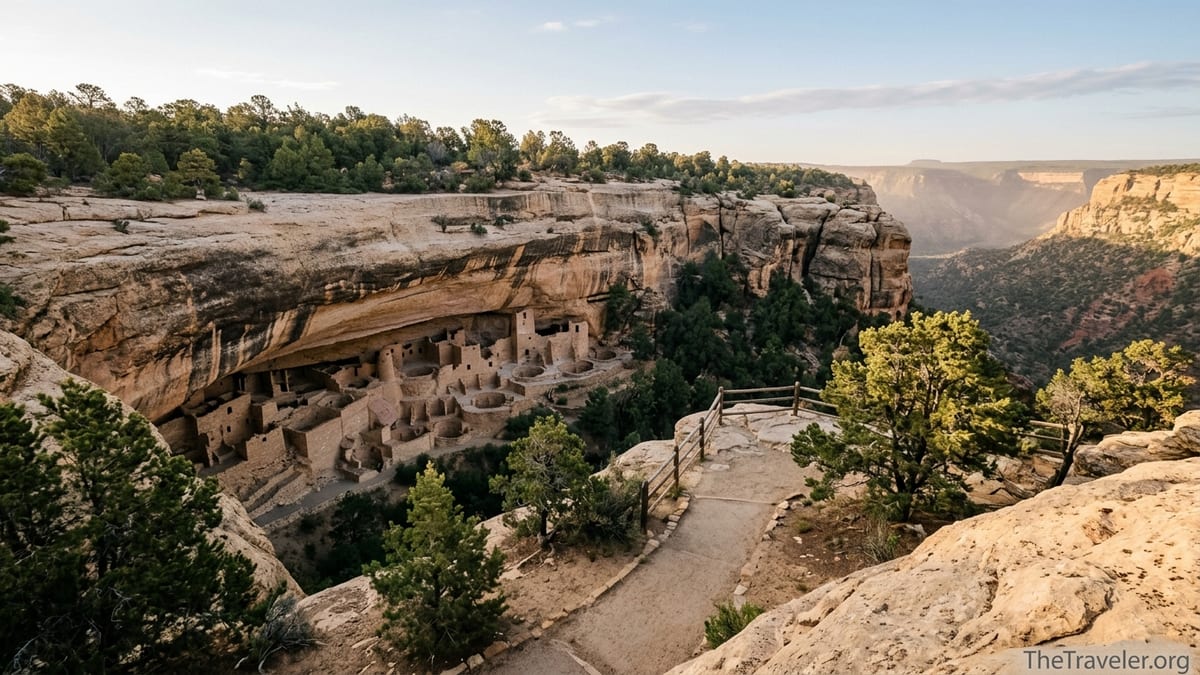
These Are Not “Ruins” of a Vanished People
One of the most important truths, and one that surprises many first-time visitors, is that ancestral Puebloan sites are not abandoned remnants of a lost civilization. They are the homes, shrines, and landscapes of living Native nations. Mesa Verde National Park in Colorado, for example, explicitly notes that its cliff dwellings and mesa-top pueblos are the heritage of 27 affiliated tribes, including Hopi, Zuni, and multiple Pueblo communities along the Rio Grande. When you walk through Cliff Palace or Balcony House, you are in the ancestral homeland of people who still practice ceremonies, tend fields, and tell origin stories that are tied directly to these walls.
At Chaco Culture National Historical Park in New Mexico, the great houses such as Pueblo Bonito and Chetro Ketl are often described as “archaeological wonders.” Yet for descendant communities they are more than engineering feats. They are part of a sacred cultural landscape that includes not only standing masonry but also roads, shrines, and celestial alignments. Modern Pueblo and Navajo people continue to visit Chaco for spiritual reasons, and some ceremonies are not shared with the public. As a traveler, it is more accurate to think of yourself as a guest in someone else’s enduring homeland than as an explorer of ancient ruins.
This shift in mindset has practical implications. It influences how you move through sites, what you photograph, and how you talk about what you see. Referring to “Ancestral Pueblo people” instead of older labels that many communities now consider offensive is one simple way to show respect. Choosing words such as “ancestors” and “homes” rather than “mysterious ruins” helps align your visit with how descendant communities understand these places today.
Travelers often discover this living connection most vividly in smaller, community-run or tribal museums. At the Canyons of the Ancients Visitor Center and Museum in southwestern Colorado, for example, exhibits weave together archaeological findings with oral histories from modern Pueblos and Ute communities. Interpreters there will often remind visitors that migration from places like Mesa Verde did not mean disappearance. People moved, adapted, and are very much present in the region today.
Climbing, Touching, And Even Sitting Can Cause Permanent Damage
Another surprise for many visitors is just how fragile these sites are. Stone walls that have stood for centuries can be destabilized by the pressure of a single person sitting or leaning on them. The National Park Service repeatedly warns that even actions that feel harmless, such as climbing onto a low wall for a better photo or brushing a hand along a petroglyph panel, can accelerate erosion and flake off irreplaceable material. At popular overlooks in Mesa Verde, rangers now spend much of their day politely asking guests to step back from unprotected masonry where repeated contact has started to crumble sandstone blocks.
Rock art is particularly vulnerable. Oils and moisture from your skin can darken or stain the surface and slowly erase faint pecked or painted figures. At places like Grand Canyon’s Tusayan Pueblo and along side canyons feeding into Bears Ears National Monument, managers have had to install fences and viewing platforms not because the rock art is inherently fragile, but because thousands of fingers touching the same spiral over years have left a visible, permanent sheen. National Park Service guidance is blunt: never touch rock art or carve your own marks nearby, and do not attempt to chalk, trace, or pour water on images to “see them better.”
Even where you place your feet matters. In backcountry sections of Canyons of the Ancients National Monument and in remote canyons of Cedar Mesa in Bears Ears, visitors sometimes unknowingly step on ancient corn cobs, pottery sherds, or low mounded room blocks disguised by vegetation. Land managers now urge hikers to stay on durable surfaces such as rock and established trails whenever possible, and to back away if they realize they have wandered into a fragile structure. Commercial-gauge hiking boots and repeated foot traffic can grind artifacts and plaster into dust in a single season.
Because of this fragility, more sites are shifting to guided-only access or restricting interior visits. Balcony House at Mesa Verde, for instance, is accessible only on ranger-led tours that control group size and movement, including where people may stop, sit, and take photographs. In other locations, such as unexcavated pueblos like Yucca House National Monument near Cortez or certain alcove dwellings in Bears Ears, managers encourage visitors to appreciate the site from a distance and to seek more hands-on learning at nearby museums instead.
What You Collect Or Share Can Break Federal Law
Many travelers do not realize that removing even a single potsherd, stone tool fragment, or corn cob from federal land in the United States can violate the Archaeological Resources Protection Act and related statutes. On the ground in places like Chaco Canyon or Hovenweep National Monument, this means that what might look like harmless souvenir hunting is legally treated as looting. Rangers regularly encounter visitors with pockets full of sherds who are stunned to learn they have committed a federal offense, even if their intent was simply to place the object on a home bookshelf.
It is not just physical objects that matter. Land managers and tribal partners are increasingly concerned about “digital collecting” that can expose sensitive sites to harm. Posting precise GPS coordinates, detailed route descriptions, or geotagged photos of unmarked dwellings has led, in a few cases, to sudden spikes in visitation that the site cannot absorb. At Bears Ears, local organizations now explicitly ask travelers to turn off geotagging when photographing cultural sites and to describe locations in general terms rather than giving exact canyon names or access points.
Human remains and associated funerary objects carry an additional layer of legal and moral responsibility. Under the Native American Graves Protection and Repatriation Act, excavating or disturbing graves on federal and tribal lands is strictly prohibited without formal consultation and permits. In practical terms, if you stumble across exposed bones or burial items while hiking near an ancestral Puebloan site, you should leave them exactly as you found them and report the location to the nearest ranger or land office. Authorities can then work with tribal representatives to protect or rebury the remains appropriately.
Even rearranging artifacts within a site has consequences. Some well-meaning visitors at little-monitored alcoves in southeast Utah, for example, have been known to gather scattered sherds into decorative “potsherd gardens” for easier viewing or photography. Archaeologists and tribal representatives alike consider this a form of site disturbance because it moves evidence away from where it was used and deposited. The best practice is simple: enjoy artifacts as they lie, photograph them without touching, and leave the landscape intact for future visitors and for ongoing research.
Some Places Are Spiritually Active, Not Just Historically Interesting
Another underappreciated reality is that many ancestral Puebloan sites remain active spiritual landscapes for descendant communities. To a visiting traveler, a kiva at Mesa Verde may appear to be an empty circular room with a ladder and stone bench. For Pueblo people, it represents a ceremonial space connected to origin stories and ongoing religious practice. At some sites in Chaco Culture National Historical Park, modern tribal members still conduct private rituals at dawn or after dark, intentionally outside the hours of peak tourist traffic.
This ongoing spiritual use influences what you may or may not see. At a few sensitive places in the Four Corners region, tribal partners have asked land managers to close certain structures or restrict photography. An example is an active shrine or modern offering area within what appears to visitors as an ancient dwelling. Travelers might notice eagle feathers, prayer sticks, or fresh cornmeal on a ledge and assume they are historical artifacts, when in fact they are recent ceremonial offerings. The respectful response is not to photograph or touch these items, but to step back and give the space privacy.
Tribal perspectives also shape interpretive content. At Tusayan Pueblo on the South Rim of Grand Canyon and at visitor centers serving Canyons of the Ancients and Bears Ears, you will often find signage or ranger talks created in collaboration with tribal historic preservation offices. These presentations may emphasize themes like migration, reciprocity with the land, and cultural continuity rather than mystery or collapse. Listening carefully to these voices, and recognizing that not all knowledge is meant for public sharing, is part of visiting as a respectful guest.
As a traveler, you may also encounter days when ceremonies or tribal events temporarily limit access or change standard schedules. In some Pueblo communities near ancestral sites in New Mexico and Arizona, photography can be entirely prohibited during feast days or dances, and road access may be rerouted. Even at major federal sites like Chaco, park staff may adjust evening programs or access to certain overlooks in consultation with tribal partners when spiritually significant dates approach. Flexibility and patience are essential; the land is not a stage set but a living cultural landscape.
Conditions On The Ground Are Harsher Than Most Visitors Expect
The postcard images of cliff dwellings basking under blue skies can conceal how physically demanding and exposed these landscapes really are. Many ancestral Puebloan sites sit between 6,000 and 8,000 feet of elevation, with thin air, strong sun, and wide swings between daytime heat and nighttime cold. At Mesa Verde, visitors drive a steep, winding road onto a high mesa and then walk along cliff edges or descend ladders into alcoves. Even short guided tours can feel strenuous for those unused to altitude, and afternoon thunderstorms in summer can bring sudden hail or lightning.
At Chaco Culture National Historical Park, the challenge begins before you even reach the great houses. Access typically involves a long stretch of washboarded dirt road that can become muddy and rutted after storms. Once inside the park, many trails have little to no shade. Visitors who underestimate the dryness and sun exposure sometimes arrive at the visitor center already dehydrated. Rangers there routinely advise carrying far more water than you think you need, wearing wide-brimmed hats and long sleeves, and planning rigorous hikes such as the Pueblo Alto trail for early morning.
Backcountry sites managed by the Bureau of Land Management, including much of Bears Ears and Canyons of the Ancients, add navigational complexity to the mix. Trailheads may be unmarked or signed only with small posts, and social paths can braid into confusing networks. In canyons like Grand Gulch or Mule Canyon, flash floods remain a seasonal risk, and temperature differentials between the rim and the canyon floor can be dramatic. Visitors who rely solely on a smartphone, especially in areas with little cell coverage, can find themselves disoriented far from help. Paper maps, offline navigation apps, and clear trip plans shared with someone outside your group become more than conveniences; they are safety essentials.
Accessibility also varies more than many people expect. Some overlooks and museum exhibits, such as those at the Mesa Verde Visitor and Research Center or the Canyons of the Ancients Visitor Center and Museum, offer ramps, accessible restrooms, and relatively flat paths to view ancestral sites from a distance. Others, including cliff dwellings that require ladder climbs, tight tunnels, or steep stone steps, may be unsuitable for travelers with limited mobility or certain health conditions. Checking recent park accessibility information and, if needed, choosing mesa-top pueblos or roadside viewpoints rather than alcove tours can make the experience safer and more rewarding.
Your Tourism Choices Directly Affect Preservation And Local Communities
Many travelers underestimate how much their individual choices about where to spend money, which guides to hire, and how long to stay can shape the future of ancestral Puebloan landscapes. In regions like the Four Corners, tourism can support tribal and rural economies that are closely tied to these sites, but it can also strain infrastructure, increase housing pressure, and contribute to crowding at fragile locations. Choosing locally owned lodging in towns like Cortez, Bluff, or Gallup, and hiring Native-led guiding services when available, helps keep more of your spending in communities most connected to the sites you are visiting.
Visitor centers and museums play a quiet yet critical role in site protection. Places such as the Bears Ears Education Center in Bluff or the Canyons of the Ancients Visitor Center encourage travelers to spend more time learning off-site and to treat backcountry visits as a privilege rather than an entitlement. Staff there often provide up-to-date information about which canyons are experiencing overuse, where seasonal closures are in effect to protect raptor nests or lambing grounds, and which lesser-known overlooks can disperse crowds. Travelers who build an extra half day into their itinerary to visit these centers frequently make more informed, lower-impact choices in the field.
Permits and group-size limits, particularly on guided hikes or overnight backpacking routes, are another tool that depends on visitor cooperation. In canyon systems with dense ancestral Puebloan sites, land managers may cap group sizes or require day-use permits to limit cumulative impact. While it can be tempting to view these as obstacles, they exist precisely because previous eras of open access led to documented graffiti, structural damage, and artifact collecting. Planning ahead, reserving tours early, and being prepared with backup options if permits are unavailable are all part of traveling responsibly in these landscapes.
Finally, seemingly small gestures can signal support for ongoing stewardship. Donating to friends groups or tribal cultural preservation programs, attending ranger talks that feature Native speakers, and amplifying land acknowledgments in your own trip storytelling help keep descendant communities visible. When you return home, describing your visit in terms of learning from living cultures, rather than conquering remote ruins, subtly shifts expectations for those who might travel after you.
The Takeaway
Visiting ancestral Puebloan sites is not simply a matter of ticking another national park off your list. It is an opportunity to step, briefly and humbly, into landscapes where ancient masonry, living cultures, and complex legal protections intersect. Understanding that these are ancestral homes rather than abandoned ruins, recognizing the extreme fragility of walls and rock art, and respecting both federal law and modern spiritual practice are all essential parts of preparing for your trip.
Conditions on the ground can be harsh, from high-altitude sun to rough roads and unmarked trails, and your personal safety planning directly influences how much you can absorb and appreciate. Just as importantly, your tourism decisions shape how well these sites and their descendant communities will fare in the coming decades. By seeking out tribal perspectives, supporting local institutions, and embracing low-impact behavior, you help ensure that the cliff dwellings of Mesa Verde, the great houses of Chaco, and the countless smaller pueblos and rock art panels across the Four Corners remain intact and meaningful for those whose ancestors built them, and for travelers yet to come.
FAQ
Q1. Are visitors allowed to go inside ancestral Puebloan cliff dwellings?
Access varies by site. Some dwellings, such as Cliff Palace or Balcony House at Mesa Verde, are open only on guided tours, while many others are closed to interior visitation to protect fragile structures.
Q2. Is it ever acceptable to take pottery sherds or other artifacts home?
No. Removing artifacts from federal or tribal lands is illegal and considered looting, even if you take only a single sherd or corn cob as a souvenir.
Q3. Can I post my exact hiking route and GPS coordinates from a trip to Bears Ears or Canyons of the Ancients?
Land managers and local organizations urge visitors not to share precise locations of sensitive cultural sites online. General descriptions are fine; exact coordinates can unintentionally attract damaging crowds.
Q4. What should I do if I accidentally discover human remains or burial items?
Do not touch or move anything. Carefully note the location, leave the area as you found it, and report the discovery to the nearest ranger station or land management office as soon as possible.
Q5. How physically demanding are tours at places like Mesa Verde and Chaco Canyon?
Many visits involve high elevation, sun exposure, and uneven terrain. Some tours require climbing ladders, descending steep steps, or walking significant distances without shade, so reasonable fitness and preparation are important.
Q6. Are there options for travelers with limited mobility to experience ancestral Puebloan sites?
Yes. Museums and visitor centers offer exhibits, films, and accessible overlooks. Mesa-top pueblos and roadside viewpoints can provide meaningful experiences without ladders or long hikes; check current accessibility information before visiting.
Q7. Why do some sites or tribes restrict photography during certain times or ceremonies?
Photography limits often reflect spiritual and cultural values, protecting ceremonies, sacred objects, and community privacy. These rules are not arbitrary; they honor living traditions connected to the sites.
Q8. Do I need special permits to hike in areas with many ancestral Puebloan sites?
In some canyons and monuments, day-use or backcountry permits are required to manage crowding and protect cultural resources. Always check current regulations for specific parks, monuments, and BLM units before heading out.
Q9. How can I support descendant communities while visiting ancestral Puebloan landscapes?
Stay in locally owned lodging, hire Native or local guides when possible, visit community and tribal museums, and consider donating to cultural preservation programs or friends groups tied to the sites you enjoy.
Q10. What is the single most important guideline to remember when visiting these places?
Treat every site as if you are a guest in someone’s ancestral home: look closely, tread lightly, leave everything as you find it, and respect that living people remain deeply connected to these landscapes.