


More news on this day
Mexico is backing a landmark 24-year concession granted to Global Ports Holding for Acapulco’s cruise terminal, positioning the Pacific resort city for a fresh wave of tourism and long-term economic recovery after years of security concerns and hurricane damage.
Get the latest news straight to your inbox!
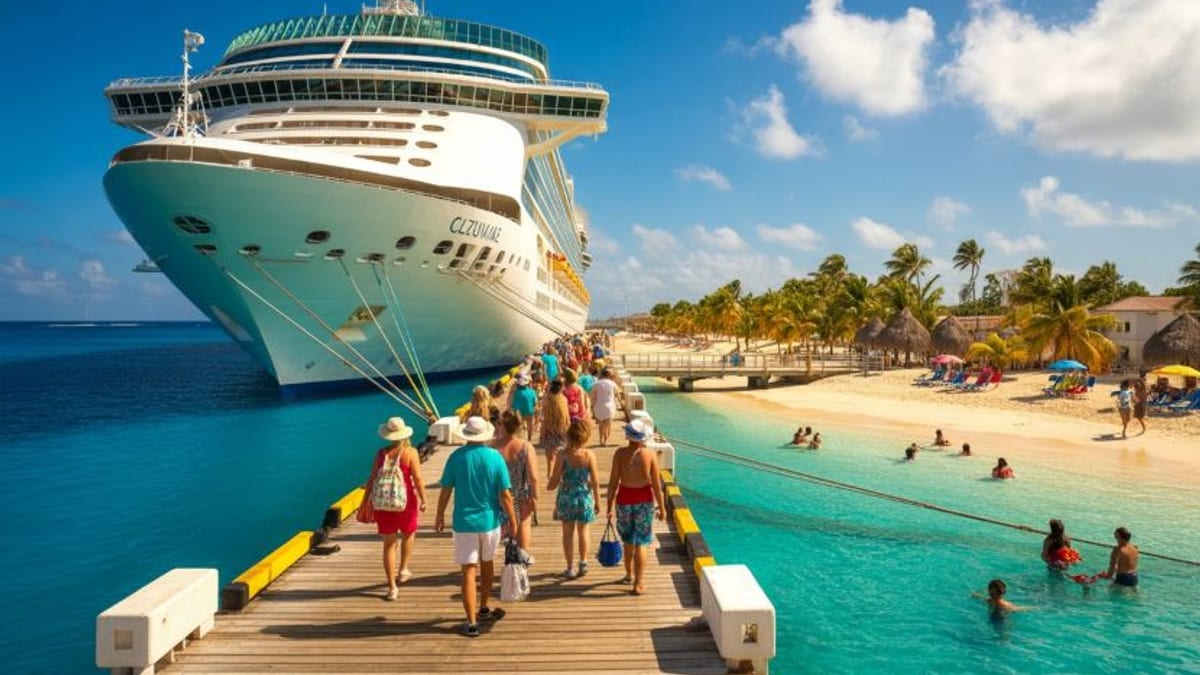
Landmark 24-Year Concession Signals Long-Term Commitment
Publicly available information shows that Global Ports Holding, described in industry coverage as the world’s largest cruise port operator, has signed a 24-year operating concession for Acapulco’s cruise terminal area. The agreement, finalized in April 2026 with the national port administration for Acapulco, gives the company responsibility for operating and developing a waterfront zone of more than 17,000 square meters in the heart of the bay.
According to corporate disclosures, the concession covers the existing cruise pier and terminal buildings and includes obligations to invest in upgraded infrastructure, passenger services and commercial spaces. Reports indicate that Global Ports Holding plans a phased development program, allowing the company to align investment with future growth in cruise calls and passenger volumes on the Mexican Riviera.
Industry observers note that the deal marks Global Ports Holding’s first port in Mexico, expanding a portfolio that already spans Europe, the Caribbean and North Africa. Analysts say the move reflects growing interest from international operators in Mexico’s Pacific coast, which has historically seen fewer cruise calls than the country’s Caribbean gateways but is gaining attention as lines diversify itineraries.
Government-focused logistics and infrastructure coverage has framed the agreement as part of a broader push to bring private capital into strategic port assets. The long tenor of the concession is viewed as a signal that Mexico expects cruise tourism to remain a key pillar of coastal development and foreign-exchange earnings over the coming decades.
Anchor Project in Mexico’s Port Modernization Strategy
The Acapulco terminal handover aligns with a multi-year Mexican program to modernize key ports on both coasts. Planning documents and business media reports describe a national portfolio of projects worth the equivalent of billions of US dollars, aimed at expanding cargo capacity, upgrading passenger facilities and improving connectivity with highways and rail.
Within that framework, Acapulco is categorized as a tourism-focused port, with federal and state authorities prioritizing cruise infrastructure, waterfront redesign and public-access promenades. Previous government presentations referenced a new or substantially renovated cruise terminal scheduled for completion around late 2026, designed to attract larger vessels and reposition the city on Pacific cruise maps.
By bringing in a specialist cruise operator on a long concession, Mexico is effectively outsourcing commercial management and product development at Acapulco’s passenger terminal while retaining strategic oversight through its port system. Analysts say this model mirrors deals in San Juan, Seville, Casablanca and other destinations where Global Ports Holding or its partners manage terminals under public ownership frameworks.
Sector commentary suggests that the arrangement could also support Mexico’s wider tourism diversification strategy. While Caribbean hubs such as Cozumel and Mahahual continue to dominate cruise traffic, policymakers have sought to distribute visitor flows more evenly across coastal states, both to ease pressure on saturated ports and to spread economic benefits.
Tourism Rebound Hopes After Security Shocks and Hurricane Otis
The concession arrives at a pivotal moment for Acapulco, which has seen its international profile dim after years of security incidents and, more recently, devastating storm damage. The city was heavily impacted by Hurricane Otis in October 2023, when the Category 5 system made landfall with little warning, severely damaging hotels, marinas and basic infrastructure along the bay.
Travel and hospitality data for 2024 highlight how far Acapulco fell behind other Mexican cruise destinations in the aftermath. Industry research on Mexican cruise ports indicates that Cozumel, Mahahual and Ensenada handled millions of passengers in 2024, while Acapulco registered no regular cruise calls as the port focused on recovery and reconstruction.
Local and national tourism officials have since promoted Acapulco’s rebuilding as an opportunity to redefine the destination. Urban design proposals emphasize a more walkable, publicly accessible waterfront, improved safety measures and closer integration between the cruise terminal, historic center and hotel districts along the Costera Miguel Alemán.
By entrusting cruise operations to a global specialist, Mexico is betting that a more predictable, higher-quality port experience will help persuade cruise lines to reintroduce Acapulco into Mexican Riviera itineraries. Destination planners argue that a modernized terminal and curated shore experiences could reassure both operators and travelers who remain wary of the city’s past challenges.
Economic Impact: Jobs, Small Business and Regional Linkages
Economic analyses of cruise ports in Mexico and the Caribbean generally point to three main channels of local impact: direct employment at the terminal, spending by passengers and crew in port, and demand for goods and services across the supply chain. In Acapulco’s case, the concession is expected to touch all three as calls gradually resume.
Port modernization plans highlight the potential to create new jobs in security, maintenance, guest services, retail, food and beverage, and tour operations tied to the terminal. Beyond direct employment, local business associations are watching closely to see how new commercial spaces within the concession area will be leased and whether local brands will be able to secure prominent positions alongside international operators.
Regional tourism experts note that Acapulco’s cruise revival could generate spillover benefits for neighboring communities in Guerrero through shore excursions to cultural, ecological and adventure sites outside the urban core. Transport companies, guides, crafts cooperatives and food producers could all see rising demand if ship calls increase as expected.
At the same time, public debate in Mexico about the real value of cruise tourism has grown more intense, particularly around port fees and how much passenger spending reaches local communities. Observers say Acapulco’s reboot will be closely watched as a test case for whether a public private model at the terminal can deliver more inclusive economic gains than past approaches.
Competitive Stakes on the Mexican Riviera
The Acapulco concession also has strategic implications for cruise competition along the Pacific coast of North America. Over the past decade, many Mexican Riviera itineraries shifted toward ports such as Cabo San Lucas, Puerto Vallarta and Ensenada, with some lines dropping Acapulco entirely due to security assessments and demand patterns.
Industry reports indicate that cruise operators are now reconsidering their Pacific deployment as new homeports emerge and traveler preferences evolve. A revitalized Acapulco terminal operated to international standards could give itinerary planners more flexibility to design longer voyages from California, Baja California and even Central American ports, opening the door to new route combinations.
For Mexico, having a globally managed cruise gateway on the Pacific side may also strengthen its negotiating position with major cruise brands when discussing future schedules, port charges and infrastructure needs. Observers point out that other privatized or concessioned terminals in the region have used improved facilities and service levels to secure more consistent seasonal commitments from the largest lines.
While passenger volumes will ultimately depend on broader economic conditions and traveler confidence, the combination of federal backing, long-term private investment and Acapulco’s enduring name recognition on the global tourism map is being framed by analysts as a rare second chance for one of Mexico’s most storied beach destinations.