


More news on this day
Heightened customs checks at major Mexican airports are triggering a wave of complaints from U.S. travelers, who report surprise inspections, confiscations and the threat of fines that in extreme cases could climb toward 12,000 dollars for undeclared high-value goods.
Get the latest news straight to your inbox!
From Routine Checkpoint to Flashpoint
Mexico’s customs procedures have long allowed inspectors to scrutinize luggage and assess duties on goods that exceed personal exemptions. In recent months, however, social media posts, travel forums and local news coverage have begun to describe a noticeably tougher environment at airports popular with U.S. tourists, including Cancun and Mexico City. Travelers recount being pulled aside for secondary screening, having bags emptied on inspection tables and being questioned in detail about new electronics, luxury accessories and large quantities of cosmetics or clothing.
Publicly available information from Mexico’s customs authority indicates that inspectors can impose steep penalties when they believe passengers are importing merchandise rather than personal belongings. Under Mexican rules, undeclared taxable items can be hit with combined assessments and penalties that reach a large percentage of an item’s commercial value. For U.S. visitors arriving with designer handbags, watches, jewelry, premium cosmetics or multiple high-end devices, that can translate into potential liability that runs into several thousand dollars.
Reports circulating in travel communities describe some U.S. passengers being warned that their total exposure on disputed luxury purchases could run as high as the low five figures in dollar terms. In practice, the amount ultimately demanded varies widely from case to case, but the specter of a bill that could approach 12,000 dollars has become a powerful symbol among concerned tourists who feel they have little leverage once their passports and bags are in customs control.
Alongside financial worries, travelers highlight a broader sense of unpredictability. While some passengers describe breezing through the green channel without so much as a question, others on the same flights have reported lengthy interrogations and assessments on items they believed would qualify as personal use. That inconsistency is helping to fuel the perception of a sudden “crackdown,” even though the underlying legal authority has been in place for years.
Legal Framework Allows Aggressive Penalties
Mexico’s customs regulations distinguish between personal luggage and merchandise, giving inspectors discretion to determine when goods appear to be intended for resale rather than individual use. Official guidance explains that undeclared items found to exceed the duty-free allowance can be subject to taxes and additional penalties calculated as a large share of the goods’ market value, and that noncompliance can lead to precautionary seizure of the items involved.
For travelers, that structure means that a suitcase filled with new, high-value products may draw different treatment than a bag containing a mix of used clothing and one or two new items. If customs officials categorize a traveler as a de facto importer, the person can be asked to pay not only import duties but also stiff surcharges. When the goods in question include designer accessories or electronics worth several thousand dollars, the resulting bill can reach levels that feel punitive, particularly to visitors who believed they were simply returning from a shopping trip.
In online accounts, some passengers describe being told that penalties could reach a high percentage of the total declared value if they declined to cooperate immediately. Consumer advocates note that such interactions can be intimidating for foreign visitors who may not be familiar with local law, the appeals process or their right to request more detailed written explanations. Language barriers and time pressure to catch onward flights can further reduce travelers’ willingness to contest assessments that, by their calculations, come close to or even exceed 10,000 or 12,000 dollars.
Legal analyses of Mexico’s customs system emphasize that the government has a clear mandate to pursue tax revenue on imports and to combat smuggling and counterfeit goods. Recent policy papers also point out that enforcement operations at airports are a central part of that strategy. For tourism-dependent destinations, however, the challenge lies in maintaining a visible stance against illicit trade while avoiding the perception that ordinary visitors are being treated as commercial offenders for carrying high-end personal belongings.
On-the-Ground Impact: Delays, Seizures and Travel Disruption
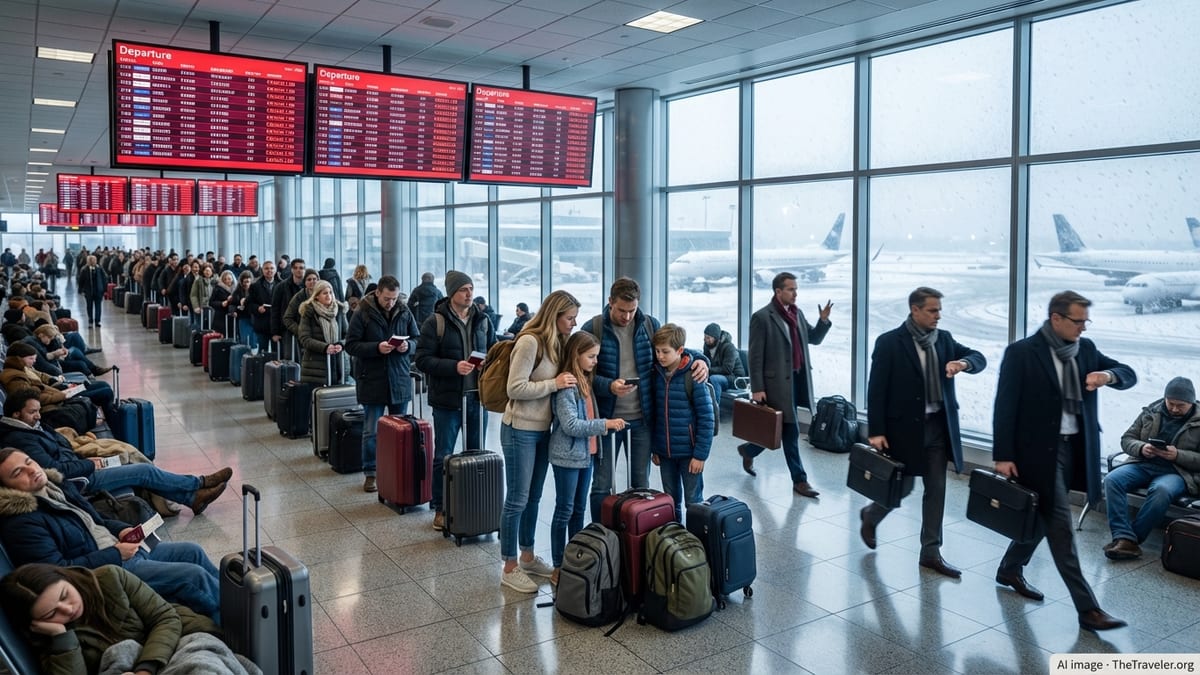
Beyond the risk of fines, the immediate effect for many tourists is disruption to their trips. Travelers have described extended queues forming behind inspection stations when multiple passengers are diverted for secondary screening. In peak seasons, these bottlenecks can delay airport transfers, shorten resort stays and cause missed connections, according to anecdotal reports from tour operators and hotel staff monitoring guest arrivals.
In more serious cases, posts shared on regional news sites and travel forums recount instances where disputed goods are confiscated on the spot pending payment of assessed duties and penalties. Passengers faced with unexpected charges on luxury bags, jewelry or high-end electronics sometimes choose to abandon the items rather than pay the full amount. Others report being escorted to payment counters to settle in cash or with a card before being allowed to proceed.
Episodes in which travelers feel pressured, confused or unable to verify the legality of a demand in the moment have fed a perception that legitimate enforcement and opportunistic behavior can blur together. Some visitors interpret sudden reassessments or changes in quoted amounts as evidence of misconduct, while others see them as the product of discretionary decision-making in a complex regulatory environment. In either case, the experience is often described as stressful and damaging to Mexico’s image as a welcoming, hassle-free vacation destination.
The uncertainty is particularly acute for passengers transiting with expensive shopping from resort-area malls and duty-free boutiques. Many assume that receipts or store packaging will automatically shield them from problems, only to discover that customs officers may focus on value, quantity and apparent intent rather than point of purchase. That discrepancy between traveler expectations and formal rules is at the heart of the current wave of frustration.
Why U.S. Passengers Feel Especially Exposed
U.S. travelers make up a large share of arrivals to beach destinations such as Cancun, the Riviera Maya, Los Cabos and Puerto Vallarta. Industry data show that these routes are heavily marketed as quick, convenient escapes, and short breaks are often paired with shopping for luxury goods, electronics and fashion. As a result, Americans are statistically more likely than many other visitor groups to arrive with high-value items that can attract extra scrutiny at customs.
Several widely shared accounts involve passengers returning from special-occasion trips, such as destination weddings, anniversary celebrations or influencer-hosted events, where gifts and sponsored products can accumulate quickly. A single checked bag might contain new designer accessories, premium cosmetics in bulk and multiple electronic devices. When inspectors treat that collection as merchandise rather than personal effects, the potential tax base grows dramatically and with it the possible penalties.
Airline consumer advocates in the United States note that many passengers do not realize that compensation rules, luggage liability limits and insurance policies often do not cover losses or confiscations tied to customs enforcement. Travelers may assume that their carrier or credit card will make them whole for seized items, only to learn that claims linked to regulatory actions fall into a gray area. That mismatch contributes to the feeling that a customs dispute in Mexico can escalate into an unexpectedly costly episode with limited recourse.
The growing online conversation has prompted some U.S. travel advisers and content creators to issue more explicit warnings ahead of Mexico trips. Their guidance typically urges clients to travel with fewer unopened, high-value items; to carry receipts for expensive purchases; and to consider declaring major buys proactively upon arrival. Even so, frequent visitors point out that enforcement intensity seems to vary by airport, time of day and individual inspector, leaving many to conclude that personal risk is difficult to predict.
How Travelers Can Navigate the Crackdown
While the recent wave of complaints has raised alarms, experienced travelers and legal specialists stress that many problems can be mitigated through preparation. They recommend that visitors familiarize themselves with Mexico’s current baggage allowances, duty-free thresholds and declaration procedures before flying. Understanding the difference between personal effects and merchandise, and recognizing that multiples of the same new item can be viewed as inventory, can help shape packing choices.
Practical steps suggested in public advisories include consolidating valuables into carry-on bags so they remain within reach, traveling with original receipts for big-ticket items and keeping packaging to a minimum to avoid the appearance of commercial stock. Those who plan significant shopping sprees are encouraged to research local tax obligations and to set aside a contingency budget in case import duties are assessed on departure or return.
Specialists also recommend that travelers stay calm and ask for clear, written explanations if confronted with a large assessment for undeclared goods. While language barriers can present challenges, requesting documentation of proposed penalties and itemized calculations may provide a basis for future review. Some visitors choose to document interactions for their own records, though they must balance that impulse with respect for local rules regarding filming in secure areas.
For now, there is no indication that Mexico plans to scale back the legal authority driving these inspections, and published policy documents continue to frame strict customs enforcement as a key tool in combating tax evasion and illicit trade. That leaves airlines, hotels and tourism boards working to reassure nervous visitors while encouraging them to arrive better informed. As the peak travel seasons approach, how Mexico manages the tension between firmness at the customs desk and flexibility toward foreign guests will remain a closely watched factor in its crucial relationship with U.S. travelers.