


Zurich has a reputation that precedes it: glossy banks, immaculate trams, and price tags that make even seasoned travelers blink. It frequently appears on lists of the world’s most expensive cities, and a quick glance at hotel rates or a simple coffee can seem to confirm the stereotype. Yet when you look past the first impression, the real cost of a Zurich trip is more nuanced than the headlines suggest.
Is Zurich Really That Expensive?
The perception of Zurich as an expensive city is not random. Cost of living indexes consistently rank it near the top globally, and locals talk matter-of-factly about monthly budgets that would feel luxurious in many other places. For travelers, a basic hotel room that starts around 180 to 250 Swiss francs per night and casual restaurant meals that often exceed 30 francs per person immediately reinforce the sense of a high-price destination.
However, this is only part of the story. Zurich is also a city where public spaces are exceptionally well maintained, tap water from fountains is clean and drinkable, and public transport works with near-clockwork reliability. Many of the things that shape a visitor’s experience, from lakefront walks to parks and viewpoints, are completely free. The contrast between expensive daily transactions and free, high-quality infrastructure is where perception and reality start to diverge.
To understand whether Zurich is “too expensive,” it helps to compare costs not only to cheaper regions but also to similar global cities. When you match Zurich against places like Oslo, Copenhagen, or central London, some costs turn out to be comparable, while others are noticeably higher or lower. That context is crucial when planning your own Zurich travel budget.
Why Zurich Feels Expensive At First
Most visitors feel the price shock in Zurich within their first hour in the city. You might step off the train at the main station and, while waiting for a tram, buy a takeaway coffee that comes to 5.50 or 6 francs. In many European capitals, a similar drink might cost 3 euros, so the gap is obvious and immediate. Even a bottle of water at a kiosk can run to 3 or 4 francs, which seems steep until you realize you could have refilled a reusable bottle for free at one of the city’s many fountains.
Accommodation magnifies that first impression. Midrange hotels commonly begin around 200 francs per night for a double room and can easily climb past 300 francs in busy months. This is not just in postcard-perfect old town properties, but also in business-style hotels near the central station or along the river. For travelers who are used to 120-euro rooms in cities like Berlin or Madrid, Zurich lodging can feel like it is in an entirely different price category.
Dining is another point where visitors quickly sense the premium. A simple main course such as a pasta dish or curry in an unpretentious restaurant frequently falls in the 25 to 35 franc range, and a burger with fries can sit near 30 francs before you add a drink. Even fast-casual places and salad bars often charge around 15 to 20 francs for a filling meal. The absence of very cheap restaurant tiers, such as the 8 to 12 euro lunches common in Southern Europe, means Zurich can feel unforgiving if you sit down to eat without checking the menu first.
Transport prices also contribute to the early sticker shock. A single tram or bus ticket within the core Zurich zones typically costs around 4 to 5 francs for an adult, and a standard train ticket from the airport to the main station is roughly 7 francs in second class. Compared with cities where a metro ride might cost 1.50 or 2 euros, the gap is noticeable. When these first encounters happen back-to-back on your arrival day, it is natural to conclude that everything in Zurich is wildly expensive.
What Actually Costs More Than Expected
Some areas of spending in Zurich are not just slightly higher, they are genuinely expensive compared with most other cities. Accommodation is a clear example. Business travel, limited land for construction, and strong local demand keep prices elevated, so even very small hotel rooms or simple apartments can command high nightly rates. Travelers looking at guesthouses, serviced apartments, or aparthotels may still find prices over 150 francs per night, which is notably above many European averages.
Dining out regularly, especially in the evening, is another category where costs can escalate faster than new visitors expect. Sit-down dinners with a main course, a glass of wine or a beer, and perhaps a shared dessert for two can easily cross 80 to 100 francs. High service standards, relatively high wages for restaurant staff, and quality ingredients all contribute to this, but for a traveler on a modest budget the effect is that spontaneous dinners out need to be fewer and more carefully chosen.
Alcohol in bars and restaurants often surprises visitors. A draft beer in a central bar typically ranges around 7 to 9 francs for half a liter, and a glass of house wine might be 8 to 12 francs. Cocktails commonly cross 16 francs in stylish venues. If you are used to inexpensive pints in Prague or low-priced house wine in Spain, a casual evening out in Zurich can double or triple your expected spend without feeling particularly extravagant in terms of what you actually ordered.
Certain everyday treats, like coffee and pastries, also sit above regional norms. A cappuccino for 5.50 francs and a simple croissant around 2 to 3 francs means that a quick café breakfast can creep toward 10 francs without including anything more substantial. While these amounts may be manageable on a short trip, they quickly matter if you repeat them every day or travel as a family.
Where Zurich Offers Real Value
Despite the higher prices, there are areas where Zurich offers strong value, especially when you consider the quality and reliability of what you receive. Public transport is a good example. A 24-hour ticket that covers central Zurich and nearby zones costs more than a single fare but allows unlimited travel within that period, including trams, buses, suburban S-Bahn trains, and even some boats on the lake. For travelers who plan to move around frequently, this can compress many trips into one fixed cost while experiencing a network that is punctual, clean, and extensive.
For short stays, the Zurich Card goes a step further by combining unlimited second-class travel in the city and surrounding zones with free or discounted entry to numerous museums and attractions. While it requires an upfront payment that might feel high compared with a basic day ticket, travelers who visit even a couple of museums and take a round-trip boat ride on Lake Zurich often find that the pass quickly pays for itself. When you factor in the convenience of not buying separate tickets each time, the card can represent genuine value, especially over 48 or 72 hours.
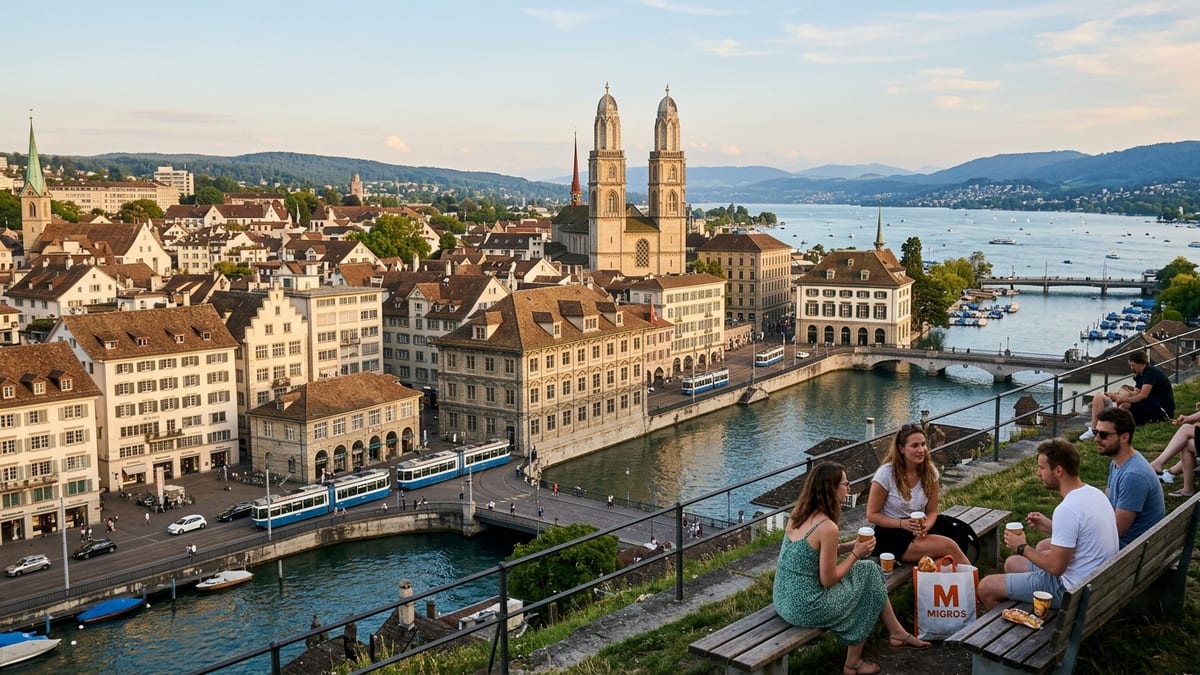
Free activities are one of Zurich’s major advantages, particularly in good weather. The entire lakefront is lined with promenades, lawns, and public bathing areas where you pay little or nothing to enjoy the view. Some lake baths charge a small entrance fee, but many spaces are open, with ladders down into the water and wide grassy areas for picnics. Exploring neighborhoods like the old town, the industrial quarter around Zurich West, or the university quarter above the city costs nothing, and the views over the lake and Alps from local hills are also free.
Another area of value lies in quality and longevity. Food in supermarkets often emphasizes fresh, local, and seasonal produce, and while prices per item can be higher than in neighboring countries, quality is generally excellent. This matters for self-catering travelers, who might pay 8 to 10 francs for a fresh ready-made salad box or 4 francs for a good loaf of bread yet feel they receive a meal or ingredients that are healthier and more substantial than cheaper options elsewhere. The same applies to infrastructure: well-lit streets, efficient trams, and reliable services are not free, but they underpin a travel experience that many visitors judge as worth the extra expense.
Why The Perception Gap Exists
The gap between how expensive Zurich feels and how residents experience it is rooted in Swiss incomes and economic structure. Switzerland has some of the highest average wages in the world, with typical full-time monthly gross salaries that sit well above most European counterparts. After relatively moderate income taxes and social contributions, many residents still have substantial take-home pay, which means prices that shock visitors may feel normal, though not cheap, to locals.
High wages directly influence the cost of labor-intensive services. Restaurant meals, haircuts, childcare, and professional services must cover wages that are significantly higher than those in neighboring countries, so the final prices charged to customers rise accordingly. For a Zurich worker earning a strong local salary, a 30 franc lunch is noticeable but manageable. For a traveler whose income is based in a weaker currency or a lower-wage economy, that same lunch can feel like a luxury splurge.
Strict quality standards and an emphasis on safety and reliability also affect prices. From construction regulations to food hygiene rules and environmental standards, Switzerland layers many requirements into almost every sector of the economy. Meeting these standards adds to costs, but the result is infrastructure that tends to work without much visible friction. Trains are frequent and dependable, tap water is excellent, and public spaces are meticulously maintained, which all contribute to the sense that your money is buying a high level of everyday security and comfort.
Currency strength further shapes perceptions. The Swiss franc has long been a strong and relatively stable currency, and during periods when the euro or other currencies are weaker, visitors feel the gap even more. A traveler converting from euros, U.S. dollars, or many Asian currencies may see their vacation budget shrink on arrival, even before they spend anything. This makes Zurich feel pricier in practice than simple price comparisons on paper might suggest.
What A Realistic Daily Budget Feels Like
To understand Zurich travel cost in real terms, imagine a midrange traveler spending a full day in the city. They wake up in a centrally located three-star hotel that costs around 220 francs per night for a double room. Breakfast might be included, but if it is not, they head to a nearby bakery, pay about 3 francs for a croissant and 5 francs for a cappuccino, and spend roughly 8 francs each to start the day. Afterward they buy a 24-hour transport ticket for about 9 to 10 francs, which will cover all trams and buses they need for the day.
In the late morning they take a tram to the old town, explore side streets and churches for free, then visit a major museum where entry costs somewhere around 15 to 20 francs. Lunch is a mix of value and comfort: perhaps a supermarket picnic of fresh bread, cheese, fruit, and a drink for about 12 to 15 francs per person, eaten on a bench overlooking the river. Using the same transport pass, they then head to the lake for a swim in a public bath, paying a modest entrance fee of around 8 francs, or simply using a free lakeside area if they prefer.
In the afternoon they ride an S-Bahn train up to a viewpoint above the city using their still-valid day pass, enjoying broad views over the lake and the distant Alps at no extra cost. Later, they stop at a café for another drink and perhaps a slice of cake, spending 10 to 12 francs per person. By dinner time, they decide on one sit-down meal, choosing a casual restaurant where mains fall around 25 to 30 francs and a small beer or soft drink adds another 5 to 7 francs.
By the end of the day, this traveler has likely spent about 70 to 90 francs per person on food, drinks, local transport, and paid activities, on top of their accommodation. A more frugal traveler who self-caters from supermarkets, sticks to free sights, and limits café visits could reduce this to closer to 50 to 60 francs per day, while a traveler who opts for wine with dinner, multiple café stops, or higher-end dining can easily push the daily spend past 120 francs without feeling particularly extravagant in terms of what they actually did.
The Takeaway
Zurich is undeniably one of the most expensive cities a traveler can visit, especially if you approach it with the same dining and accommodation habits that work in cheaper destinations. Room rates, restaurant meals, alcohol, and little luxuries like daily coffees sit noticeably above the European average, and for visitors paid in weaker currencies the gap can feel dramatic. If you arrive unprepared, the first day’s spending will likely confirm every story you have heard about Switzerland being pricey.
At the same time, Zurich rewards travelers who understand where the real value lies. The public transport network is not just efficient but also cost-effective when you use day passes or city cards. Many of the city’s most memorable experiences, from swimming in the lake to strolling the old town or watching sunset from a hillside viewpoint, are free or very low cost. With a bit of planning, self-catering some meals, and treating restaurant dinners as occasional highlights, it is possible to enjoy Zurich without feeling that every moment is draining your budget.
Ultimately, whether Zurich feels “too expensive” depends on expectations and habits. If you compare every coffee and tram ride to cheaper destinations, frustration is inevitable. If you instead compare Zurich to other high-income global cities and focus on the quality, safety, and reliability you receive for your money, the picture becomes more balanced. Understanding these dynamics before you arrive allows you to design a Zurich trip that aligns with both your budget and your expectations.
FAQ
Q1. Is Zurich really the most expensive city in Europe?
Zurich often appears near the top of European cost of living rankings and is among the most expensive cities, especially for housing and services, but whether it is strictly number one can vary by survey and year. For travelers, it will usually feel more expensive than cities like Paris, Barcelona, or Berlin, though it may be comparable to or slightly higher than places like Geneva or some Nordic capitals.
Q2. How much should I budget per day for a Zurich trip?
A realistic midrange budget, excluding accommodation, is roughly 70 to 100 Swiss francs per person per day, covering food, local transport, and a couple of paid activities. Very frugal travelers who cook their own meals, use supermarket takeaway, and focus on free sights can bring this nearer to 50 to 60 francs, while those who enjoy restaurant dinners, drinks, and frequent café stops can easily exceed 120 francs per day.
Q3. Why are restaurants in Zurich so expensive?
Restaurant prices in Zurich reflect high wages for staff, strong social protections, and quality expectations for ingredients and hygiene. When everyone from cooks to servers earns significantly more than their counterparts in many other countries, each plate of food must cover those labor costs, which is why a simple main course can regularly cost 25 to 35 francs or more.
Q4. Is public transport in Zurich worth the price?
Although single tickets are pricey compared with many cities, Zurich’s public transport system is dense, reliable, and integrates trams, buses, trains, and boats under one fare structure. Day passes and city cards can turn what seems like an expensive network into good value, especially if you ride multiple times per day or combine urban travel with short regional trips around the lake or surrounding hills.
Q5. Can I visit Zurich on a tight budget?
Visiting Zurich on a tight budget is possible if you are deliberate about your choices. Staying in hostels or budget guesthouses, shopping in supermarkets, cooking where possible, and focusing on free attractions like the lakefront, parks, and neighborhoods can keep daily expenses under control, though it will still feel pricier than many other European destinations.
Q6. Are there cheaper places to stay near Zurich?
Yes, staying slightly outside the city center or in nearby towns along the S-Bahn lines often reduces accommodation costs. While you will spend a bit more on transport and time, the combination of a cheaper room and a day pass for trains and trams can be more economical than paying premium rates for a central hotel, especially during busy periods or trade fairs.
Q7. Is it cheaper to cook for myself in Zurich?
Cooking for yourself almost always reduces costs in Zurich, particularly if you are staying for several days and have access to a kitchen. Supermarket prices are higher than in many neighboring countries but still significantly cheaper per meal than eating in restaurants, and simple dishes using local bread, cheese, vegetables, and basic proteins can be both affordable and good quality.
Q8. When is the most affordable time to visit Zurich?
Prices in Zurich do not swing as dramatically as in some seasonal beach destinations, but hotel rates are often a bit lower outside major trade fairs, summer peak, and the Christmas period. Visiting in late spring or early autumn can sometimes bring slightly better deals, and booking accommodation well ahead usually offers more choice at moderate prices.
Q9. How expensive is alcohol in Zurich compared to other cities?
Alcohol in Zurich’s bars and restaurants is noticeably more expensive than in many European countries, with draft beers commonly around 7 to 9 francs and cocktails well into double digits. Buying beer or wine from supermarkets is considerably cheaper, so many budget-conscious travelers choose to enjoy a drink by the lake or in their accommodation instead of spending heavily in bars every night.
Q10. Is Zurich still worth visiting if I am on a limited budget?
Zurich can absolutely be worth visiting on a limited budget if you value clean, safe public spaces, easy access to nature, and a compact city that is pleasant to explore on foot or by tram. While you may need to skip some restaurant meals or high-end activities, the lake, river, historic streets, and viewpoints cost little or nothing and deliver a strong sense of place that many travelers find justifies the higher overall price level.