


Mexico remains one of the world’s most popular destinations for long-stay visitors and foreign residents, but its residency policy framework is no longer static or predictably permissive. Over the last several years Mexican authorities have tightened enforcement around long-term stays, adjusted financial thresholds, and approved significant fee increases that will reshape the risk profile for current and prospective expats. Understanding these changes is essential for anyone considering Mexico as a medium or long-term base.
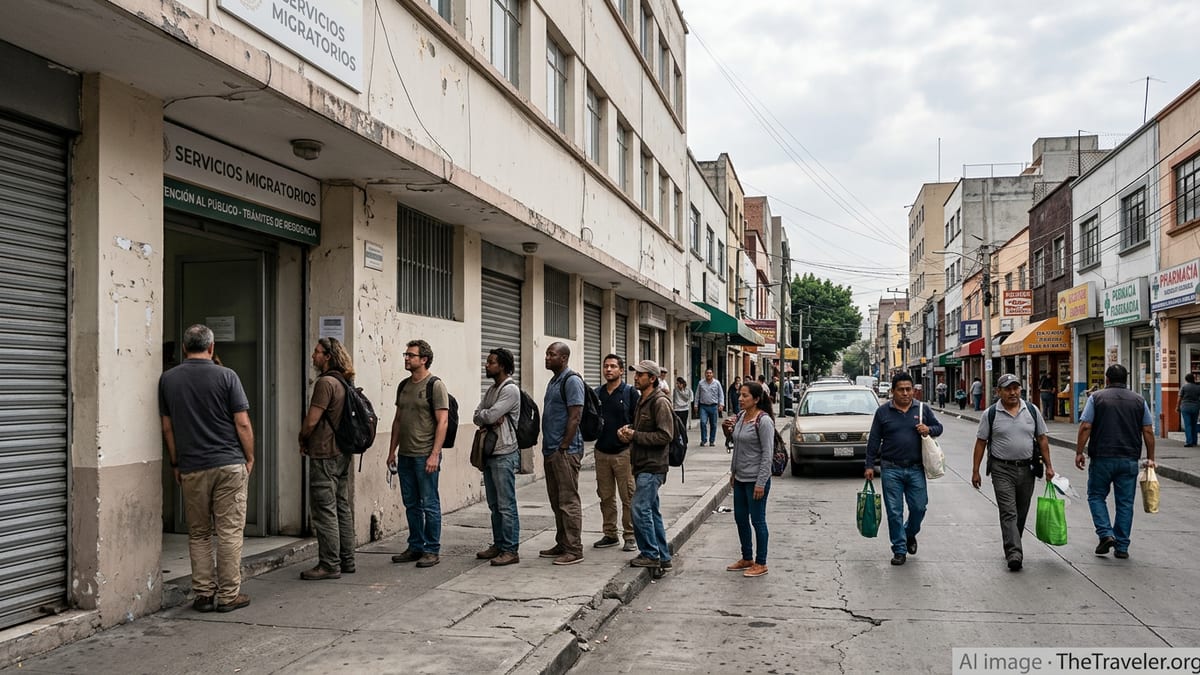
Overview: From Easy Long Stays To A More Controlled Residency System
For many years Mexico was perceived as relatively flexible on long-term stays, with generous tourist entries and comparatively accessible residency options. That perception has driven substantial inflows of digital nomads, remote workers, retirees, and lifestyle migrants. Policy and practice, however, have been evolving toward tighter control and closer alignment with the formal residency system, rather than informal long-stay tourism.
Key trends include increased scrutiny at entry for those attempting to live in Mexico on repeated visitor stays, gradual but cumulative increases in financial thresholds tied to the national UMA index, and a sharp break in 2026 with residency fees expected to roughly double in many categories. These shifts do not eliminate the viability of Mexico as a relocation destination, but they increase both the cost of non-compliance and the volatility of relying on past norms.
Expats evaluating Mexico today need to move beyond legacy assumptions about automatic 180-day stays and low-friction residency. The developing pattern is a more formalized system in which authorities expect long-stay foreigners to hold proper residency status, meet rising solvency standards, and adhere strictly to deadlines and reporting obligations.
Rising Financial Thresholds And Cost Volatility
Mexico calculates most residency income and asset thresholds using the Unidad de Medida y Actualización (UMA), an indexed unit that is updated annually. As UMA values rise, so do the peso-denominated requirements for temporary and permanent residency. Several recent adjustments and policy choices have amplified this effect, particularly from 2025 onward, with some consulates reporting higher income multiples and more conservative interpretations of solvency.
For temporary residency based on economic solvency, recent practice at many consulates has generally fallen in an approximate band of the equivalent of about 2,500 to over 4,000 US dollars per month in verified income, or savings in the range of roughly 40,000 to over 70,000 US dollars, depending on consulate and year. Permanent residency thresholds are higher, often requiring substantially greater recurring income or asset balances. These figures are indicative, not guaranteed, and can shift with exchange rates, UMA updates, and local consular criteria.
From 2026, fee policy introduces a sharper discontinuity. Analysis of recent federal budget legislation and specialist commentary indicates that government processing fees for residency cards are set to more than double across many categories. Typical five-year costs for the progression from one-year temporary residency through to permanent status, which previously aggregated to roughly the equivalent of 25,000 Mexican pesos, are projected to rise above 50,000 pesos per applicant. This represents a material cost risk for long-term planning, particularly for families applying together.
Prospective expats should therefore treat Mexican residency costs as both rising and volatile. Budgeting based on historic averages or informal anecdotal figures is increasingly unreliable. It is prudent to assume that income requirements and official fees will continue trending upward, and that there is a non-trivial risk of sudden policy adjustments tied to fiscal or political priorities.
Shorter Visitor Stays And Reduced Reliance On The 180-Day Norm
The legal framework for visitor entry to Mexico continues to allow stays of up to 180 days for many nationalities. In practice, however, the assumption that immigration officers will automatically grant the full six months has eroded. Reports across multiple airports and land crossings indicate that stays of 15, 30, 60 or 90 days are increasingly common, especially where travelers are perceived as likely to live in Mexico rather than visit briefly.
Immigration officers have broad discretion in determining the length of stay granted on the Forma Migratoria Múltiple (FMM) or its digital equivalent. That decision is influenced by declared length of stay, evidence of onward travel, financial means, and the perceived credibility of a tourist profile. Authorities have also invested in better-connected information systems, increasing their ability to see patterns of repeated long stays and border runs.
For expats who have historically relied on “perpetual tourism” to reside in Mexico without formal residency, this shift presents a structural risk. There is no guaranteed right to repeated 180-day entries, nor to consecutive back-to-back stays. As scrutiny increases, individuals attempting to live indefinitely on visitor entries face greater likelihood of receiving shorter authorizations, being questioned at entry, or in more serious scenarios, being denied admission.
Relocation planners should therefore treat visitor status as an inherently unstable basis for living in Mexico. While one or more long entries may still be granted, policy direction and enforcement practice point toward nudging long-stay foreigners into the formal residency channels or out of the country.
Enforcement Tightening And Greater Compliance Expectations
Beyond entry decisions, Mexico’s immigration authorities have signaled a broader tightening of compliance expectations for existing residents. During the pandemic, many administrative deadlines and penalties were temporarily relaxed for residency card holders who faced travel and processing disruptions. That suspension has now been withdrawn, and ordinary rules regarding renewals, address notifications, and status changes are fully back in force.
Residents who allow their cards to expire, fail to update key personal data, or neglect to complete renewals on time are again subject to standard penalties. These may include fines and, in cases of prolonged non-compliance, the risk of residency revocation. Authorities appear more willing than in previous years to enforce these consequences, particularly where individuals have also breached the terms of their status.
At the same time, legislative discussions and policy proposals have contemplated expanding the range of officials empowered to verify immigration status, including local police and the National Guard in certain contexts. While implementation varies and practice is uneven across states, the overall trend increases the operational risk for foreigners who are out of status or who cannot readily demonstrate valid documentation during inspections or checkpoints.
For compliant residents, these shifts primarily translate into a need for more rigorous calendar management and record-keeping. For irregular residents or quasi-residents on visitor entries, the risk profile is more serious, as enhanced enforcement tools make it easier for authorities to identify and address violations.
Policy Response To Digital Nomads And Expanding Expat Clusters
Mexico’s residency and visa policy evolution is closely linked to the rapid growth of digital nomadism and expat concentrations in major cities and tourism regions. Authorities at federal and local levels are grappling with pressures on housing markets, infrastructure, and social cohesion in areas where foreign demand and purchasing power have accelerated rent inflation and short-term rental proliferation.
In this context, tightening residency criteria and raising government fees serve multiple policy objectives. They generate additional fiscal revenue from high-income newcomers, discourage casual long-stay tourism that bypasses formal residency, and signal political responsiveness to local concerns about displacement and gentrification. Fee increases for temporary and permanent residency applicants in 2026, in particular, have been framed as a significant policy response to the perceived externalities of digital nomad inflows.
Parallel debates have emerged around the creation of a dedicated digital nomad visa or e-visa. Regional business groups in areas such as the Riviera Maya have actively lobbied for formalized long-stay remote work categories, arguing that clear rules would reduce legal ambiguity and facilitate better planning for both authorities and investors. As of early 2026, however, Mexico has not yet implemented a dedicated national digital nomad visa, and long-stay remote workers remain largely channeled into existing visitor and residency categories.
Until a tailored framework is created, policy responses are likely to continue operating through the available levers: stricter application of visitor stay limits, higher economic solvency thresholds, and increased costs for formal residency. Expats whose relocation plans are predicated on remote work without local employment should incorporate these structural tensions into their risk assessments.
Operational Risks In The Residency Process
Mexico’s residency system is administratively complex, with responsibilities divided between Mexican consulates abroad and the National Migration Institute (INM) inside the country. Recent practice shows several operational risks that can affect timelines and outcomes for applicants even when they meet the formal eligibility criteria.
First, processing capacity is uneven. Consulates in high-demand locations and INM offices in popular expat regions often experience appointment backlogs and seasonal surges, particularly around policy change dates or toward year-end. This can extend processing times and compress renewal windows, increasing the risk of falling out of status if applications are not lodged early.
Second, interpretation of central rules can vary between consulates and INM offices. Some posts apply higher income multiples, require more extensive documentation, or scrutinize bank statements and tax records more intensively than others. Applicants with borderline financial profiles may find themselves approved at one post and refused at another, adding a layer of unpredictability to planning.
Third, policy updates sometimes take effect with limited transition periods. The 2026 residency fee increases, for example, were tied to federal budget measures that left relatively little time for applicants to advance their plans under the previous cost structure. Similar dynamics may recur with future UMA adjustments or regulatory changes, creating incentives for earlier action but also complicating long-term forecasting.
Scenario-Based Risk Assessment For Prospective Expats
Given the current trajectory of Mexico’s residency framework, relocating individuals and families should approach planning through scenario-based analysis rather than single-point expectations. Several recurring profiles face distinct policy-related risks.
Individuals intending to reside in Mexico primarily on visitor entries face the most pronounced uncertainty. Their continued presence depends on discretionary decisions at each entry, growing data visibility on past stays, and evolving enforcement priorities. This group should evaluate the consequences of sudden short-stay stamps or entry denial, including potential disruption to housing, work routines, and family arrangements.
Applicants who can comfortably exceed current income and asset thresholds but are sensitive to cost increases should focus on timing. Bringing forward residency applications or renewals ahead of known fee hikes or UMA adjustments can materially reduce lifetime cost. However, they should also build in buffers for processing delays, local interpretation issues, and additional documentation requests.
Those whose financial profiles sit near the lower edge of current thresholds face a different risk. As consulates and INM offices adopt more stringent multiples or documentation standards, previously acceptable income levels may no longer suffice. Fluctuations in exchange rates can also move an applicant from just above to just below the required level in local currency terms. Conservative planning would treat current published requirements as a floor rather than a guaranteed standard.
Across all profiles, the central theme is that Mexico’s residency environment is dynamic. Expats should expect continued policy experimentation around fees, solvency metrics, and enforcement practices as the country balances openness to foreign residents with domestic economic and social considerations.
The Takeaway
Mexico remains accessible compared with many jurisdictions, but the era of consistently generous informal arrangements for long-term foreign stays is receding. Residency policy is moving toward tighter criteria, higher direct costs, and more assertive enforcement of both visitor and resident status rules.
For relocation decision-makers, the practical implication is that Mexico should be evaluated not on legacy narratives of easy 180-day entries and inexpensive residency, but on the emerging framework of indexed financial thresholds, substantial application and renewal fees, and stricter expectations around legal compliance. Individuals and families whose plans assume long-term residence should prioritize securing and maintaining formal residency status, monitor annual UMA and fee updates, and allow for local variation in administrative practice.
Mexico can still represent a viable and attractive base, but only when its residency policy trajectory is incorporated directly into risk and cost assessments. Those who underweight these evolving factors face heightened exposure to policy shocks, administrative hurdles, and potential disruption to their relocation plans.
FAQ
Q1. Is Mexico still reliably granting 180-day stays to visitors who might want to relocate later?
Visitor entries of up to 180 days remain legally possible, but they are no longer automatic in practice. Immigration officers increasingly apply discretion, and many travelers receive shorter periods such as 15, 30, 60 or 90 days based on their profile, documentation, and travel history.
Q2. How are rising UMA values affecting residency eligibility for expats?
Residency income and asset thresholds are tied to the UMA index, which is updated annually. As UMA rises, so do peso-denominated requirements, meaning expats must show higher monthly income or savings over time, and marginal applicants are more exposed to disqualification when thresholds adjust.
Q3. What is changing in 2026 regarding Mexico residency fees?
From 2026, federal fee schedules provide for large increases in government charges for residency processing. In many cases, total official costs for a multi-year path from temporary to permanent residency are expected to more than double compared with prior years.
Q4. Can long-term expats still live in Mexico using only repeated visitor entries?
Some individuals continue to do so, but this strategy is increasingly risky. Authorities have more connected data systems, are granting shorter stays more frequently, and can deny entry when they judge that a traveler is effectively residing in Mexico without proper status.
Q5. Are residency rules and requirements consistent across all Mexican consulates and INM offices?
The core legal framework is national, but practical application varies. Different consulates and INM offices may interpret income multiples, acceptable documentation, and procedural details differently, creating uneven approval odds and processing experiences across locations.
Q6. How strictly are residency renewal deadlines and notification rules being enforced now?
Following the end of pandemic-era flexibility, authorities have returned to enforcing standard deadlines and reporting rules. Late renewals or failure to notify changes such as address or employer can trigger fines and, in more serious cases, risk of residency revocation.
Q7. Are digital nomads a specific target of Mexico’s changing residency policies?
Policy changes are framed broadly, but concerns about digital nomads and concentrated expat communities are a clear underlying driver. Shorter visitor stays, higher fees, and talk of future specialized visas all reflect attempts to channel long-stay remote workers into more regulated categories.
Q8. How do exchange rate movements influence residency policy risk for expats?
Because financial thresholds are set in pesos and many expats earn foreign currency, exchange rate swings can determine whether an applicant meets the required levels. A weaker foreign currency or sudden peso appreciation can push applicants below the qualifying band even if their nominal income is unchanged.
Q9. What operational risks should expats plan for in the Mexico residency process?
Key operational risks include appointment bottlenecks at busy consulates and INM offices, variable documentation standards between locations, and policy updates that take effect with short lead times. These factors can delay approvals, compress renewal windows, or force applicants into higher fee regimes.
Q10. How should prospective residents factor Mexico’s residency policy trajectory into relocation decisions?
Prospective residents should treat Mexico as a dynamic policy environment with rising thresholds and costs. Conservative planning assumes stricter enforcement, higher future fees, and no reliance on long-term visitor entries, with contingency plans for policy shifts or administrative delays built into relocation timelines.