


More news on this day
New Zealanders planning trips through the Middle East are being urged to prepare for sudden airspace closures and widespread flight disruption, as the Ministry of Foreign Affairs and Trade (MFAT) tightens travel advice for the conflict-affected region.
Get the latest news straight to your inbox!
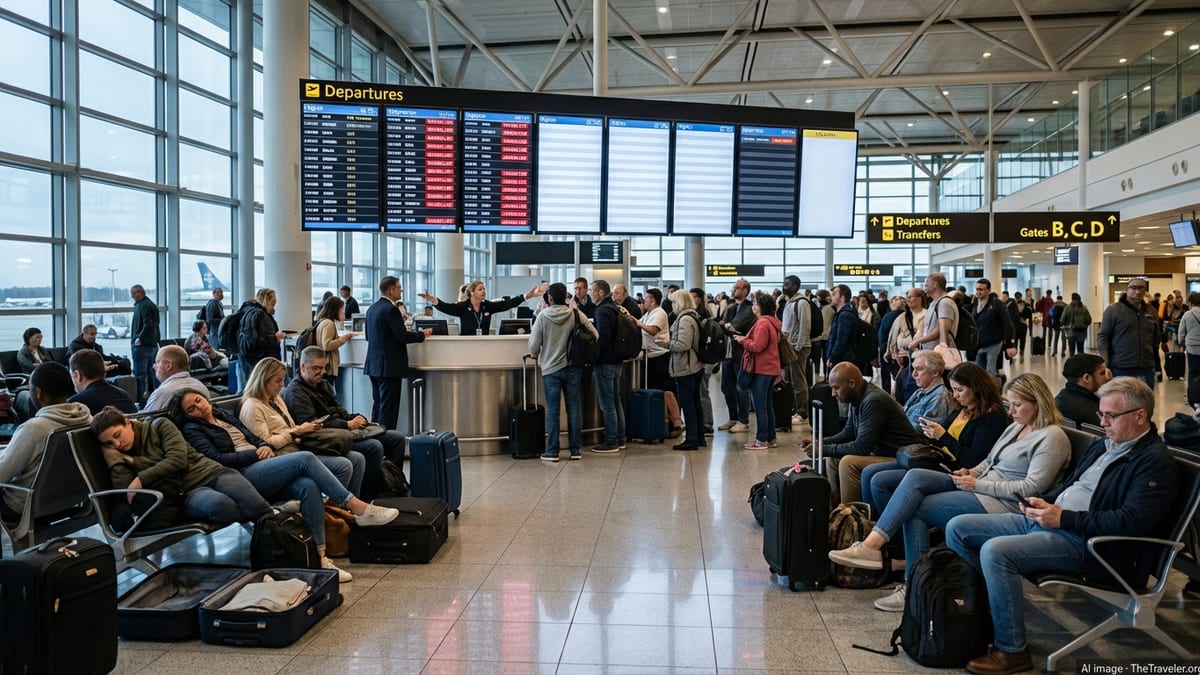
Stronger travel warnings as regional conflict disrupts skies
MFAT has recently updated its travel advisories across parts of the Middle East, highlighting a heightened risk environment linked to the ongoing Iran conflict and associated military activity. Publicly available information shows that New Zealand’s official guidance now emphasizes the possibility of rapidly changing conditions, including short-notice airspace restrictions and route diversions affecting major transit hubs.
According to published coverage and government advisories from multiple countries, the 2026 Iran war has already triggered extensive airspace shutdowns and airport disruptions in states such as Iran, Iraq, Israel, Kuwait, Qatar, Bahrain and the United Arab Emirates. These closures have at times halted traffic along some of the world’s busiest long-haul corridors between Europe, Asia and Australasia, leaving airlines to improvise lengthy detours or cancel services outright.
MFAT’s messaging aligns with a broader pattern of governments re-evaluating risk in the region. Recent advisories from partners including the United States and European states point to a complex and fast-moving security picture, where missile and drone incidents, heightened military activity and retaliatory strikes have raised concerns about civil aviation safety and reliability.
For New Zealand travellers, MFAT’s revised advice underscores that issues may not be limited to destinations in the Middle East itself. Even those only changing planes in regional hubs could experience significant disruption, as airlines navigate a patchwork of airspace restrictions, operational constraints and evolving safety guidance.
Airspace closures reshape key global flight corridors
Reports from aviation regulators and industry bodies indicate that extensive airspace closures and risk advisories are reshaping how airlines operate over the Middle East. The European Union Aviation Safety Agency has issued updated guidance urging operators under its oversight to avoid the skies over Iran, Iraq and Lebanon into August 2026, and to steer clear of parts of Gulf airspace, including Bahrain, Kuwait, Qatar, the United Arab Emirates and sections of the Gulf of Oman.
These measures follow earlier periods this year when several Middle Eastern states fully or partially closed their airspace to civilian traffic in response to missile and drone attacks. Flight tracking data and analysis from aviation specialists show that thousands of services were cancelled or rerouted, with some carriers forced to route long-haul journeys over Egypt and Saudi Arabia or push further north through Central Asia and the Caucasus to keep away from active conflict zones.
The knock-on effects extend beyond the immediate region. Airlines serving markets between New Zealand, Australia and Europe rely heavily on Middle Eastern hubs for one-stop connections. When corridors above the Gulf and surrounding areas are restricted, carriers may have to reduce frequencies, lengthen flight times or temporarily suspend certain routes, challenging the reliability that long-haul travellers typically expect.
Industry observers note that even when airports remain operational, risk-based decisions by individual airlines and insurers can limit activity. An open airport and technically available airspace may still see reduced schedules if operators judge the security environment to be volatile or if regulators in the airline’s home country apply stricter thresholds than local authorities.
What MFAT’s warning means for New Zealand travellers
MFAT’s strengthened messaging does not automatically prohibit travel, but it does signal that those heading to, from or through the Middle East face higher-than-usual uncertainty. Travel advisories for several countries in the region are already at levels where non-essential trips are discouraged, and the updated language stresses the real possibility of stranded passengers, missed onward connections and rapidly changing routings.
Public advice from travel insurers and airlines indicates that policy coverage may hinge on whether travellers heed official government guidance. Some providers emphasise that claims can be declined if a journey proceeds into an area subject to a formal “do not travel” notice, or if a traveller chooses a routing through a region that their own government recommends avoiding, especially once disruptions are widely publicised.
New Zealanders transiting through the Middle East are being encouraged, via publicly available guidance, to monitor MFAT’s SafeTravel updates closely, register their itinerary and maintain flexible plans. That includes allowing generous connection times, being prepared for schedule changes, and keeping accommodation and ground transport as changeable as possible in case an unexpected airspace closure forces an unplanned overnight stay or diversion.
For those whose trips are still in the planning phase, travel agents and comparison platforms are increasingly steering bookings towards alternative routings through hubs in East Asia or Europe where feasible. While these options can add time and cost, they may offer a higher degree of predictability amid the current volatility over the Middle East.
Global ripple effects as other governments tighten advice
The MFAT updates come as other governments refine their own messaging in light of the Iran conflict and its spillover. This week, widely reported advisories from the United States highlighted a worldwide caution for citizens abroad, citing heightened tensions in the Middle East and warning of potential airspace closures and travel disruptions affecting routes far beyond the immediate conflict zone.
In the United Kingdom, recent foreign travel advice has flagged “global travel impacts” associated with the escalation in the Middle East, noting airspace closures, delayed flights and cancellations across multiple regions. Similar warnings from European and Asian governments have pointed to the need for travellers to check flight status repeatedly in the days and hours before departure.
These overlapping notices reflect a shared assessment that aviation is particularly exposed to sudden deterioration in the security situation. Flight paths over and around the Middle East serve as critical connectors between continents, and even limited closures can remove key waypoints from the global network, forcing large numbers of passengers onto a reduced number of viable alternatives.
Airlines, for their part, are signalling that schedule planning in the region will remain fluid. Public statements and operational updates from major carriers suggest that contingency routings, dynamic risk assessments and last-minute equipment swaps are likely to continue as long as missile and drone threats, regional tensions and regulatory advisories remain elevated.
Practical steps for those who must travel
For New Zealanders who cannot avoid transiting the Middle East in the coming weeks, MFAT’s sharper language about possible airspace closures effectively serves as a call to prepare for disruption. Travel industry guidance suggests choosing itineraries with through-tickets on a single carrier or alliance, which can make it easier to be rebooked if one leg is cancelled due to a sudden airspace restriction.
Travellers are also being advised, through airline and airport communications, to keep contact details up to date in booking profiles, download airline apps for real-time alerts and carry at least one backup payment method in case a forced layover requires unplanned accommodation or meals. Flexible or refundable fares, while more expensive upfront, may prove less costly than rigid tickets that cannot be changed without high penalties when airspace conditions shift.
For those already in affected countries, MFAT’s guidance highlights the importance of closely tracking local news and official announcements, maintaining a charged mobile phone and printed copies of travel documents, and having contingency plans for extended stays or alternative exit routes. Some travellers have opted for overland or sea connections to neighbouring states whose airspace and airports are currently less constrained.
While the intensity of restrictions is likely to fluctuate with developments in the Iran conflict and regional diplomacy, MFAT’s upgraded warnings indicate that volatility in Middle Eastern airspace may persist for some time. For long-haul travellers, building redundancy and flexibility into any itinerary touching the region is increasingly viewed as a necessary precaution rather than an optional extra.