


More news on this day
Travelers at Philadelphia International Airport faced another difficult day on Sunday, as more than 300 flights were delayed or canceled in the lingering aftermath of powerful thunderstorms that swept through the region a day earlier.
Get the latest news straight to your inbox!
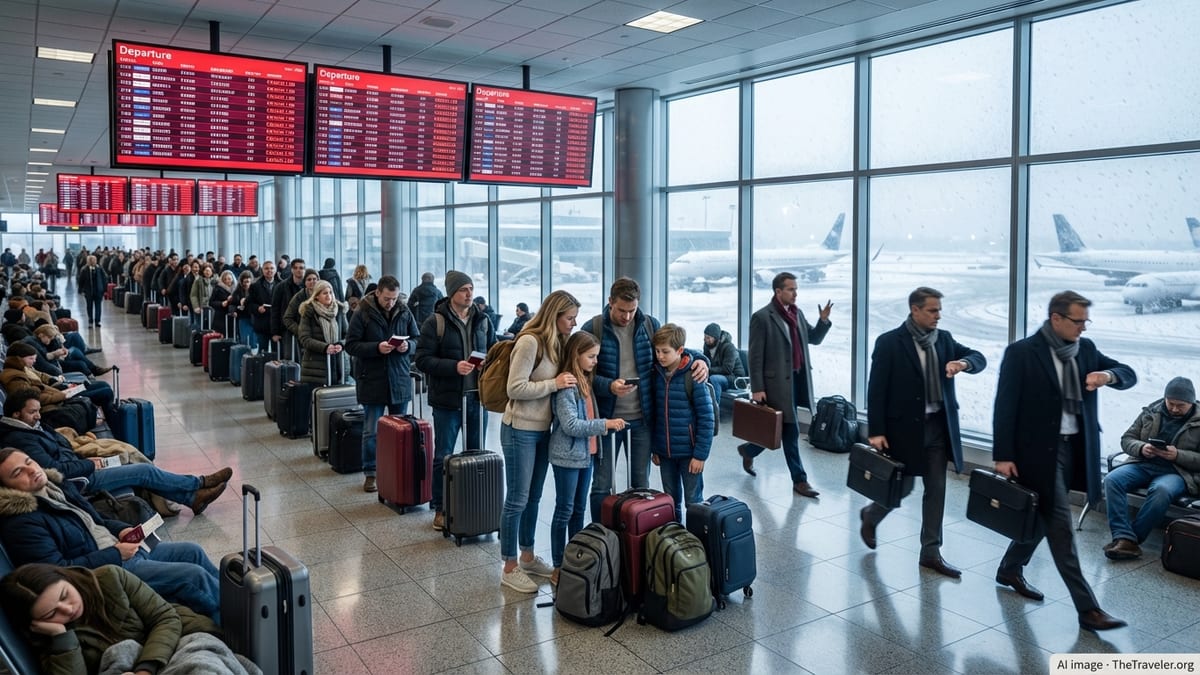
Lingering Disruptions After Saturday Thunderstorms
Publicly available flight-tracking data indicates that Philadelphia International Airport recorded nearly 300 delays and close to 100 cancellations on Sunday, even as skies cleared over much of the city. The turbulence followed a volatile Saturday marked by strong thunderstorms that moved through the Mid-Atlantic and Northeast, slowing air traffic across several major hubs.
Coverage from local broadcast outlets describes a weekend of shifting departure times, rolling gate changes and longer-than-expected waits for passengers departing or arriving in Philadelphia. Although Sunday brought improved conditions on the ground, ripple effects from the previous day’s storms continued to complicate airline schedules, with aircraft and crews still out of position.
Operational summaries show that Saturday’s storms prompted a series of restrictions on air traffic along the East Coast, including temporary ground stops and flow controls designed to safely manage aircraft spacing. Those measures contributed to a backlog that could not be fully resolved by Sunday morning, resulting in another day of heavy disruption for travelers using the Philadelphia hub.
The situation underlined how quickly severe summer weather can disrupt even routine operations. A relatively short period of intense thunderstorms on Saturday translated into a second day of significant schedule impacts, as airlines worked to reassemble normal patterns of aircraft rotations and crew assignments.
Ground Stops, Airspace Constraints and Knock-on Effects
Federal aviation advisories show that in the days surrounding the storms, Philadelphia and nearby airspace were subject to intermittent traffic management initiatives, including ground stops and ground delay programs. These tools limit the volume of arriving and departing flights, easing pressure on congested airspace but frequently resulting in extended waits for passengers on the ground.
According to publicly posted data, a recent ground stop affecting Philadelphia led to average delays exceeding an hour for affected flights, with some waiting considerably longer for clearance. Once such restrictions are in place, the resulting queues of delayed aircraft can extend far beyond the weather cell that triggered the slowdown, particularly during peak summer travel periods.
Aviation analysts note that storm-related constraints rarely affect just a single airport. Aircraft en route to Philadelphia may be held at distant departure points, diverted to other fields, or forced to circle before landing. Those changes cascade across airline networks, leaving crews out of sequence and reducing the number of planes available for subsequent departures in Philadelphia even after local conditions improve.
These dynamics were visible over the weekend, when the combination of thunderstorms, hazy conditions on other days, and high seasonal demand contributed to a series of rolling disruptions. For passengers, that translated into crowded terminals, rebookings and uncertainty about departure times well into Sunday.
Travelers Confront Second Day of Delays
Local news coverage over the weekend highlighted the experience of travelers navigating Philadelphia International Airport during the disruptions. Reports described long lines at security and customer service counters, with some passengers arriving early to safeguard connections and others stranded overnight as flight options dwindled.
Despite clearer skies on Sunday, many flights remained delayed as carriers worked through the backlog created on Saturday. Some travelers arriving for morning or midday departures encountered aircraft that had not yet reached Philadelphia, requiring crews to reshuffle aircraft assignments or combine flights where possible.
For those connecting through the city, the second day of schedule changes proved particularly challenging. Missed connections often required rebooking on later services or, in some cases, alternate routings through other East Coast hubs that were also managing weather-related interruptions. Families heading to vacations and attendees bound for major events in the city faced added uncertainty about arrival times.
Observers noted that the weekend’s disruptions came during an already busy period for Philadelphia, coinciding with large-scale summer events that were drawing visitors from across the country and overseas. The strain on hotel availability and ground transportation added another layer of complexity for travelers whose plans were upended by the flight schedule changes.
Broader Pattern of Summer Weather Challenges
The latest disruptions fit into a broader pattern of weather-related challenges affecting air travel across the United States this summer. Recent weeks have brought episodes of severe storms, haze and low visibility that have prompted the Federal Aviation Administration to slow traffic into several major airports, including Philadelphia.
Historical planning documents and previous storm reports for the region show that Philadelphia International Airport has faced similar episodes in past summers, with intense weather events causing hours-long delays and, in some cases, single-day closures. The combination of a busy air corridor, limited slack in airline schedules and increasingly changeable summer weather has made the region particularly vulnerable to cascading delays.
Industry observers point out that even when airlines build extra time into schedules, operations can quickly become strained when multiple weather systems affect the East Coast simultaneously. When that happens, individual storms over Philadelphia interact with broader constraints on airspace from Washington to New York, leaving little room to absorb additional disruptions.
As travelers continue to navigate the peak season, consumer advocates and aviation specialists alike emphasize the importance of checking flight status frequently, remaining flexible about departure times and routings, and preparing for the possibility that a single afternoon of storms can lead to widespread delays well into the following day.