


More news on this day
The total solar eclipse on August 12, 2026 is still a year away, but tourism data and booking patterns already point to a pronounced hotel boom in destinations lying along the path of totality from the Arctic to northern Spain.
Get the latest news straight to your inbox!
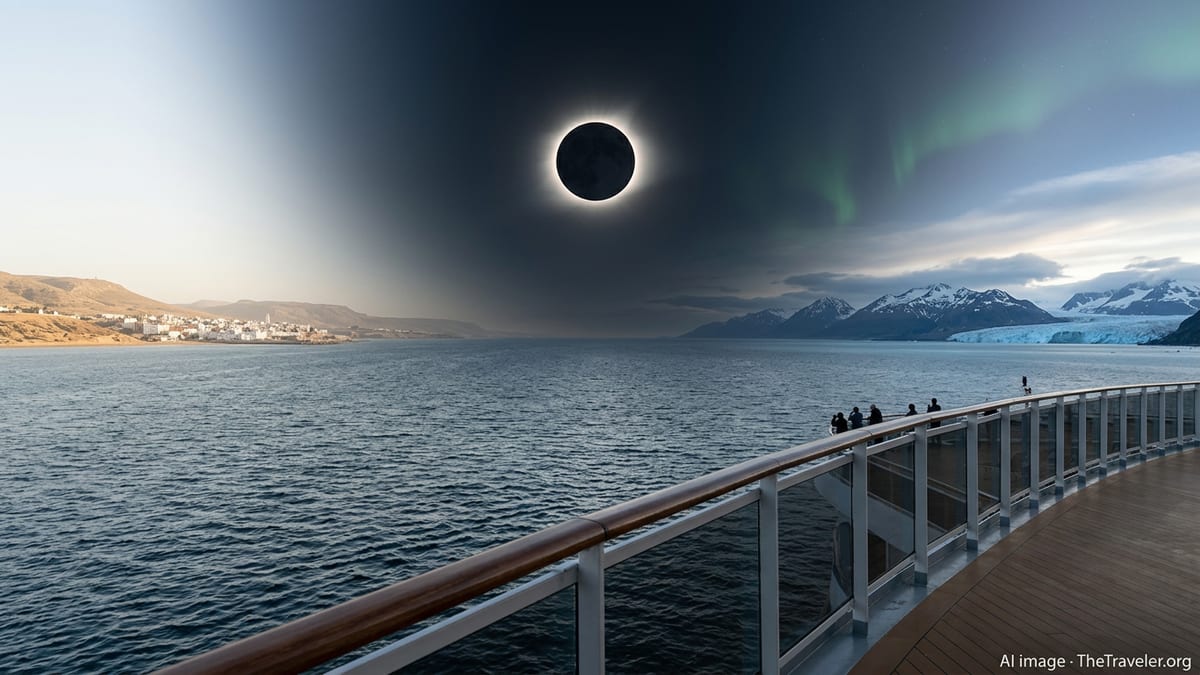
Rare celestial event reshapes 2026 travel patterns
The August 12, 2026 total solar eclipse will sweep across the Arctic, eastern Greenland, western Iceland and northern Spain, with a partial eclipse visible over large parts of Europe and North America. Astronomical coverage describes it as one of the most accessible total eclipses of the decade for European travelers, falling at the height of the summer holiday season.
Publicly available analyses of recent eclipses suggest that such events can trigger concentrated surges in visitor numbers, compressing a year’s worth of demand into just a few days. That pattern is now emerging along the 2026 path of totality, where hotel searches, advance bookings and dedicated eclipse tours are all rising sharply.
For destinations in Iceland and Spain, the timing coincides with existing peak seasons, meaning beds that would normally be busy in August are now in even shorter supply. Industry observers note that this overlap between leisure demand and astro-tourism is intensifying competition for rooms and pushing rates higher than typical summer levels.
Travel planners also point to the appeal of combining the eclipse with other seasonal draws, from long daylight hours in the North Atlantic to beaches and festivals on the Iberian coast. As a result, many itineraries now extend well beyond eclipse day as visitors turn a two-minute spectacle into weeklong holidays.
Iceland accommodation crunch deepens ahead of eclipse
Iceland sits directly beneath a prime stretch of the 2026 path, with parts of the country expected to experience more than two minutes of totality in the late afternoon. The island is already a high-demand summer destination, and reports from local travel forums and tourism discussions indicate that August 2026 rooms in key viewing areas have been heavily booked for months.
Commentary from travelers and residents describes a sharp tightening in availability along the west coast and Westfjords, where viewing conditions are considered particularly attractive. Many properties close to the center line are reported to be fully committed or offering only a few remaining rooms at significantly elevated prices compared with recent summers.
Some discussions highlight blocks of rooms reserved years in advance by tour operators, charter groups and university alumni programs organizing eclipse trips. When these allocations shift or cancel, pockets of availability briefly reappear, only to be snapped up quickly by independent travelers monitoring the market.
At the same time, publicly shared advice from local voices is urging visitors without confirmed accommodation in the path of totality to reconsider plans to drive long distances on eclipse day. Concerns focus on limited road capacity, the risk of traffic congestion and the possibility that visitors may end up missing totality if they are stuck en route rather than staying near their chosen viewing location the night before.
Northern Spain sees surge in bookings and higher rates
On the European mainland, the eclipse track crosses northern and northeastern Spain, including parts of Galicia, Asturias, the Basque Country, Aragón, Valencia and the Balearic Islands. These regions already attract significant August tourism, and early indicators suggest the eclipse is amplifying demand in cities and resort areas located under or near the path.
Spanish and international coverage of the event points to steep growth in hotel bookings in select provinces, with some analyses citing double-digit or even higher percentage increases in reservations around the eclipse dates compared with the same period in previous years. In certain coastal areas and islands directly beneath totality, travelers report that centrally located hotels are either fully booked or quoting premium rates.
Industry forecasts referenced in European media suggest that Spain could benefit not only from the 2026 eclipse, but also from a sequence of additional eclipses in 2027 and 2028, with the combined economic impact for the country’s tourism sector projected to be substantial. For hoteliers, this has encouraged the creation of multi-year strategies that link eclipse-themed stays with broader destination marketing.
Travelers planning to combine the eclipse with popular routes such as the Camino de Santiago or Mediterranean beach holidays are being advised in public forums to secure accommodation early along key corridors. As August 2026 approaches, late bookers may increasingly need to look at secondary cities, inland towns or rural properties and be prepared to travel on the day itself to reach optimal viewing locations.
Tour operators, cruises and universities join the race
Alongside traditional hotel bookings, a parallel market of organized eclipse travel is expanding ahead of August 12, 2026. Itineraries promoted by university alumni groups, educational travel providers and specialty operators include packages in Iceland and Spain, as well as North Atlantic cruises positioned to intersect the path of totality at sea.
Brochures circulated by alumni associations at major universities describe multi-day programs that pair eclipse viewing with cultural excursions, scientific lectures and guided sightseeing. These offerings typically bundle hotel stays in coastal Spanish cities or North Atlantic ports with chartered coaches to curated viewing sites within the path.
At sea, dedicated eclipse cruises marketed through travel vendors promise a mobile platform that can adjust position in response to weather forecasts. These voyages, scheduled to sail between Scandinavia, Greenland and Iceland in late July and early August 2026, emphasize the ability to chase clear skies while also visiting otherwise remote destinations.
Many of these organized options are reported to be selling out or carrying waitlists well in advance, reflecting both limited capacity and strong demand from repeat “eclipse chasers.” Their presence further tightens local hotel markets, since pre- and post-cruise nights are frequently booked in already busy gateway cities.
Pricing spikes, booking strategies and lessons from 2024
Although comprehensive global data is still emerging, traveler reports and early analyses point to typical eclipse-driven pricing dynamics across the 2026 path. In high-demand zones of Iceland and northern Spain, visitors describe nightly rates several times higher than equivalent dates a few years earlier, especially for properties within walking distance of prime viewing spots.
Instances of last-minute repricing and the release of previously blocked inventory are also being discussed in travel communities, echoing patterns observed ahead of the April 2024 total solar eclipse in North America. In that event, some travelers faced cancellations or abrupt price changes as property owners responded to surging demand, a scenario many are now trying to anticipate and mitigate for 2026.
For independent travelers, publicly shared guidance emphasizes booking cancellable rates where possible, targeting locations with a reasonable chance of clear skies, and planning for flexible transport on eclipse day. Given the likelihood of crowded roads in Iceland and busier rail and highway networks in Spain, experienced eclipse travelers recommend arriving in the path of totality at least one night before the event rather than attempting long transfers on August 12 itself.
With the eclipse still months away, additional inventory may surface through new hotel openings, short-term rentals or shifting group allocations. However, the prevailing message from on-the-ground commentary and industry projections is consistent: for those intent on seeing totality in 2026, the window for securing reasonably priced, well-located accommodation is narrowing rapidly.