


More news on this day
The United States has rolled out some of its toughest travel controls in years in response to the expanding Ebola outbreak in the Democratic Republic of the Congo, introducing layered restrictions and screening measures that are already reshaping itineraries for travelers with recent links to the region.
Get the latest news straight to your inbox!
Escalating Outbreak Drives Rapid Policy Shift
The latest Ebola emergency in the Democratic Republic of the Congo, driven by Bundibugyo virus, has intensified sharply in recent weeks, with international health updates describing one of the fastest-growing outbreaks recorded in the country. Publicly available situation reports point to thousands of confirmed infections and a rapidly rising death toll since the event was first detected in May 2026.
Coverage from global health agencies indicates that the outbreak has spread across multiple provinces, complicating containment in a country already struggling with insecurity and fragile health infrastructure. As cases climbed through June and July, warnings about possible international spread increased, especially as cross-border movement continued along major land and river routes.
Travel and tourism flows from the affected areas are relatively modest by global standards, but the pace of the epidemic has nevertheless heightened concern in major aviation hubs. Airlines and travel intermediaries are now navigating a fluid landscape: scheduled services may technically operate, yet the number of passengers who can meet new entry conditions for destinations such as the United States has contracted significantly.
The World Health Organization and regional partners have emphasized the importance of maintaining essential trade and travel, but have also acknowledged the need for strong exit and entry screening, as well as preparedness in countries receiving travelers from Congo and neighboring states.
New U.S. Entry Controls and Screening Measures
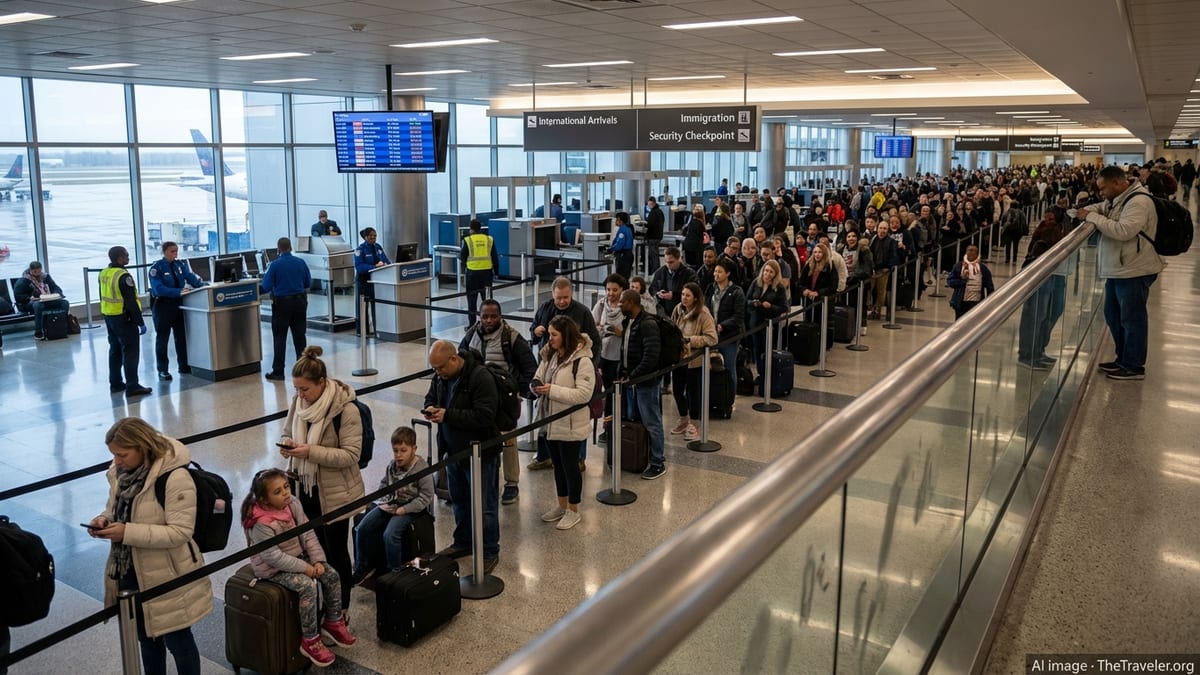
In mid-May and June 2026, the United States government moved to deploy a suite of public health travel controls focused on travelers who have recently been in the Democratic Republic of the Congo, Uganda, or South Sudan. Federal notices and technical guidance describe a layered system that combines visa limitations, arrival restrictions at designated airports, and post-arrival monitoring requirements.
Public documents from the Centers for Disease Control and Prevention outline the use of public health travel restrictions to reduce the risk of Ebola reaching U.S. communities. These measures include enhanced pre-departure evaluations, health questionnaires, and temperature checks, as well as the authority to reroute eligible travelers to specific airports equipped with quarantine and isolation facilities.
According to widely reported coverage, non-U.S. travelers who have been in outbreak-affected areas within the previous 21 days now face tight limits on entering the country, with some categories temporarily barred from boarding commercial flights destined for the United States. U.S. citizens and permanent residents with recent exposure may still travel home but are generally subject to intensive screening and structured health monitoring on arrival.
In practice, these steps mean that many passengers with recent stays in Congo cannot fly directly to the United States on their original itineraries. They may first need to spend a full 21-day incubation period in another country without signs of illness, or delay travel altogether, a shift that is creating immediate ripple effects across the broader travel ecosystem.
Consular Services, Visas, and Route Disruptions
Alongside public health measures, the U.S. Department of State has temporarily paused routine visa services at several embassies in the region, including in Kinshasa. Notices indicate that the move is linked to both security and outbreak-related concerns, and that consular resources are being focused on emergency assistance and crisis response activities.
For would-be visitors, students, and business travelers from Congo and neighboring countries, the pause translates into longer wait times and uncertainty over when applications will be processed. The suspension also affects some third-country travelers who rely on these posts for transit or regional visas, contributing to a wider slowdown in mobility across Central and East Africa.
Airlines are responding by reviewing schedules, seat capacity, and crew routing. While major carriers have not universally suspended flights, publicly available route information suggests that some frequencies to Kinshasa and nearby hubs have been pared back as demand falls and operational complexity increases. Carriers must now account for passengers who may be denied boarding if they do not meet evolving entry conditions for onward journeys to North America.
Travel intermediaries, including tour operators and corporate travel managers, are updating clients on shifting documentation needs, possible quarantines, and the risk that itineraries could be altered at short notice. The result is a more cautious climate around trips that involve Congo, even when the final destination is elsewhere.
Impact on Travelers, Diaspora Communities, and Tourism
The tightened controls are being felt most acutely by travelers with personal or professional ties to affected provinces in Congo. Members of diaspora communities in the United States who would normally visit family or attend events are confronting difficult choices about postponing travel or accepting the possibility of extended time in third countries to satisfy the 21-day requirement.
Humanitarian staff, health workers, and business travelers engaged in mining, logistics, or infrastructure projects face an added layer of complexity. Public health guidance for organizations sending personnel into outbreak zones advises careful pre-departure preparation, robust infection prevention training, and contingency planning for delayed returns, all of which increase the cost and time required to mount field missions.
Leisure tourism to Congo was relatively limited even before the outbreak, but niche segments such as adventure travel, wildlife expeditions, and river cruises are experiencing significant disruption. Reports from the region indicate that some operators have suspended departures or modified routes away from affected communities, while riverine transport is under tighter observation after recent incidents involving passengers with suspected Ebola-like symptoms.
Travelers who do proceed are being urged by public health advisories to avoid direct contact with sick individuals, follow local health measures, and remain reachable by their tour operator or employer in case of sudden policy shifts. These recommendations are reshaping how itineraries are structured, from preferred accommodations to transfer points and emergency evacuation plans.
What Prospective Travelers Need to Know Now
For U.S.-bound travelers who have been in the Democratic Republic of the Congo or nearby affected areas, the key factor is timing. Entry measures are framed around the 21-day incubation window for Ebola, meaning that even asymptomatic travelers can encounter limitations based solely on their recent travel history.
Publicly available U.S. guidance stresses that rules may change as the outbreak evolves and that travelers remain responsible for understanding the conditions that apply to their specific situation. That includes verifying which airports are currently receiving travelers subject to enhanced screening, what documents are required to demonstrate travel history, and whether any state or local monitoring obligations will follow arrival.
Travel industry analysts note that while the overall risk of Ebola importation to the United States is considered low, public health controls are deliberately conservative, reflecting the severity and high fatality rate of the disease. For travel planners, this means building in additional buffers, insurance coverage, and flexibility into any trip involving Central or East Africa in the coming months.
As the Congo outbreak continues to unfold, governments, airlines, and travelers are all operating in an environment of heightened vigilance. For now, the United States is leaning heavily on stringent travel controls and screening as a frontline defense, even as international health agencies continue to call for sustained support to contain the epidemic at its source.