


More news on this day
The United States has sharply tightened travel and entry controls in response to the fast‑spreading Ebola outbreak in the Democratic Republic of the Congo, triggering flight diversions, visa delays and heightened anxiety among travelers with recent links to the region.
Get the latest news straight to your inbox!
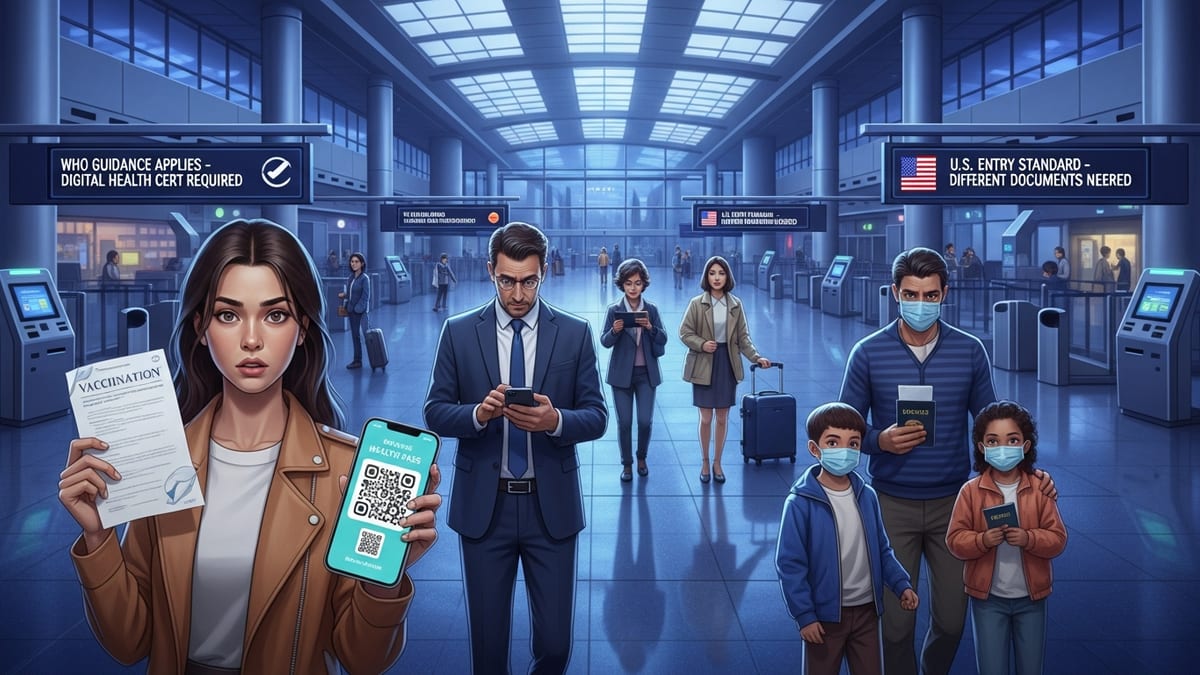
Escalating Ebola Crisis Triggers Rapid US Policy Shift
Publicly available information from health and aviation sources indicates that Ebola cases in eastern Congo have climbed into the thousands since May 2026, with several thousand deaths reported and transmission described in multiple outlets as among the fastest recorded in an Ebola outbreak. The scale and pace of infections, combined with intense population movement around mining areas and displacement camps, have revived longstanding fears about the virus reaching major global hubs.
International coverage describes mounting concern as the outbreak spreads beyond remote forested zones toward busy river ports and urban centers. Recent reporting on a quarantined river boat near Kinshasa, where hundreds of passengers were held after a traveler died with Ebola‑like symptoms, has underscored how quickly suspected cases can disrupt internal mobility and fuel regional alarm, even before a laboratory confirmation is made public.
Against this backdrop, Washington has framed the latest travel measures as part of a broader containment effort across Central and East Africa rather than a country‑specific response. Federal notices and technical guidance released in May and June set out a layered approach that ties entry to recent travel history, airport routing and post‑arrival health monitoring.
New Entry Restrictions, Designated Airports and Screening
Federal Register publications and Centers for Disease Control and Prevention documentation from late May describe a regime of “arrival restrictions” and public health travel measures focused on travelers who have recently been in the Democratic Republic of the Congo, Uganda or South Sudan. Non‑US passport holders with travel history in those countries within the previous 21 days face temporary entry bans or are required to meet additional criteria before boarding flights to the United States.
According to public health guidance made available to state and local authorities, inbound travelers who are permitted to enter are funneled through a small number of designated US airports equipped for enhanced screening. Recent accounts from passengers and local media highlight Washington Dulles, Houston’s George Bush Intercontinental and at least one major East Coast gateway as primary processing points, where temperature checks, exposure questionnaires and risk assessments are carried out on arrival.
Reports from airlines and affected travelers suggest that flights have already been diverted or re‑routed when a passenger’s recent stay in an Ebola‑affected country was disclosed in transit. In some cases, carriers have removed passengers before departure rather than risk landing in a US city that is not on the designated list, reinforcing how operational decisions by airlines interact with formal government controls.
Once admitted, travelers deemed at some level of risk are being asked to comply with active monitoring for 21 days, often coordinated through local health departments. Passengers describe daily text check‑ins and periodic calls about symptoms, reflecting an effort to combine front‑end screening with follow‑up surveillance after arrival.
Visa Pauses, Third‑Country Stays and Impact on Travelers
Alongside port‑of‑entry measures, publicly available State Department communications point to a temporary pause in visa issuance for people who have been in Ebola‑affected countries within the previous 21 days. Media reports referencing internal cables describe consular posts instructed to delay processing for applicants who have recently transited the Democratic Republic of the Congo, Uganda or South Sudan, effectively closing off new short‑term travel to the United States for many would‑be visitors linked to the region.
Separate coverage and traveler accounts indicate that the policy is unusually stringent in how it treats US‑linked travelers. Commentaries summarizing recent rule changes describe entry bans that extend beyond tourists and business visitors to include some lawful permanent residents, a move that legal analysts note has rarely accompanied prior infectious‑disease travel controls. Individuals with green cards who have been in the affected countries within the last 21 days may be unable to board flights directly to the United States until that period has elapsed.
As a consequence, an emerging pattern of “third‑country waiting periods” has been described in forums and travel reports. US citizens and residents seeking to return from Congo or neighboring states have arranged 21‑day stays in countries without current Ebola transmission in order to reset their travel history and meet boarding criteria. This workaround can add substantial cost and complexity to journeys that would normally route through a single hub such as Brussels, Addis Ababa or Doha.
Publicly reported case studies describe travelers denied boarding in European transit airports despite having already spent several weeks in a non‑affected country, reflecting confusion over how airlines interpret the 21‑day rule and which documentation is sufficient to demonstrate compliance. Advocacy groups and immigration attorneys have raised concerns that inconsistent application of the rules could separate families and leave some travelers stranded abroad.
Global Context and Debate Over Travel Controls
The US measures are unfolding within a wider international response that includes recommendations from the World Health Organization under the International Health Regulations. Recent WHO documents urge affected states to strengthen exit screening at points of departure and encourage destination countries to provide clear information and proportionate screening for incoming travelers, while cautioning against blanket border closures that could disrupt humanitarian operations.
Academic analyses of previous Ebola emergencies, including studies of the 2014 to 2016 West Africa epidemic, have repeatedly found that travel restrictions have mixed effectiveness. Modeling work on mobility controls suggests that while tight controls can delay international spread, they rarely stop it outright and may drive people to use informal routes. Researchers argue that travel rules work best when paired with robust case finding, treatment capacity and community engagement in the outbreak zone itself.
Commentary in global health circles reflects those tensions. Some public health experts emphasize that strict entry rules and targeted bans are politically appealing tools that signal decisive action to domestic audiences. Others warn that aggressive restrictions can stigmatize affected countries, discourage early outbreak reporting and make it harder to move health workers and supplies into the areas that need them most.
Recent coverage of funding trends illustrates the same paradox. Even as Washington has announced additional financial support for Ebola response efforts in Congo, humanitarian organizations report significant shortfalls in resources for displacement camps and basic health services. Analysts note that focusing on outbound travel from Congo without adequately reinforcing care and surveillance within the country risks addressing symptoms rather than causes.
What Travelers and the Industry Are Watching Next
For airlines and airports, the evolving US controls add another layer of operational complexity to routes that connect Central and East Africa with North America. Carriers must verify passengers’ recent travel histories, adjust schedules to accommodate diversions to designated US entry points and prepare for possible last‑minute changes if policies tighten or are extended to additional countries in the region.
Travelers with future itineraries touching the Democratic Republic of the Congo, Uganda or South Sudan are watching for further advisories from health agencies and consular posts. Publicly available guidance encourages would‑be visitors to monitor official travel alerts, consider flexible tickets and be prepared for prolonged layovers or enforced stays in third countries if exposure risk or routing raises flags during screening.
Industry observers note that the summer and early autumn period is typically important for safari tourism, business travel and diaspora family visits across East and Central Africa. Extended US entry controls tied to Ebola could reshape booking patterns, with some travelers opting to postpone trips and others rerouting through European or Gulf hubs that are not directly affected by American arrival restrictions.
How long the toughest US travel curbs remain in place is likely to depend on the trajectory of the outbreak in Congo and neighboring states, as well as on evolving assessments of international spread risk. For now, publicly available policies and on‑the‑ground reports converge on a clear reality for travelers linked to the region: entry into the United States is still possible in many cases, but it is more conditional, more concentrated through a handful of airports and subject to rapid change as the Ebola crisis evolves.