


More news on this day
A fresh operational meltdown at Miami International Airport has rippled across global airline networks, with publicly available tracking data showing more than 160 delays and cancellations affecting key services operated by American Airlines, Delta Air Lines and LATAM and disrupting connections throughout the Americas and beyond.
Get the latest news straight to your inbox!
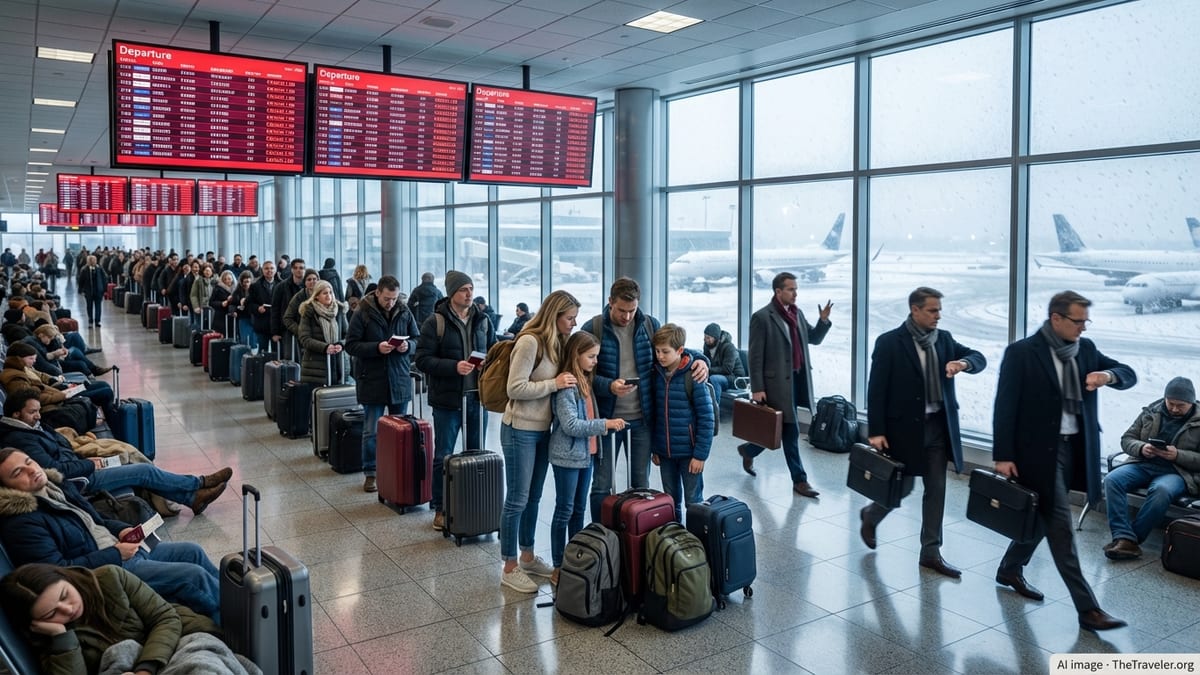
Chain Reaction at One of the World’s Busiest Gateways
Miami International Airport functions as a critical hub for traffic between North America, Latin America and Europe, and any large-scale disruption there quickly cascades across multiple continents. Industry data for the latest incident indicate that American Airlines, the dominant carrier at Miami, absorbed the largest share of the impact, with around 160 delayed flights and several cancellations concentrated over a single 24-hour window. These figures sit within a wider pattern of more than 200 delayed and cancelled services at the airport as airlines struggled to reset their schedules.
Reports from flight-tracking platforms and aviation outlets describe departure boards heavily skewed toward late operations, with delay percentages in the double digits for several carriers serving Miami. American’s operation in particular showed a high proportion of services departing behind schedule, while Delta and LATAM contended with knock-on disruptions on key regional and long-haul routes. Travelers reported missed connections at downstream hubs as late-arriving aircraft and crews failed to turn around on time for subsequent departures.
The imbalance between scheduled and actually operating flights quickly overwhelmed gate areas, baggage systems and customer-service channels. With multiple peak banks of departures compressed into shortened operating windows, aircraft and crews were forced into unplanned idling or reassignments, adding fresh layers of complexity to an already stressed system.
American, Delta and LATAM at the Center of the Storm
Publicly available information shows that American Airlines, which operates hundreds of daily flights from Miami, was hit hardest by the latest meltdown. Data compiled from live flight boards and independent trackers point to roughly 160 American-operated flights designated as delayed, alongside a smaller but significant number of outright cancellations. The sheer scale of American’s schedule in Miami meant that even a modest cancellation rate translated into thousands of disrupted passengers and widespread rebooking challenges.
Delta Air Lines recorded a lower volume of disruptions at Miami but still faced a notable spike in delays. Industry coverage highlights double-digit delay percentages on Delta’s Miami departures during the incident period, including services feeding into its hubs in Atlanta and New York. These late departures not only inconvenienced local passengers but also complicated onward connections across Delta’s domestic and international network.
LATAM, a major player on routes linking Miami with South America, was affected both directly and indirectly. Flights between Miami and key cities such as São Paulo and Lima encountered extended delays, while some passengers faced missed long-haul connections further south. Aviation analysts note that higher-utilization widebody aircraft, like those used by LATAM on transcontinental routes, are especially vulnerable to schedule compression; a single protracted delay can displace rotation plans for days.
Together, the three carriers form the backbone of Miami’s long-haul connectivity. Their simultaneous operational difficulties quickly translated into a wider pattern of missed connections, aircraft repositioning flights and last-minute schedule adjustments as planners attempted to restore network stability.
Global Ripple Effects From a Local Breakdown
While the operational flashpoint was Miami, the impact spread far beyond South Florida. According to aggregated data cited by aviation news outlets, delays and cancellations at Miami contributed to a broader pattern of more than 250 severely affected flights across multiple carriers worldwide in the same general timeframe. Routes linking Miami to major hubs such as Dallas, Toronto, New York and various South American capitals were particularly exposed, with late arrivals forcing crews to run up against duty limits and preventing aircraft from operating their next scheduled segments.
These local bottlenecks can quickly translate into global problems. When an aircraft scheduled from Miami to a Latin American city arrives several hours late, its subsequent long-haul or regional legs are pushed back or scrubbed altogether. Passengers connecting onward to Europe or deeper into South America then face missed flights, overnight layovers and complex rebooking scenarios. Each missed connection often requires additional hotel accommodation, ground transportation and new tickets, amplifying the financial and logistical strain on both travelers and airlines.
Operational specialists describe this type of disruption as a classic network cascade, in which a single airport’s failure to maintain schedule integrity propagates across multiple hubs. Miami’s role as a primary gateway for American, Delta and LATAM means that irregular operations there can quickly affect airports in Chicago, New York, Atlanta, São Paulo and beyond, as fleets and crews fail to appear where the next day’s schedule expects them to be.
Systemic Strains Exposed in a Volatile Travel Year
The Miami disruption arrives during a period of heightened fragility for global aviation. In recent months, separate coverage has documented major breakdowns at other large hubs and across several carriers, including mass cancellations driven by severe weather and technology failures. Analysts point out that while the specific triggers vary, the underlying patterns are similar: tight crew scheduling, aging IT infrastructure and highly optimized networks that leave little room for error.
Miami’s meltdown underscores how quickly these structural vulnerabilities can surface. When storms, staffing gaps or equipment outages coincide with peak travel periods, even a small initial disruption can escalate into a large-scale failure. American, Delta and LATAM all operate dense schedules into and out of Miami, so any loss of operational buffer there tends to be felt immediately in the form of rolling delays and hard-to-recover cancellation waves.
The incident also reinforces concerns about customer-experience resilience. Social media posts and traveler reports from Miami during the disruption describe long lines at service counters, limited access to live agents and confusion over rebooking options, echoing similar accounts from recent meltdowns at other airports. For many passengers, the immediate challenge was not only a late or cancelled flight, but also difficulty obtaining timely information or alternative travel arrangements.
Independent aviation commentators argue that Miami’s latest crisis highlights the need for carriers and airports to invest more heavily in redundancy, from crew and aircraft reserves to more robust passenger-support systems. As travel demand remains strong and networks grow more interconnected, disruptions like the one at Miami International Airport are likely to exert outsized influence on global travel patterns whenever cracks appear in the system.