


More news on this day
Thousands of travelers at Miami International Airport are facing cascading delays, diversions and packed terminals after an Amazon-branded cargo plane overran a runway on Sunday, killing several people and forcing a full ground stop at one of the United States’ busiest hubs.
Get the latest news straight to your inbox!
Runway Crash Triggers Full Ground Stop at Busy Hub
Publicly available information indicates that a Boeing 767 cargo jet operating as a Prime Air flight overran a runway at Miami International Airport on the afternoon of September 6, striking vehicles beyond the airfield perimeter and erupting in flames. Images and video shared across news outlets and social media show the aircraft bearing Amazon signage, with a collapsed nose gear and a large debris field near Northwest 42nd Avenue.
Reports from multiple outlets describe plumes of thick black smoke rising from the crash site as fire crews worked to contain the blaze. The Federal Aviation Administration reported that the aircraft had originated in San Juan, Puerto Rico, before attempting to land in Miami, where it came to rest beyond the northwest end of a diagonal runway.
Coverage from national and local news organizations indicates that several people on the ground were injured when vehicles were struck, and at least five fatalities have been reported in connection with the crash. Emergency services deployed dozens of units to the area as all runways at Miami International were temporarily closed to protect rescue operations and secure the scene.
According to FAA traffic advisories summarized in media reports, a full ground stop was initiated shortly after 2:30 p.m. local time, halting both arrivals and departures and immediately disrupting flight schedules across the domestic network.
Delays, Diversions and Cancellations Ripple Across the System
The shutdown of all runways quickly translated into widespread disruption for passengers. Ground-stop advisories reviewed by national broadcasters show that no arrivals or departures were permitted for a period of time on Sunday afternoon, effectively pausing traffic at a gateway that regularly handles more than 1,000 daily flights.
Travel commentary and airline tracking platforms cited by news outlets point to diversions of inbound flights to alternate airports such as Orlando, Tampa and Charlotte while Miami’s runways remained closed. Some long-haul international services were reported to be placed in holding patterns before being rerouted, adding further complexity for passengers already en route.
As limited runway capacity began to return, the FAA cautioned through public statements quoted in national coverage that delays and cancellations would continue into the evening. The agency indicated that flights would resume at a reduced rate while investigators and recovery crews remained active near the accident site, creating a backlog of departures and arrivals.
Travelers scheduled to connect through Miami faced additional uncertainty as aircraft and crews were displaced across the network. Airline notifications referenced by media reports warned of rolling delays, missed connections and potential overnight disruptions as carriers attempted to rebuild their schedules.
Terminal Crowding and Long Waits for Stranded Travelers
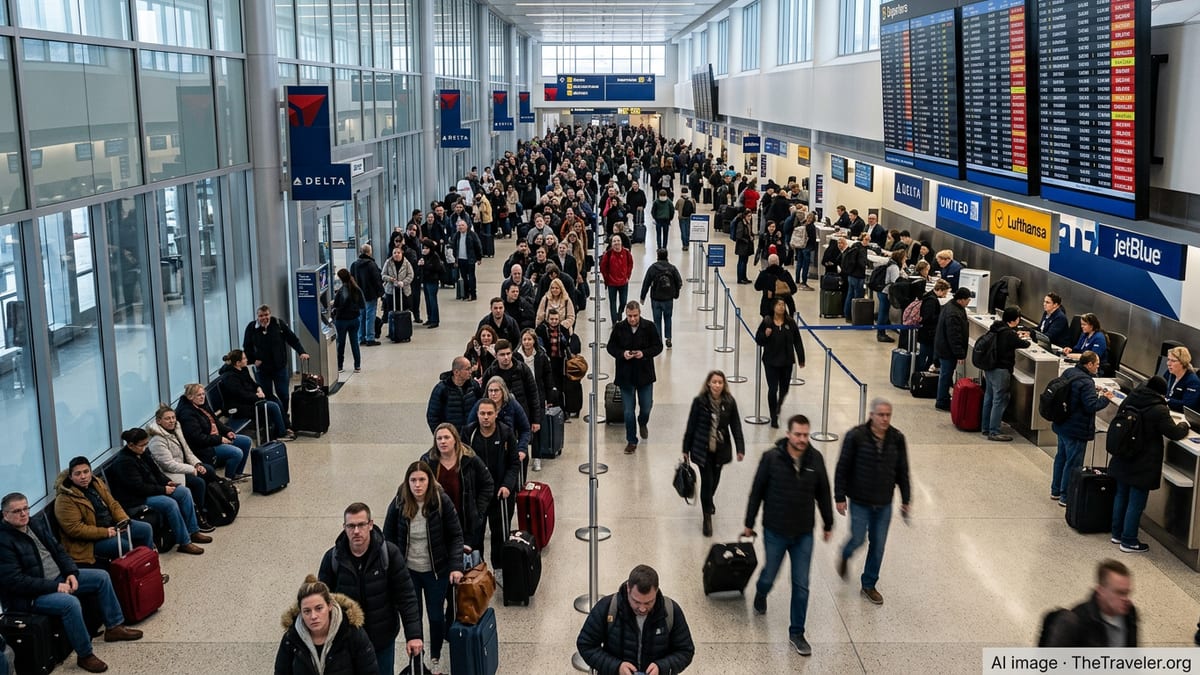
Inside Miami International Airport, the sudden halt in operations led to mounting crowds at departure gates, check-in counters and customer service desks. Images of departure boards published by regional news outlets show rows of flights listed as delayed, diverted or canceled during the afternoon peak.
Passengers posting on social platforms and travel forums, later cited in news coverage, described long lines at ticket counters as they sought rebooking options, along with crowded concourses as travelers waited for updates. Some domestic departures that had already boarded were held at gates or on taxiways before being brought back, adding to congestion in the terminal as passengers disembarked and rejoined queues.
Publicly available information from transportation officials noted that travelers should anticipate “significant delays and potential cancellations” throughout the day. That advisory echoed what stranded passengers were seeing on the ground: extended waits for updated departure times, limited availability on later flights and uncertainty about when normal operations might resume.
Airport data shared in tourism and aviation reports underscores how quickly disruptions at Miami International can escalate. As one of the nation’s leading international gateways, even a brief runway closure can displace tens of thousands of passengers, a dynamic that was reflected in Sunday’s crowded terminals and blocked roadways around the airport perimeter.
Safety Investigation Underway as Operations Gradually Resume
According to publicly released statements summarized by national and regional outlets, the FAA has opened an investigation into the circumstances that led to the runway overrun and subsequent crash. Early details from federal records cited in those reports identify the aircraft as a Boeing 767 cargo freighter operating a Prime Air route from San Juan to Miami.
Investigators are expected to focus on a range of factors, including the aircraft’s approach and landing, runway conditions, weather at the time of arrival and any potential mechanical or systems issues. Aviation analysts quoted across media coverage note that runway overruns of large jets are relatively rare events, and detailed incident reconstructions can take months to complete.
As emergency operations transitioned to recovery, publicly available FAA advisories showed that Miami’s runways began reopening in stages, allowing limited arrivals and departures to resume. However, the agency and transportation leaders warned that lingering disruptions would likely continue well beyond the initial reopening window, given the scale of the shutdown and the number of flights affected.
Aviation performance reports produced for Miami International Airport in recent years have already highlighted how infrastructure work and high traffic volumes can create bottlenecks and delay risks even under normal circumstances. Sunday’s fatal crash placed extraordinary additional pressure on that system, straining capacity and complicating airport traffic management.
What Travelers Passing Through Miami Should Expect Next
Publicly available guidance from transportation agencies and airline advisories suggests that travelers booked to fly through Miami over the next 24 to 48 hours should prepare for residual disruptions. Even after a ground stop is lifted, aircraft and crews often remain out of position, affecting subsequent flights across multiple cities.
Travel experts quoted in national coverage recommend that passengers monitor airline apps and websites closely, verify flight status before heading to the airport and consider allowing extra connection time if rerouting through Miami is unavoidable. Same-day rebooking options may be limited on heavily traveled routes while carriers work through the backlog.
The crash also comes at a period of sustained demand for Miami as both a domestic and international gateway. Tourism and air traffic summaries for 2026 point to robust passenger numbers, which means even minor schedule disruptions can quickly translate into crowded terminals and limited spare capacity across airline networks serving the airport.
For now, publicly available information indicates that Miami International is moving cautiously back toward regular operations while a formal investigation progresses. Travelers heading through the airport in the coming days are being advised to plan for potential delays, stay flexible with itineraries and watch for further updates from airlines and official traffic advisories as more is learned about the fatal crash.
Los Angeles Times coverage of the Miami cargo crash
Forbes summary of the ground stop and travel impact