


More news on this day
At least five people are dead and several others are hospitalized after an Amazon-branded cargo plane overran a runway at Miami International Airport, crossed a perimeter road and smashed into vehicles before coming to rest in a parking area on Sunday afternoon.
Get the latest news straight to your inbox!
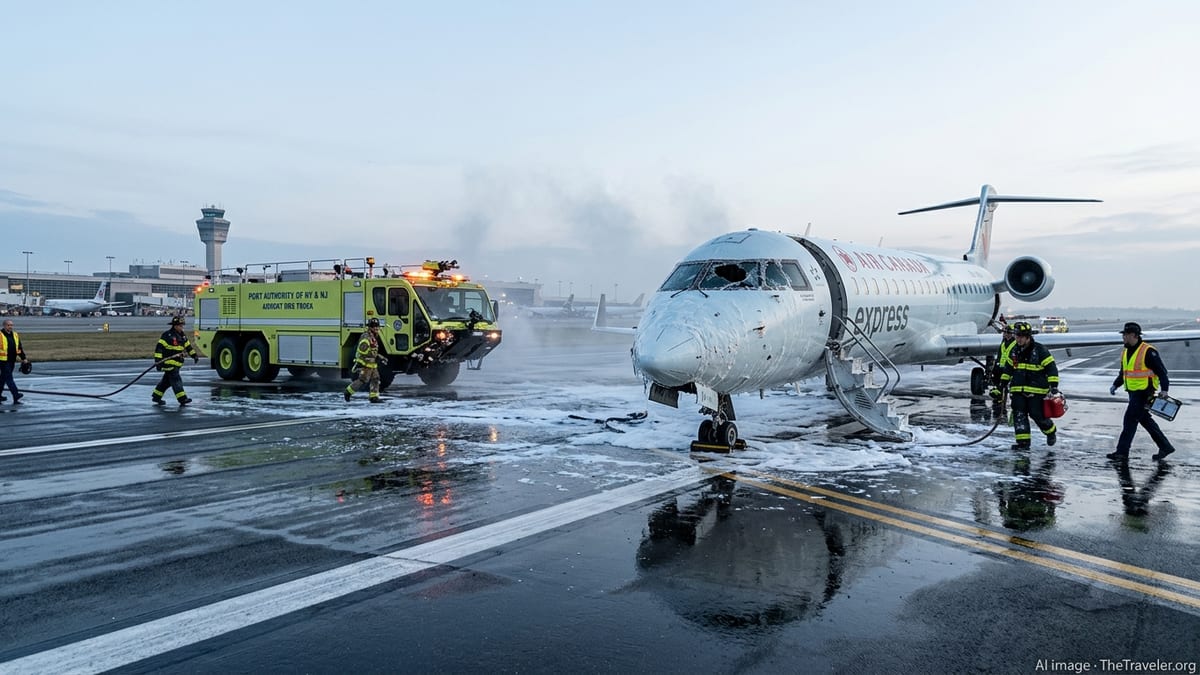
Runway overrun sends jet across road into parked vehicles
Publicly available information indicates the incident began around 2 p.m. local time on Sunday, September 6, when Prime Air Flight 7598, a Boeing 767 cargo aircraft operated for Amazon by North Carolina based carrier 21 Air, landed on a diagonal runway at Miami International Airport. The aircraft failed to stop within the paved surface, continued beyond the runway end and exited the airfield boundary.
Reports describe the jet barreling across a grass overrun area and then crossing Northwest 67th Avenue, a busy road that runs along the airport’s northwest side. The plane then plowed into a parking lot, striking multiple vehicles before coming to a stop on its belly with its landing gear collapsed.
Images and videos shared by local outlets show the aircraft largely intact but surrounded by burned cars and heavy fire damage near its right wing and engine area. A thick column of black smoke was visible from surrounding neighborhoods as emergency crews worked to extinguish the blaze.
Coverage from several news organizations indicates more than 60 Miami Dade Fire Rescue units and approximately 200 personnel responded to the scene, encountering intense flames and smoke around the fuselage and the vehicles that had been hit.
Casualties and injuries among motorists and aviation workers
According to published coverage citing county and airport briefings, five people were confirmed dead in the immediate aftermath of the crash. Initial reports did not clarify whether all of those killed had been inside vehicles on the ground, aboard the aircraft, or a combination of both.
Miami Dade officials cited in multiple reports stated that five additional people were transported to local hospitals. Three of those patients were described as being in critical condition at regional trauma centers, while two others were reported to have less severe injuries.
The aircraft’s flight crew survived the impact and was transported to area hospitals for evaluation, according to several national and local news outlets. As of Monday morning, there had been no official public breakdown of injuries by role, such as motorists, airport workers or aircrew, and some details remained subject to confirmation as investigations progress.
The crash unfolded alongside a stretch of road and commercial lots that serve warehouses and businesses on the airport perimeter, raising the likelihood that at least some of the victims were people on the ground rather than passengers on the cargo aircraft.
Airport operations disrupted at one of nation’s busiest hubs
Miami International Airport temporarily halted all runway and taxiway operations following the overrun, according to airport statements summarized in media reports. A ground stop was implemented as emergency vehicles massed around the disabled jet and responders worked amid burning vehicles and spilled fuel.
Flight tracking data and airline statements compiled by travel and business outlets show that both departures and arrivals were affected for several hours, with diversions reported to nearby airports such as Fort Lauderdale Hollywood International and Palm Beach International. Some flights experienced significant delays as crews worked to reopen unaffected portions of the airfield.
By Sunday evening, airport updates encouraged travelers to check directly with their airlines before heading to the terminal, noting that schedules remained fluid. As of Monday morning, the disabled aircraft and sections of the affected perimeter remained cordoned off while investigators documented the scene, but most routine commercial operations had begun to recover.
The incident comes at a time when Miami International consistently ranks among the busiest U.S. airports for international passengers and is a major hub for cargo traffic linking Latin America, the Caribbean and the United States, meaning disruptions can ripple quickly across airline and logistics networks.
Investigators probe causes of high speed landing overrun
The National Transportation Safety Board announced the deployment of a “go team” to Miami to examine the crash site, according to national news coverage. The Federal Aviation Administration also opened an investigation, standard procedure following a serious runway excursion involving a large transport aircraft.
Preliminary information from aviation data services referenced in multiple reports suggests the Boeing 767 approached and touched down well along the runway, limiting the stopping distance available. Video widely circulated on social media appears to show the jet landing past the midpoint of the runway, then failing to decelerate sufficiently before the pavement ended.
Investigators are expected to review flight data and cockpit voice recorders, weather conditions at the time of landing, runway surface status and braking performance, as well as the crew’s decision making and any mechanical issues. The age and maintenance history of the aircraft, which has been reported as entering service in the 1990s before later conversion to cargo use, will likely be part of the examination.
Runway overruns are a known aviation risk, particularly in wet or stormy conditions or when an aircraft touches down long or too fast. Miami has experienced previous runway excursion incidents, though large transport overrun events that cause multiple fatalities on the ground remain relatively rare in U.S. commercial aviation.
Questions raised over safety buffers around busy airports
The crash has renewed attention on land use and safety zones around major airports, especially in dense urban regions where perimeter roads, parking lots and commercial properties sit close to runway ends. Images of the Amazon cargo jet resting beyond the airport fence, surrounded by damaged vehicles, have prompted discussion about how far airport hazards can extend into neighboring communities.
Aviation safety specialists interviewed in past runway overrun cases have highlighted engineered materials arresting systems, or EMAS, as one tool to reduce risks when aircraft leave the pavement. These crushable concrete beds installed beyond some runway ends are designed to slow and stop jets that overrun. Public information available as of Monday did not clearly indicate whether an EMAS was present at the Miami runway involved in Sunday’s incident.
Local and federal investigators are expected to review whether existing safety areas and barriers functioned as intended and whether additional protections might have mitigated the impact on motorists and nearby businesses. Such questions commonly feed into longer term recommendations that can lead to infrastructure changes at busy airports.
For travelers and residents, the crash serves as a stark reminder of how aviation operations intersect with daily life around major hubs. As Miami International restores normal flight operations, the investigation now turns to understanding how a routine cargo run from San Juan turned into a deadly overrun and what can be done to reduce the chances of a similar event in the future.
Yahoo News: At least five dead, others hospitalized after plane overshoots Miami runway
CBS Miami: At least 5 dead, 5 injured after Amazon cargo plane overruns runway
NBC 6 South Florida: 5 dead, 5 injured after Amazon cargo plane overruns runway at MIA
AP News: At least 5 dead after Amazon cargo plane barreled off runway at Miami airport