


Dubai International Airport has become one of the world’s great crossroads, handling more international passengers than any other airport in recent years. For many travelers planning long-haul trips between Europe, Asia, Africa and the Americas, the question is no longer whether they will connect somewhere, but where. Dubai is on almost every booking engine’s list of options. Yet DXB is not the right answer for everyone. Understanding who gains the most from connecting in Dubai, and who might be better off routing elsewhere, can save time, stress and money.
Get the latest updates straight to your inbox!
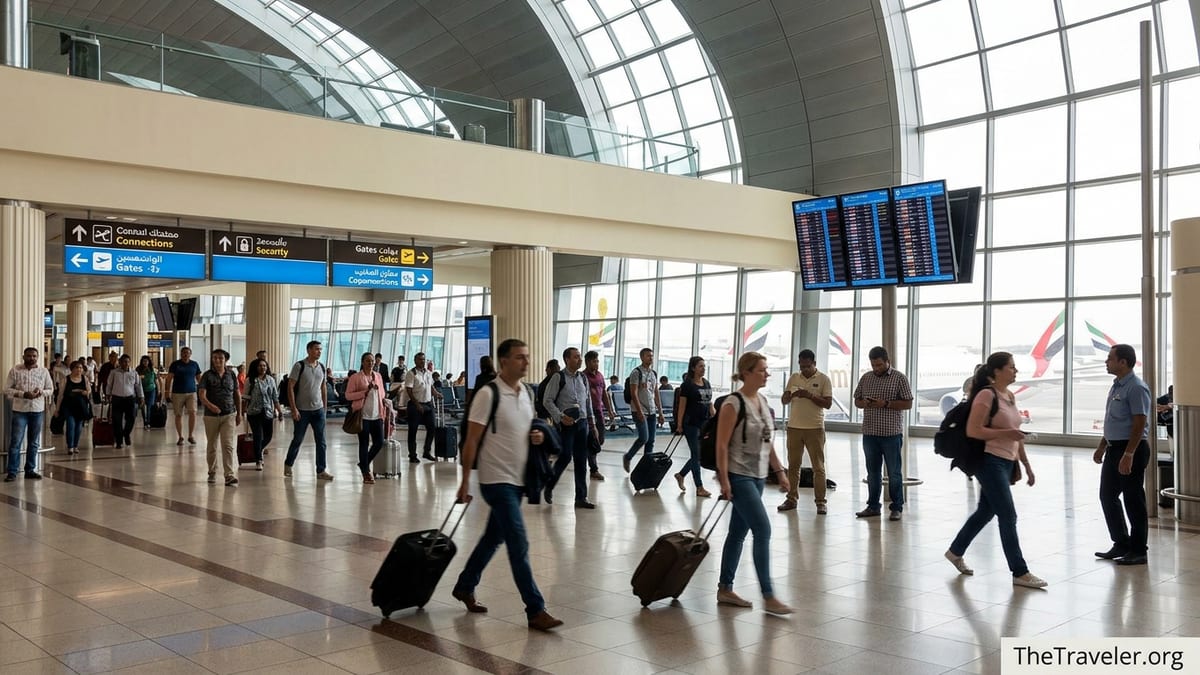
Why Dubai Has Become a Global Connection Powerhouse
Dubai International Airport sits geographically between Europe, Asia and Africa, which makes it a natural refueling and transfer point. Over the past two decades, the city has built on that advantage with an enormous hub airport and an airline network aimed specifically at connecting long-haul passengers. In 2023, DXB handled around 87 million international passengers, placing it at or near the top of global rankings for international traffic and making it one of the most important transit hubs on earth.
The main driver of this connectivity is Emirates, the Dubai-based carrier that operates from Terminal 3. Emirates serves roughly 140 to 150 destinations across 70-plus countries, from major U.S. cities such as New York, Los Angeles and Houston to regional centers like Lusaka, Kochi and Phnom Penh. This breadth means that a traveler flying, for example, from Chicago to Colombo or from Manchester to Manila will often find a one-stop option through Dubai when there may be no equivalent one-stop routing via European or Asian hubs.
Dubai’s airport is also designed around transit passengers. All Emirates flights operate from Terminal 3, spread across Concourses A, B and C and linked by an automated train, so many connections happen within the same building. Typical minimum connection times are about 75 to 90 minutes, and even 60-minute connections are routinely sold on the same ticket. For instance, it is common to see itineraries such as Frankfurt to Dubai to Bangkok with a 1 hour 25 minute layover that remain fully protected when booked on a single Emirates ticket.
For travelers who are comfortable with a large, busy hub and who value having many routing choices on a single ticket, these features make Dubai particularly attractive. However, the experience can vary significantly depending on which airline you use, which terminal you arrive at, and whether your journey continues on the same ticket or across separate bookings.
Travelers Best Served by an All-Emirates Connection
The people who benefit the most from choosing Dubai as their connection point are those flying entirely on Emirates, on a single ticket, between continents. If you are traveling from Boston to Johannesburg, Seattle to Nairobi, or Lisbon to Bali, you will see many options that involve a change of planes in Dubai with both flights marketed and operated by Emirates. In these cases, the connection is straightforward: you stay within Terminal 3, follow “Connections” signs, pass through transfer security, and walk or take the short train to your next gate.
On a typical Emirates-to-Emirates connection, checked baggage is automatically transferred, and the airline is responsible for rebooking you if your first flight arrives late and you miss the onward sector. For example, a passenger flying from Toronto to Dubai and then on to Karachi on a single Emirates ticket does not need to collect bags or clear immigration in Dubai. If the Toronto flight is delayed and the scheduled 2-hour layover shrinks to 45 minutes, ground staff will either fast-track the passenger through the terminal or automatically move them to the next available Karachi flight, usually at no extra charge.
These seamless connections are especially valuable on complex long-haul itineraries where alternatives can involve multiple stops. A traveler from Los Angeles to Male in the Maldives, for instance, might otherwise have to connect in both Europe and the Middle East or South Asia when flying with some competitors. Emirates offers a single connection in Dubai, reducing total travel time and eliminating the risk attached to separate tickets. For families with children or older travelers who prefer not to manage multiple airports, this simplicity can outweigh the sheer size and busyness of DXB.
Another group that does well with all-Emirates connections is premium cabin travelers. Business and first class passengers, as well as many elite frequent flyers, gain access to large Emirates lounges in all three concourses of Terminal 3. On a layover of three to four hours, a business class passenger flying from London to Sydney via Dubai can shower, dine from a buffet comparable to a hotel restaurant, and rest in quiet seating areas before boarding their onward flight, making the long journey significantly more bearable.
Who Benefits from the Emirates–flydubai Partnership
Dubai is also a strong choice for passengers connecting between an Emirates long-haul flight and a regional flight on flydubai, the city’s low-cost carrier. Flydubai is based at Terminal 2 but operates a growing number of flights from Terminal 3 specifically to connect with Emirates. Many of its European and popular leisure routes, for example to Prague or Zagreb, are scheduled from Terminal 3 so that a traveler can fly New York to Dubai on Emirates and then continue on to a flydubai-operated flight without changing terminals.
These coordinated connections are sold on a single ticket through Emirates or flydubai. A traveler from Houston to Tbilisi, for instance, might fly Emirates from Houston to Dubai and then connect onto flydubai to Georgia, all under one reservation. Checked baggage is tagged through to the final destination, and missed connections are handled by the airlines. In practice, this works very similarly to an all-Emirates connection and is a strong reason to choose Dubai over another hub that might not offer a through-ticket to secondary cities.
However, not all flydubai flights operate from Terminal 3. Many still use Terminal 2, which sits on the opposite side of the airfield. If you book a through ticket from Emirates to a flydubai route that departs Terminal 2, you will still remain airside but will be transported between terminals by a dedicated shuttle bus. This adds transit time, so itineraries usually build in at least three hours for such transfers. For example, someone flying from Sydney to Dubai on Emirates and then on to a smaller city such as Chittagong on flydubai could face a transfer that involves deplaning at Terminal 3, following “Connections” signage, boarding a bus to Terminal 2, and then clearing transfer security again before reaching the departure gate.
These mixed-terminal transfers are manageable when they are part of a single ticket, as the airlines have built standard procedures and buffers into the schedule. Passengers who are patient with bus transfers and large terminals, and who value one-stop access to regional destinations in the Middle East, South Asia or parts of Eastern Europe, are good candidates to route through Dubai using this partnership.
When DXB Makes Sense for Long Layovers and Stopovers
Dubai can be a smart connection choice for travelers who prefer a long layover, either for comfort or for a short stopover in the city. The airport is closely linked to the city center via the Dubai Metro, with a station directly at Terminal 3. In off-peak traffic, a taxi ride to popular areas like Downtown Dubai or Dubai Marina can take 20 to 30 minutes. This makes it feasible to plan an 8- to 12-hour layover where you leave the airport to visit a few major sights, have a meal, or rest at a hotel before continuing your journey.
For example, a traveler flying from Paris to Manila might choose an itinerary with a mid-morning arrival in Dubai and an evening departure. After landing, they could pass through immigration, take the metro or taxi to a hotel near the Burj Khalifa, have lunch, swim in the pool, and return to the airport three hours before their onward flight. Many hotels close to the airport, such as those in the Deira and Garhoud areas, offer day-use rates or comparatively inexpensive overnight stays that are attractive for passengers facing 10-plus-hour layovers.
Some nationalities can enter Dubai without a visa or can obtain a visa on arrival, which makes such stopovers straightforward. Others may need to apply for a transit visa in advance, often valid for up to 96 hours. In practice, this means that Dubai is particularly convenient for travelers from countries that enjoy relatively easy UAE access. For instance, many European passport holders can plan a 24-hour stopover to break up a long trip from London to Auckland, spending a full day in the city between flights while keeping DXB as their connection point.
Long layovers within the terminal can also be relatively comfortable. Terminal 3 offers a range of airside hotels and sleep pods where passengers can book blocks of hours to rest without passing immigration. A traveler connecting from Los Angeles to Delhi with a 9-hour overnight layover, for example, might book a small cabin in an airport transit hotel, allowing them to shower and sleep horizontally instead of remaining in a lounge or public seating. For passengers who prioritize this kind of rest during ultra-long journeys, Dubai compares favorably to some other large hubs that offer more limited airside accommodation.
Who Should Probably Avoid Connecting in Dubai
Despite its advantages, Dubai is not the ideal choice for every traveler. One group that may wish to avoid DXB as a connection point is passengers traveling on separate tickets between airlines that do not interline with each other. For instance, if you book an Emirates ticket from San Francisco to Dubai and then a separate low-cost ticket on a regional carrier from Dubai to Muscat that requires check-in at Terminal 2, you would have to clear immigration, collect your luggage, pass through customs, then check in again, clear departure security and transit across the airport. If the first flight is delayed, the second airline has no obligation to rebook you, and you could lose the ticket entirely.
Another group that may struggle with Dubai connections is travelers with very short layovers involving a change of terminal, particularly between Terminal 2 and Terminal 3. While free shuttle buses connect the terminals, the ride plus waiting time can add 30 to 40 minutes before you even reach transfer security. A connection such as arriving on a flydubai flight to Terminal 2 and departing two hours later on an Emirates flight from Terminal 3 leaves little margin if the inbound flight is late. Unless both flights are on a single ticket and specifically sold as a through connection, it is safer in such cases to route through a hub where both airlines share the same terminal.
Dubai can also be challenging for travelers who find large, crowded, heavily commercialized terminals overwhelming. DXB’s main concourses feature long distances between gates, bright lighting, and extensive duty free and retail. During peak banks of departures, particularly late at night, transfer security lines and boarding areas can feel congested. A passenger who values small, quiet airports with short walks between gates might prefer to connect through hubs like Helsinki, Doha at off-peak times, or certain secondary European airports instead of Dubai.
Lastly, travelers subject to complex or changing visa rules might opt for a more straightforward connection point. While most passengers do not need a visa simply to remain airside, some nationalities face evolving policies around transit visas and short stays in the UAE. If you hold a passport that has experienced recent, unpredictable changes to UAE entry conditions, it may be prudent to connect through a country with clearer, more stable rules, at least until you can confirm the current policy with official sources or your airline.
Comparing Dubai with Other Major Connection Hubs
When deciding whether to choose Dubai, it helps to compare it with other common hubs that may appear on your itinerary. For routes between North America and South Asia, Middle East hubs like Doha and Abu Dhabi compete directly with Dubai by offering similar one-stop connections. A traveler flying from Chicago to Kathmandu might see options via Dubai on Emirates, via Doha on Qatar Airways, and via Istanbul on Turkish Airlines. In this scenario, Dubai may win on schedule convenience or loyalty program preference, while Doha could offer slightly shorter walking distances within the terminal and Istanbul might offer more competitive fares in economy.
For Europe to Asia traffic, DXB often competes with major European hubs like Frankfurt, Amsterdam and London Heathrow, as well as with Asian hubs like Singapore and Hong Kong. A passenger traveling from Madrid to Tokyo, for example, might find itineraries via Dubai on Emirates or via Frankfurt on Lufthansa. Dubai’s appeal in that case may be a more modern onboard product on the long-haul sectors, competitive prices, and the chance to schedule a stopover in a warm-weather city with well-developed tourism infrastructure. On the other hand, those who prefer shorter overall great-circle distances might select a more northerly hub such as Helsinki or a direct European–Japan service if available.
Intra-Asia routes present another angle. Travelers going from, say, Bangkok to Istanbul or from Manila to Barcelona will often see Emirates via Dubai as one option among several, including connections via Doha, Abu Dhabi, or European gateways. Here, the strength of Dubai lies in the consistency of the transfer experience within Terminal 3 and in the frequency of flights. Many city pairs enjoy daily or multiple daily flights, which gives travelers flexibility to choose layover durations that suit their preferences rather than being forced into an awkward 2 a.m. connection.
Ultimately, Dubai is most competitive for passengers who value schedule choice, a consistent onboard and lounge product, and the ability to bolt on a short city break. It is less compelling for those whose main priority is the shortest possible flying distance or for budget travelers piecing together separate low-cost tickets without through-checking of bags.
The Takeaway
Dubai International Airport is one of the world’s dominant hubs for international connections, but it is not automatically the best choice for every journey. It shines for travelers booking all-Emirates or coordinated Emirates–flydubai itineraries on a single ticket, particularly when flying between continents or to secondary cities in the Middle East, South Asia and parts of Europe. In these cases, the connection process is engineered to be smooth, baggage is transferred automatically, and the airlines take responsibility for delays.
DXB also suits passengers who welcome long layovers or stopovers and want to turn a necessary connection into a brief visit. With fast links to the city, a wide choice of hotels, and extensive airport amenities including lounges and airside accommodation, it is easy to transform an eight- or twelve-hour wait into a restorative break or a mini city break.
On the other hand, travelers relying on separate tickets, tight cross-terminal connections, or who are sensitive to crowded, high-energy terminals may find other hubs more comfortable and less risky. Visa-sensitive passengers should pay close attention to current UAE policies, especially if they plan to leave the airport during a layover.
For most long-haul travelers who value seamless one-stop options and a familiar transfer experience, Dubai remains an excellent, often logical choice. The key is to match the airport’s strengths to your own itinerary: if you can keep your flights on a single ticket, avoid unnecessary cross-terminal dashes, and build in a reasonable buffer, DXB is likely to serve you well.
FAQ
Q1. Do I need a visa to connect through Dubai International Airport?
Most travelers do not need a visa if they remain airside during their connection and do not pass through immigration. However, if you want to leave the airport during a long layover or plan an overnight stopover, visa rules depend on your nationality. Some passports qualify for visa-free entry or visa on arrival, while others require a transit visa arranged in advance. Always check current requirements with your airline or the official UAE authorities before you travel.
Q2. How much time should I allow for a connection at DXB?
For an Emirates-to-Emirates connection within Terminal 3, around 90 minutes is usually enough if both flights are on a single ticket. If your itinerary involves changing from Terminal 3 to Terminal 2 or vice versa, it is safer to plan for at least three hours due to shuttle bus transfers and additional security checks. If you are traveling on separate tickets, you should allow substantially more time, especially if you must collect and recheck baggage.
Q3. Is Dubai a good connection point for families with children?
Dubai can be a good option for families, particularly on all-Emirates itineraries. Terminal 3 has family-friendly facilities like play areas, baby changing rooms and a wide choice of food outlets. On longer layovers, families may appreciate being able to book a room in an airside transit hotel so children can rest. The main drawback is the size and busyness of the terminal, so parents should allow extra time to move between gates and avoid very tight connections.
Q4. What happens if my first flight is delayed and I miss my connection in Dubai?
If both flights are on a single ticket with Emirates or a coordinated Emirates–flydubai itinerary, the operating airline will typically rebook you on the next available flight to your destination at no additional fare cost. Staff may also assist with meal vouchers or hotel accommodation if the delay is long and you qualify under the airline’s policies. If your onward flight is on a separate ticket with another airline, you will usually need to buy a new ticket if you miss the connection.
Q5. Is it easy to move between terminals at Dubai International Airport?
Moving between Terminal 1 and Terminal 3 is relatively straightforward using internal walkways and an automated train. Transfers involving Terminal 2 are slower because it is on the opposite side of the airfield, connected by free shuttle buses that can take 30 to 40 minutes including waiting time. Passengers on through-tickets are guided by “Connections” signage and staff, but those on separate tickets may need to exit, take public transport or a taxi, and re-enter through departures.
Q6. Are there good facilities for sleeping during a long layover at DXB?
Yes, especially in and around Terminal 3. There are airside transit hotels and sleep pod facilities that can be booked for a few hours at a time, allowing you to rest without clearing immigration. Many passengers on overnight connections reserve a small room to shower and sleep between flights. There are also quiet seating areas and multiple lounges where eligible travelers can relax, but they may be busy during peak periods.
Q7. Is Dubai a cost-effective hub for budget travelers?
Dubai can sometimes be cost-effective, particularly when airlines run promotions on long-haul routes, but it is not always the cheapest option. Budget travelers often find lower fares by combining low-cost carriers on separate tickets, though this adds risk if connections are missed. Flydubai offers competitive regional fares from Dubai, yet using DXB as a hub on separate tickets requires generous layover times and careful planning to avoid expensive last-minute rebookings.
Q8. Can I leave the airport during a long layover in Dubai?
Yes, if your nationality and visa status allow you to enter the UAE. Many travelers with layovers of 8 to 12 hours choose to exit the airport to visit the city, dine at a restaurant, or rest in a hotel. The airport is linked to central areas by metro and taxis, but you should aim to return at least three hours before your next international flight to allow for security and possible queues, and always confirm visa rules in advance.
Q9. Is Dubai a good connection point for Africa and South Asia?
Dubai is particularly strong for routes to and from Africa and South Asia. Emirates and flydubai together serve numerous cities across India, Pakistan, Sri Lanka, Bangladesh and much of East and Southern Africa. For example, travelers from London to Dar es Salaam or from Toronto to Kochi often find that Dubai provides a convenient one-stop option on a single ticket, avoiding the need for multiple transfers via both Europe and another regional hub.
Q10. How does DXB compare with Doha or Abu Dhabi for connections?
All three airports function as major Gulf hubs and can offer similar one-stop itineraries between Europe, Asia, Africa and the Americas. Dubai typically stands out for its size, the breadth of Emirates’ network, and the variety of flight times and stopover options. Doha and Abu Dhabi may offer slightly smaller, quieter terminals and competitive fares on some routes. Which is better depends on your priorities: schedule, price, frequent flyer program, and comfort with very large versus more compact hubs.