


More news on this day
Airports across the Middle East, including key hubs in Dubai and Jeddah, have reported a fresh wave of disruption, with 836 delayed flights and 28 cancellations logged within a single 24 hour period as airspace restrictions and rerouted traffic continue to strain regional operations.
Get the latest news straight to your inbox!
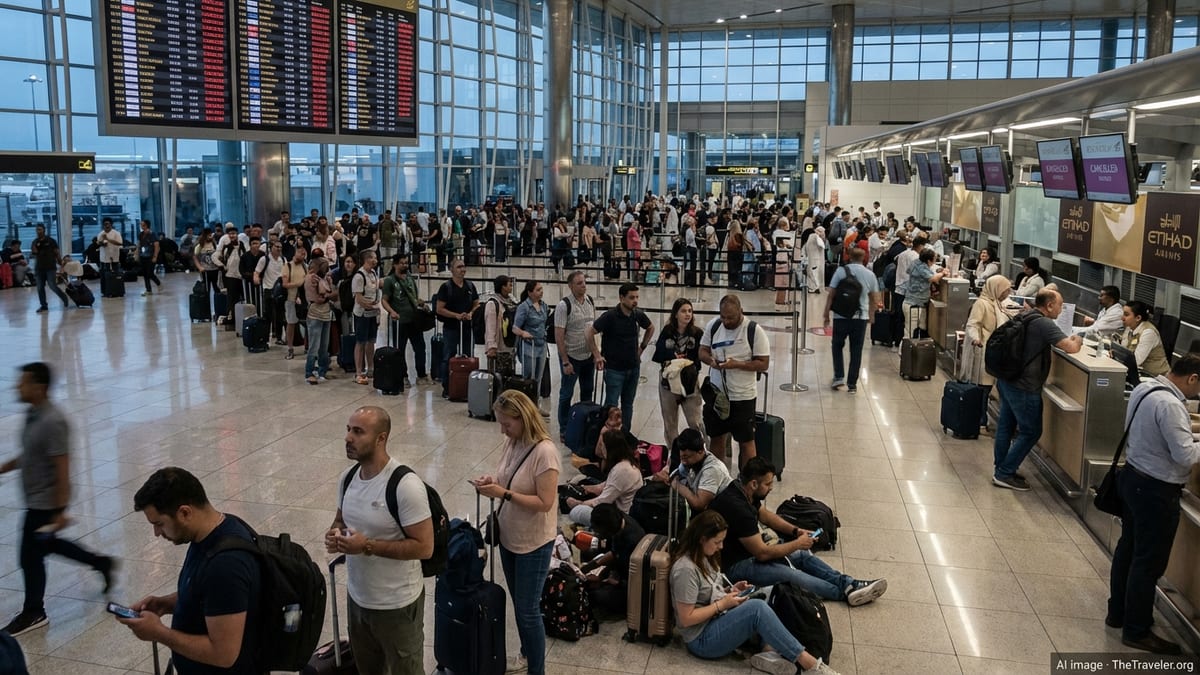
Dubai and Jeddah Emerge as Epicenters of Operational Strain
Recent operational data compiled by aviation tracking and passenger rights platforms shows that Dubai International Airport and King Abdulaziz International Airport in Jeddah were among the hardest hit in the latest round of Middle East disruption, collectively accounting for a substantial share of the 836 delays and 28 cancellations recorded across the region.
Earlier industry snapshots this season already identified Dubai as a recurring pressure point, with separate tallies attributing nearly 200 delays and a smaller number of cancellations to Dubai International alone during a previous surge in schedule volatility. Jeddah has also appeared consistently in these datasets, with earlier reporting indicating dozens of delays and more than 10 cancellations at the Saudi hub during another recent disruption cycle, underscoring how exposed both airports remain when airspace patterns shift.
These figures sit against a backdrop of repeated episodes in which Dubai, Jeddah, Riyadh and Dammam have all faced rolling schedule changes as airlines adjust routings around areas designated higher risk. Travel advisories continue to classify major Middle East gateways as vulnerable to short notice operational changes, with warnings that flight schedules can be revised rapidly when security assessments change.
Regional Airspace Instability Forces Reroutes and Cascading Delays
The latest count of 836 delays and 28 cancellations reflects more than local weather or isolated technical issues. Publicly available operational summaries point to ongoing airspace instability linked to regional tensions and shifting overflight advisories, which have repeatedly forced airlines to reroute traffic around parts of Iran, Iraq, Israel and sections of the Gulf.
Analysts tracking these developments note that when large portions of Middle East airspace are restricted or avoided, long haul services between Europe and Asia are pushed onto narrower corridors, concentrating traffic over relatively fewer waypoints. Earlier travel risk bulletins highlighted how carriers have had to arc south over the Arabian Sea and enter the region via Oman before threading through Saudi or Red Sea corridors, adding time and complexity to flight planning.
For hub airports, even modest increases in block times can have outsized effects. Middle East carriers rely heavily on tightly timed banks of connecting flights, and when an incoming service arrives late, onward departures are often held to protect connections. This hub and spoke structure means a delay to a single arrival into Dubai or Jeddah can cascade into missed slots, crew duty issues and knock on delays across several onward services, amplifying the raw disruption totals recorded in daily statistics.
Multiple Airlines and Hubs Share the Impact
Operational tables from recent weeks show that disruption has been spread across several leading Middle East carriers and airports rather than confined to a single airline. Past data from the region’s recent disruption cycles lists high delay counts at Emirates, flydubai, Qatar Airways, Saudia, flynas, Air Arabia and EgyptAir, among others, reflecting how widespread the operational challenges have become.
Hub metrics mirror this picture. Previous breakdowns of August and early September performance indicated that Dubai, Doha, Riyadh, Jeddah, Dammam and Kuwait City all registered elevated numbers of late or canceled flights during earlier waves of disruption, together exceeding 1,200 delays and several dozen cancellations across a broader timeframe. The new figure of 836 delays and 28 cancellations in a single day fits into this wider pattern of persistent volatility instead of a one off event.
While some airports have reported gradual normalization at various points, published updates from passenger rights organizations and regional media outlets consistently stress that operations remain vulnerable to renewed turbulence. International airlines have in several cases extended capacity cuts or continued to avoid certain routings over the Middle East, which helps manage risk but also concentrates demand on the corridors and hubs that remain open, including Dubai and Jeddah.
What the Numbers Mean for Passengers Transiting the Gulf
For travelers, the headline figures of 836 delays and 28 cancellations translate into missed connections, last minute rebookings and unplanned overnight stays across multiple airports. Consumer guidance from compensation and advisory platforms emphasizes that even when flights eventually depart, significantly delayed services can still trigger entitlements to care, accommodation and in some cases partial refunds, depending on the route and carrier.
Advisory notices current through mid 2026 continue to recommend that passengers build generous buffers into itineraries that rely on Middle East hubs. This is particularly relevant for those connecting via Dubai or Jeddah on multi segment journeys between Europe, North America, Asia and Africa, where tight connections that might have been routine in previous years now carry a higher risk of misalignment due to shifting airspace advisories.
Travel risk assessments further note that while airports and airlines have grown more adept at handling rolling disruption since earlier shutdowns and temporary suspensions this year, the operating environment remains complex. Schedules may appear normal at the time of booking, yet still be subject to rapid adjustment if regional conditions or flight corridor permissions change.
Practical Planning Steps for Upcoming Trips
For those planning to transit the region in the coming weeks, publicly available guidance converges around several practical steps. Passengers are encouraged to monitor flight status closely in the 24 to 48 hours before departure and again on the day of travel, as many airlines now push changes and rebooking options via apps and email on relatively short notice.
Itineraries that leave only minimal connection times at major Middle East hubs are currently considered higher risk. Travel advisories and industry commentators suggest selecting longer layovers where possible, particularly for trips involving through tickets on separate carriers or complex routings that cross several airspace control zones.
Travel insurance that explicitly covers missed connections and disruption related costs can also help reduce financial exposure in the event of prolonged delay or cancellation. With daily statistics now routinely counting hundreds of delayed flights across Dubai, Jeddah and neighboring airports during disruption spikes, these precautions are increasingly framed as a pragmatic response to an unsettled regional aviation environment rather than an overly cautious measure.
AirHelp: Dubai and Jeddah flight delays and cancellations report
NomadLawyer: Middle East aviation crisis analysis