


More news on this day
Airspace closures and security tensions across the Middle East in 2026 are triggering some of the most significant flight cancellations and delays in years, reshaping how Saudi Arabia, the United Arab Emirates and Qatar manage their role as global aviation hubs.
Get the latest news straight to your inbox!
From Sudden Airspace Closures to Prolonged Disruption
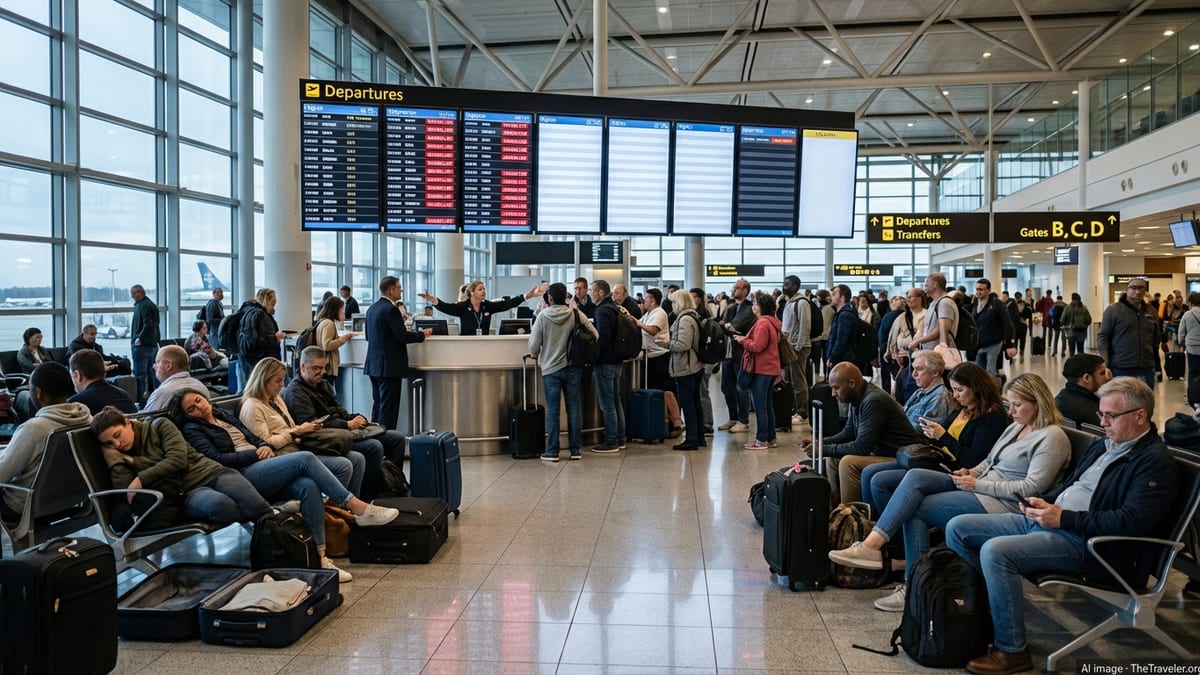
By early March 2026, a cascade of regional crises had converged into a severe aviation shock. Airspace restrictions spread rapidly across parts of the Gulf, affecting routes over the United Arab Emirates, Qatar, Bahrain, Kuwait, Iraq and Iran. Flight tracking data and operational bulletins pointed to thousands of cancellations and diversions in the first days of March alone, as long haul services between Europe, Asia and Africa were forced to hold, reroute or return to origin.
Industry analyses described the first week of March as the worst disruption for Middle East aviation since the pandemic. One global airline body reported that around 85 percent of flights to and from key Gulf airports were withdrawn or cancelled in the first seven days, as carriers paused schedules and reassessed risk. The simultaneous closure or restriction of multiple flight information regions removed many of the traditional overflight corridors that underpin Gulf hubs.
As the crisis has evolved through mid 2026, restrictions have eased in some corridors but remain volatile. Contingency routes, altitude caps and temporary holds continue to add complexity to operations. Airlines serving Saudi Arabia, the UAE and Qatar are still adjusting schedules week by week, with reduced frequencies, retimed departures and extended block times now a common feature of summer timetables.
Travel management advisories issued in June highlighted that while major airports in Riyadh, Jeddah, Dubai, Abu Dhabi and Doha were again handling substantial traffic, flight plans were being rewritten around compressed airspace and changing security assessments. The result is a more fragile network, where localized alerts can rapidly cascade into missed connections and rolling delays.
Saudi Arabia Balances Expansion Plans With Operational Constraints
Saudi Arabia entered 2026 with ambitions to scale its aviation sector and promote new carriers and hubs as part of broader economic diversification plans. The latest airspace turmoil has complicated that strategy. Capacity coordinators and slot managers have indicated that several Saudi airports are likely to operate below previously planned levels for the remainder of the current scheduling season, reflecting limitations on routings and crew availability.
Passenger information circulated in the spring noted selective cancellations and consolidations on routes linking Saudi cities with Europe and Asia. Repatriation and essential travel flights have been prioritized when restrictions spike, with discretionary leisure frequencies trimmed back. Travel risk briefings suggest that operators are giving preference to aircraft and crews already based in the kingdom to reduce exposure to sudden airspace or border changes.
Domestic connectivity inside Saudi Arabia has been relatively more resilient, but it is not immune. When regional security alerts intensify, knock on effects from delayed inbound aircraft and temporary adjustments to flight paths can ripple through internal networks. Travelers flying onward from Riyadh or Jeddah to secondary cities have reported longer connection windows and more frequent schedule changes, even when their domestic sectors operate as planned.
These operational constraints come as Saudi Arabia continues to market long term hub projects and tourism initiatives. Analysts note that sustaining investor and passenger confidence will depend on how effectively authorities and local airlines can demonstrate reliability in an environment where external geopolitical shocks remain a persistent risk.
UAE Hubs Face Repeated Shocks to a High Density Network
For the United Arab Emirates, disruption in 2026 has arrived on top of recent experience managing large scale operational shocks. In 2024, extreme flooding in Dubai forced widespread cancellations and diversions at Dubai International, already one of the world’s busiest airports by international traffic. That episode prompted investments in contingency planning, including improved coordination between airports, airlines and ground transport providers.
The current crisis has tested those preparations under different conditions. When regional airspace closed or was restricted at the end of February 2026, Dubai and Abu Dhabi were forced to suspend or sharply curtail departures for several days. Local coverage reported thousands of cancelled or heavily delayed flights in the UAE and wider Gulf, with some carriers temporarily halting services to the country altogether.
Industry commentary indicates that Emirates and Etihad have since rebuilt much of their long haul networks, but with notable changes. Extended routings around closed or sensitive airspace have increased flight times on some Europe and Americas services, adding fuel costs and forcing schedule retimes. Night time banks at Dubai, which depend on tight connection windows, have been particularly exposed to disruption whenever upstream sectors are delayed.
Travel and tourism analysts emphasize that the UAE’s heavy reliance on aviation as an economic pillar magnifies these pressures. While hotels and airports quickly see rebounds once airspace partially reopens, the financial impact of repeated bursts of cancellations, diversion handling and crew layovers is accumulating. Forward booking data cited by regional business media suggest some passengers are temporarily shifting to routings via alternative hubs when itineraries allow.
Qatar Navigates Airspace Suspension and Gradual Rebuild
Qatar has experienced some of the starkest swings in operational status in 2026. At the start of March, the Qatar Civil Aviation Authority announced a temporary suspension of air traffic in national airspace as a precautionary response to regional developments. Published information shows that all but essential movements were halted, with Hamad International Airport in Doha handling only a limited number of special operations.
Within days, the authority moved to a partial reopening, using designated contingency corridors under close coordination with military and civil agencies. Public travel advisories urged passengers not to proceed to the airport unless they had been directly notified that their flight was operating. Reduced capacity and new routings meant that even operating services often faced extended journey times and non standard routings to avoid restricted areas.
By late March and early April, Qatar Airways began publishing revised interim schedules reflecting a gradual ramp up of operations. Trade and network updates showed that the carrier was restoring more than one hundred destinations by mid May, though often with fewer weekly frequencies than before the crisis. Separate schedule filings indicated continued reductions across parts of the long haul network into the second quarter, including on selected North American and European routes.
Regulatory statements in March emphasized that Qatar’s air traffic control and airspace management systems were operating with high readiness, with emergency plans and enhanced separation procedures in place to handle traffic under stress. Even so, airlines and logistics firms continued to warn clients through June that routings through Doha remained subject to sudden change, and that missed connections and irregular operations were possible.
Passengers Face Longer Journeys, Uncertain Itineraries and Higher Costs
For travelers using Saudi, Emirati and Qatari hubs, the most immediate impact of 2026’s disruptions has been unpredictability. Airspace closures and changing risk assessments have forced carriers to publish revised timetables at short notice, sometimes multiple times in a single season. Passengers holding tickets issued months in advance have frequently received rebooking notices, altered departure times, or notifications of newly added technical stops.
Long haul journeys that once relied on fast east west connections through Riyadh, Jeddah, Dubai, Abu Dhabi or Doha now often involve longer routings and additional time in the air. Aviation analysts note that detours around constrained corridors can add hours to flights between Europe and Asia or between North America and South Asia. These longer sectors increase fuel burn and crew costs, which in turn place pressure on airfares at a time when demand for international travel remains strong.
Travel risk consultancies and airline advisories throughout the spring and early summer have stressed the importance of monitoring flight status closely, building extra time into connections, and remaining flexible about routings. Reports suggest that compensation for delays and cancellations has been limited in many cases because disruptions are being categorized as resulting from external geopolitical events rather than carrier controlled issues.
Despite these challenges, passenger volumes through the leading Gulf hubs have started to recover from the sharp shock in early March. Industry data show that Middle Eastern airlines still carry around a tenth of global passenger traffic, underlining the region’s central role in connecting continents. How Saudi Arabia, the UAE and Qatar manage the ongoing cycle of cancellations, delays and rerouting through the rest of 2026 is expected to be a critical test of their long term hub strategies.