


More news on this day
Flight operations across the Middle East faced another turbulent day as data showed 836 delays and 28 cancellations affecting major regional hubs, underscoring how ongoing airspace restrictions and security concerns continue to snarl one of the world’s most important aviation corridors.
Get the latest news straight to your inbox!
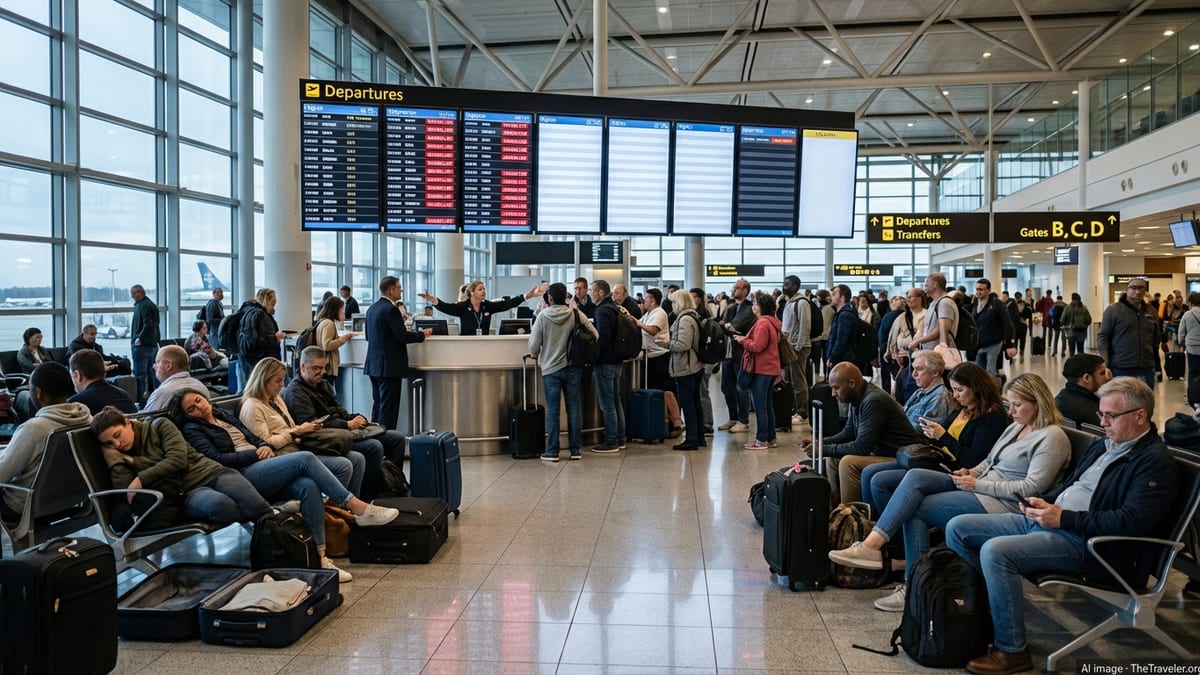
Regional Hubs Under Sustained Operational Strain
Published coverage and live tracking data indicate that airports in Dubai, Abu Dhabi, Doha, Riyadh and Kuwait City remain at the center of the latest disruption, with hundreds of services departing well behind schedule. The figure of 836 delayed flights and 28 cancellations reflects a single-day snapshot of operations at these hubs, highlighting how even a partial reduction in capacity can create significant bottlenecks.
Dubai International Airport, one of the busiest international hubs globally, continues to feel the weight of regional tensions. Reports show that delays there alone can number in the hundreds on a bad day, with knock-on effects for connecting traffic between Europe, Asia and Africa. Similar patterns are visible in Abu Dhabi and Doha, where airlines are juggling revised routings and altered departure banks.
Airlines operating from these hubs, including large Gulf carriers and regional low-cost operators, are still working within a constrained airspace map. Publicly available information shows they are avoiding or tightly limiting operations over parts of Iran, Iraq, Israel and surrounding areas, forcing longer flight paths and squeezing departure and arrival slots.
Operational strain is not limited to passenger services. Cargo schedules have also been affected, as freighter operators compete for the same limited airspace and runway capacity. Industry advisories note that this is feeding into broader logistics delays for time-sensitive shipments routed through the Gulf.
Conflict and Airspace Closures Drive Persistent Disruption
The disruption is rooted in the conflict that flared across the region in late February 2026, when strikes involving the United States, Israel and Iran triggered waves of airspace closures and restrictions. Subsequent missile and drone activity prompted authorities in multiple states to suspend or curtail overflights, creating a patchwork of no-go zones above critical transit points.
Analysis from aviation and logistics consultancies describes the Middle East as the primary east–west bridge for global aviation, with hubs in the Gulf and Levant carrying a significant share of traffic between Europe, India, Southeast Asia and Oceania. When those hubs are constrained, airlines must reroute via longer paths over Central Asia, Africa or southern maritime corridors, adding substantial flying time and cost.
Industry briefings and government travel advisories emphasize that airspace availability can change at short notice, depending on security assessments and military activity. This fluid environment continues to generate rolling disruption, meaning that even on days with relatively few outright cancellations, schedules are vulnerable to waves of delay as congestion builds around open corridors.
Recent factbox-style updates from international news outlets show that while some foreign carriers are gradually restoring services to the region, many have extended suspensions on certain routes into the autumn, particularly to and from Dubai and Abu Dhabi. This keeps overall capacity below pre-conflict levels and limits options for rebooking stranded passengers.
Impact on Travelers Extends Far Beyond the Region
The high concentration of delays and cancellations at Middle East hubs is being felt by passengers who never set foot in the region. Travel reports and data-driven analyses explain that itineraries from Europe to India, Southeast Asia and Australia are often built around Gulf connections, so disruption at a single hub can cascade across multiple continents.
Travel forums and passenger accounts describe long queues at transfer desks, last-minute gate changes and missed onward connections after modest initial delays snowball into missed banks of departures. In some cases, rerouting has pushed travelers onto multi-stop itineraries via alternative hubs in Europe, Central Asia or East Asia, stretching journeys by many hours.
Government advisories from countries including the United States and several European states currently urge travelers to anticipate significant schedule changes when flying to, from or through the Middle East. These advisories highlight that even confirmed flights may be retimed or rerouted close to departure, and that overnight stays or extended layovers remain a possibility if further airspace restrictions are introduced.
Beyond leisure travel, the disruption is complicating corporate mobility, humanitarian work and cargo-dependent supply chains. Logistics bulletins warn that selective cancellations and limited freight capacity at key Middle East gateways are lengthening delivery times for critical shipments, including pharmaceuticals and high-value industrial components.
Airlines Adjust Schedules and Routings Around Constraints
In response to the latest wave of 836 delays and 28 cancellations, airlines active in the region continue to refine their schedules and routings. Publicly available notices from major network carriers and low-cost airlines show a mix of approaches, from temporary suspension of particular city pairs to retimed flights that avoid the most congested hours on remaining open corridors.
Some carriers have extended their avoidance of Iranian and Iraqi airspace, preferring southern or more westerly tracks even when this adds significant mileage. Travel alerts from European and Asian airlines explain that journeys via Dubai and other Gulf hubs may involve longer flight times than advertised, as aircraft follow circuitous paths around sensitive zones.
Within the Gulf itself, regional services to destinations such as Bahrain, Kuwait and certain Saudi cities are seeing intermittent cancellations or aircraft downgrades as airlines reallocate capacity to long-haul routes. Aviation-focused publications report that this can leave short-haul travelers with fewer same-day alternatives if their flight is among the 28 cancellations recorded in a given disruption window.
Industry analysts note that airlines are also trying to manage crew duty-time limitations and aircraft positioning challenges. Extended routings and ground delays make it harder to keep aircraft and crew where they are needed, contributing to knock-on irregularities that can persist for several days after a particularly disrupted cycle.
What Passengers Can Expect in the Coming Weeks
Although some indicators suggest gradual normalization compared with the peak of the crisis earlier in the year, the latest figures of 836 delays and 28 cancellations show that the Middle East aviation system remains fragile. Fact-based assessments from aviation data platforms and consultancies point to a protracted recovery period, given continuing security concerns and the complexity of recalibrating global networks.
For travelers, this means continued uncertainty around departure and arrival times at regional hubs, especially on routes that depend on overflying or connecting through conflict-adjacent airspace. Published guidance from airlines and travel advisors generally recommends allowing extra connection time, keeping contact details updated in bookings and checking flight status frequently on the day of travel.
Travel industry commentary also stresses the importance of flexibility on dates and routings. With some carriers still operating reduced schedules into major Gulf airports, alternative itineraries may involve transit points that would not usually be part of a given journey, as airlines and passengers route around constrained airspace and limited slot availability.
While the overall number of outright cancellations is lower than during the earliest days of the conflict, the concentration of 836 delayed flights in a single disruption cycle underscores how sensitive the region’s aviation network remains. As long as airspace restrictions and intermittent security incidents persist, observers expect periodic spikes in delays and smaller clusters of cancellations to remain a defining feature of travel through Middle Eastern hubs.