


More news on this day
Travel across the Middle East is facing renewed disruption as flight-tracking data and regional media reports indicate at least 518 flights delayed and 23 cancelled in and out of Doha and neighboring hubs, reflecting the continuing strain on aviation networks from conflict-related airspace closures and operational bottlenecks.
Get the latest news straight to your inbox!
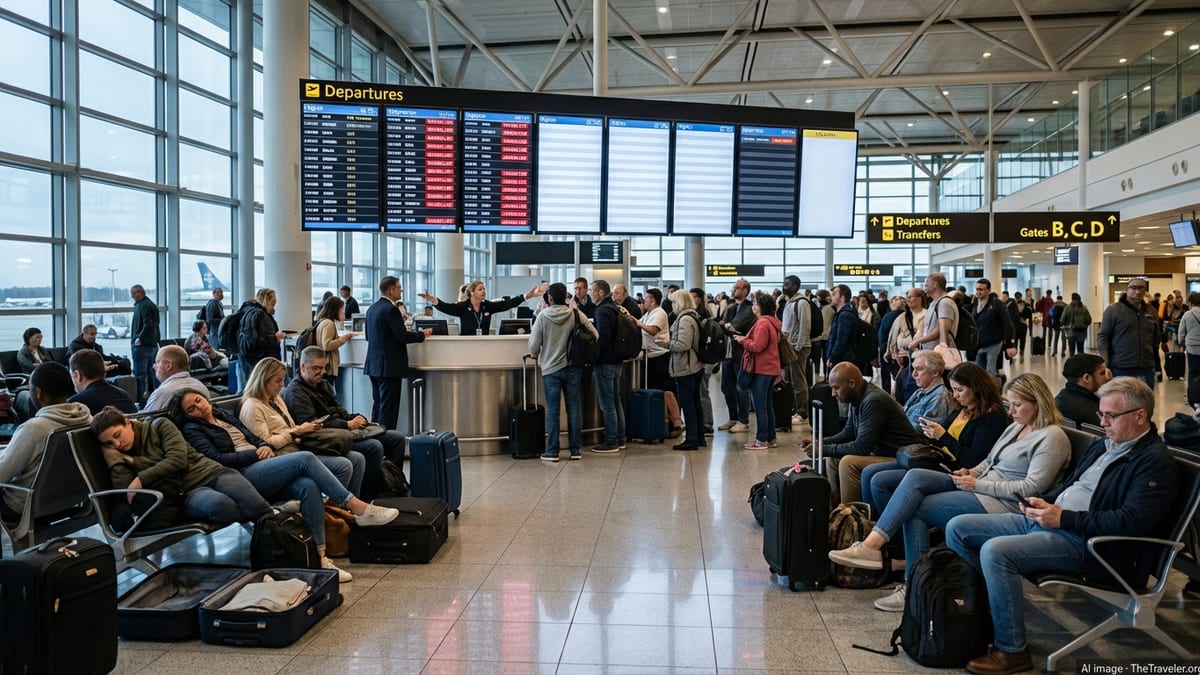
Doha at the Center of a Fresh Wave of Delays
Doha’s Hamad International Airport remains one of the busiest transfer points between Europe, Asia and Africa, which means any regional airspace issue is quickly magnified across the global network. Recent disruption has again placed the Qatari hub under pressure, with delays rippling across departures and arrivals, and some services withdrawn from schedules at short notice.
Publicly available flight-tracking boards show an elevated number of late operations into and out of Doha, particularly on routes linking the Gulf to Europe and South Asia. While the majority of services continue to operate, longer ground times, aircraft rotations and traffic management restraints are contributing to a noticeable build-up of delayed departures.
According to published coverage, airlines using Doha are prioritizing long-haul and high-demand connections while trimming or consolidating other services. The pattern has resulted in a day where more than 500 flights are reported as delayed and at least 23 are fully cancelled, a snapshot that underscores the vulnerability of hub-and-spoke networks when regional airspace becomes constrained.
For travelers passing through Hamad International, the experience can vary widely: some transits proceed close to schedule, while others involve missed connections and extended waits as carriers work through backlogs and seek alternative routings.
Airspace Restrictions and Conflict Spillover
The current disruption is rooted in broader instability affecting multiple Middle Eastern flight information regions. Since early 2026, episodes of missile strikes and military activity have led to partial or temporary airspace closures over parts of Iran and surrounding states. Aviation authorities and airlines have responded by diverting traffic around sensitive zones, lengthening flight times and concentrating traffic into narrower corridors.
Reports from industry sources indicate that the Doha Flight Information Region has, at times, operated with restrictions that limit the rate at which aircraft can arrive and depart. Even when the airport itself remains open, these caps on traffic flow can quickly translate into stacked holding patterns, departure queues and schedule knock-on effects far from the Gulf.
Neighboring hubs in the United Arab Emirates and other Gulf states are facing similar pressures. Media coverage has highlighted days with extensive disruption at airports in Dubai and Abu Dhabi, often triggered by the same set of airspace and routing constraints. When multiple hubs are affected simultaneously, airlines have fewer options to reroute passengers, amplifying the impact of every cancellation or extended delay.
While safety-driven restrictions are central to the current situation, the pattern of interrupted services illustrates how geopolitical events in one part of the region can swiftly reshape travel plans for passengers flying between continents.
Knock-On Effects Across the Global Network
The numerical scale of 518 delayed flights and 23 cancellations is not confined to local traffic. Because Doha functions primarily as a transfer hub, any aircraft arriving late from one region often departs late to another, spreading disruption to Europe, Asia, Africa and the Americas.
Analysts point out that long-haul schedules are especially sensitive to such shocks. A delay of an hour or more on an overnight sector can cause passengers to miss tightly timed onward connections, triggering a cascade of rebookings, hotel placements and baggage re-routing. The result is that a single regional disruption window can be felt for several days in markets far beyond the Middle East.
Published accounts from travelers show a mix of minor schedule changes and significant itinerary overhauls. Some report slightly compressed connection times that still allow them to make onward flights, while others describe having their journeys split across new routings via alternative hubs. These experiences align with the broader picture of airlines attempting to absorb disruption without fully suspending their Middle East operations.
The operational impact extends to airline fleet and crew planning. Longer diversions around restricted airspace increase fuel burn and flying hours, while irregular schedules complicate crew rotations. Carriers are responding by adjusting timetables, combining flights where demand allows and selectively cancelling services that can no longer be operated efficiently within regulatory and safety frameworks.
What Travelers Passing Through Doha Should Expect
For passengers with upcoming itineraries through Doha or other Middle Eastern hubs, current conditions call for added flexibility and preparation. Publicly available guidance from airlines and aviation regulators stresses that schedules remain fluid, with flight times and routings subject to late changes in response to security assessments and airspace status updates.
Travelers are being advised through carrier channels and travel agents to monitor their flight status frequently, use mobile apps for real-time notifications and allow extra time for connections wherever possible. Those on complex multi-stop journeys are particularly exposed to missed connections if any sector in the chain is significantly delayed.
Published coverage also highlights the importance of understanding ticket conditions. Many airlines serving Doha have, during previous waves of disruption, offered complimentary date changes, alternate routings or refunds for affected flights. The specific options available now depend on the fare class and booking channel, making it essential for passengers to review their rights and, where necessary, contact their airline or agent well before their day of travel.
Despite the volume of delays and cancellations reported, most flights through Doha are still operating, and a significant number of travelers continue to transit the hub without major incident. However, the uneven nature of the disruption means that individual experiences can range from routine journeys to extended, multi-day rebookings.
Outlook for Middle East Aviation in the Coming Weeks
Looking ahead, the trajectory of flight operations in Doha and across the Middle East will largely depend on developments in regional security and airspace policy. Aviation analysts note that airlines and air navigation authorities have become more adept at managing conflict-related disruptions over the past decade, employing contingency routings and real-time coordination to keep critical corridors open where possible.
Nevertheless, the current episode has underscored how quickly conditions can change. A renewed round of airspace closures or infrastructure damage could trigger another spike in delays and cancellations, while a sustained period of stability would allow hubs like Doha, Dubai and Abu Dhabi to gradually normalize schedules and reduce backlogs.
For now, published information from carriers indicates a cautious but ongoing operation through Doha, with schedules adjusted to reflect both demand and routing constraints. Industry observers expect that timetables will continue to be revised in short cycles, giving airlines room to respond to new information while maintaining core long-haul links between continents.
Passengers planning trips through the region in the near term are likely to face a more unpredictable environment than in previous years, but they can also expect airlines and airports to prioritize safety while working to keep key international connections open. As the situation evolves, Doha’s role as a barometer for wider Middle East aviation health will remain central to how the global travel network performs.