


More news on this day
A SkyWest Airlines regional service operating as Flight SKW6410 between Shreveport and Dallas on 7 August diverted to Waco, Texas, after a disruption affected the planned Shreveport–Dallas routing, according to flight tracking data and published reports.
Get the latest news straight to your inbox!
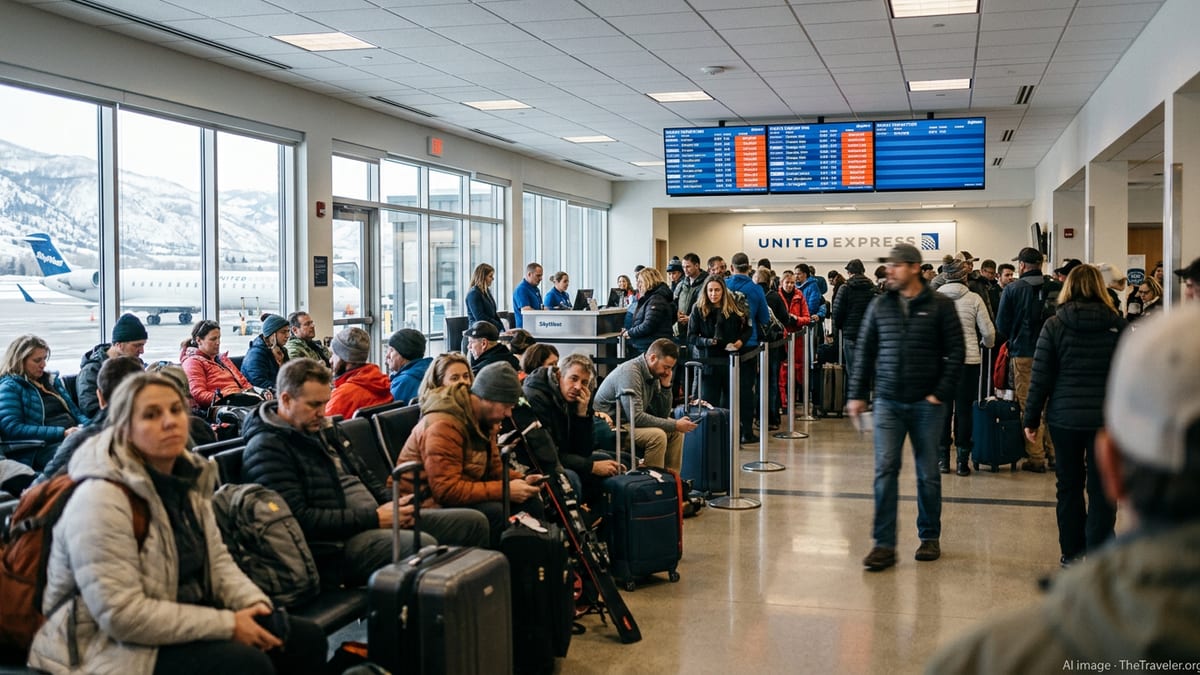
Unscheduled Stop in Waco After Shreveport–Dallas Disruption
Publicly available flight tracking information indicates that SkyWest Airlines Flight SKW6410, operating a regional connection in the United States on 7 August, departed Shreveport Regional Airport with Dallas Fort Worth International Airport listed as its intended destination. During the flight, the aircraft altered course and landed at Waco Regional Airport instead of continuing on to Dallas.
Data from tracking platforms shows the aircraft following the typical northwesterly corridor from Shreveport toward North Texas before turning and descending into Waco. The landing pattern and time on the ground in Waco are consistent with a precautionary diversion rather than an en route emergency, although precise details about the trigger for the change in plan have not been disclosed in official public statements.
Reports in aviation community forums and live tracking commentary describe the event as part of a broader day of irregular operations affecting the Shreveport to Dallas corridor, with congestion and delays also impacting journeys to the Dallas hub. Passengers on affected services were re-accommodated through a mix of rebooked itineraries and onward connections after the diversion.
The aircraft involved in SKW6410’s 7 August operation is listed in fleet records as a regional jet configured for short to medium-haul feeder services. These aircraft are commonly used by major U.S. network airlines through capacity-purchase agreements, linking smaller cities such as Shreveport and Waco with primary hubs in Dallas, Houston, and other large markets.
Possible Weather and Flow Constraints in North Texas Airspace
Meteorological summaries for North Texas on 7 August point to convective activity and scattered thunderstorms in the afternoon and evening hours, conditions that frequently prompt air traffic control to impose spacing initiatives and arrival metering at large hub airports. When these constraints combine with peak travel periods, regional flights from smaller stations are often among the first to face extended holding patterns, diversions, or cancellations.
Operational analyses published after the event suggest that SKW6410’s diversion into Waco may have been influenced by a combination of arrival congestion near Dallas and the need to maintain fuel reserves within conservative planning margins. In such scenarios, dispatchers and flight crews routinely balance the likelihood of further en route delays against the certainty of landing at a nearby airport with available runway capacity and ground handling support.
Observers note that Waco Regional Airport lies roughly along the broader Shreveport–Dallas–Austin axis and is frequently listed as an alternate in flight planning for regional services into North Texas hubs. The airport’s runway length and instrument approach infrastructure are capable of handling regional jets in a variety of weather conditions, making it a practical diversion choice when Dallas traffic or storms create operational bottlenecks.
While no mechanical issue has been publicly documented for SKW6410, industry commentary emphasizes that modern airline procedures favor early diversions over prolonged holding when uncertainty grows around destination weather or traffic flow. This conservative bias is designed to keep fuel margins robust and to reduce the risk of last-minute, higher-stress decision-making near busy terminal areas.
Impact on Passengers and Follow-on Operations
Travelers on SKW6410 reportedly experienced extended journey times as a result of the diversion and subsequent rerouting. According to accounts shared on social media and in travel forums, some passengers were offered options to continue from Waco by ground transport, while others were rebooked onto later connections from Dallas once the aircraft or replacement aircraft could reposition.
Regional deviations of this kind often create ripple effects for airline schedules, particularly when a single aircraft is scheduled to operate a series of short segments over the course of a day. When SKW6410 terminated temporarily at Waco, downstream departures using the same aircraft or crew would likely have required adjustment, contributing to additional delays or equipment swaps later in the day.
For travelers starting in smaller markets such as Shreveport, disruptions on their primary link to a major hub can quickly compound missed connections to long-haul services. Consumer advocacy groups regularly highlight these episodes as examples of the particular vulnerability of regional passengers compared with those originating at large hub airports, where alternative flights are more plentiful.
In publicly available operational statistics filed with regulators, SkyWest generally reports high completion rates for its contracted flying. However, aviation analysts note that even a small number of disrupted regional legs can disproportionately affect customer perceptions in smaller communities, where a single diverted or cancelled flight may represent a significant portion of the day’s scheduled departures.
Regional Airlines Under Pressure Amid Weather and Crew Constraints
The SKW6410 diversion comes at a time when U.S. regional airlines continue to face a challenging operating environment. Industry reports describe a combination of pilot staffing constraints, aircraft availability issues, and increasingly volatile weather patterns, all contributing to a fragile day-to-day schedule in secondary and tertiary markets.
SkyWest, which flies for several major U.S. network carriers under brands such as United Express, Delta Connection, and American Eagle, plays a pivotal role in maintaining connectivity for smaller cities. Contract structures typically compensate regional operators based on completed flights, a model that encourages schedule reliability but also leaves limited room for error when storms or air traffic programs disrupt densely packed operating days.
On peak travel days, including summer holiday periods in early August, regional operations are especially sensitive to crew duty-time limits. If diversions extend flight times or require unscheduled stops at alternates like Waco, crews may approach regulatory limits more quickly, sometimes triggering additional cancellations or delays as airlines work to reset rotations and position both aircraft and staff.
Industry observers say that events such as the SKW6410 diversion highlight the importance of resilient planning for regional networks, including flexible crew and fleet allocation, robust alternate-airport strategies, and clear passenger communication when irregular operations arise. While diversions remain relatively rare compared with the volume of daily departures, their visibility and impact on individual journeys ensure that each incident attracts close scrutiny from both travelers and regulators.