


More news on this day
A PSA Airlines-operated American Eagle service for American Airlines, operating as Flight JIA5500 from Wichita to Washington on 6 August, diverted from its planned route and ultimately returned to Wichita Dwight D. Eisenhower National Airport, according to publicly available flight-tracking information and aviation data.
Get the latest news straight to your inbox!
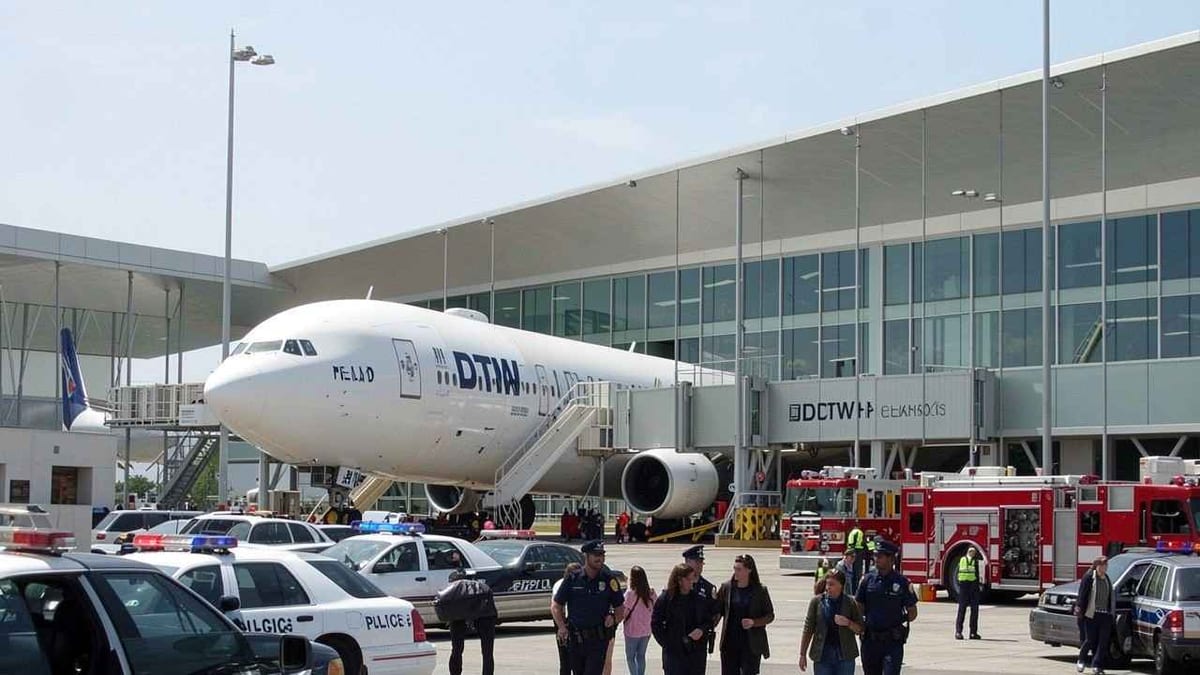
Regional Jet Turns Back After Departure From Wichita
Available flight-tracking records indicate that Flight JIA5500, operated with a Bombardier CRJ-700 regional jet under the American Eagle brand, departed Wichita on 6 August bound for the Washington, D.C. area. Instead of continuing to its scheduled destination, the aircraft left its route and circled back toward Kansas, completing a diversion and landing again at Wichita.
The service is part of the American Eagle network flown by PSA Airlines, a wholly owned regional subsidiary that operates flights on behalf of American Airlines. The carrier uses the internal designator JIA, a legacy reference to Jetstream International Airlines, which later became PSA Airlines in its current form. The CRJ-700 is a common regional jet type in the American Eagle fleet, typically configured for around 65 to 70 passengers.
Publicly accessible tracking data show the aircraft climbing normally after departure before altering course and returning to its origin. The flight was recorded as having landed back at Wichita without further continuation to Washington, effectively ending the scheduled segment for that aircraft.
At the time of writing, no formal, publicly detailed explanation for the diversion has been widely circulated through airline statements or federal investigative summaries, leaving only generic operational categories that commonly lead to such outcomes.
Typical Causes of Midjourney Diversions
While specific details for Flight JIA5500 on 6 August have not been published in a comprehensive incident summary, industry records and historical patterns point to a familiar set of potential causes. Regional jets often divert or return to origin for reasons that include technical irregularities, weather conditions en route or at destination, air traffic control restrictions, or crew duty-time limits triggered by earlier disruptions in the aircraft’s schedule.
Analyses of American Airlines and American Eagle operations in recent years show that unscheduled returns and diversions frequently stem from a combination of aircraft maintenance concerns and cascading delays from previous flights. Studies of airline disruption management highlight that even seemingly minor technical alerts, such as sensor anomalies or engine parameter warnings, can prompt a precautionary return so that mechanics can assess the aircraft at a base with appropriate support.
Weather along the route or at the Washington area can also influence operational decisions. Summer convection patterns in the central and eastern United States regularly generate thunderstorms and low-visibility conditions that complicate arrivals into busy metropolitan airspace. When these factors intersect with existing delays or tight crew schedules, a diversion back to the departure airport may be considered the most predictable and controllable option.
Beyond technical and weather influences, airline schedule recovery models show that returning to the origin airport can sometimes minimize wider network disruption. By positioning aircraft and crew where more maintenance resources and alternative flights are available, operators may limit knock-on effects across multiple routes, even though the immediate impact on affected passengers can be significant.
Context: PSA Airlines and Wichita–Washington Operations
PSA Airlines operates as one of several regional carriers within the American Eagle system, focusing on hub-feeding routes that connect smaller and midsized markets with major American Airlines gateways. The Wichita to Washington corridor is part of this broader network, providing links from the Midwest to the U.S. capital region through Ronald Reagan Washington National Airport.
Data published by the Wichita Airport Authority show that PSA plays a notable role in American-branded regional service at Wichita Dwight D. Eisenhower National Airport, alongside other affiliated operators. In recent reporting periods, regional affiliates have carried tens of thousands of passengers to and from the city, reflecting demand for connections to larger domestic and international networks.
The CRJ-700 platform is used widely across these routes because of its balance between seat capacity and performance. Its ability to operate efficiently from medium-sized airports like Wichita while serving congested hubs on the East Coast makes it a staple of American Eagle scheduling. When a diversion or return occurs on such a route, the disruption can ripple into subsequent legs assigned to the same aircraft and crew pairing.
Published industry analyses on airline network resilience note that regional operations are especially sensitive to such irregularities. Shorter stage lengths, tight turn times, and limited backup aircraft at smaller stations can all amplify the effect of a single diversion, complicating recovery efforts over the remainder of the day.
Passenger Impact and Operational Follow-Up
When a flight diverts or returns to its origin, passengers typically face missed connections and extended travel times. In the case of Flight JIA5500, the decision to land back in Wichita removed the direct link to Washington for those booked on the service, likely requiring rebooking on later departures or routing through alternative hubs in the American Airlines network.
General guidance from publicly available American Airlines and industry documents describes how airlines handle such irregular operations. Standard practice involves reaccommodating passengers on the next available flights, sometimes through other connecting cities, and in some circumstances arranging overnight accommodations when onward travel is not possible the same day. The exact level of support can vary according to the underlying cause of the diversion, such as weather or maintenance, and local station resources.
Operationally, a return to origin often triggers an internal review to confirm that any technical or safety-related issue has been addressed before the aircraft reenters service. Maintenance personnel may inspect affected systems, run diagnostic checks, and coordinate with the carrier’s control center to determine when the jet can resume flying. If a crew’s duty-time limits are approached or exceeded due to the additional air and ground time, a replacement crew may be required for subsequent legs.
Disruption-management research underscores that events like the JIA5500 diversion are embedded in a wider pattern of routine irregular operations across large airline networks. Although such events are disruptive for those on board, they are generally resolved within the framework of existing safety, maintenance, and scheduling procedures that prioritize controlled outcomes over maintaining the original timetable at all costs.
Safety Culture and Public Perception
Within the U.S. airline system, precautionary returns and diversions are broadly regarded in industry literature as an expression of safety-first culture. Even when the underlying issue proves minor once inspected on the ground, the decision to divert or abandon a leg is often characterized as consistent with conservative operational standards for commercial aviation.
Publicly accessible aviation safety databases show that serious incidents involving American Eagle regional jets remain rare relative to the total number of flights operated annually. For carriers such as PSA Airlines, the overwhelming majority of departures proceed without notable irregularities, reflecting a system built around layered redundancies across aircraft systems, crew training, and regulatory oversight.
However, diversions and unscheduled returns can still influence public perception, particularly when information is limited in the immediate aftermath. Travel forums and social platforms frequently feature accounts from passengers trying to understand why a given flight changed course or never reached its destination. Without detailed briefings, travelers sometimes speculate about causes, even when internal records categorize the event as a relatively routine operational precaution.
Analysts of airline operations suggest that clearer communication about generic categories of disruptions, along with realistic expectations about how regional networks function, can help align passenger understanding with the operational reality behind events like the 6 August diversion of Flight JIA5500 back to Wichita.