


More news on this day
Heightened tensions and shifting airspace advisories across the Middle East are rippling through one of the Gulf’s busiest short‑haul corridors, with carriers trimming or suspending select flights between the United Arab Emirates and Riyadh and warning of further short‑notice changes.
Get the latest news straight to your inbox!
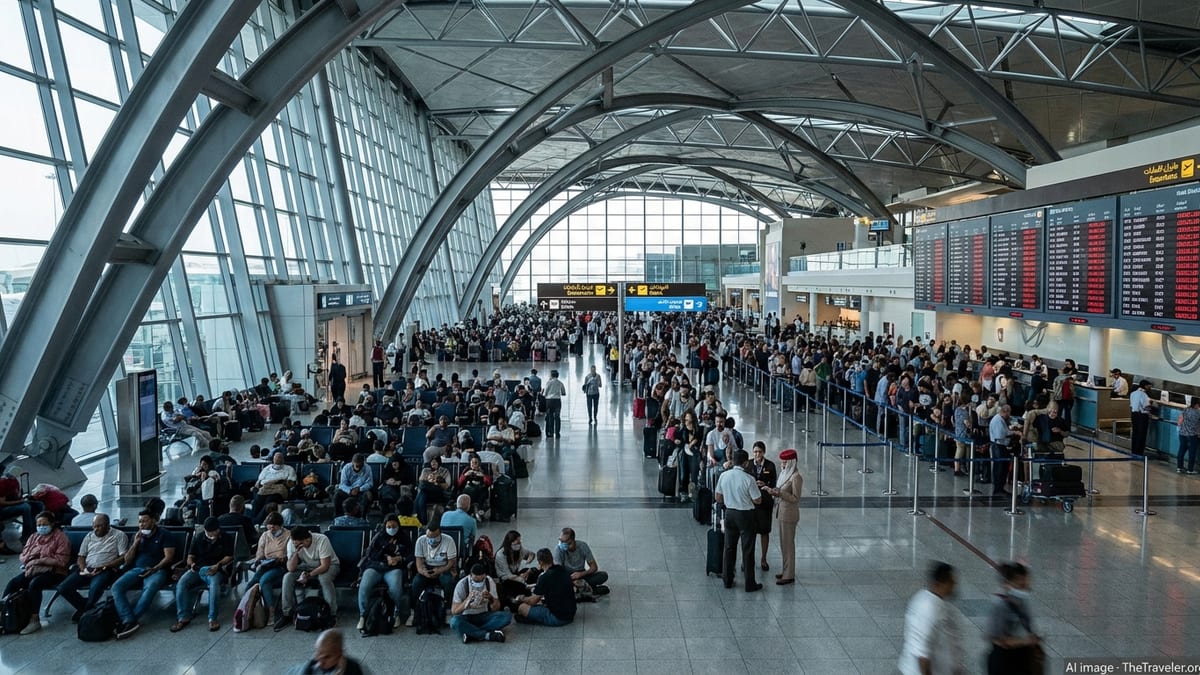
Regional Conflict Spurs Targeted Flight Cancellations
Recent military escalations involving Iran and US allies have led to a patchwork of airspace restrictions across the Middle East, prompting airlines to reassess operations on key Gulf routes. Industry briefings and operational trackers describe a compressed airspace environment where many long‑haul services have already been rerouted around higher‑risk areas, adding pressure to regional networks.
While most Gulf flight information regions remain technically open, aviation safety advisories highlight elevated risk levels over several states, including Iran and parts of Iraq, and note the potential for sudden route changes or airport disruptions. According to independent airspace monitoring platforms, operators are being urged to plan conservatively, build extra time into schedules and remain prepared for last‑minute diversions or delays.
Within this broader context, services between the UAE and Saudi Arabia’s capital are under renewed scrutiny. Airlines that rely heavily on Gulf corridors are facing more complex flight planning and may choose to scale back frequencies on shorter sectors such as Dubai or Abu Dhabi to Riyadh in order to free aircraft and crews for longer detours on intercontinental routes.
Capacity data for July and August 2026 shows that regional airlines had been steadily rebuilding their schedules following earlier disruptions, but analysts now describe a fragile recovery. The latest round of security concerns has introduced fresh uncertainty, with airline planners balancing strong passenger demand against operational, fuel and crew‑duty constraints.
UAE–Riyadh Routes See Suspensions and Frequency Cuts
Published travel advisories indicate that the most visible changes for passengers are selective cancellations and reduced frequencies on links between the UAE and Riyadh. Coverage in regional media shows that some European carriers with a presence in both Dubai and the Saudi capital have paused their operations to both cities, citing the current security outlook and evolving airspace guidance.
For example, Air France has extended a temporary suspension of flights to Dubai and Riyadh as part of a wider adjustment to its Middle East network during the summer 2026 season, while maintaining growth in long‑haul markets such as North and South America. Publicly available schedule updates show that the carrier is continuing to contact affected passengers and offer rebooking or refunds, with flights on the two Gulf city‑pairs off the timetable until at least late July, and subject to further review.
Other international airlines have taken similar steps. Dutch carrier KLM has reiterated in an online statement that it will not operate flights to Dubai, Riyadh and Dammam for an extended period, pushing back an earlier restart date as it reassesses the regional situation. The move further tightens capacity between the Gulf and European hubs that typically feed into Saudi and UAE routes, indirectly affecting options for travelers connecting between the UAE and Riyadh through Amsterdam and other points.
Regional reporting from the UAE also notes that some carriers are trimming daily frequencies to Riyadh rather than suspending routes entirely. One recent advisory referenced schedule changes that would see certain Gulf services reduced to a single daily rotation from August, with Riyadh among the destinations affected as airlines concentrate resources on core trunk routes and maintain flexibility to respond to further airspace developments.
Operational Picture: Gulf Airports Open but Disruption Risk High
Despite the headline cancellations, major airports in the UAE and Saudi Arabia remain operational, and core UAE–Riyadh services continue to run on a reduced or adjusted basis. Independent operational summaries compiled for international operators describe the Gulf airspace as open but heavily managed, with tactical routings in place and regular flow‑management interventions.
Specialist flight‑operations groups tracking the Middle East note that the main Gulf hubs, including Dubai International, Abu Dhabi’s Zayed International Airport and Riyadh’s King Khalid International Airport, are handling traffic, though some Saudi airports in the south have experienced temporary closures in recent weeks following missile and drone incidents. These localized shutdowns have not directly targeted Riyadh, but they reinforce concerns about the possibility of short‑notice changes across the country’s wider airport network.
Among Gulf carriers, operational update pages show that airlines such as flydubai are maintaining services across their networks with reduced schedules. Advisories emphasize that some flight paths are being temporarily rerouted, resulting in longer sector times and tighter aircraft rotations. Passengers are being urged to monitor flight status closely before travel, as day‑of‑departure changes remain possible when airways are adjusted or when air traffic control reroutes traffic around sensitive areas.
Travel advisories aimed at UAE‑based passengers also highlight new layers of complexity. Recent coverage collating official guidance mentions simultaneous developments ranging from new health documentation requirements for certain destinations to flight cancellations affecting Saudi airports. For travelers focused on the UAE–Riyadh corridor, the message is that schedules are more fluid than usual, even where tickets remain on sale.
Airspace Advisories and the Wider Network Effect
Behind the shifting timetables is a fast‑moving risk picture for Middle East airspace. Aviation safety bulletins and conflict‑zone summaries continue to flag high‑risk or restricted areas in and around Iran and Iraq, with additional cautionary notes covering parts of the Gulf region, including Saudi Arabia and the UAE. Operators are advised to avoid specific airspace at certain levels or to adopt conservative routing, which in turn pushes traffic into narrower corridors to the north and south of the main conflict zones.
Analysis by industry bodies shows that earlier airspace closures and reroutings have already increased flying times and fuel burn on many long‑haul flights that would normally cross Iran or neighboring states. As a result, airlines are facing higher operating costs and tighter crew‑duty margins. On short‑haul Gulf sectors such as UAE to Riyadh, this can translate into fewer daily rotations per aircraft, pressure on turnaround times and a greater likelihood that irregular operations elsewhere in the network cascade into delays or cancellations on regional legs.
Commercial and cargo operators also report that schedule planning has become more complex. Logistics updates from global freight and supply‑chain providers describe a Middle East environment in which available airspace and airport capacity can change quickly, forcing carriers to switch routings or pairing patterns with relatively little notice. When combined with seasonal demand peaks, this volatility contributes to intermittent bottlenecks on busy city‑pairs such as Dubai‑Riyadh and Abu Dhabi‑Riyadh.
Risk consultants note that, for now, most Gulf hubs are avoiding the kind of sustained shutdown that would trigger mass cancellations across entire airline networks. However, the cumulative effect of multiple advisories, localized incidents and conservative routing policies is a steady background of disruption. Passengers on the UAE–Riyadh corridor may therefore experience a pattern of sporadic cancellations, swapped aircraft types and retimed departures rather than wholesale route withdrawals.
What UAE–Riyadh Travelers Should Do Now
With schedules changing frequently, passenger advocates and travel‑advisory platforms recommend proactive planning for those booked between the UAE and Riyadh in the coming weeks. Travelers are urged to check the status of their flights directly with airlines and airports on the day of travel, sign up for SMS or app notifications where available, and allow extra time at the airport in case of longer check‑in or security queues.
Regional consumer guidance also stresses the importance of understanding airline policies on rebooking and refunds, especially where services are suspended by foreign carriers. Published advisories from European airlines show a willingness to offer fee‑free changes or cancellations during the current disruption period, even for tickets that remain formally valid. Passengers connecting via European hubs to reach Riyadh or the UAE should pay particular attention to any changes involving intermediate legs.
Travelers with flexibility in their plans may benefit from considering alternative routings or nearby airports, provided they remain within the bounds of government travel advice. With airspace constraints continuing to evolve, some itineraries that avoid the most heavily affected corridors may prove more resilient, even if they involve longer journey times or additional connections.
Industry observers caution that conditions could tighten further if regional tensions escalate or if new airspace restrictions are introduced. For now, the UAE–Riyadh market remains partially served, but with an unusually high degree of operational uncertainty. Anyone planning to fly between the two should treat schedules as subject to change and stay closely informed in the days leading up to departure.
Gulf News: Latest UAE flight cancellations and travel advisories
Gulf News: UAE travel advisory and Gulf airspace warnings
OPSGROUP: Middle East airspace current operational picture
SafeAirspace: Middle East conflict zone and airspace risks summary