


More news on this day
Ha Long Bay and neighboring Lan Ha Bay are emerging as Vietnam’s most sought-after luxury summer escapes, as new six-star cruises, island resorts and wellness-focused itineraries reshape the country’s premier seascape for high-end travelers.
Get the latest news straight to your inbox!
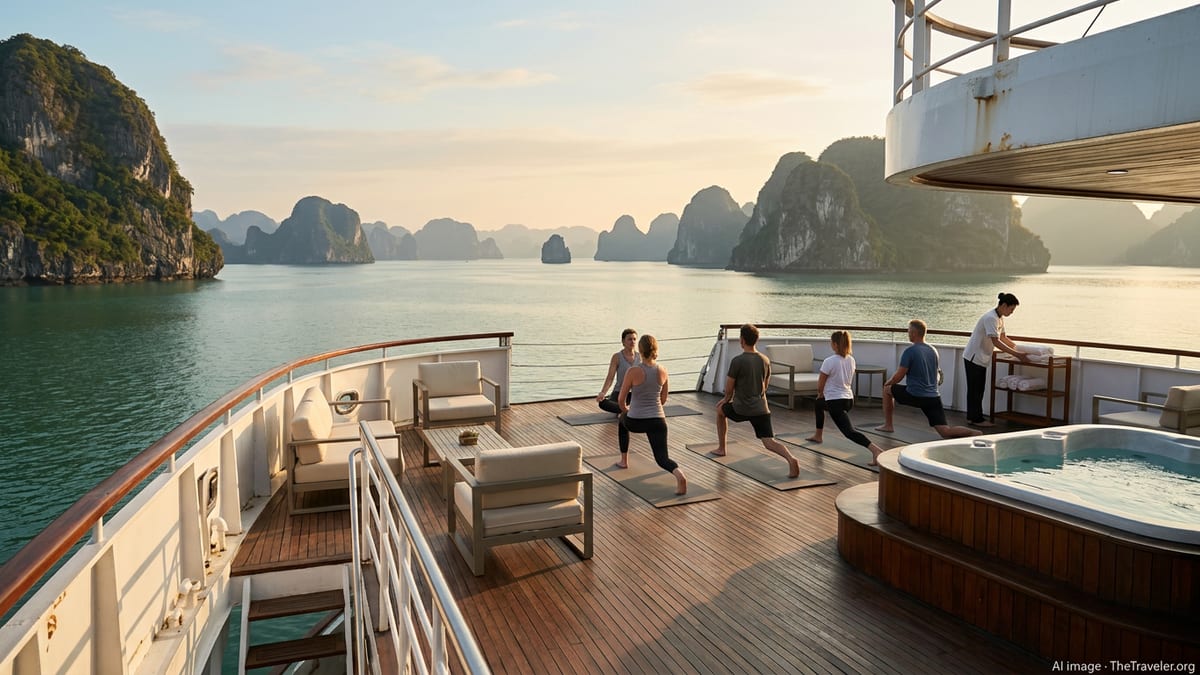
New Six-Star Cruises Redefine Ha Long’s High-End Appeal
Ha Long Bay’s long-established status as a UNESCO World Heritage site is being reinforced by a rapid wave of luxury cruise launches targeting affluent summer travelers. Recent industry updates highlight the debut of new six-star vessels such as Athena Premium and Venus Cruise, which are marketed with expansive suites, infinity pools, fine-dining restaurants and wellness facilities designed to rival upscale city hotels. Publicly available information on these ships emphasizes large sundecks, spa complexes and multi-restaurant concepts aimed squarely at the premium leisure segment.
Tourism-focused reports note that operators are now highlighting Ha Long’s luxury credentials as much as its iconic limestone karst scenery. Newbuilds and upgraded fleets, often with fewer but larger cabins, cater to guests seeking privacy, balconies and bathtubs along with curated experiences like wine tastings and small-group excursions. Industry guides for 2024 and 2025 point to a rising number of high-end launch announcements, suggesting that competition at the top end of the market is intensifying.
Several cruise brands are also promoting itineraries that link Ha Long Bay with adjacent Lan Ha Bay, positioning the twin-bay route as a “two wonders” experience. Detailed itineraries published by cruise lines describe multi-night journeys that move from the busier core of Ha Long toward quieter anchorages, emphasizing sunset views, overwater jacuzzis and à la carte dining as part of the luxury proposition.
This emphasis on comfort, privacy and onboard amenities reflects broader trends outlined in Vietnam tourism strategy documents, which identify high-spending visitors and premium coastal products as key growth drivers. Ha Long Bay’s upgraded cruise fleet is increasingly cited as a leading example of how the country is repositioning its natural icons for upscale tourism.
Lan Ha Bay Emerges as a Boutique Alternative
Lan Ha Bay, lying to the southeast of Ha Long and bordering Cat Ba Island, is drawing growing attention as a quieter, boutique alternative for luxury travelers. Destination overviews describe Lan Ha as part of the same broader seascape but with fewer commercial ports and less dense traffic, an attribute now heavily used in promotional material targeting guests who want seclusion and softer adventure alongside high comfort.
Travel guides and comparison pieces published in August 2026 point out that Lan Ha Bay has attracted a concentration of newer five-star cruises with a lower passenger count, wider cabins and large balcony categories. Operators such as Indochine Cruise and Ambassador Signature have publicized Lan Ha-focused or Lan Ha–inclusive itineraries that include expansive sundecks, piano lounges, dedicated spas and water slides, illustrating how the bay has become a testing ground for more design-driven vessels and resort-style amenities.
Lan Ha is also frequently highlighted in eco- and adventure-leaning itineraries that incorporate kayaking, caving and cycling on Cat Ba Island. Official descriptions of the bay stress its suitability for low-impact tourism, noting clear waters and dense limestone islets that create sheltered lagoons and beaches. The combination of high-end ships with access to more secluded coves has helped Lan Ha gain a reputation among travel planners as the bay of choice for honeymooners, small incentive groups and families seeking privacy.
Inter-bay routes connecting Ha Long and Lan Ha have expanded in recent seasons, according to destination briefings and cruise brochures. These integrated routes allow vessels to embark in Ha Long, cross into Lan Ha’s calmer waters for overnight moorings, and then return via different sightseeing points, effectively turning the entire Gulf of Tonkin seascape into one extended luxury cruising corridor.
Island Resorts and Coastal Investments Lift the Wider Region
Beyond the water, high-end hotel investment along the northeastern coast is reinforcing Ha Long and Lan Ha’s status as summer escape hubs. One of the most notable additions is the Angsana Quan Lan Ha Long Bay complex on Quan Lan Island in Bai Tu Long Bay, a quieter area that serves as a secondary gateway to the main Ha Long seascape. According to information released by the brand and local partners, the resort spans around 35 hectares and features a 150-room five-star hotel alongside 37 villas, a year-round indoor infinity pool, and what is described as one of northern Vietnam’s largest interconnected outdoor pools.
Local media coverage of the project underlines its role in lifting the profile of Van Don district as an emerging high-end coastal destination and extension of the Ha Long tourism zone. Reports indicate that authorities and investors see Quan Lan as part of a future network of island stays that complement luxury cruises, allowing guests to combine nights at sea with extended relaxation on shore.
Existing international hotels in Ha Long City, including large waterfront properties with bay-view ballrooms and rooftop bars, are also refining their premium offers with wellness packages, wedding products and short-stay city–plus–cruise combinations. Promotional materials emphasize panoramic views over the bay, upgraded spa facilities and concierge support for arranging private yacht charters or helicopter sightseeing, moving the destination further into the upscale leisure and events market.
These land-based developments are supported by improved access via nearby airports and upgraded highways from Hanoi and Hai Phong, which shorten travel times for visitors arriving on regional and long-haul flights. Tourism analyses note that better connectivity is critical as Ha Long, Lan Ha and surrounding islands seek to differentiate themselves from other beach destinations in Vietnam by offering integrated sea, island and city luxury experiences within a compact radius.
Luxury Travelers Seek Wellness, Sustainability and Space
Available market research on inbound tourism to Vietnam in 2024 and 2025 identifies strong interest in wellness, sustainability and authentic nature experiences among higher-spending visitors. Ha Long and Lan Ha Bay operators are increasingly aligning with these preferences, spotlighting spa facilities, sunrise tai chi sessions, yoga decks and locally inspired treatments as core elements of their cruise programs.
Cruise brochures and itineraries outline daily schedules that start with dawn wellness classes on open sundecks, followed by guided kayaking in less-trafficked coves, visits to floating fishing communities, and menus that incorporate regional seafood and Vietnamese specialties. Some ships now feature wellness-centric branding, with full spa floors, saunas and even small golf simulators or meditation corners, marketed as a way to decompress between onshore excursions.
Sustainability messaging is also more prominent. Several operators emphasize reduced passenger capacity, modern waste treatment systems and partnerships with local communities for shore excursions such as cycling in Viet Hai village or farm-to-table dining on Cat Ba. Destination overviews of Lan Ha Bay, in particular, frequently underline its suitability for eco-cruising and controlled visitor numbers to help protect its marine environment.
This combination of high-comfort hardware and softer, experience-led programming is positioning Ha Long and Lan Ha Bay as competitive choices not only within Vietnam but also against other regional cruising hubs. For summer 2026 and beyond, travel planners expect that guests will continue to prioritize space, health-focused amenities and access to relatively pristine natural settings, trends to which the twin bays appear well aligned.
Outlook: Twin Bays at the Center of Vietnam’s Premium Strategy
Vietnam’s broader tourism planning documents highlight coastal and marine products as a core pillar of the country’s strategy to attract more international visitors in the coming years, with Ha Long Bay repeatedly cited as a flagship asset. The rapid expansion of luxury cruises and the diversification of routes into Lan Ha Bay indicate that the northern seascape is set to remain central to this effort.
Trade news from early 2026 references additional newbuilds such as Lyra Grandeur, a luxury ship operating both Ha Long and Lan Ha routes, underscoring the fact that more capacity at the top end is still entering the market. With each launch, operators are under pressure to differentiate on design, gastronomy and experiences, which could further raise standards for guests opting for overnight cruises during Vietnam’s hottest months.
Industry observers point out that competition also extends to other Vietnamese coastal destinations, including Phu Quoc, Nha Trang and central Vietnam’s lagoon resorts. However, Ha Long and Lan Ha’s combination of UNESCO-listed scenery, sheltered bays for year-round cruising, and growing inventory of premium hotels and villas gives the region a distinct profile, particularly for travelers seeking a shorter coastal break add-on to a city itinerary in Hanoi.
As international arrivals recover and shift toward higher-value segments, the cluster of luxury cruises and island resorts across Ha Long, Lan Ha and neighboring Bai Tu Long positions northern Vietnam as one of Southeast Asia’s most compelling options for upscale summer escapes, with further product launches anticipated over the next two to three seasons.
https://halongtrip.com/guide/lan-ha-bay-cruises/
https://ambassadorcruise.com/ambassador-signature-lan-ha/