


More news on this day
Travel and tourism across the Middle East are enduring a bruising 2026 as war-related airspace closures, elevated oil prices and shifting demand patterns batter visitor flows, even as new global forecasts from the World Travel & Tourism Council (WTTC) point to a powerful recovery once the current crisis eases.
Get the latest news straight to your inbox!
War, airspace closures and a sudden demand shock
The latest disruption follows the escalation of the Iran conflict in late February and March 2026, which triggered widespread airspace closures across Iran, Iraq, Israel, Qatar, Bahrain, Kuwait and parts of the Gulf. Commercial aviation analysis shows that international airlines suspended or rerouted services, while several Middle Eastern carriers sharply curtailed operations as key hubs lost access to traditional corridors.
Reports on the economic fallout of the conflict describe the near-closure of the Strait of Hormuz and renewed threats in the Gulf of Aden and Red Sea, forcing traffic into narrow northern and southern routes and raising operating costs for airlines. Industry briefings suggest that long-haul journeys between Europe and Asia are facing longer flight times, higher fuel burn and capacity constraints, eroding the price competitiveness that underpinned the region’s growth as a global transit hub.
Tourism bodies and regional observers indicate that leisure demand has softened sharply in frontline and neighbouring markets, with travellers shifting bookings away from the eastern Mediterranean and Gulf region toward alternative sun and city destinations. Early 2026 surveys cited in multilateral tourism reports show a marked deterioration in traveller confidence for trips touching conflict-affected airspace, compounding the immediate aviation shock with a broader perception risk.
International financial institutions monitoring the Middle East and Central Asia report that tourism-dependent economies are facing additional pressure from disrupted logistics, weaker re-exports and reduced passenger flows. The International Monetary Fund’s April 2026 regional outlook notes that travel and tourism are among the sectors most exposed to prolonged conflict and trade bottlenecks, underlining the vulnerability revealed by this year’s sudden shock.
WTTC data shows region entered 2026 from a position of strength
The severity of the 2026 hit stands in contrast to the sector’s strong momentum through 2023, 2024 and 2025. WTTC economic impact research published in recent years shows that Middle East travel and tourism rebounded faster than many regions after the pandemic, with the sector’s total contribution reaching close to 460 billion dollars in 2023 and posting double-digit growth after borders reopened.
Country-level WTTC reports highlight how Gulf economies became key engines of that expansion. In Saudi Arabia, the council’s 2024 research pointed to record tourism GDP, jobs and visitor spending, while the United Arab Emirates and Oman also set new peaks in sector output and employment. These gains were supported by major investment in new resorts, cultural attractions, conferencing capacity and aviation infrastructure designed to position the Middle East as both a global hub and a year-round leisure destination.
WTTC’s latest global economic impact update, released in mid-2026, still projects that travel and tourism will outpace wider economic growth over the coming decade, with global sector GDP expected to expand around one and a half times faster than the overall economy. Within that global picture, earlier regional forecasts for the Middle East anticipated above-average growth through 2035, driven by large-scale projects in Saudi Arabia, continued urban development in Dubai and Abu Dhabi, and diversification strategies across Gulf Cooperation Council states.
Although these projections predate the full impact of the current conflict, WTTC methodology typically incorporates scenario analysis around shocks and recoveries. Analysts working with the data note that past crises in the region, including earlier conflicts and health emergencies, produced sharp but relatively short-lived downturns, followed by rebounds once connectivity and safety perceptions improved. That historical pattern underpins expectations that the current downturn, while significant, may not permanently derail the region’s longer-term tourism trajectory.
Short-term pain: Gulf hubs, Qatar and Red Sea corridors under strain
In the immediate term, the deepest pain is being felt at major aviation and tourism hubs whose business models depend on open skies and seamless connectivity. Publicly available incident reports describe repeated disruptions at Doha’s Hamad International Airport after Iranian strikes and temporary airspace closures, with Qatari authorities prioritising limited evacuation and cargo movements over regular commercial schedules. Airline-focused communication channels tracking the crisis also point to passengers stranded or re-routed via alternative hubs outside the Gulf.
Across the wider region, aviation outlook assessments produced in the second quarter of 2026 estimate that a large share of east–west traffic has been pushed onto two constrained corridors: a northerly track over the Caucasus and Central Asia, and a southerly route via Egypt and Saudi Arabia. Capacity limits on these paths, along with higher fuel prices linked to reduced oil exports from the Gulf, are expected to keep fares elevated into the peak northern hemisphere summer season, suppressing price-sensitive leisure demand.
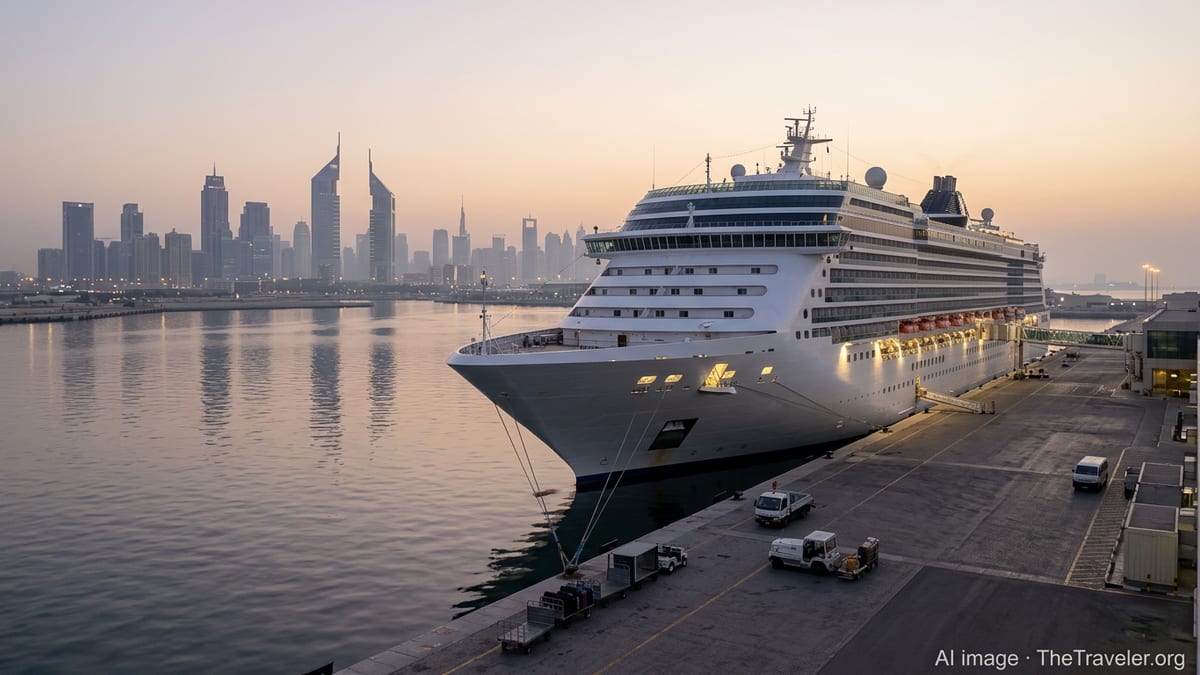
Tourism-linked businesses in frontline markets are reporting visible declines. Commentaries from hospitality analysts describe quieter hotels and malls in Qatar and Kuwait, along with booking slowdowns in parts of the United Arab Emirates, even as core attractions remain open. In the Red Sea and eastern Mediterranean, cruise itineraries and package tours are being rerouted or cancelled, affecting destinations that had banked on strong 2026 arrivals after a robust 2024 and 2025.
Industry observers caution that the timing of the shock, just ahead of the main summer travel period, could lead to an outsized revenue hit if the conflict and associated airspace restrictions persist. For operators with high fixed costs and investment-heavy projects, a prolonged slump in occupancy and passenger volumes would squeeze margins, potentially delaying planned expansions and infrastructure upgrades.
Signals of resilience and a medium-term comeback
Despite the turbulence, WTTC’s medium-term outlook remains broadly upbeat. Its global 2026 and decade-ahead forecasts envisage travel and tourism’s total GDP contribution reaching around 12 trillion dollars worldwide within two years and continuing to climb as pent-up demand in key source markets is released. Regional breakdowns published for earlier years position the Middle East among the fastest-growing tourism regions, suggesting considerable catch-up potential once stability returns.
Several structural strengths underlie this confidence. The region entered the current crisis with upgraded airports, expanded flag-carrier fleets, and a diversified mix of source markets spanning Europe, Asia and Africa. Major cities such as Dubai, Riyadh and Doha have built strong brands as stopover and business hubs, while investments in culture, sports and entertainment have broadened their appeal beyond shopping and beach tourism.
Policy frameworks also continue to prioritise the sector. National strategies across the Gulf set ambitious targets for visitor arrivals and tourism’s share of GDP through the 2030s, aligning visa reforms, infrastructure spending and marketing campaigns. While some timelines may need adjustment in light of present shocks, these plans provide a roadmap for reactivating growth quickly when conditions allow, and for reallocating capacity to markets that recover fastest.
Past experience suggests that traveller sentiment can shift quickly once security fears ease and flight options normalise. International tourism barometer data for previous Middle East crises show that regional arrivals often recover within one to three seasons, particularly where governments move swiftly to restore connectivity, communicate safety measures and offer promotional pricing. WTTC’s expectation of a powerful rebound draws heavily on this record of resilience, combined with the sheer scale of investment already committed to the region’s tourism ecosystems.
What to watch in the months ahead
Analysts tracking the sector point to several indicators that will shape the path from shock to recovery. The first is the duration and geographic extent of airspace closures, which determine not only when full schedules can resume but also how airlines reconfigure networks and fleet deployment. Decisions by major European and Asian carriers on whether to restore, reroute or permanently reduce Middle East services will strongly influence hub traffic and onward tourism flows.
Oil and jet fuel prices form a second critical variable. The 2026 conflict has already pushed benchmark prices higher, and sustained volatility would weigh heavily on long-haul travel that underpins much of the region’s visitor economy. A stabilisation or reversal of this energy spike would ease pressure on airfares and improve the economics of reinstating capacity into Gulf hubs.
Domestic and regional tourism may offer a partial cushion. Previous WTTC research on the Middle East shows that while international visitors are vital, local and intra-regional travel also make a substantial contribution to sector GDP and jobs. If households and businesses adjust their plans toward shorter, nearer trips while conflict persists, destinations perceived as safer within the wider region could recapture some lost demand.
Finally, the speed at which key source markets lift travel advisories and insurance restrictions will help determine when mainstream leisure segments return. Publicly available guidance from governments and insurers has tightened significantly since February, affecting not just direct trips to conflict zones but also itineraries transiting nearby airspace. A gradual easing of those warnings, combined with visible improvements in security and connectivity, would signal the point at which WTTC’s projected powerful recovery for Middle East travel and tourism can begin to materialise.