


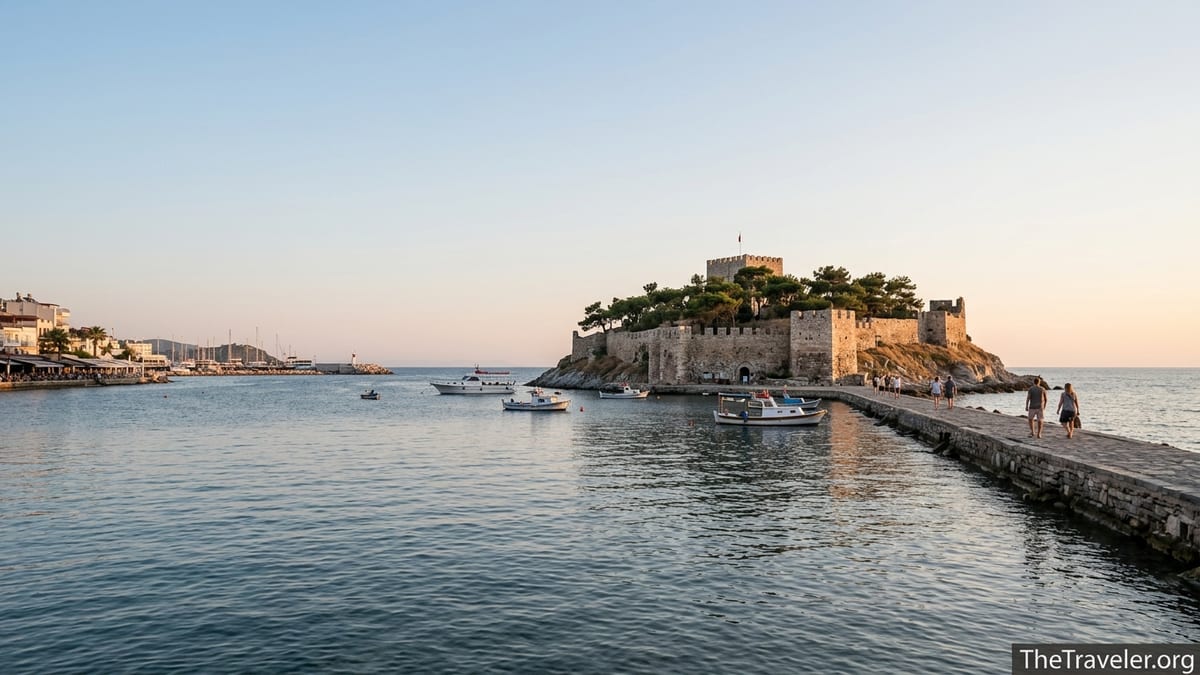
Pigeon Island, or Güvercinada, is the stone crowned islet that every traveler notices first in Kusadasi. Linked to the mainland by a short causeway and topped with a compact seafront fortress, it is the town’s most photogenic landmark and one of the easiest sights to weave into a waterfront stroll, cruise-port day or sunset walk. This guide breaks down how to explore the castle, find the best viewpoints and photo angles, pair it with the marina promenade and choose a nearby restaurant without wasting precious Aegean hours.
Get the latest updates straight to your inbox!
Getting Oriented: What Exactly Is Pigeon Island?
Pigeon Island, known locally as Güvercinada, sits just off the central Kusadasi waterfront, directly opposite the main marina and within clear view of the cruise terminal. A 350 meter man made causeway links the island to the promenade, so you do not need a boat or tour to visit. The small island is completely encircled by stone fortifications, with a restored castle at its highest point, pine shaded paths along the perimeter and a tiny lighthouse at the far end.
The castle itself is a compact Byzantine and later Ottoman fortress that once guarded the harbor approaches and helped defend this busy stretch of Aegean trade route. Today it has been restored as a public park and heritage site rather than a traditional museum. You will find information panels in Turkish and English, a few displays inside the inner fortress including a large whale skeleton, and plenty of benches where locals sit with tea and sunflower seeds in the evenings.
Most visitors spend between 45 and 75 minutes on the island, though keen photographers and sunset chasers can easily linger longer. Entry has typically been free at the time of writing, which makes it an easy, low commitment stop to add between a morning in the bazaar and an evening drink by the marina. Because you are never far from town, you can also treat it as a flexible filler between excursions to places like Ephesus or the Dilek Peninsula.
The island is small enough that you will never feel lost, but it pays to know the basic layout before you cross the causeway. Once on the island you can either climb straight up to the fortress for panoramic views, or follow the lower ring path around the base of the walls, which loops past rocky coves, viewpoints and the lighthouse before rising gradually back toward the castle gates.
Walking the Causeway: Approaches, Timing and Practical Tips
The walk to Pigeon Island is part of the experience. From the central waterfront near the cruise port and marina, most visitors simply follow the seafront promenade south. From the cruise terminal gates it is roughly 700 to 800 meters to the start of the causeway, an eight to twelve minute stroll on flat pavement depending on crowds and how often you stop for photos. The causeway itself adds another five minutes of gentle walking with sea on both sides.
The causeway is wide enough for two way pedestrian traffic and occasional service vehicles, but it can feel crowded on days when two or three large cruise ships are in port. Early morning, before 9:00 a.m., is the quietest time, with joggers and local dog walkers sharing the path. Late afternoon into golden hour is busiest but also the most beautiful, as the low sun backlights the castle and the town behind you begins to glow.
In high summer the Aegean sun can be intense, and the causeway offers very little shade. A hat, sunglasses and a bottle of water are more important here than sturdy hiking shoes, because the surface is smooth and flat. You will often see local vendors at the mainland end of the causeway selling roasted corn, simit bread rings and cold drinks. Prices are typically only slightly higher than in town, but it is still wise to confirm costs before ordering, especially if you are paying in euros rather than Turkish lira.
For travelers with limited mobility, the causeway is usually manageable with a stroller or basic wheelchair, though there may be some uneven patches and low curbs. Benches dotted along the seafront promenade before you reach the island provide convenient rest points. Even if you decide not to climb up into the castle itself, the views of the fortifications and the Aegean from the causeway alone make the short walk worthwhile.
Exploring the Castle: Routes, Views and Visit Length
Once you step off the causeway and through the stone gate onto Pigeon Island, you will find a small courtyard and information panels that outline the history of the fortress. Most visitors face a simple choice: turn right and follow the lower perimeter path around the island, or head straight up the steps into the inner castle. A common strategy is to take the ring path first, then enter the castle on your way back when the light has softened for photos.
The perimeter path circumnavigates the island, hugging the outer walls and dipping down toward the sea at several points. Along the north and west sides you get sweeping views back to the marina, cruise ships and the rooftop terraces of central Kusadasi. On the south and east sides the town falls away and the Aegean opens up, with low headlands and distant islands visible on clear days. There are occasional side paths that drop down toward rocky coves where you may see locals sitting on the rocks or even swimming in calm conditions, though there is no organized beach here.
Inside the castle, the first level offers shaded walkways, small exhibit panels and a few models of historic ships, which give a sense of Kusadasi’s maritime role. Climb higher and the views become the main attraction. From the ramparts you can look directly down the line of the causeway, with people reduced to tiny silhouettes, or pivot to capture the cruise port and old town framed by stone battlements. The top level is where many visitors wait for sunset, leaning on warm stone walls as the sky shifts from blue to orange and purple.
Allow at least 45 minutes if you want to walk the full ring path and climb into the castle without rushing. History enthusiasts who read every panel and pause at multiple viewpoints should budget up to 90 minutes, especially if they are timing their visit with sunset. There are limited facilities on the island itself, so use restrooms along the waterfront before you cross and bring any snacks or water you may need.
Best Sunset Views and Photo Spots on Pigeon Island
For photographers, Pigeon Island is essentially one large outdoor studio with shifting compositions throughout the day. In the morning, the sun tends to be behind the town, so this is the time for crisp, less hazy shots of the castle from the mainland promenade. Locals often recommend walking out early for clear views, then returning in the evening for mood and color. Late afternoon to just after sunset is when most of the iconic postcard images are taken.
On the walk out, the middle of the causeway is a classic spot to capture the castle framed by turquoise water, with fishing boats and excursion yachts drifting in the background. If you turn back toward town from the same point, you will get the symmetrical line of the causeway leading to the waterfront skyline. Handheld shots are usually fine because there is plenty of ambient light until the sun drops, but a small travel tripod can help with slower shutter speeds if you want evening city lights and smooth water.
Once on the island, head to the western ramparts of the castle for the best combination of sea, town and sky at sunset. From here you can shoot the sun dipping behind the hills to the north while still keeping the cruise ships and marina in frame. The small lighthouse at the far end of the island works well for silhouette shots against the glowing horizon. As the light fades, turn your lens back toward the fortress walls themselves; the warm illumination from park lights creates atmospheric images of stone and shadow.
Smartphone cameras cope well in the strong Kusadasi light, but if you are using a dedicated camera, a mid range zoom in the 24 to 70 millimeter equivalent range will cover most compositions. Wide angles make the castle walls feel more dramatic, while slightly longer focal lengths compress the town and ships into the background, emphasizing scale. To avoid large crowds in your shots on busy cruise days, step away from the main paths and use the pine trees, walls or rocky foregrounds to frame more intimate scenes.
Nearby Restaurants and Cafés: Where to Eat Around the Island
One of the pleasures of visiting Pigeon Island is how easily you can fold it into a relaxed waterfront meal. The mainland side of the causeway opens onto a stretch of seafront with several casual seafood restaurants and cafés, many with outdoor terraces facing the island. Menus typically feature grilled sea bream and sea bass, fried calamari, shrimp casseroles, and meze plates with favorites like haydari yogurt dip, eggplant salad and stuffed vine leaves. Prices are higher than in streets a few blocks back, but for travelers used to western European seaside towns they still feel moderate.
If you are arriving from a cruise ship and want something quick before or after your island walk, there are also simple lokanta style places in the streets just behind the promenade. These serve trays of home style dishes such as chicken stew, lentil soup and vegetable casseroles at clearly posted prices, often noticeably cheaper than the marina facing spots. Ordering a bowl of mercimek çorbası and a fresh bread basket is an easy budget friendly option that will set you up for more walking.
Closer to the main marina, about five to ten minutes north of the causeway on foot, you will find more polished establishments advertising steaks, pasta and mixed grills alongside seafood. Many of these restaurants market themselves directly to cruise passengers with set menus in euros, for example a fixed price including starter, main, dessert and a drink. These can be good value if you prefer to know the total cost upfront, but you will generally pay less if you order à la carte in Turkish lira at a typical local place.
For coffee or a light snack, the waterfront is lined with patisseries and café chains where you can grab a Turkish tea, espresso or iced coffee and a slice of baklava or chocolate cake. A common pattern for independent travelers is to walk out to Pigeon Island in the late afternoon, linger through sunset and then return to the marina to pick a restaurant with an open terrace overlooking the harbor lights. Because Kusadasi’s waterfront is compact, you can easily check a few menus and ambiance before choosing where to sit.
Arriving from the Cruise Port and Combining with the Waterfront
For cruise passengers, Pigeon Island is one of the simplest independent excursions available in Kusadasi. From the moment you step outside the port gates, the castle is visible across the bay, and the route is almost entirely along a single seafront promenade. You do not need taxis or organized tours if your goal is simply to enjoy the island, stroll the waterfront and perhaps add a bit of shopping and a meal.
Plan for around ten to twelve minutes of walking from the terminal exit to the base of the causeway, allowing longer on very busy days when large groups move slowly along the same promenade. Along the way you will pass harbor cafés, small parks and viewpoints where local families sit in the evening. This makes it easy to pace yourself and stop whenever something catches your eye. Because the island is free to enter and open during daylight hours until around sunset, you can be flexible with timing even if your ship is only in port for half a day.
A popular way to structure a short cruise day is to start with a self guided wander through the old bazaar streets just inland from the port, where you can browse for Turkish delight, textiles and leather goods. From there, drop back to the waterfront, walk out along the promenade and cross to Pigeon Island in the late afternoon. After exploring the castle and watching the sky change color, return to the marina area for an early dinner before heading back to the ship. This sequence keeps walking distances short, sticks close to the water and avoids the hottest midday hours on the exposed causeway.
If you have a full day in port and still want to see marquee sites like Ephesus, you can treat Pigeon Island as a relaxing bookend to a more structured tour. Many Ephesus excursions return to Kusadasi by mid afternoon. Instead of going straight back on board, consider freshening up at the ship, then heading out again on foot for the short walk to the island and a leisurely sunset. Because you are only a short distance from the gangway, it is a low stress way to extend your day without worrying about traffic delays.
Combining Pigeon Island with the Broader Waterfront
Pigeon Island is at its best when you see it as part of Kusadasi’s whole waterfront rather than a stand alone tick box sight. The promenade itself runs north past the marina with its bobbing yachts and excursion boats, and south toward quieter residential stretches and headlands. You can turn your castle visit into an easy half day itinerary by adding a slow walk along either direction of the shoreline, punctuated with café stops and viewpoints.
Walking north from the causeway brings you into the heart of the marina district. Here, polished motor yachts sit alongside wooden gulet style tour boats advertising half day and full day cruises with swimming stops in the bays around the Dilek Peninsula. Even if you are not planning a boat trip, the atmosphere is lively and photogenic, particularly in the evening when lights reflect off the water. Families with children often favor this part of the waterfront because of the open spaces, ice cream stands and casual restaurants.
Heading south is a quieter experience. The promenade narrows, local residents fish from the rocks and small neighborhood cafés replace the busier marina establishments. From some stretches you can look back and see the castle projected dramatically against the town, giving you alternative angles to the classic causeway view. If you are staying in a seafront hotel in this direction, Pigeon Island can become a daily reference point for morning walks or jogs, with the castle acting as a convenient turnaround marker.
However you choose to combine it, the key is to keep your pace unhurried. Kusadasi is a town designed for strolling and pausing as much as for sightseeing checklists. By treating Pigeon Island as one stop in a continuous, sea facing loop, you will come away with a better sense of how the harbor, castle and town all fit together.
The Takeaway
Pigeon Island in Kusadasi is the rare landmark that rewards both quick visits and slow lingering. It asks very little of you in terms of logistics: no tickets to reserve, no long transfers, no complex routes to navigate. In return it offers the essential elements of an Aegean coastal stop, from stone battlements and gentle sea breezes to glowing sunsets over a busy harbor.
Whether you are stepping off a cruise ship for a few short hours, spending several days in a seafront hotel or simply passing through on your way to Ephesus, it is worth setting aside time to cross the causeway, wander the paths and see the town from the castle’s perspective. Add a waterfront meal, a coffee by the marina or a casual stroll along the promenade and you will have experienced much of what gives Kusadasi its easygoing charm.
FAQ
Q1. How long do I need to visit Pigeon Island and the castle?
Most travelers are satisfied with 45 to 75 minutes on the island, which allows time to walk the perimeter path, climb into the castle for views and take photos without rushing. If you plan to sit and watch sunset, budget up to 90 minutes.
Q2. Is there an entrance fee for Pigeon Island or the castle?
At the time of writing, access to Pigeon Island and the castle area is generally free, though policies can change and occasional temporary closures or controlled access periods are possible. It is wise to carry a small amount of cash in case of minor charges for special exhibitions or facilities.
Q3. How far is Pigeon Island from the Kusadasi cruise port?
From the cruise terminal gates to the base of the Pigeon Island causeway is roughly 700 to 800 meters along the seafront, about an eight to twelve minute flat walk. The causeway itself adds another five minutes, so you can reach the castle area comfortably within 15 to 20 minutes on foot.
Q4. What is the best time of day to visit for photos and views?
Early morning offers the clearest air and fewer people on the causeway and paths, which is ideal for wide, uncluttered shots of the castle. Late afternoon through sunset provides the warmest light and dramatic colors over the harbor, and is the most popular time for both photographers and casual visitors.
Q5. Is Pigeon Island suitable for visitors with limited mobility?
The causeway and seafront promenade are mostly flat and paved, making them manageable for many visitors using strollers or basic wheelchairs, though there may be some uneven patches. The interior of the castle involves steps and sloped paths, which can be challenging, so some travelers choose to enjoy the views from the causeway and lower island paths instead.
Q6. Are there restrooms or places to buy food on the island?
Facilities on Pigeon Island are limited and can vary by season, so it is safest to use restrooms along the waterfront before crossing and to bring your own water. Food options are much better on the mainland side of the causeway, where you will find waterfront cafés, seafood restaurants and street vendors selling snacks and drinks.
Q7. Can I swim near Pigeon Island?
There are rocky coves around the island where locals sometimes swim in calm conditions, but there is no organized beach with lifeguards or facilities directly on Pigeon Island. For a more comfortable swimming experience, most visitors head to established beaches such as Ladies Beach or nearby bays reached by boat excursions from the marina.
Q8. Do I need a guided tour to visit the castle?
No guide is required to visit Pigeon Island or the castle. The site is easy to navigate on your own, with clear paths and information panels that explain the basic history. Some escorted city walks and Ephesus tours include a brief stop or exterior view of the island, but most independent travelers are comfortable exploring at their own pace.
Q9. What should I wear and bring for the visit?
Comfortable walking shoes or sandals, a hat, sunglasses and sunscreen are recommended, especially in summer, because the causeway and castle walls are exposed to the sun. Bringing a refillable water bottle is sensible, and a light layer is useful in shoulder seasons when sea breezes can feel cool in the late afternoon.
Q10. How can I combine Pigeon Island with other Kusadasi sights in one day?
A simple plan is to explore the bazaar and old town near the port in the morning, take an excursion to Ephesus or another nearby site around midday, then return to Kusadasi and walk out to Pigeon Island in the late afternoon for views and sunset. Finish with dinner or coffee along the marina promenade before heading back to your hotel or cruise ship.