


More news on this day
Critical Metals Corp has acquired the former expedition cruise vessel Ocean Endeavour to serve as a floating base for workers at its Tanbreez rare earths project in southern Greenland, marking one of the most high-profile crossovers yet between cruise shipping and large-scale Arctic mining.
Get the latest news straight to your inbox!
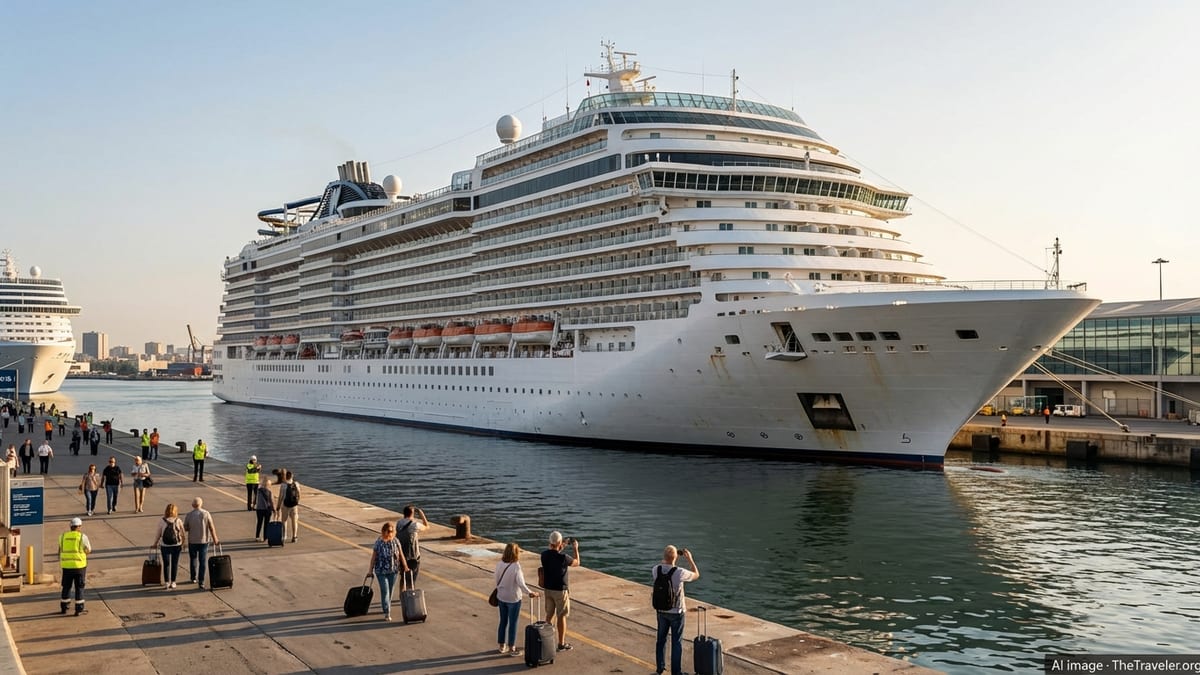
Ocean Endeavour Becomes Floating Workforce Base
According to recent corporate statements and industry coverage, Nasdaq-listed Critical Metals has purchased the ice-strengthened Ocean Endeavour for about 7.5 million euros to support development activities near Qaqortoq in southern Greenland. The vessel, built in 1982 and long used for expedition cruising in polar regions, is set to be moored adjacent to the Tanbreez critical minerals site, subject to approvals from Greenlandic authorities.
Publicly available information indicates that the ship will be configured to house up to 300 project workers, combining accommodation, catering and limited transport functions under one roof. The company has highlighted the vessel’s proven history in both Arctic and Antarctic waters as a key factor in the decision, presenting it as a practical solution for year-round operations in a remote, weather-exposed environment.
The move reflects a growing trend toward using former cruise ships as so-called floatels, providing temporary housing for industrial workforces where onshore infrastructure is sparse. Ocean Endeavour, once marketed to tourists for high-latitude adventure itineraries, is now poised to become a long-term logistics asset for one of Greenland’s most closely watched mining projects.
Corporate communications describe the acquisition as a strategic step intended to enhance workforce safety, improve logistics and give the company greater resilience in an area where distances are long and local services limited.
Relieving Pressure on Local Housing and Tourism
Critical Metals has emphasized that basing workers offshore is intended in part to ease pressure on housing and hotel capacity in Qaqortoq and surrounding communities. Public statements note that the Tanbreez project area has limited accommodation options, and demand from incoming construction and operations staff would otherwise risk outstripping local supply during peak phases.
By concentrating up to 300 workers on a self-contained vessel, the company projects a reduced impact on local rental markets, guesthouses and hotels, facilities that also serve a modest but growing stream of visitors arriving in southern Greenland during the summer cruise and adventure travel season. The ship is expected to include its own catering, recreation and support services, reducing reliance on shore-based amenities.
Available information indicates that the company plans to work with Greenlandic suppliers for services such as provisioning, waste handling and marine support. That approach, if implemented as described, could create new revenue channels for local businesses even as the majority of day-to-day worker life unfolds offshore on the vessel itself.
The balance between minimizing strain on local infrastructure and ensuring that communities capture economic benefits is emerging as a central theme around the project, and the ship-based housing model is likely to be closely scrutinized by local stakeholders.
Rare Earth Project Highlights Strategic Stakes in Greenland
The Tanbreez project, located in southern Greenland, is described in public disclosures as one of the world’s larger undeveloped deposits of heavy rare earth elements. These metals are used in technologies such as wind turbines, electric vehicles and defense systems, placing Greenland within broader debates over critical minerals security and supply diversification.
Critical Metals acquired a controlling interest in Tanbreez in 2024 and has since presented it as a cornerstone of its growth strategy. The decision to secure dedicated offshore accommodation via Ocean Endeavour is framed by the company as a way to support longer-term development, from early works and construction through to potential production, in a region where roads, ports and housing remain limited.
The purchase also underscores how infrastructure choices in Greenland’s mining sector increasingly carry geopolitical as well as logistical dimensions. As governments and companies seek alternatives to established rare earth suppliers, high-latitude projects like Tanbreez draw heightened attention from investors, regulators and environmental organizations.
Using a repurposed cruise vessel as a central hub for personnel may give the operator flexibility to adjust staffing levels and deployment schedules as permitting and project timelines evolve, while keeping a substantial part of its physical footprint offshore.
Arctic Floatels and the Repurposed Cruise Ship Trend
The Ocean Endeavour acquisition fits into a wider pattern of cruise vessels being adapted as floating accommodation for industrial and infrastructure projects. In recent years, similar ships have been used to house workers at liquefied natural gas developments, support emergency response efforts and provide temporary barracks for military exercises in northern waters.
Maritime trade publications have previously documented Ocean Endeavour’s role as housing for Danish and NATO personnel during Arctic training activities in Greenland, illustrating how the vessel has already shifted between tourism and non-tourism uses. Other operators have purchased retired cruise ships specifically to serve as long-term floatels for energy and resource projects in remote coastal areas.
The appeal of such conversions lies in their turnkey nature: cabins, kitchens, medical rooms and common spaces are already designed for extended stays, while hulls certified for ice or cold-weather operations can be adapted to industrial mooring and logistics needs. For companies working in the Arctic, that combination can prove faster and sometimes cheaper than building large-scale, permanent worker camps on land.
At the same time, the trend raises questions for destinations that host both cruise tourism and resource extraction. Vessels that once brought visitors to see glaciers and fjords are increasingly being folded into the infrastructure of mining and energy projects, blurring the line between leisure and industrial maritime activity in sensitive polar regions.
Community, Environmental and Regulatory Considerations
Publicly available information indicates that Critical Metals intends to moor Ocean Endeavour at or near the Tanbreez site, a step that will require approval from the Government of Greenland and engagement with local authorities. Issues likely to be examined include marine safety, environmental protection, waste and wastewater management, and the broader social impact of stationing a large workforce offshore.
Greenland has been developing its own regulatory approach to both cruise activity and mining, aiming to capture economic benefits while protecting fragile coastal and Arctic ecosystems. A permanently moored accommodation vessel adds a new layer to that discussion, combining elements of both sectors in a single asset.
The company has stated that it expects to contract Greenlandic businesses for services linked to the vessel and the project, a step that could strengthen local supply chains if contracts are structured to favor regional participation and skills development. For residents in and around Qaqortoq, the practical effects may be measured less in headline investment figures and more in local jobs, training opportunities and the visibility of environmental safeguards.
As the Tanbreez project advances through permitting and development stages, the repurposed cruise ship now tied to its workforce plans is likely to become a prominent symbol of how Greenland manages the intersection of mining expansion, Arctic maritime operations and community expectations.