


More news on this day
Travel across Colombia’s busiest air corridors is facing fresh disruption as publicly available flight data and local reports point to at least 71 delays and 28 cancellations affecting services operated by Avianca, LATAM Airlines Colombia and United on routes linking Bogotá, Medellín and Cartagena.
Get the latest news straight to your inbox!
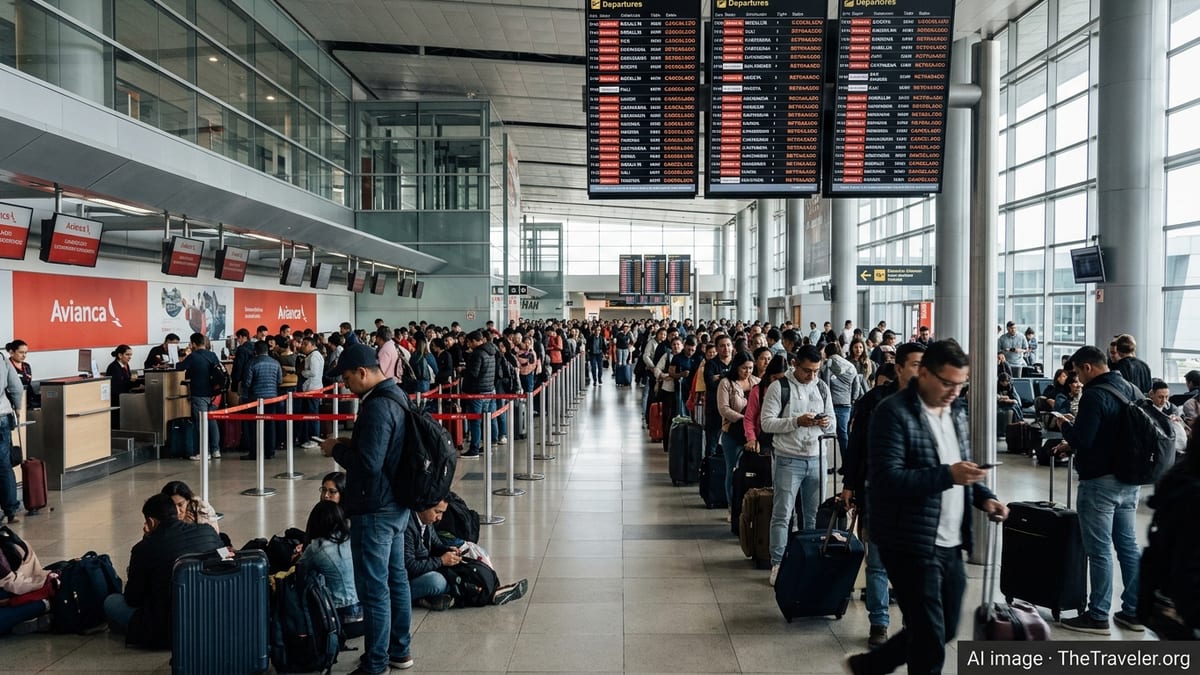
Network Strain Across Colombia’s Main Hubs
The latest disruption spans Colombia’s three most important passenger gateways, with Bogotá’s El Dorado International Airport at the center of the ripple effects. Domestic trunk routes between the capital and Medellín’s José María Córdova Airport, as well as Cartagena’s Rafael Núñez International Airport, have seen a concentration of late departures, extended ground holds and scrubbed flights, according to live tracking boards and schedule aggregators.
Avianca, the country’s largest carrier, continues to operate a dense shuttle-style schedule on Bogotá to Medellín and Bogotá to Cartagena sectors. Recent days have shown a mix of on-time operations and statistically significant late arrivals on these routes, suggesting that even minor operational bottlenecks are quickly cascading into broader timetable pressures.
LATAM Airlines Colombia and United, both present in the same domestic and feeder markets, are also adjusting timetables and equipment as conditions evolve. Publicly available information points to rolling delays and selected cancellations rather than a full standstill, but the cumulative effect across multiple operators is creating a challenging environment for connections through Bogotá and onward flights along the Caribbean coast.
While the tally of 71 delays and 28 cancellations captures only a snapshot in time, it underscores how even short-haul sectors of under 90 minutes can be vulnerable when aircraft rotations are tight and recovery windows are limited.
Weather, Congestion and Tight Turnarounds Blamed
Operational data and recent travel commentary highlight a mix of contributory factors behind the latest wave of disruptions. Bogotá’s high-altitude location and susceptibility to low cloud and reduced visibility continue to challenge traffic flows, particularly at peak morning and evening banks when runway capacity is stretched and holding patterns are common.
Travelers connecting through El Dorado frequently point to long taxi times, busy security checkpoints and long walks between gates as additional pressure points when delays compress connection windows. When an inbound service arrives late from Medellín or Cartagena, even by 20 or 30 minutes, downstream itineraries often become vulnerable, forcing airlines to reassign aircraft or consolidate lightly booked flights.
Industry observers also note that Colombian domestic carriers have been running intense utilization on narrowbody fleets, with short ground times between segments. Under such conditions, a single technical issue or crew scheduling complication can push an aircraft out of position, amplifying the likelihood of both delayed departures and outright cancellations on subsequent legs.
According to published coverage, the broader regional context also matters. Network adjustments following aircraft maintenance campaigns and evolving demand patterns on international routes are leaving airlines with less spare capacity to absorb unexpected disruptions on core domestic corridors.
Passenger Impact on Bogotá, Medellín and Cartagena Routes
For travelers, the most visible consequence of the current problems is extended time in terminals and the risk of missed connections. Bogotá to Medellín and Bogotá to Cartagena are among Colombia’s most heavily trafficked city pairs, used not only by business travelers and residents but also by international visitors piecing together multi-stop itineraries that include the Caribbean coast and the Coffee Region.
Reports from recent travel experiences describe passengers facing last-minute schedule changes, rebooked itineraries that add unplanned overnight stays, and domestic trips that stretch into full-day journeys. In some cases, travelers who booked through international partners such as major North American carriers have encountered added complexity when a domestic leg operated by a Colombian airline is disrupted, requiring coordination across multiple reservation systems.
Medellín and Cartagena, both key tourism magnets, are particularly exposed when disruptions coincide with weekends, local holidays or school vacation periods. Hotels and tour operators can be left juggling late arrivals and missed excursions, while cruise passengers and group tours risk losing tightly timed transfers from airports to onward departures.
Publicly shared accounts also highlight anxiety around short connections at Bogotá, with some travelers advising against tight layovers on itineraries that rely on domestic links operated by Avianca or LATAM Colombia, noting that even modest delays can be enough to derail travel plans.
How Airlines Are Managing Rebooking and Compensation
Each carrier involved in the disruption wave applies its own policies regarding rebooking, vouchers and refunds. Avianca’s publicly available conditions of carriage outline options for passengers when flights are delayed beyond specific thresholds or cancelled, including re-accommodation on later departures, rerouting on alternative services within defined time windows, or partial refunds in some circumstances.
LATAM Airlines Colombia maintains a similar framework, with online tools that allow passengers to review updated itineraries and, on some affected routes, self-manage changes or request travel credits. United’s handling of domestic connections within Colombia typically depends on the underlying fare rules and whether the disrupted leg is part of a through-ticket from North America or another international origin.
In practice, passengers’ experiences vary widely depending on the cause of disruption, seat availability on alternative flights and whether they hold flexible or restricted tickets. When weather is involved, airlines may offer schedule protection without the same level of financial compensation that applies in cases classified as controllable operational issues, such as certain crew or aircraft problems.
Consumer advocates monitoring Latin American air travel advise that travelers carefully document delays and cancellations, retain boarding passes where possible and track official notifications issued through airline apps or email, as these can be important in supporting subsequent claims or requests for reimbursement.
Advice for Travelers Planning Colombian Itineraries
For those with upcoming trips across Colombia, particularly on the Bogotá to Medellín and Bogotá to Cartagena corridors, travel planners recommend building additional buffer time into itineraries. This can mean opting for longer layovers at El Dorado, especially when connecting from international flights to domestic legs operated by Avianca, LATAM Colombia or partner airlines.
Passengers with critical same-day commitments in Medellín or Cartagena, such as business meetings, events or cruise departures, may benefit from arriving a day earlier than strictly necessary, reducing exposure to last-minute cancellations or multi-hour delays. Booking earlier departures in the day can also create more rebooking options if initial flights are disrupted.
Travelers are further encouraged to use airline mobile apps and third-party flight trackers to monitor real-time status changes and gate information. Publicly available guidance stresses the importance of checking bookings periodically in the days leading up to departure, as schedule adjustments can occur well before passengers reach the airport.
While the current tally of 71 delays and 28 cancellations illustrates a period of pronounced stress on Colombia’s aviation network, the situation remains fluid. Observers expect airlines to continue fine-tuning schedules and fleet deployment in an effort to stabilize operations on these high-demand domestic routes, even as travelers adapt by allowing more time and flexibility in their plans.