


Salzburg’s historic center is compact enough to cross on foot in 20 minutes, yet choosing where to base yourself still shapes your trip. Two of the most attractive and practical areas are Mirabellplatz, just north of the river, and Mozartplatz in the heart of the Old Town. Both squares offer Baroque charm, easy access to major sights, and plenty of cafes, but the feel on the ground is very different. This guide compares Mirabellplatz and Mozartplatz in detail so you can decide which suits your travel style, budget, and plans.
Get the latest updates straight to your inbox!
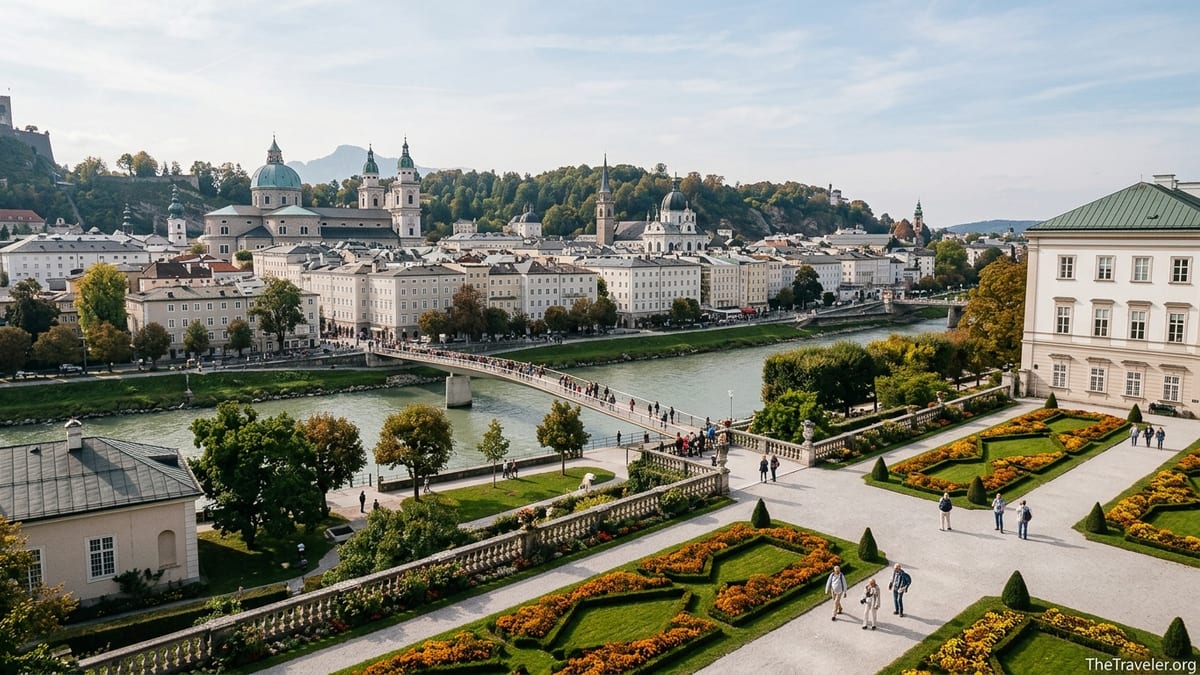
Getting Oriented: Where Mirabellplatz and Mozartplatz Sit in Salzburg
Mirabellplatz sits on the right bank of the Salzach River, directly in front of Mirabell Palace and its formal gardens. It marks the edge of the historic New Town, a short walk over Makartsteg bridge from the Old Town. The square itself is a traffic hub with tram-style trolleybuses and regional buses stopping in front of the palace, and streets radiating into residential neighborhoods and shopping areas. You are very close to daily life here: commuters waiting for buses, school groups heading to the gardens, and locals grabbing coffee near their offices.
Mozartplatz, by contrast, lies inside the UNESCO-listed historic center on the left bank. It is a small, enclosed square framed by Baroque facades, with a bronze statue of Wolfgang Amadeus Mozart at its center and the towers of Salzburg Cathedral looming just a minute away. The streets around it are fully pedestrianized, shared with neighboring squares such as Residenzplatz and Domplatz. Standing here, you are in the densest cluster of Salzburg’s classical attractions, from the cathedral and Salzburg Museum to narrow lanes like Getreidegasse and Mozart’s birthplace.
In terms of pure distance, the two squares are not far apart. Walking from Mirabellplatz to Mozartplatz takes roughly 10–15 minutes at a leisurely pace, usually via Mirabell Gardens, across Makartsteg bridge, and into the Old Town. Many visitors base themselves in one area and spend most of their days wandering freely between both. The real decision is less about distance and more about what you want on your doorstep first thing in the morning and last thing at night.
The right-bank Mirabell side feels slightly more spacious, with wider streets and easier vehicle access, while the Mozartplatz side is more like a historical stage set. If you imagine stepping out of your hotel straight into a picture-perfect Baroque square, Mozartplatz wins. If you prefer a quieter, mixed local-and-visitor environment with quick links to the rest of the city and region, Mirabellplatz makes a strong case.
Atmosphere and Street Life: Elegant Gardens vs. Baroque Stage Set
Mirabellplatz’s atmosphere is shaped by Mirabell Palace and Gardens. From March to October, the formal gardens are filled with flower beds, mythological statues, and the famous Pegasus fountain, and they are free to enter. Couples take wedding photos here, families let children run between the hedges, and Sound of Music fans re-create scenes on the garden steps. On weekday mornings, the square feels businesslike as buses come and go, but step through the palace gate and you are in a calm, manicured oasis.
Nearby streets such as Rainerstrasse and Paris-Lodron-Strasse mix historic buildings with modern everyday services: small supermarkets, pharmacies, and banks, plus cafes that cater as much to locals as to tourists. Around breakfast time you might find office workers grabbing takeaway coffee from a bakery while visitors slowly emerge from their hotels. In the evening, the area is relatively quiet compared with the Old Town; you will still find restaurants and bars, but the buzz is gentler and the streets thin out earlier.
Mozartplatz, in contrast, is almost always in sightseeing mode. The square draws a steady stream of walking tours that pause at the Mozart statue. Around its edges are businesses aimed squarely at visitors, including the official tourist information office and classic cafes such as Café Glockenspiel with its outdoor terrace looking across to the monument. The neighboring Residenzplatz and Domplatz host concerts and events in summer and transform into a major Christmas market in late November and December, adding festive stalls, decorative lights, and mulled-wine stands.
Because Mozartplatz sits in the most visited part of Salzburg, it stays lively from morning until late evening in high season. You will hear church bells, buskers playing violin or accordion, and snippets of guided tours in multiple languages. Nightlife here is more about cozy wine taverns and traditional restaurants than clubs, but there is a constant hum of people moving between dinner, evening concerts, and moonlit strolls through the lanes. If you thrive on that continuous energy and do not mind crowds, the Mozartplatz area delivers it in a compact package.
Access, Transport, and Getting Around
For pure transport convenience, Mirabellplatz has the edge. The square is a key node for Salzburg’s trolleybus network, with several lines running along Rainerstrasse and stopping directly by Mirabell Palace. This makes it simple to reach the main train station in about five minutes by bus, or 10–15 minutes on foot. If you are arriving with luggage, the relatively flat walk from the station to Mirabellplatz is manageable even with a suitcase, and taxis from the station commonly drop passengers here because it is a straightforward drive without Old Town vehicle restrictions.
Mirabellplatz is also convenient if you are taking regional buses for day trips. Many routes heading to places such as Lake Wolfgang, the Salzkammergut, or the outskirts of the city have stops on or near the square. Tour coaches for popular excursions, including some Sound of Music and lake district tours, often use pickup points a short walk from Mirabell Palace. If your itinerary involves frequent trips in and out of Salzburg, being based near Mirabellplatz can significantly reduce backtracking.
Mozartplatz, though central for walking, has more limited direct access by public transport because the surrounding streets are pedestrianized. City buses stop a few minutes away at Rudolfskai or near Nonntal, and from there you walk into the Old Town. This creates a more peaceful soundscape in the square itself, free of traffic noise, but it does mean you will usually roll your suitcase across cobblestones for the last stretch. Taxis are allowed to enter at certain times and routes, yet drivers may prefer to drop you slightly outside the pedestrian zone, especially during busy events.
For getting around on foot, Mozartplatz wins. Almost every major Old Town attraction is within a 10-minute stroll: Salzburg Cathedral, the funicular to Hohensalzburg Fortress, the Salzburg Museum, Getreidegasse and Mozart’s birthplace, and the riverside promenades. You can easily pop back to your room between museum visits or after picking up purchases. In practical terms, if your stay is short and focused on sightseeing inside the Old Town, basing yourself by Mozartplatz cuts out a lot of transit time.
Sights and Culture on Your Doorstep
Staying near Mirabellplatz puts Mirabell Palace and Gardens literally across the street. The gardens open in the early morning, often before day trippers arrive, which means you can enjoy the geometrically arranged flower beds and fortress views in relative quiet. In summer, open-air concerts and small events take place in the gardens and the Marble Hall inside the palace hosts classical music performances. A few minutes’ walk away you will also find the Mozarteum University buildings, concert halls, and small contemporary galleries, which give the neighborhood a cultural life beyond pure tourism.
Another advantage of Mirabellplatz is its proximity to everyday amenities. You are a short walk from the Andräkirche (St. Andrew’s Church) and the Thursday farmers’ market that spreads out beside it, where locals buy bread, cheese, and fresh produce. Streets leading from the square hold practical shops that make longer stays easier, such as supermarkets where you can grab bottled water, fruit, and snacks at local prices instead of relying on mini-bar items.
Mozartplatz, on the other hand, is embedded among Salzburg’s showcase attractions. Step outside and in a few minutes you can visit Salzburg Cathedral, explore the Salzburg Museum in the Neue Residenz, or walk over to Residenzplatz to admire its large baroque fountain. The official tourist information center is located right on Mozartplatz, which is ideal if you want immediate help with concert tickets, Salzburg Card purchases, or last-minute tour bookings. During festival season the whole area becomes a backdrop for performances and outdoor screens.
From Mozartplatz, you can also reach the funicular to Hohensalzburg Fortress in roughly five to seven minutes on foot, which makes it easy to time your visit for clearer skies or sunset. Getreidegasse, known for its wrought-iron shop signs and Mozart’s birthplace, lies only a short stroll away. This cluster of highlights means that if you only have one full day in Salzburg, basing yourself around Mozartplatz lets you see a substantial amount without ever needing public transport.
Eating, Drinking, and Everyday Costs
A common question is whether Mirabellplatz or Mozartplatz is more expensive for food and drink. In general, prices around Mozartplatz trend higher because you are in the densest tourist zone. A cappuccino enjoyed on the terrace of a traditional cafe overlooking the Mozart statue will usually cost more than the same drink at a cafe two or three blocks off Mirabellplatz. Exact prices change frequently, but you can expect to pay a noticeable premium for prime views and the convenience of being in the middle of the Old Town squares.
Around Mirabellplatz, you will find a mix of hotel cafes, modern coffee roasters, and traditional bakeries where locals buy breakfast. Grabbing a coffee and pastry at a bakery counter and taking it to a bench in Mirabell Gardens is a popular budget-friendly option. Lunch spots in this area tend to cater to office workers as well as visitors, which often keeps prices a bit more grounded. If you are staying several days and do not want every meal to feel like a splurge, Mirabellplatz’s surroundings make it easier to alternate between casual and more elaborate dining.
Near Mozartplatz, the focus skews toward sit-down establishments with atmospheric interiors: vaulted beer halls, wood-paneled dining rooms, and classic cafes with waiter service. These are memorable places to experience Salzburg specialties like Salzburger Nockerl dessert or hearty dumpling dishes. You will also find gelato stands and small snack spots tucked into side streets, but the immediate square is dominated by full-service venues. During peak months and Christmas market season, reservations are recommended for dinner in the most popular restaurants around the square.
Everyday costs beyond food can also differ slightly. Souvenir shops around Mozartplatz and neighboring squares prominently display items such as Mozartkugel chocolates, music-themed trinkets, and decorative Christmas ornaments all year. While charming, many of these goods come with tourist-center price tags. Around Mirabellplatz and nearby shopping streets, you are more likely to find regular stores where prices reflect what locals pay, from pharmacies for basic toiletries to supermarkets stocking Austrian chocolate at standard rates. For travelers watching their budget, these small differences add up over several days.
Hotels and Accommodation: What Each Area Offers
Mirabellplatz is surrounded by a broad range of accommodations, from classic city hotels to modern design properties. Many mid-range hotels cluster on the streets leading from the square toward the train station and river. Rooms in this area often provide slightly more space for the same price compared with equivalent properties inside the Old Town, and some offer views toward the fortress or Mirabell Gardens. Because vehicle access is straightforward and buses run frequently, this area is particularly convenient if you are arriving by train, renting a car, or planning several day trips.
Another advantage of Mirabellplatz-area lodging is relative quiet at night. While there is still traffic on main streets, once inside your hotel the noise level is often lower than in the alleys of the Old Town, where sound can echo off stone walls. Families and light sleepers often appreciate this. Hotels here are used to hosting both business travelers and tourists, so you will usually find services like early breakfast, luggage storage, and straightforward airport transfer arrangements.
Around Mozartplatz, hotel choices tilt toward smaller, characterful properties within historic buildings, plus some upscale options in adjacent squares. Rooms may come with features such as exposed beams, original staircases, or views of church towers and the fortress. Space can be more limited and layouts less standardized because of the age of the buildings, but the trade-off is atmosphere. Waking up to the bells of nearby churches and stepping directly into a pedestrian square steeped in history is a central part of the appeal.
Prices in the Mozartplatz area generally sit at a premium compared with Mirabellplatz, especially in peak summer and during major events like the Salzburg Festival or Advent markets. Some travelers consider this worthwhile for the sheer convenience of staying inside the Old Town walls, while others prefer to book a larger, slightly more modern room by Mirabellplatz and walk into the Old Town when they choose. If you are traveling with a car, keep in mind that parking near Mozartplatz is largely in garages with overnight fees, while some Mirabell-area hotels may offer easier access to parking facilities.
Seasonal Experiences: Summer Festivals vs. Christmas Market Magic
Your choice between Mirabellplatz and Mozartplatz can feel very different depending on the season. In spring and summer, Mirabell Gardens are at their best, with flower beds in full color and manicured lawns inviting slow strolls. Early morning or late evening walks through the gardens are particularly special for guests staying nearby, as the daytime crowds have not yet arrived or have already thinned out. Free open-air performances and informal musical moments often happen in and around the gardens during festival periods.
Summer is also when Salzburg hosts its famous classical music festival. While most major venues lie nearer the Old Town and the area around the Festspielhaus, Mirabellplatz stays relatively calm, which some festival-goers appreciate as a retreat. You can attend performances across the river, then cross back over the bridge to quieter streets and a less crowded square at night. Mozartplatz, conversely, is in the middle of festival-season activity, with more people, more late-night conversation on terraces, and a general sense that something is always happening nearby.
In late November and December, Mozartplatz transforms along with neighboring Residenzplatz and Domplatz into one of Europe’s better-known Christmas market zones. Wooden stalls appear selling ornaments, candles, local crafts, and seasonal food such as roasted chestnuts and sausages. The air fills with the scent of mulled wine and gingerbread, and choirs or brass groups sometimes perform near the cathedral. Staying right by Mozartplatz at this time of year means the market is effectively your front yard: you can wander out for a cup of punch in the evening or do some shopping in short bursts, returning to your room to warm up.
Mirabellplatz also feels festive in winter, with decorations in the gardens and occasional smaller markets in the wider district, but it does not match the concentrated Christmas atmosphere of the Old Town squares. On the other hand, the quieter streets and easier access to buses can be welcome when the crowds swell around the markets. Many winter visitors choose a Mirabellplatz hotel and spend afternoons and evenings exploring the Old Town festivities, then retreat across the river when they are ready for calm.
Which Area Suits Which Traveler?
If you are visiting Salzburg for the first time, have only one or two nights, and your main goal is to immerse yourself in the historic core, Mozartplatz is often the better base. You will be able to walk to almost every headline sight, drop shopping bags in your room between visits, and feel the pulse of the Old Town at all hours. This is especially appealing for travelers focused on churches, museums, fortress views, and evening concerts who do not mind higher prices and heavier foot traffic.
Mirabellplatz tends to suit travelers who value a balance between access and breathing space. If you are staying three or more nights, planning several day trips to lakes or mountain towns, or arriving by train with larger luggage, this side of the river offers practical advantages. It works well for families who want parks and open spaces close by, for business travelers who appreciate easy bus links to the station and airport buses, and for anyone sensitive to nighttime noise who still wants to be within walking distance of the Old Town.
Budget-conscious travelers often find that Mirabellplatz allows their money to stretch further, both in terms of room size and everyday costs like breakfasts, snacks, and supermarket runs. Meanwhile, couples on a short romantic escape might happily pay extra for the fairy-tale feel of waking up by Mozartplatz, especially if they are visiting during Advent or the height of summer when the Old Town is at its most atmospheric.
Ultimately, the choice is not irreversible or absolute. Because Salzburg is small, you will almost certainly spend time in both areas regardless of where you sleep. Think of Mirabellplatz as a practical, green-tinged base with strong transport ties and Mozartplatz as the historic heart, wrapped in cobblestones and church bells. Choose the one that best matches how you like to spend your mornings and nights, knowing you can reach the other in a short, scenic walk along the river.
The Takeaway
Mirabellplatz and Mozartplatz each showcase a different side of Salzburg. Mirabellplatz combines formal gardens, everyday shops, and excellent transport connections on the right bank of the river. It offers slightly better value, more breathing room, and an easy link to the main train station and regional buses, making it ideal for longer stays, day trippers, and travelers who prefer quieter evenings without sacrificing walkable access to the Old Town.
Mozartplatz, on the other hand, puts you at the epicenter of Salzburg’s historic charm. The square is framed by Baroque architecture, just steps from the cathedral, fortress funicular, and major museums, with the city’s main tourist information center right on site. You pay a premium in room rates and restaurant prices, and you share the space with more crowds, but you gain the immediacy of living inside the UNESCO-listed core, surrounded by music, history, and seasonal events.
For a once-in-a-lifetime, short visit where atmosphere and convenience to classic sights outweigh everything else, basing yourself by Mozartplatz is hard to beat. For repeat visits, family trips, or itineraries that include regular forays beyond the city, Mirabellplatz’s combination of garden views, transport links, and more everyday surroundings may serve you better. Either way, Salzburg’s scale means you will rarely be more than a quarter of an hour’s walk from the other square, so you can freely enjoy the best of both worlds.
FAQ
Q1. Is Mirabellplatz or Mozartplatz better for a first-time visitor to Salzburg?
For a first-time visitor with limited time, Mozartplatz usually works better because you are in the middle of the Old Town, within a few minutes’ walk of the cathedral, fortress funicular, Salzburg Museum, and key historic lanes. You can see a lot in a short period without needing buses or taxis, and it is easy to duck back to your room between sights.
Q2. Which area is more budget friendly, Mirabellplatz or Mozartplatz?
Mirabellplatz is typically more budget friendly. Hotels around the square and along nearby streets often offer slightly lower prices and larger rooms than comparable properties inside the Old Town near Mozartplatz, and everyday costs for things like supermarket snacks or casual lunches are usually a bit lower on the Mirabell side.
Q3. Where is it easier to reach the train station from, Mirabellplatz or Mozartplatz?
It is easier from Mirabellplatz. The main station sits a short bus ride or roughly a 10–15 minute walk away, and several trolleybus lines serve the square directly. From Mozartplatz, you will generally need to walk out of the pedestrian zone to a bus stop or take a taxi, which can add time and cost, especially with luggage.
Q4. Which area is quieter at night?
Mirabellplatz is generally quieter at night. While there is some traffic on surrounding streets, the atmosphere is more residential and businesslike once offices close. Around Mozartplatz, evening foot traffic, restaurant terraces, and events in neighboring squares mean there is often more noise, particularly in summer and during the Christmas market season.
Q5. Is one area better for visiting the Salzburg Christmas markets?
If your priority is the main Christmas markets, Mozartplatz has the advantage. The largest and most atmospheric markets cluster around the cathedral and nearby squares, just steps from Mozartplatz. Staying there means you can come and go easily throughout the day and evening without dealing with bus schedules or long walks in the cold.
Q6. Which square is better for families with children?
Families often favor Mirabellplatz because of the immediate access to Mirabell Gardens, where children can run around safely away from traffic, and because the area has more space, playgrounds nearby, and easier access to buses for day trips. The slightly quieter streets in the evening can also be helpful for earlier bedtimes.
Q7. Are there more traditional cafes and restaurants around Mirabellplatz or Mozartplatz?
Mozartplatz and its neighboring Old Town lanes have a denser concentration of traditional cafes, beer halls, and historic restaurants. You will find plenty of places with vaulted ceilings, wood-paneled interiors, and classic Austrian dishes. Mirabellplatz has good dining options too, but the feel is more mixed, with modern cafes and hotel restaurants alongside a few long-established spots.
Q8. Is parking easier near Mirabellplatz or Mozartplatz?
Parking is generally easier near Mirabellplatz. Hotels on that side of the river tend to have more straightforward access to public garages or partner parking, and driving in and out is simpler because you are outside the tightest part of the Old Town. Around Mozartplatz, access by car is more restricted and you will usually rely on central garages with higher fees.
Q9. Can I stay in one area and easily visit the other on foot?
Yes. Salzburg is compact and the walk between Mirabellplatz and Mozartplatz typically takes 10–15 minutes at a relaxed pace, often through Mirabell Gardens and over the river via a pedestrian bridge. Many travelers choose their base for practical reasons and then spend large parts of each day wandering between the two squares without using public transport.
Q10. If I am mainly interested in day trips outside Salzburg, which area is better?
If your focus is on day trips to lakes, mountain towns, or other nearby cities, Mirabellplatz is usually the better base. Its direct trolleybus links to the main train station and proximity to regional bus stops simplify early departures and late returns, and you can still be in the Old Town around Mozartplatz within a short walk when you want to explore the historic center.