


More news on this day
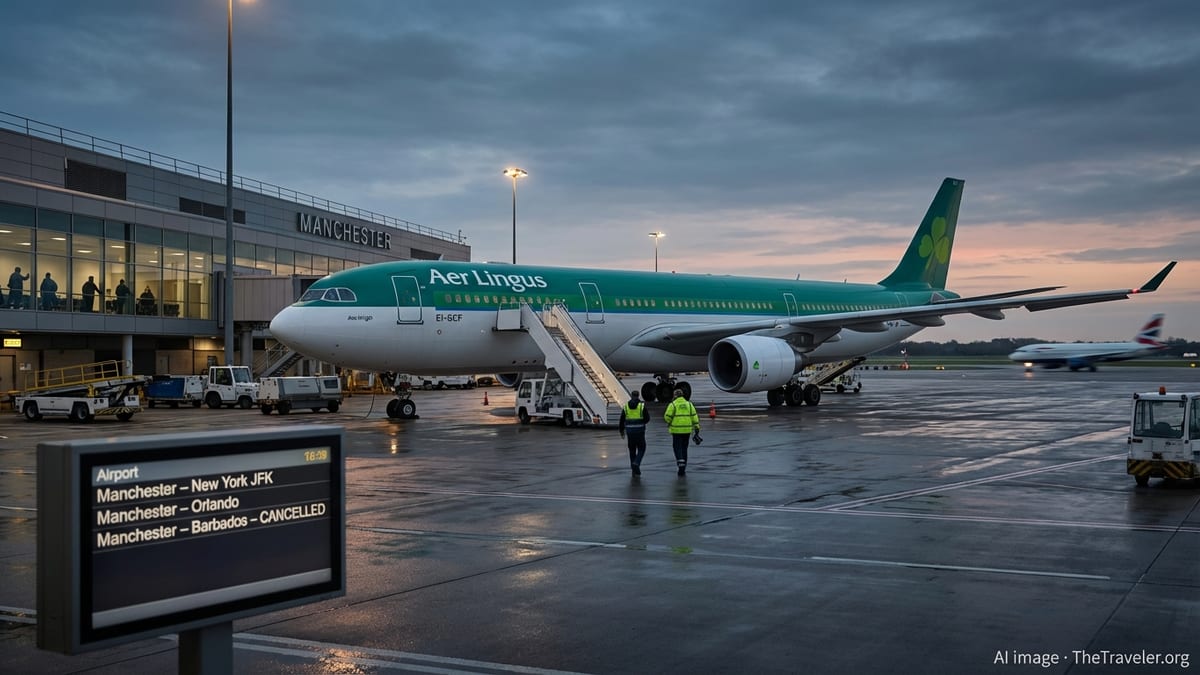
Passengers using Manchester Airport faced notable disruption today as publicly available flight tracking data showed more than 50 departures and arrivals running behind schedule, along with at least one service cancelled, affecting journeys across the UK, Europe and long-haul routes.
Get the latest news straight to your inbox!
Widespread Delays Hit Morning and Afternoon Schedules
Flight monitoring services tracking operations at Manchester Airport indicated that disruption built steadily through the morning peak before spreading into early afternoon services. Departures to popular European destinations, UK domestic routes and some longer-haul services were among those affected, with delays typically ranging from 30 minutes to over two hours in some cases.
Published coverage of recent disruption patterns at Manchester suggests the airport already operates with a relatively high proportion of delayed departures compared with other major UK hubs, which can leave schedules vulnerable when additional strain is placed on the system. Separate industry reporting has highlighted that around one in three flights from Manchester in the past year have experienced some level of delay, underlining how quickly punctuality can deteriorate when conditions are not optimal.
Today’s disruption appeared to follow that broader pattern, with knock-on effects visible on mid-morning and early afternoon rotations as aircraft and crews fell out of position. Passengers connecting onward from Manchester or returning on later legs of the same aircraft were among those most exposed to the cascading timetable changes.
While the number of outright cancellations remained limited, the cumulative effect of dozens of delayed services created crowding in departure areas and additional pressure on ground handling and airport transport links serving the terminals.
Single Cancellation Highlights Fragile Recovery Window
Alongside the wave of delays, at least one scheduled flight from Manchester Airport was cancelled outright today, according to live airport information services. Although a single cancellation may appear minor when set against the wider flight program, it can have outsized consequences where that aircraft is due to operate multiple sectors or provide an inbound leg for later services.
Recent published data on disruption in the UK aviation sector has shown that cancellations at busy regional hubs such as Manchester often stem from a mixture of operational constraints, aircraft availability and network-level decisions aimed at protecting the remainder of the day’s schedule. Once a rotation is cancelled, passengers can face extended rebooking times, especially in peak travel periods when alternative seats are scarce.
The cancellation recorded today fits within that broader context. Industry statistics compiled over the last year indicate that Manchester’s cancellation rate remains low in percentage terms but still affects thousands of passengers annually because of the airport’s overall scale and its role as a base for multiple low-cost and leisure airlines.
Travelers on the affected service were expected to be moved onto later departures or rerouted via other European hubs, though options can be constrained when several flights on the same route are already experiencing delays.
Possible Causes: Congested Airspace and Weather Knock-ons
Although a single, clear-cut cause for today’s disruption had not been publicly identified at the time of writing, recent days have seen a combination of factors that typically challenge flight operations, including episodes of unsettled weather over parts of the UK and northwest Europe and reports of temporary runway and airspace restrictions. Online flight-tracking visualisations showed periods when multiple aircraft bound for Manchester entered holding patterns near the airport, suggesting congestion and short-lived constraints on runway capacity.
Published analysis of UK aviation performance in 2025 has underlined how sensitive airports such as Manchester are to even brief slowdowns in arrivals or departures. When flow rates are reduced, queues of aircraft can build swiftly in surrounding airspace, and the resulting knock-on delays can persist for several hours after any immediate issue has been resolved.
Passengers had also reported in recent weeks that some services into Manchester were diverted to other airports or required go-arounds before landing, underlining how episodes of disruption in the region can ripple into later operating days. While those individual incidents were separate from today’s events, they highlight the tight margins within which airlines and airports are currently operating.
Air traffic control capacity, adverse weather bands and local ground-handling constraints frequently interact to create the kind of broad, multi-hour disruption pattern observed today, where many flights are late rather than grounded outright.
Impact on Passengers and Guidance for Those Yet to Travel
For passengers, today’s wave of delays at Manchester Airport translated into longer waits at departure gates, busier check-in and security areas, and increased pressure on seating and catering facilities throughout the terminals. Travelers on shorter European and domestic hops were among those most likely to see their journeys extended, as modest initial delays compounded throughout the day.
Public information from consumer-rights and air-passenger advocacy groups stresses that, depending on the length of the delay and the cause, travelers departing from UK airports may be entitled to assistance such as refreshments, hotel accommodation or, in some cases, financial compensation. However, eligibility varies significantly based on circumstances, the length of the wait and whether the disruption is judged to be within the airline’s control.
Those due to travel later today or this evening have been advised by multiple travel outlets to monitor their airline’s app or website closely, as schedules can change at short notice when airlines attempt to recover the operation. Passengers with tight onward connections or critical appointments have also been encouraged to allow additional time and to consider flexible arrangements where possible.
Rail and coach services connecting Manchester Airport with the wider region remained available, offering alternatives for passengers whose inbound flights were significantly delayed or rerouted and who needed to complete the final leg of their journey by land.
Manchester’s Record Puts Today’s Disruption in Context
The latest available statistics from UK aviation data sources show that Manchester Airport handled more than 32 million passengers within the past year, making it one of the country’s busiest hubs outside London. With major bases for low-cost and leisure carriers, the airport serves high-frequency routes to European holiday destinations as well as long-haul links to North America, the Middle East and beyond.
Independent disruption reports released in 2025 indicated that Manchester had one of the highest proportions of delayed departures among major UK airports, with around a third of flights not leaving on time. That context helps explain why large clusters of delays, such as those seen today, can have immediate and visible effects on terminal congestion and passenger experience.
At the same time, industry analysts note that Manchester’s performance is influenced by broader pressures throughout European airspace, including staffing levels at air traffic control centres, weather volatility and the rapid rebound in leisure travel demand. These systemic factors mean that even well-planned schedules can unravel quickly when several small disruptions coincide.
For travelers, today’s events serve as another reminder to build flexibility into itineraries involving major hubs at peak times, particularly where same-day onward connections or time-sensitive engagements are concerned.
Live departures and arrivals data for Manchester Airport
Manchester Airport official live departures page
Recent disruption statistics at Manchester Airport
Comparative analysis of UK airport delays