


More news on this day
Traffic along the Makurdi–Lafia highway in north central Nigeria was brought to a standstill on Sunday, October 11, 2026, after hundreds of articulated vehicles blocked both lanes near Makurdi, leaving intercity passengers and local residents stranded for hours.
Get the latest news straight to your inbox!
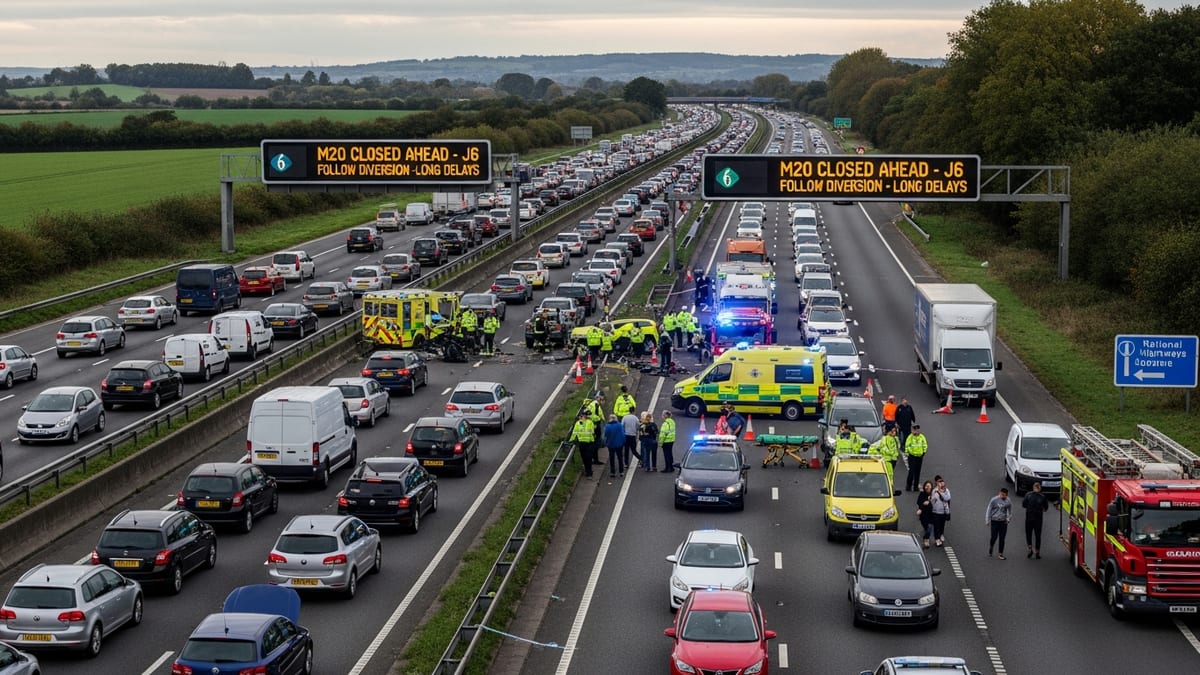
Gridlock on a Key North Central Transport Corridor
Reports from Benue State indicate that the disruption occurred on the dual carriage section of the Makurdi–Lafia highway, a critical stretch of the A3 corridor linking Makurdi with Lafia and onward to Jos and other northern cities. Available coverage describes long queues of articulated vehicles lined across the highway, effectively sealing off traffic in both directions near the Benue State capital.
Publicly available information compiled on Sunday describes hundreds of trucks occupying the two carriageways, forcing commercial buses, private cars and local taxis to halt on the approach to Makurdi. Some passengers were reported to have abandoned their vehicles to continue journeys on foot or to seek temporary shelter in nearby communities as the standstill persisted.
Images and descriptions from the scene referenced in Nigerian media reports show several heavy trucks with smashed front windscreens positioned across the highway. Observers describe the absence of many of the drivers at the location, which complicated efforts by security personnel and local officials to immediately clear the road and restore movement.
The incident adds fresh pressure on a corridor that already carries a high volume of interstate passenger traffic and commercial haulage, with the Makurdi–Lafia axis serving as a gateway between the Middle Belt and other parts of the country along the A3 highway.
Checkpoint Dispute and Escalating Tensions
According to accounts published by Nigerian outlets drawing on field reports, the blockade followed a dispute involving articulated truck drivers and officials at a revenue or security checkpoint near Makurdi. Local coverage attributes the immediate trigger to an altercation in which windscreens of some trucks were smashed during a confrontation, leaving several drivers insisting that the damage be addressed before they would move their vehicles.
Subsequent updates attributed to the Benue State police public relations unit in local reporting describe the confrontation as involving truck drivers and personnel of the Nigerian Immigration Service at a checkpoint close to the Agan Toll Gate on the Makurdi approach road. Published information notes that some drivers were reportedly injured during the altercation, prompting colleagues to mobilise in protest.
Reports indicate that following the incident, truck drivers moved from the initial checkpoint area back toward the Lafia garage axis of Makurdi, coordinating a blockade that rapidly extended across both directions of the highway. With many of the drivers leaving their trucks and dispersing from the immediate scene, efforts to re-open at least one lane for controlled movement initially yielded limited progress.
Coverage of similar disputes on other Nigerian highways in recent years shows that conflicts between commercial drivers and security or revenue officers at roadside checkpoints have periodically escalated into blockades, causing extended traffic disruptions. Analysts who track road safety and transport operations argue that such flashpoints highlight unresolved tensions around enforcement practices, documentation checks and informal payments on key freight corridors.
Stranded Passengers Face Delays and Rising Costs
Nigerian news agency reports from the Makurdi–Lafia route describe intercity passengers caught in the gridlock for much of the day, with one traveller in a shuttle bus reportedly stating that their vehicle had remained trapped since late morning. With articulated trucks occupying both carriageways and service lanes, there were limited options for detours, particularly for long-distance buses operating fixed routes between Benue, Nasarawa and other north central states.
The situation reflects a recurring pattern on major Nigerian highways, where obstructions caused by crashes, stalled trucks or deliberate blockades often leave motorists immobilised for hours. On the Lagos–Ibadan Expressway, for instance, a recent crash involving two articulated vehicles near the Sagamu interchange produced multi-hour queues and forced motorists to seek alternative local roads at higher cost and risk, as documented in metropolitan transport reporting.
For travellers on the Makurdi–Lafia axis, the sudden halt implied missed connections to onward destinations such as Lafia, Jos, Abuja and Otukpo, along with rising expenditure on food, water and, where available, alternative transport. Past incidents of highway protests in Benue, including blockades of nearby federal roads following security incidents, have led commercial drivers to increase fares temporarily in response to longer journey times and fuel usage, according to regional media coverage.
With the Makurdi–Lafia route serving both passenger coaches and long-haul freight heading north from the Niger Delta and southeastern ports via Makurdi, any sustained disruption has implications not only for individual travellers but also for the flow of goods along this leg of the A3 network.
Highway Vulnerabilities and Ongoing Upgrade Works
The Makurdi–Lafia highway forms part of the wider Abuja–Keffi–Akwanga–Lafia–Makurdi corridor under federal concession and upgrade arrangements overseen by Nigeria’s Federal Ministry of Works. Official statements from the ministry in recent years have highlighted efforts to address flooding and pavement failures on sections of the Lafia–Makurdi road, including the deployment of maintenance teams to deal with severe washouts that previously disrupted traffic.
Despite these interventions, the broader corridor has continued to experience periodic blockages arising from accidents, stalled trucks and protests. In Benue, separate reports over the past year have documented residents blocking segments of federal highways, including the Makurdi–Gboko and Makurdi–Lafia roads, to protest killings, abductions or other security incidents, leaving motorists stranded until mediating teams arrived and negotiations concluded.
Transport policy material and road safety publications from Nigerian agencies underline the particular risks posed by articulated vehicles on busy intercity highways. Concerns range from overloading and poor vehicle maintenance to driver fatigue and limited availability of formal truck parks or holding bays, which can encourage drivers to stop or park in unsafe locations and contribute to sudden gridlock when incidents occur.
Specialist commentary in sector reports has also pointed to the concentration of checkpoints on some federal routes as a factor that can slow traffic, create bottlenecks and, in extreme cases such as the Makurdi–Lafia episode, become flashpoints for confrontation when disputes arise between enforcement officers and commercial drivers.
Implications for Travellers and Calls for Longer-Term Fixes
While detailed, time-stamped updates about the eventual clearance of Sunday’s blockade were still limited in early reports, coverage notes that local government representatives and senior security officers in Makurdi entered discussions with driver representatives in an attempt to reopen the route. Such ad hoc negotiations have become a common response when highway protests and blockades emerge without formal notice.
For travellers who regularly use the Makurdi–Lafia corridor, the incident serves as a reminder of the unpredictability that can affect overland journeys in the region. Transport companies and independent drivers often advise passengers to factor in additional travel time, particularly on weekends and market days, and to carry sufficient cash for unscheduled stops where digital payment options may be unreliable.
Sector analysts argue that more systematic measures will be required to reduce the likelihood of similar disruptions. Proposals in policy discussions include clearer protocols for checkpoint operations, enhanced training for officers who interact with commercial drivers, expansion of certified truck parks off the main carriageway, and improved mechanisms for lodging and resolving grievances without resorting to road blockades.
For now, the latest standstill on the Makurdi–Lafia highway illustrates the intersection of infrastructure strain, enforcement disputes and security anxieties across Nigeria’s road network, and underscores how quickly events at a single checkpoint can cascade into hours-long disruption for travellers across an entire region.