


More news on this day
More than 100 flights at Minneapolis-St. Paul International Airport (MSP) were delayed as schedule disruptions from an East Coast air traffic control outage rippled across the country, complicating connections to and from major Northeast hubs.
Get the latest news straight to your inbox!
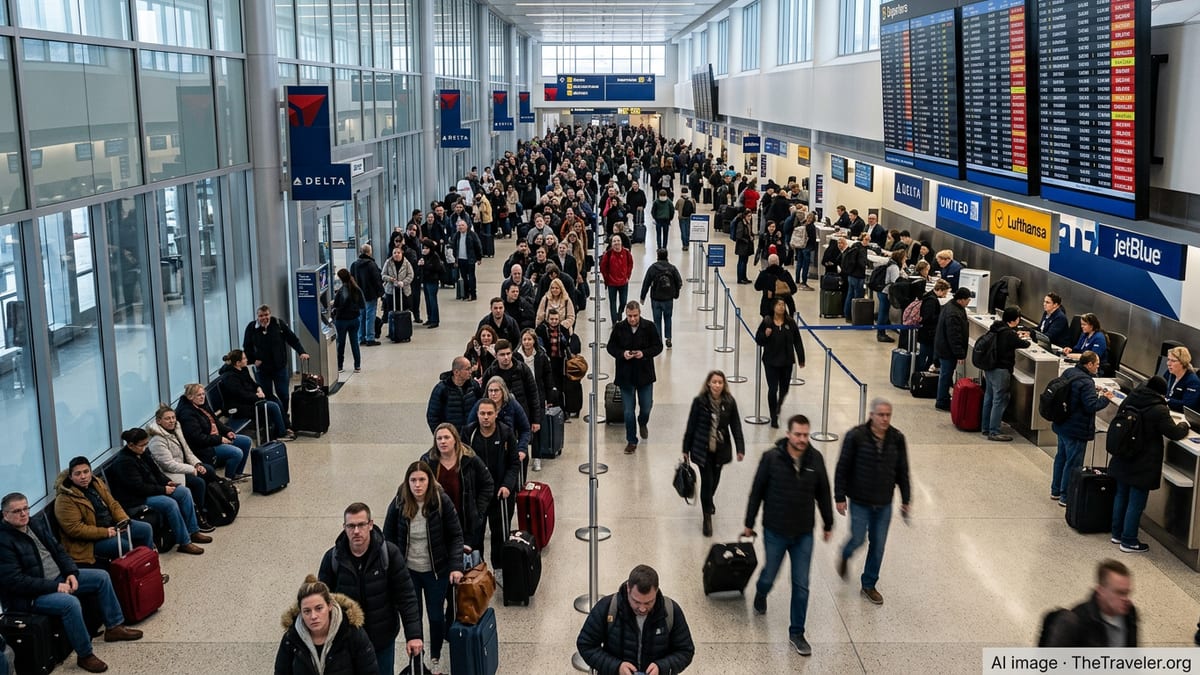
What happened and why MSP was affected
Published coverage indicates the disruption began Monday, Sept. 21, 2026, when flights were halted or slowed at several East Coast airports after a failure involving communications infrastructure supporting air traffic control in the Northeast. The incident centered on the Philadelphia Terminal Radar Approach Control (TRACON) facility, a key node that helps manage flights in busy airspace for the region.
The outage had an outsized national impact because the New York and Philadelphia metro areas act as major gateways for transatlantic arrivals and high-frequency domestic routes. When departures and arrivals are paused at those hubs, aircraft and crews end up out of position, creating cascading delays that can show up hours later at airports far from the original problem, including MSP.
Reports tied the outage to damage involving fiber communications lines. Even after service was restored, the aviation system still had to work through backlogs of aircraft waiting to depart, crews hitting duty-time limits, and inbound planes needing gates and staffing in the right places.
How big the disruption looked at MSP
At MSP, flight-tracking tallies published Monday showed more than 100 delays and a smaller number of cancellations as airlines absorbed the knock-on effects of Northeast ground stops and constrained traffic flows. The bulk of the disruption at MSP showed up as delayed arrivals and departures tied to East Coast routes and connections.
By later in the day, publicly available FAA airport-status information for MSP showed only modest systemwide delays, with general arrival and departure delays described as 15 minutes or less in its most recent update. That contrast highlights a common feature of nationwide disruption days: an airport’s overall flow can look manageable even while individual flights remain delayed due to aircraft rotations and network constraints elsewhere.
For travelers, the practical result was uneven impacts. A flight might appear “on time” at the airport level while still shifting substantially because the inbound aircraft was late arriving from Newark, LaGuardia, Kennedy, Philadelphia, or another affected airport.
What it meant for East Coast hubs and national connections
In the Northeast, the outage triggered widespread cancellations and long delays, with published coverage describing a near-standstill for portions of the day at Newark Liberty International Airport and significant disruption at other New York area airports. These airports feed MSP with both nonstop service and one-stop itineraries, so their problems quickly become MSP’s problems.
Travel disruptions were amplified by the timing: Monday is a heavy business-travel day, and the New York region’s airspace is among the most capacity-constrained in the country. When that airspace is restricted, airlines often need to hold planes at their origin airports, implement ground stops, and reroute traffic, which can push delays into later parts of the day in the Midwest and beyond.
Published reporting also noted that airlines issued flexible travel policies for some affected customers, allowing itinerary changes without additional fees in certain cases. Those policies vary by carrier and route, and travelers generally need to review their airline’s specific waiver details tied to the disruption date and impacted airports.
What travelers can do now if they’re flying through MSP
Travelers with upcoming trips, especially those connecting through the New York area or Philadelphia, may want to re-check their flight status frequently because changes can occur in waves as aircraft and crews are repositioned. The most reliable source for a passenger’s specific flight remains the airline’s own app or notifications, since FAA airport status pages describe general conditions rather than individual departures.
When disruptions stem from air traffic control constraints, rebooking options can differ from weather events. A delay caused by a hub outage can also trigger missed connections, forcing new routings through other hubs such as Chicago, Detroit, or Atlanta depending on the airline’s network and available seats.
For passengers heading to MSP to pick up arriving family members, it can help to track the inbound aircraft, not just the scheduled arrival time. A departure delay out of the Northeast can propagate into MSP even if MSP’s local conditions are stable, and gate assignments may change as airlines shuffle arrivals to match available space and staff.
Why outages like this tend to linger beyond the initial fix
Even after the underlying communications issue is repaired, the aviation system typically needs hours, and sometimes longer, to reset. Aircraft that were held at gates or diverted during the peak of the outage may arrive late to their next destinations, and crews can time out under federal duty rules, requiring substitutions that are not always immediately available.
Published coverage of the Northeast disruption framed the incident as another example of how a single infrastructure failure can cascade through the national airspace system. Large hubs on the East Coast operate with limited slack during busy periods, so when a major facility experiences a sudden outage, the backlog can affect flight schedules well outside the region, including at major connecting airports like MSP.